USA TRAVEL GUIDE
USA Health & Safety: Practical Travel Preparation and Useful Contacts

Health and safety decisions in the United States are local and activity-specific. The useful preparation for a central-city weekend differs from a canyon walk, a beach holiday or a long drive between rural bases. Check the risks that belong to your itinerary, arrange appropriate cover and keep the right assistance contacts accessible. Avoid treating a national reputation, a sunny photograph or one traveller’s experience as a guarantee about every neighbourhood or outdoor site. This guide focuses on practical actions and reliable information. For individual medical needs, obtain advice from a qualified clinician who knows your circumstances and use the relevant local service when help is needed.
Prepare health cover and essential information
Review travel insurance against the activities and places actually booked. Ask about medical treatment, existing conditions, cancellations, evacuation and any exclusions relevant to driving, hiking or water activities. A policy name or payment-card benefit is not enough to establish that a specific situation is covered. Keep the assistance number and policy reference where a companion can find them if you cannot make the call yourself.
Carry a concise record of regular medicines, allergies and important conditions, using generic medicine names where they help identification. Keep medicines in their appropriate packaging and check entry rules when necessary. If a medicine needs particular storage, arrange that with the accommodation and transport provider before the journey. Do not assume a small room refrigerator or a parked car will meet its requirements.
For non-emergency medical needs, ask the insurer how to find an appropriate local provider and what information to retain for a claim. Keep itemised receipts and treatment records. For an emergency, seek urgent help first; the administrative process is a separate task. A companion should know the accommodation address and any essential health information rather than depending on a locked phone.
Swipe horizontally if needed to compare all columns.
| Need | First contact | Information to have ready |
|---|---|---|
| Immediate emergency | 911 | Actual location, nature of emergency and callback |
| Non-emergency medical arrangement | Insurer assistance or appropriate local provider | Policy, symptoms and relevant health details |
| Vehicle problem | Rental company assistance | Branch/contract, vehicle and exact location |
| Lost foreign passport | Your country’s embassy or consulate | Identity details and available document copy |
| Disrupted journey | Actual airline, rail, coach or transfer operator | Booking reference and current location |
Make city visits and evening returns practical
Check the actual location of accommodation and the journey you will make after an evening activity. A citywide description is too broad to establish whether a particular walk or transfer works for you. Use the current local transport information and ask accommodation staff about the route, stop or entrance you intend to use. Choose a straightforward return when an unfamiliar area, heavy luggage or a late arrival makes the cheaper option awkward.
Protect documents, payment cards and electronics without making them difficult to use when needed. Keep a backup payment method separate and avoid leaving travel essentials visible in a parked vehicle. During a move between bases, consider where the bags will remain while you stop for lunch or sightseeing. A planned luggage drop can make the day easier than trying to store everything in the car.
Use official booking and payment channels, particularly for accommodation and tickets. Be cautious about a message asking you to move payment to an unexpected account or send sensitive details outside the confirmed service. Verify a change through the supplier's known contact information. For a theft or lost item, preserve the facts and contact the relevant local service rather than relying on an unverified recovery offer.
Change the day when heat or severe weather changes

Check the forecast for the activity location, not only the city where you slept. Heat can affect urban sightseeing as well as desert hikes. CDC guidance recommends cooler-hour outdoor activity, shade, hydration and attention to symptoms. Discuss individual medicine or health concerns with a clinician, and plan where you can rest in a suitably cool indoor space.
A morning start does not make every walk appropriate in hot conditions. Shorten or replace an outing when the heat risk exceeds the preparation of the group. Keep children and companions involved in the decision rather than letting a prepaid ticket determine the day. Never treat a car as a safe place to wait in dangerous heat while someone completes an activity.
For storms, snow, flooding or tropical weather, use current local authority and National Weather Service instructions. The Atlantic hurricane season runs from June through November, but a seasonal label is not a forecast for your beach or flight. Leave room to change coastal plans and know the accommodation's instructions if local officials issue warnings or an evacuation direction.
Check air quality when smoke affects the route
Wildfire smoke can affect places far from the fire itself, so a road that is open may still lead to poor conditions for a strenuous outdoor day. Use the AirNow Fire and Smoke Map to review local particle pollution, smoke information and any available forecast. Check the location where you will be active rather than a distant airport reading.
Keep an indoor or lower-exertion alternative and consider the needs of people with respiratory or other relevant health conditions. Follow the official health guidance for the measured conditions and obtain personal medical advice where needed. A clear view in a travel photograph says nothing about today's air quality, and a change in wind can alter conditions during a multi-day stay.
If a fire or closure affects the driving route, use the official road and park notices before accepting a navigation app's diversion. A suggested minor road may be unsuitable for the vehicle or the conditions. Tell the next accommodation when a disruption changes arrival plans, and avoid turning a detour into a pressured night drive simply to preserve the original timetable.
Use local beach and outdoor advice
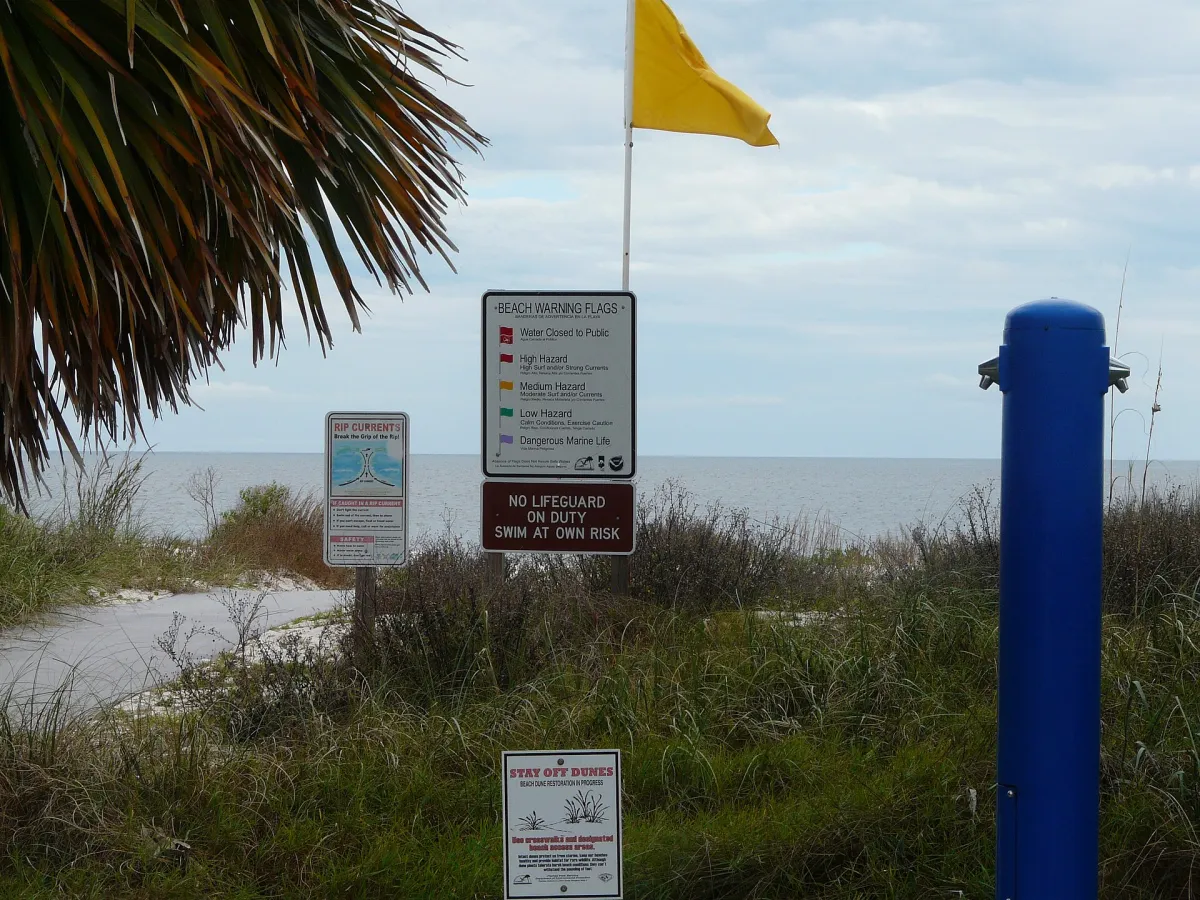
At beaches, check the local forecast, signs and lifeguard instructions before entering the water. National Weather Service advice explains that good beach weather does not establish safe swimming conditions. Rip currents can also occur on Great Lakes surf beaches. Prefer a lifeguarded location and choose another activity when the conditions are unsuitable for your swimming ability.
For forest and grassy walks, use appropriate repellent according to its label, keep to suitable trails and check for ticks afterwards. The CDC tick-prevention guidance describes checking clothing, gear and the body after outdoor exposure. Ask a clinician about symptoms or a bite that concerns you rather than treating an internet description as a diagnosis.
In national parks, respect barriers and the specific wildlife rules. A habituated-looking animal remains wild, and a short boardwalk can pass dangerous thermal ground. Prepare for the walk you chose, keep a turnaround plan and check current closures. If an injury or weather change makes continuing unsafe, abandon the planned viewpoint; a schedule is not a reason to enter a closed or unsuitable area.
Useful Contacts: choose the right assistance
For an immediate emergency requiring police, fire or ambulance assistance, call 911. Be ready to give the actual location, what happened and a callback number. The National 911 Program advises calling if you can; text availability varies. Do not use an emergency line for a general transport query, routine opening hours or a test of a new travel plan.
For a non-emergency, use the responsible local service's published contact: police for a report, the health provider or insurer for care arrangements, the rental company for a vehicle problem and the transport operator for a missed service. Save these contacts from the actual booking or official website. The correct number can depend on the city, state, branch or specific reservation.
If a passport is lost, contact your own country's embassy or consulate in the United States for its replacement process. A U.S. embassy abroad is not the office that replaces a foreign visitor's passport inside the country. For U.S. admission-record questions, use the appropriate CBP service. Keep document copies separately so you can explain the issue without exposing all sensitive details in an unsolicited message.
Keep a simple assistance plan for each travel stage
Before a rural day, record the overnight address, intended route, estimated return and where you expect mobile service. Tell a trusted contact what to do if you do not check in. Make the plan proportionate to the activity: a remote walk needs more than the contact card used for an urban museum day. Review local ranger guidance before leaving reception.
For a family or group, agree on a meeting point if separated and ensure each person can identify the accommodation. Keep at least one backup way to reach essential information if a phone fails. Good preparation is a small set of arrangements everyone understands, supported by current local advice, rather than a long list that nobody can use during a disruption.
Continue planning your USA trip
Sources and further reading
FAQ
What number should I call in an emergency in the USA?
Call 911 for immediate emergency police, fire or ambulance assistance. Give your actual location, explain the emergency and provide a callback number. Follow the dispatcher’s instructions.
Does a data-only eSIM guarantee ordinary calls and callbacks?
No. Check the actual plan and device arrangements. Data messaging, conventional voice service and emergency-call capability are different matters, and rural reception is not guaranteed.
Is sunny weather enough to choose a swimming beach?
No. Check surf forecasts, local signs and lifeguard instructions. Rip currents and other water hazards can exist in sunny conditions, including on Great Lakes beaches.
Who replaces a foreign passport lost in the United States?
Your own country’s embassy or consulate provides its replacement instructions. Keep a separate copy of the identification page and verify contact details through the official diplomatic service.