USA TRAVEL GUIDE
Gateway Arch Photography from Below: Curve, Steel and Sky
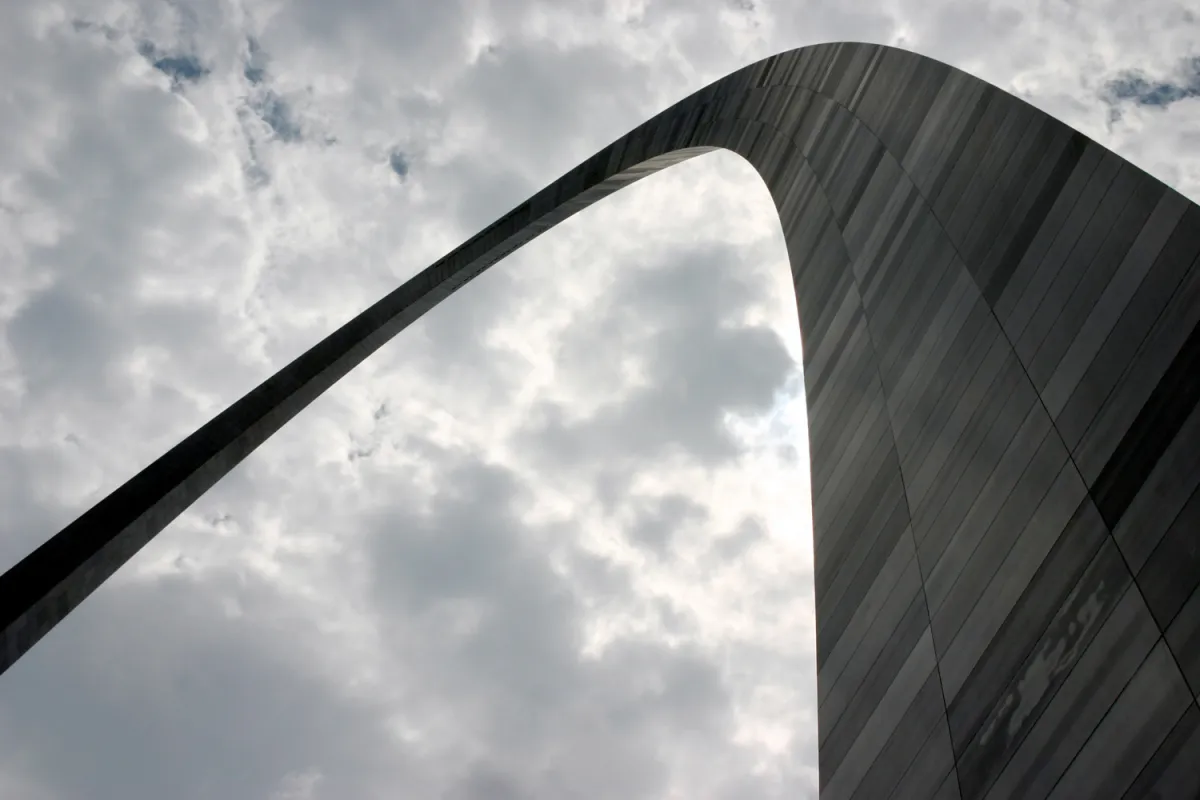
This St. Louis photograph looks up beneath the Gateway Arch, making its curve and steel surface the subject. It is not a distant skyline panorama or a view from the top. The source records the date as 7/3/08 without spelling out the date order, so this page retains the unambiguous year, 2008. The close perspective is useful for understanding how a familiar monument can become a study of form.
Read the curve as the main subject
The arch sweeps through the frame rather than standing as a small object in a larger landscape. Dark and light areas on the steel help describe its surface, while the cloudy sky supplies contrast. Notice how the curve enters and leaves the image. The edges are deliberate parts of the composition, not simply a failure to include the whole monument.
For your own photograph, compare a complete outline with a closer geometric study. The first explains the monument’s overall shape; the second asks the viewer to follow surface and curve. Both can be useful, but their captions should match what is actually visible. A close upward photograph should not be described as showing the entire park or the St. Louis skyline.
Keep the natural proportions of the image. Stretching it would change the very curve that makes it interesting. Cropping can be a creative decision where permitted by the licence, but a crop of this photograph remains the same original work and cannot supply a second supposedly unique image elsewhere in the USA guide.
Follow the curve through the edges of the photograph
In a close upward view, the edges of the frame become part of the design. The Gateway Arch does not have to fit completely inside the photograph for its shape to remain recognisable. Follow where the steel enters the image, how the curve changes direction and where it leaves. Those relationships can create a coherent study even when the surrounding grounds and city are outside the picture.
Compare a frame that follows a long sweep of the curve with one that concentrates on a smaller section of surface. The first emphasises the monument’s overall geometry; the second can reveal tonal changes and the relationship between steel and sky. Keep the purpose clear. Cropping more tightly is useful when it produces a more deliberate shape, not simply when it removes context without adding another visual idea.
The reference’s cloudy background helps the surface stand apart in some places and become subtler in others. Look at the contrast along both sides of the steel. If one edge disappears against the sky, decide whether that soft transition helps the composition or makes the form harder to read. A small authorised change of position can alter the relationship substantially. You do not need to invent a technical recipe to explain this visible effect.
Choose exterior geometry or an interior visit
A photograph from the grounds and a trip to the top are separate experiences. The exterior allows you to study the arch against the sky; an elevated interior view looks out over the city and river. Decide which matters to your visit before making arrangements. The supplied frame does not establish the conditions of the tram or its current availability.
The National Park Service’s Gateway Arch planning page separates park information, the museum, accessibility and the Ride to the Top. Use those current official details for any interior activity. An attractive exterior image is not evidence that a particular tour is running or that every visitor will find its physical arrangements suitable.
You can make a meaningful photography stop without forcing every activity into the same visit. If your aim is geometry, allow time to observe how the steel and sky change from permitted positions. If your aim is the elevated view, plan that separately and check the rules for equipment and security relevant to the experience you book.
Use cloud and reflections with intention
An upward view contains a large area of sky, so its texture becomes important. Cloud can separate the steel surface from the background or reduce the contrast between them. Before moving, look at which edge is most readable. A small shift in viewpoint can change that relationship substantially without requiring a more extreme physical position.
Bright reflections may draw attention along one side of the structure. Decide whether they help reveal the curve or dominate it. You do not need to imitate the source’s technical choices, which are not specified here. Make a frame, review the relationship between steel and sky, and adjust the composition according to the light you encounter.
The NPS maintains a photo gallery with several kinds of Gateway Arch views. It is useful for understanding how exterior, grounds and elevated perspectives differ. Reference images should guide observation, not encourage copying a standing position whose present access you have not checked.
Give the close view a clear role in a park visit
A close geometric study is more informative when you know what it is meant to contribute. It can accompany a wider exterior photograph that places the arch in its surroundings, or stand on its own as an examination of curve and material. Decide which role you want before continuing around the grounds. This avoids spending the whole visit making similar upward frames with only minor changes at the edges.
If you also visit the museum or book the Ride to the Top, keep those experiences distinct in the plan and in the captions. An exterior photograph does not describe the conditions inside a tram car or an elevated viewing space. Use the official visit information for those arrangements and let each activity contribute its own observations. There is no need to make the supplied close view appear to document more of the park than it actually shows.
When looking upwards, pause in a suitable place and check the space around you before changing position. Other visitors may be crossing the same path while looking in a different direction. Make the frame, lower the camera and move with attention. Retaining that simple rhythm allows a focused study of the structure without turning a shared public setting into a private photographic workspace. The resulting image can remain precise, useful and clearly connected to its 2008 source context.
Add context without losing the close study
A useful sequence might begin with a wider exterior showing the arch in its setting, continue with this kind of upward curve and finish with a permitted detail of surface or landscaping. Each image would explain something different. The close reference does not need to carry all the information about the park on its own.
Keep paths clear while looking upwards, and stop walking before raising the camera. Follow current boundaries, security directions and park notices. The photograph records a 2008 view of the monument, not today’s landscaping, visitor arrangements or shooting permissions. Its particular value is the visible interplay of curve, steel and cloudy sky.
Continue planning your USA trip
Sources and further reading
- National Park Service — Gateway Arch visit planning
- National Park Service — Gateway Arch photo gallery
FAQ
Does this photograph show the view from the top?
No. It looks upwards from below and studies the arch’s curve and surface. An elevated city view is a separate photographic subject.
Why is only the year given?
The source uses the numeric date 7/3/08 without specifying its order. The year 2008 is retained without inventing a day-and-month interpretation.
Do I need a tram ticket for this exact type of photograph?
The reference is an exterior upward view. Any interior visit should be planned separately using current NPS and official operator information.