USA TRAVEL GUIDE
Times Square Photography at Night: Screens, Crowds and Street-Level Framing
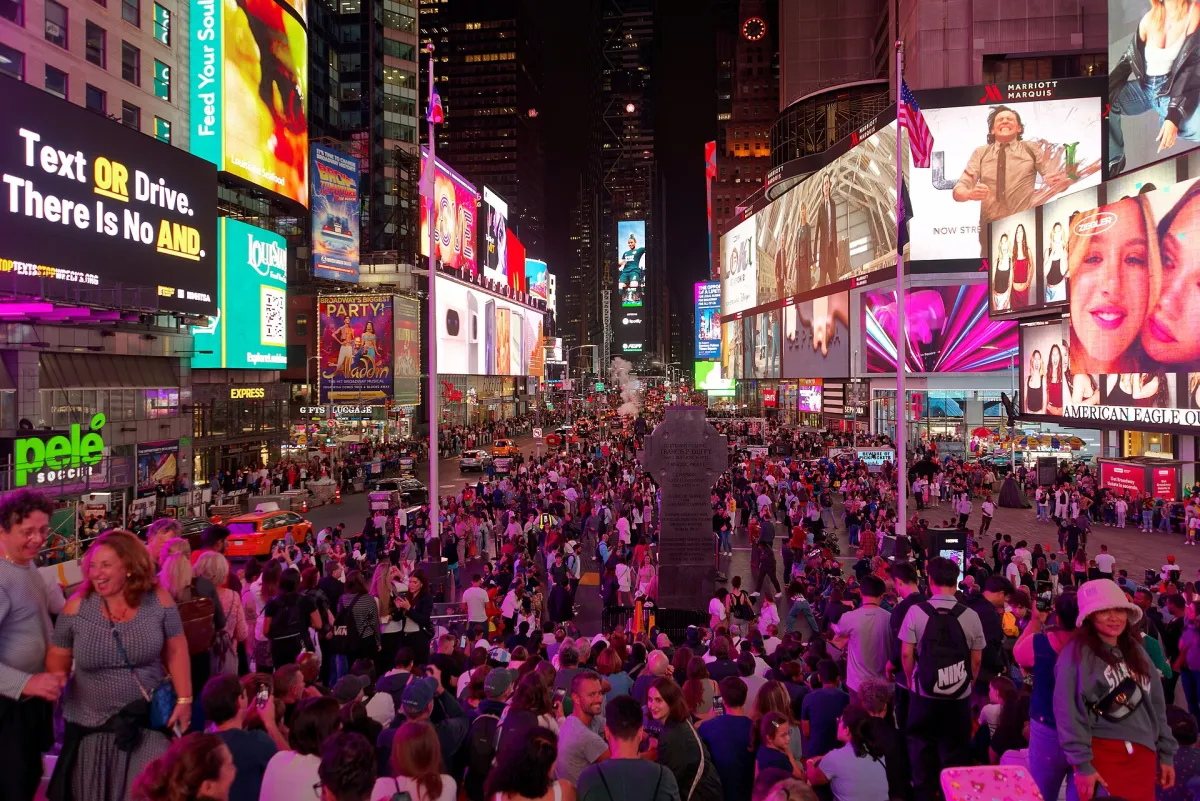
Times Square’s illuminated advertising and dense street-level activity share the frame in this photograph made on 6 October 2023. The screens provide light as well as subject matter, while the crowd explains the scale of the surrounding buildings. This page focuses on the visual decisions of photographing an active public place; it does not present the scene as a future event programme or a quiet, controlled photo location.
Decide whether the screens or people lead the image
Bright signs attract attention first, but the people below stop the image from becoming an abstract collection of rectangles. Notice how the crowd occupies the lower part of the frame and gives the eye a route towards the illuminated façades. Removing all street-level context would make a different photograph, centred on graphics rather than the experience of the place.
Try a wider scene that explains the surrounding space and a tighter arrangement based on a few screens and moving figures. Keep the frame’s edges under control: a very bright sign cut awkwardly at the border may dominate the whole picture. Waiting for a moment when the nearest pedestrian is not clipped by the edge can improve clarity without asking anyone to move.
The content on advertising screens changes. A particular colour combination or brand visible in October 2023 is not something a visitor can expect to reproduce. Treat the reference as a record of that evening’s light and activity, rather than proof of a permanent installation or scheduled display.
Watch how changing screens rearrange the composition
The illuminated surfaces in Times Square can change colour and brightness while the camera remains in one place. A combination that looks balanced may become busier a moment later. Instead of moving immediately, watch a small part of the scene and compare several frames. You may find that a simpler colour relationship gives the buildings and crowd a clearer structure, even though the physical viewpoint has not changed.
Choose one large screen or group of screens as the visual anchor, then consider the people and surrounding signs in relation to it. A bright advertisement near the edge can pull attention away from the centre. Reframing slightly may be more effective than trying to correct every competing light source afterwards. The goal is not to make the area look controlled, but to find an intelligible arrangement within an active setting.
Do not treat the advertising itself as a reliable schedule. The October 2023 reference records particular content and colours, while a later visit may look quite different. Caption the broader place and activity unless a specific display is both important and documented. A useful street photograph can communicate scale, movement and artificial light without depending on one brand or message remaining on a screen.
Work with the difference between screen and street brightness
A camera may preserve the brilliant signs while leaving faces dark, or brighten the street until the advertising loses all detail. Decide which part matters before accepting the automatic result. A darker crowd can be a deliberate part of a night scene, provided it still communicates movement and scale. A people-led image may require a different balance.
Check the result at normal viewing size as well as when enlarged. If the scene feels confused, simplify the composition before adding more effects. Choose fewer competing screens, wait for a more coherent colour arrangement or concentrate on one direction through the crowd. No exact exposure setting is guaranteed to work across changing displays and lighting.
The reference does not establish the photographer’s support equipment or any special permission. Keep your setup appropriate to a busy pedestrian space and follow current instructions. A photograph should not depend on occupying a passage, climbing street furniture or forcing other visitors around equipment.
Use pedestrian space without treating it as a closed set
The Times Square Alliance’s getting-around information explains pedestrianised sections and the surrounding transport context. Cross streets still have traffic, so being near a plaza does not make every direction a traffic-free route. Stop, look and use designated crossings when moving between compositions.
The Alliance also publishes accessibility resources, including information on public seating and crowd patterns. Use that guidance to choose a visit that fits your needs, but do not treat broad patterns as a guarantee of quiet. Theatre activity, events, temporary arrangements and ordinary city movement can change the scene.
If the immediate area is too crowded for the composition you want, choose a smaller scene or move to another permitted stopping place. A crowded photograph may describe Times Square more honestly than an attempt to make the whole area look empty. Be considerate when making identifiable people the main subject rather than background context.
Make a short street sequence without interrupting its flow
For a manageable set, begin with a broad frame that explains the space. Then look for a smaller relationship between a lit façade and the people below it. Finish with a detail that adds something different, such as a reflection or a repeated pattern of signs. This gives the sequence an opening, a closer observation and a change of scale, rather than several versions of the same crowded overview.
Use a stationary stopping place for the main compositions and lower the camera before moving through the crowd. Cross to another viewpoint only when the route and signals allow it. The pedestrian plazas are part of a wider street network, and nearby cross streets still need attention. If other people are waiting to use the same space, keep the session brief or choose a different permitted position.
When one person becomes the intended subject rather than part of the wider scene, approach the photograph considerately. Ask before arranging a portrait and respect a refusal. For companions, choose a position that does not block a walking route while you wait for the screen colours to change. The reference works because it includes the place’s public activity; a personal photograph can acknowledge that activity without requiring everyone around the camera to pause.
If you arrange a photograph with a costumed character, settle the interaction before posing rather than treating it like an incidental crowd scene. The Times Square Alliance’s visitor FAQ explains that a tip is expected when taking a photo with a character. This is a different situation from including the wider public activity in an establishing photograph. Decide whether that posed portrait is part of the experience you want, keep the walking route clear and ask for help from a Times Square Safety Officer if an interaction becomes inappropriate. The reference photograph itself does not advertise or endorse a particular performer.
Distinguish ordinary evenings from special events
The illustrated evening is not a record of New Year’s Eve access or event arrangements. Those require their own current information and can change how people move through the area. Do not use a general night photograph as evidence that the same standing position will be available during a major organised event.
A varied short set could include one establishing street scene, one graphic study of screens and one closer observation of movement or reflected light. Each should have a clear purpose. Retain the 2023 date and actual credit, then use the wider USA Photo Spots guide to compare this dense urban scene with quieter skyline and landscape subjects.
Continue planning your USA trip
Sources and further reading
FAQ
Is this a New Year’s Eve photograph?
No. The source dates it to 6 October 2023. It should not be used to imply access arrangements for a different event.
Will the same advertisements be visible?
No. Screen content changes, so the photograph records a particular evening rather than a permanent advertising display.
Are all streets around the plazas pedestrianised?
No. Consult the Times Square Alliance’s current guidance and use designated crossings. Nearby cross streets can carry traffic.