Read the contrast between city and sky
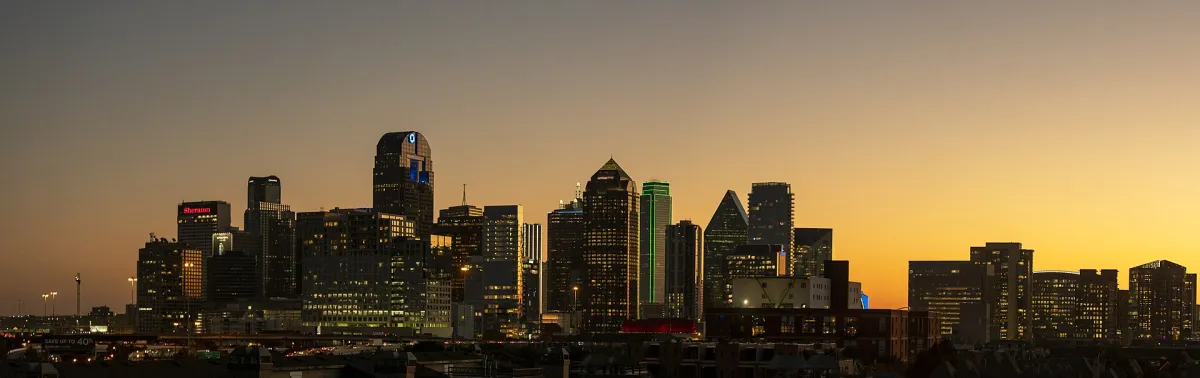
The image depends on a clear tonal difference: the skyline is dark enough to form a continuous shape, while the sky retains colour and the buildings show selected lights. The visual centre is therefore not simply the tallest structure. Look at how the bright parts are distributed across the full width and how much dark foreground the frame needs to support them.
When composing your own dusk skyline, make one version that favours the sky and another that retains more building detail. The better choice depends on what the light is doing. A brighter city may deserve a tighter frame; a textured sky can justify more space above the roofline. Avoid assuming that a warm colour cast alone will create a strong photograph.
The warm sky is strongest on the right, while the darker foreground contains smaller roofs and transport-related structures. Those lower shapes give the city a base but are less immediately legible than the towers. Decide how much of that base is useful before making a wider frame. Cropping it away completely would change the city’s apparent relationship to its surroundings; including too much could make the important skyline look small. A strong decision about the lower edge is therefore as important here as deciding which building should occupy the centre.
Choose a viewpoint you can actually access
Visit Dallas identifies Ronald Kirk Pedestrian Bridge as a place to photograph the skyline. It also distinguishes the elevated view from Reunion Tower, which requires admission. These are different visual experiences: a pedestrian viewpoint can include foreground and people, while an elevated observation view looks across and into the city.
Choose between them before planning your evening. Check the current access, ticket conditions or public-space arrangements for the place you intend to use. Do not infer a legal standing position from a distant photograph, and do not stop on a road shoulder simply because the skyline looks similar. The source picture’s viewpoint remains unspecified.
The alternative viewpoints offered by the tourism authority should be treated as different outings. A pedestrian bridge can allow pauses within a shared public setting, while an observation attraction involves admission, its own opening arrangements and an interior or elevated environment. Choose the experience that fits your day and the weather you have. If you are interested in the skyline as a dark outline, a ground-level public position may serve that aim. If the purpose is to understand how streets and buildings fit together, an elevated perspective answers a different question.
Arrive for a sequence rather than one instant
Dusk changes the balance between illuminated windows and sky over a relatively short interval. If you are already at a lawful viewpoint, compare several frames as that balance changes. The aim is not to chase an exact number of minutes after sunset, but to notice when the city lights remain distinct without the surrounding sky becoming completely featureless.
A phone can capture a useful skyline if you keep the frame steady and check whether bright signs are losing all detail. Let the scene guide any adjustments. The reference does not establish the creator’s equipment, settings or support arrangement, and those details should not be invented. Any support you use must be allowed at the site and must leave room for other visitors.
The illuminated green outline near the centre-right and the scattered lit windows show how a small amount of artificial light can remain visible against a brighter evening sky. In your own frame, check whether one very bright sign is pulling attention away from the skyline’s shape. A slightly different crop can rebalance it, but a building’s lighting may change between visits. Do not base the whole outing on the assumption that a particular colour or pattern will repeat. Work with the lights actually present and preserve useful detail rather than forcing every bright surface to the same intensity.
Separate a skyline study from an architectural detail
The long, low format makes the collective outline the subject. A photograph of a single building would require a different approach, with more attention to converging lines, street-level context and façade detail. Trying to include all of those goals in one image often makes the result harder to read. Decide whether you are describing Dallas as a whole or a particular piece of its architecture.
A small sequence might start with a ground-level skyline, move to one distinctive shape and finish with a scene showing how people use the public space. This gives each photograph a reason to exist. If you change viewpoints, keep the captions precise rather than calling every image a view from the same bridge or observation deck.
A photograph made through observation-deck glass needs a different check from one made outdoors. Look for reflections from the room behind you and follow the venue’s rules about equipment. Outdoors, inspect the immediate foreground for a railing or object that crosses an important shape. Neither situation is solved by claiming an exact camera setting from the reference. Make a small change, compare the resulting relationships and keep the viewpoint secure. The unknown source location is not a missing instruction that can safely be filled with a guess about a bridge or rooftop.
Treat the 2020 image as a reference, not a forecast
The photograph records Dallas at dusk in November 2020. It does not guarantee present building lighting, current skyline construction or access to its unknown camera position. Its useful contribution is the study of colour and silhouette, with the city clearly identified and the limits of the source made explicit.
For an outing, give yourself enough time to leave comfortably after photographing. Check the route back from the exact viewpoint and do not let a late colour change in the sky lead you into a hurried crossing or unfamiliar restricted area. A well-planned alternative is more valuable than insisting on a scene that current access or weather cannot provide.
Plan a coherent dusk sequence: one wider image showing the changing sky, one closer grouping of illuminated forms and, if appropriate, a scene that explains your actual public viewing place. The last image helps distinguish your outing from an anonymous city silhouette without requiring you to disclose a private location. When selecting the final set, avoid assigning every frame the same viewpoint label if you moved. Keeping captions specific also prevents a ground-level composition from being mistaken for the view a visitor can expect after purchasing admission to an elevated attraction.
Continue planning your USA trip
Sources and further reading
FAQ
Where exactly was the reference photograph made?
The available source identifies Dallas and the date but does not establish an exact viewpoint. This page deliberately avoids assigning it to an unverified bridge, road or rooftop.
Is Reunion Tower the same kind of view?
No. An elevated observation view and a ground-level skyline have different foregrounds and building relationships. Check admission and access before choosing the elevated option.
Is a colourful sunset guaranteed in November?
No. The image records one evening. Weather and lighting vary, and a quieter sky can still support a useful photograph of the city.