
INDONESIA · BALI TRAVEL GUIDE
Bulgari Resort Bali Photography: Architecture, Pool and Ocean
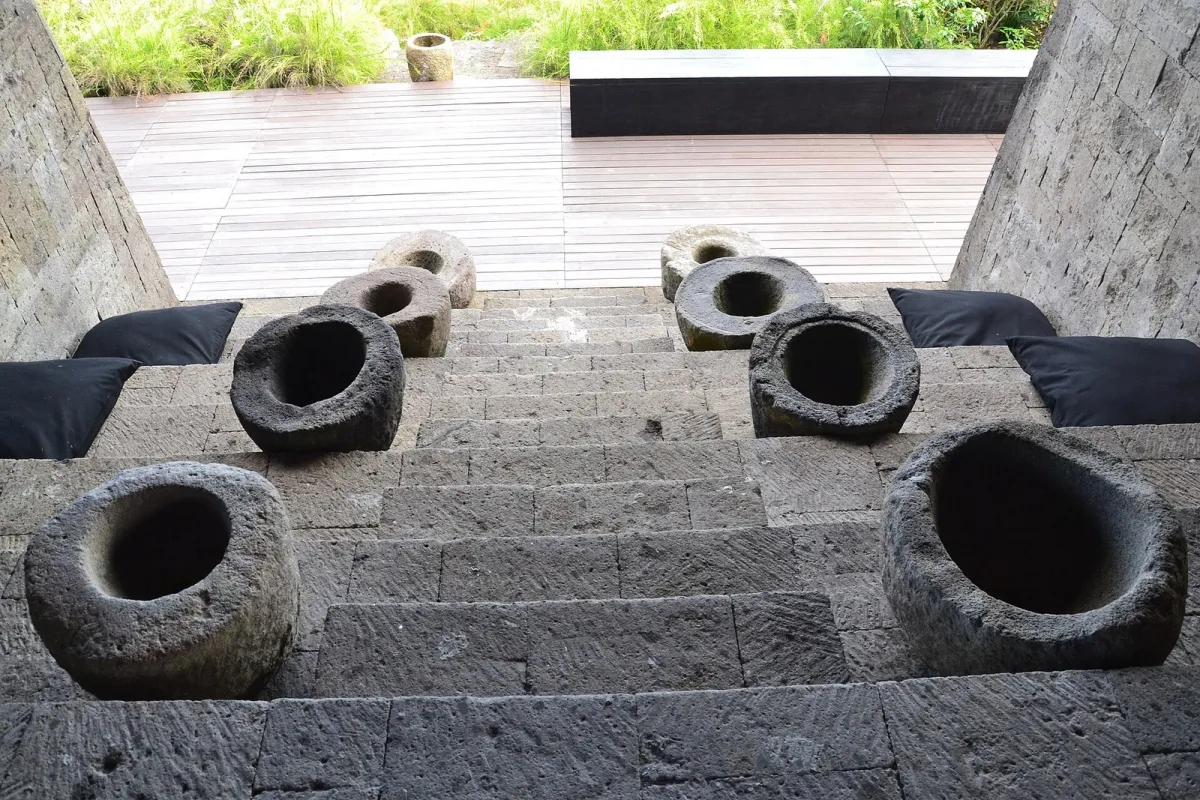

Two photographs from 2012 show different sides of Bulgari Resort Bali: a close study of stone steps and rounded vessels, and a wider main-pool scene with the ocean beyond. Compare the way each frame organises its subject, then make one access plan for the actual part of the resort you hope to photograph. Neither image describes a current guest-room category or grants visitor access.
Follow the steps through the frame
The stair treads repeat across the image, providing a clear direction for the eye. Rounded vessels interrupt that regular pattern on either side. Their dark openings stand out against the stone and stop the composition from becoming only a collection of parallel lines. The photograph gives relatively little information about the surrounding rooms, which keeps attention on this relationship.
When making a similar detail picture, check the corners before concentrating on texture. A bright sliver of another surface or a partly cut vessel can draw attention away from the pattern. Moving the camera slightly may produce a cleaner frame than cropping heavily afterwards. Keep enough of the steps to explain how the repeated shapes belong to the architecture.
Describe visible materials carefully
The rough stone surfaces contrast with a smoother, brighter area at the top of the photograph. That distinction is visible; the exact geological type and construction specification are not established by the image metadata. Avoid assigning a particular stone variety or designer’s intention simply because a material looks familiar.
Uneven light is useful for revealing the surface, but it can also make the darker vessel openings merge into featureless black. Decide whether the purpose is a graphic composition or a descriptive architectural record. In the latter case, review the darkest areas as well as the highlights, keeping the final edit close to the scene rather than forcing every surface to the same brightness.
Main pool: water, deck and ocean
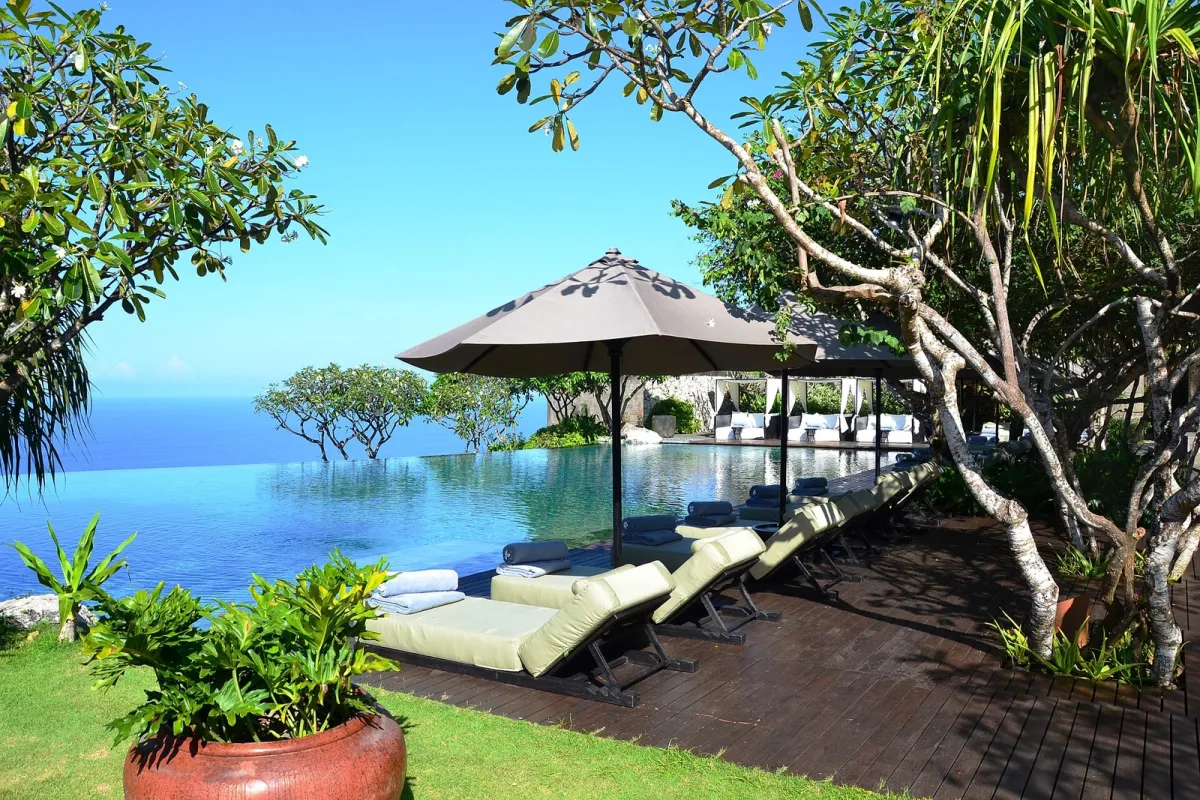

The source identifies this scene as the main pool at Bulgari Resort Bali and records it in 2012. A deck, loungers, a parasol and a tree occupy the foreground, while the sea opens beyond them. The pool is one part of the composition rather than the whole picture: its controlled rectangular space contrasts with the much broader coastal setting.
Several surfaces meet in a compact frame. Water near the deck, the deck itself, planting and the distant sea each have a different texture. Look for the edges that help you read those layers. Without them, a blue area can become ambiguous and the viewer may not understand whether it belongs to the pool or the coast.
When making a similar image, change height or move sideways before widening the lens. A small adjustment can keep a pool edge visible, separate a parasol from a branch or open a clearer view towards the horizon. The aim is not necessarily to include more: it is to make the relationship between the included elements easier to follow.
Watch reflections and bright surfaces
The sea, pool and pale outdoor furniture do not reflect light in the same way. A scene that looks balanced to your eye may contain a brighter area that dominates the photograph. Review those surfaces together, especially if the water is moving or a cloud changes the light between frames.
Reflections can add structure, but they are not guaranteed by the location. Wind, shade, pool use and the direction of light all affect what appears on the water. Avoid assuming that another visit will reproduce the same colour or a still reflection. If you use a polarising filter, check the whole frame: its effect on one surface may be stronger than on another.
Arrange access and keep working routes clear
The official resort information is the starting point for access enquiries. Ask which areas belong to your hotel reservation, dining visit or planned session. A historic licensed photograph does not establish a public day pass, pool entitlement or permission for professional equipment or a commercial shoot.
Steps and corridors are working routes. Do not stand where people need to pass, block a doorway with a camera bag or ask another guest to wait while you perfect a composition. A short series of frames taken from an approved position is usually more practical than a prolonged setup in a circulation space.
Respect pool privacy and keep equipment dry
A swimming-pool setting requires particular care with privacy. Do not make identifiable images of swimmers without permission, and do not include children as incidental subjects simply to give the scene scale. Wait for an unoccupied composition or frame a material, tree or section of water instead.
Keep equipment away from wet edges and circulation routes. A tripod, light stand or staged portrait may need specific hotel permission even where casual photographs are allowed. Choose an unobstructed, dry position and leave space for guests and staff.
Build one useful resort photo sequence
Use the stone detail to introduce texture and repeated forms, then the wider pool scene to establish the relationship between designed landscape and sea. They answer different compositional questions within the same property, so a single visit can have a coherent photographic purpose without repeating the hotel description beneath each image.
The photographs do not show a route to the beach, assess swimming conditions or prove a particular room’s outlook. For the wider Bukit Peninsula decision, use Where to Stay; for accommodation choices, use Hotels. Check present facilities and permissions directly, and retain each image’s recorded date and identity in your notes.
Frequently asked questions
Do these photographs show a Bulgari guest room?
No. One records a stone-step and vessel detail; the other records the main pool. Neither establishes a room category, current room condition or a promised view.
Can the stone type be identified from the photograph?
Its texture and colour are visible, but the available image source does not establish the exact material specification.
Can non-guests reproduce this view?
Check directly with the resort. The image does not establish public access, a day pass or permission for a professional shoot.
Does the image show direct beach access?
It shows the ocean beyond a poolside setting. It does not show the route to the beach or establish how a guest reaches the shore.
Will the same reflection appear on another visit?
That depends on wind, light, water movement and activity around the pool. Treat the image as a composition example rather than a repeatable lighting guarantee.