
INDONESIA · BALI TRAVEL GUIDE
Ulun Danu Beratan Photography: Flowers, Rooflines and Lake Light
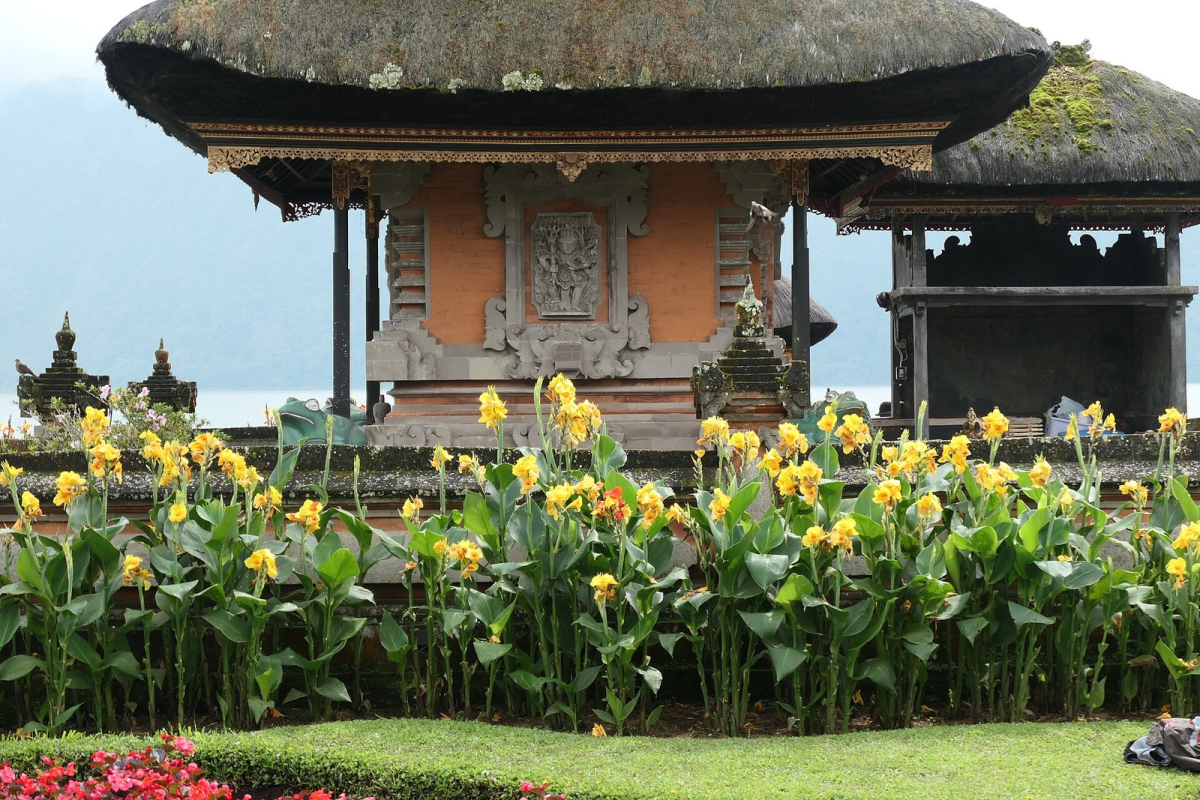
Yellow flowers fill the foreground of this photograph from the Ulun Danu Beratan temple complex. Behind them, an orange wall, a carved panel and broad thatched roof create a different view from the familiar isolated meru shrine. The source identifies Ulun Danu Beratan and records the photograph in 2022. The correct place name is Beratan, referring to the lake beside the complex.
Look for a different part of the complex
The flowers create a bright, irregular band across the lower frame. The building behind has much more ordered lines: roof edge, columns and wall panels. That contrast makes the photograph a study of planting and architecture together. A shaded pavilion on the right adds depth without becoming the main subject.
Recognisable places can produce more than one useful photograph. A wider lake view explains the setting; a closer frame can reveal the way gardens, carved surfaces and roofs relate to one another. Decide which of those questions you want to answer before trying to include the entire complex in every image.
Keep foreground and building in balance
Foreground flowers can hide an architectural subject if the camera is too low or too close. Here, enough of the wall and roof remains visible to explain the background. In a similar frame, change your position until the flowers support the building rather than covering its important outline.
Look carefully at the frame edges as well as its centre. Small personal items, a bright patch of clothing or a partly cut roof can become more obvious in the finished picture. Reframing is usually more considerate than moving another visitor’s belongings. Stay on permitted paths and do not step into planted areas to obtain a lower angle.
Work with highland light
The background has a softer, paler quality than the bright flowers and darker roof. That difference helps separate the layers. It does not establish an ideal visiting hour or promise mist around the lake. Weather can change quickly enough that waiting briefly may produce a different relationship between the near detail and the distant water.
Protect equipment from rain and give yourself time to look before setting up. A complex scene does not always need dramatic sunrise colour: diffuse light can make wall details and planting easier to record. Choose the light according to the photograph, rather than treating every lake-temple view as a sunset assignment.
Keep photography within visitor boundaries
The Indonesian tourism authority identifies Ulun Danu Beratan at Lake Beratan in the Bedugul highlands and explains that visitors should follow local religious and access instructions. Gardens and attractive architecture do not turn the complex into an unrestricted photography set.
Ask before photographing a ritual, leave sacred areas and offerings undisturbed, and follow staff instructions about where visitors may stand. The Temple Etiquette guide considers these visits in more detail. Do not confuse this Lake Beratan complex with Pura Ulun Danu Batur in the Kintamani area; they are different places.
Frequently asked questions
Is this the same temple as Ulun Danu Batur?
No. This photograph is identified as Ulun Danu Beratan beside Lake Beratan. Ulun Danu Batur belongs to the different Kintamani and Lake Batur context.
Does this photograph show the familiar meru shrine isolated in the lake?
Its main subject is a flower bed and temple building within the complex. It offers a different architectural view rather than repeating that familiar composition.
Can visitors enter flower beds or sacred areas for a cleaner angle?
Follow the marked visitor routes and staff instructions. A better composition is not a reason to enter planting or restricted religious space.

