
INDONESIA · BALI TRAVEL GUIDE
Amed Salt-Maker Photography: Work, Light and Respectful Portraits
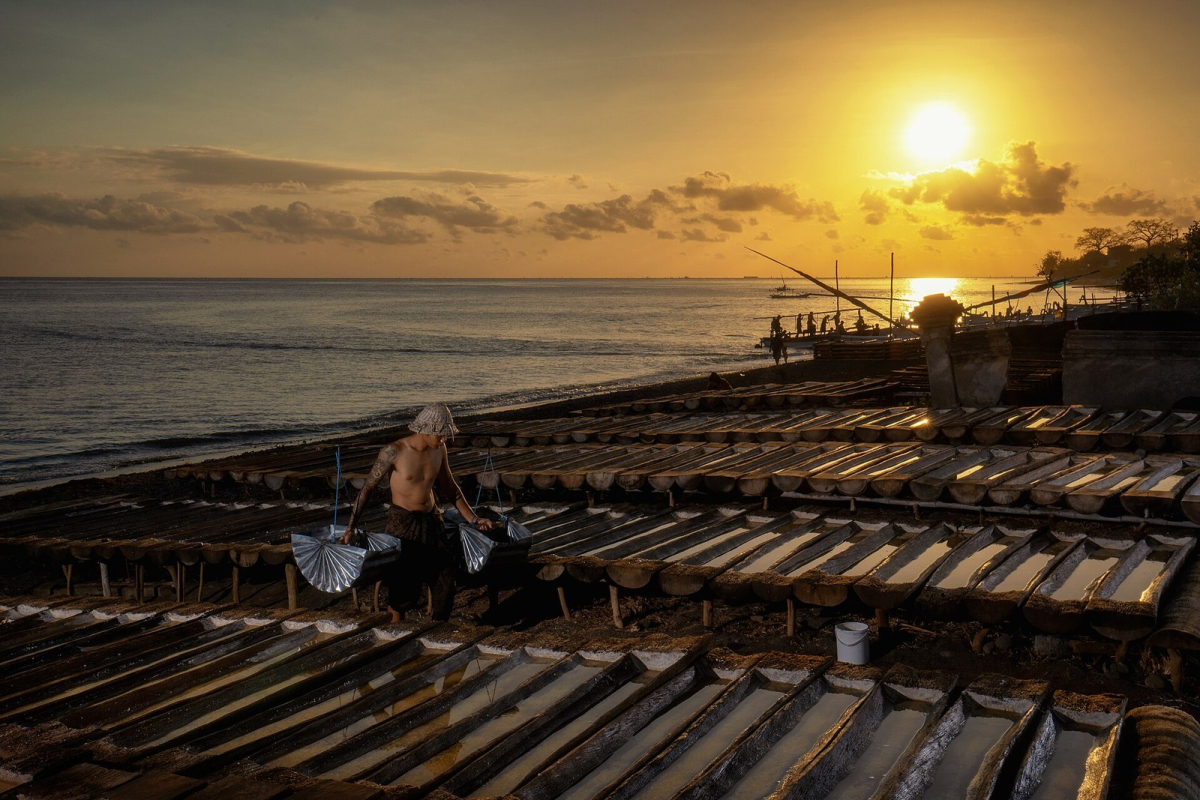
A worker moves between rows of shallow troughs beside the sea in this Amed photograph. The low sun lights the water and catches narrow edges across the working area. The source identifies traditional salt making in Amed and records the image in 2020. It provides no name or personal history for the person shown, so those details should not be invented.
Read the person together with the workplace
The rows of troughs are not simply foreground decoration. Their repetition explains the scale and organisation of the working space, while the person gives it a human centre. Carrying equipment, narrow gaps and changes in level make the activity visible without the need for a posed portrait.
The sea is also part of the composition. It establishes a coastal setting and opens the background beyond the dense pattern of troughs. A tighter crop might emphasise the person, but it would explain less about the relationship between the work and its surroundings. This is why a wider environmental portrait can sometimes tell a clearer story than a close view of a face.
Use the low light without turning work into a prop
Warm light crosses the water and picks out parts of the troughs, while the worker remains darker than the sky. The photograph’s recorded setting supports a description of low coastal light; it does not establish a routine timetable for salt production or a guarantee that the same activity will be visible on another visit.
In your own photographs, decide whether you need to retain facial detail or whether the body, tools and setting carry the story. Protect bright areas from becoming distracting, and watch the position of a person against the background. Do not ask someone to repeat a heavy movement or interrupt a task solely because the light is attractive.
Ask before entering the working area
Rows of troughs and narrow passages may look accessible from the road, but they are part of someone’s workplace. Ask where you may stand and whether photography is welcome. Keep clear of equipment, avoid stepping over or touching the troughs, and move immediately if a worker needs the route.
A source licence for an existing photograph is not an invitation to photograph every person you meet. If you want a recognisable portrait, explain your interest and how you intend to use the image. Accept a refusal without bargaining over it. Buying a product can support a producer when you genuinely want it, but it should not be treated as automatic permission for a portrait.
Keep the caption specific and fair
Indonesia’s Ministry of Marine Affairs and Fisheries identifies Garam Amed Bali among geographically indicated marine products. That gives useful context without turning the photographed individual into a representative of every Balinese person. Avoid generic labels such as “typical local people” or claims about a person’s income, family or beliefs.
The Where to Stay guide considers Amed as a base, while Responsible Travel addresses how visitors interact with communities. Here, the photographic subject remains one supported working scene: a person, salt-making troughs and coastal light, recorded at a particular moment.
Frequently asked questions
Is the person in the photograph named?
No name or personal history is established by the available source. The supported subject is a salt-making scene in Amed.
May visitors walk between the salt-making troughs?
Do not assume access. Ask the people working there where visitors may stand and keep equipment and production areas clear.
Does buying salt give permission for a portrait?
No. A purchase and consent to be photographed are separate decisions. Ask about the photograph directly and accept the answer.

