
INDONESIA · BALI TRAVEL GUIDE
Bali Food and Drink: Dishes, Ingredients and How to Order
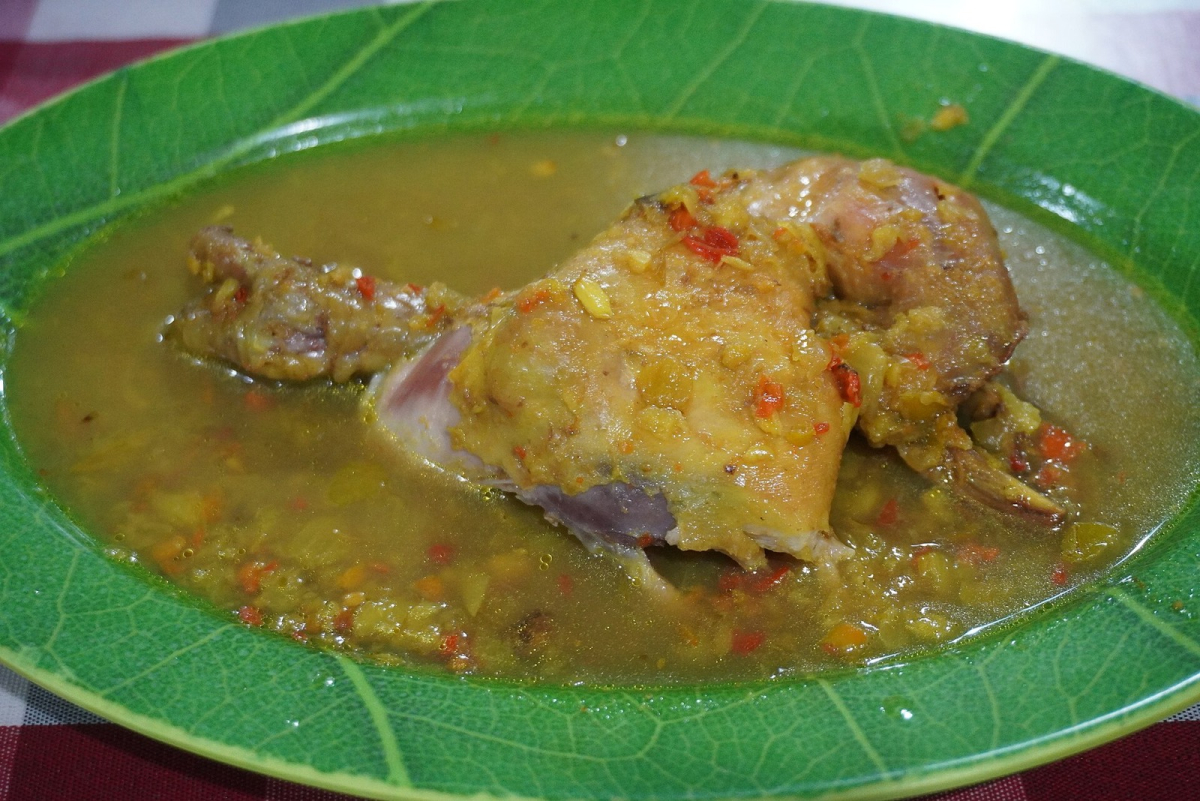
Bali's food is part of Indonesia's varied culinary landscape, but a restaurant serving Indonesian food is not necessarily serving only Balinese dishes. A mixed menu may include cooking from Java, Sumatra or elsewhere alongside local preparations. That variety is useful when it is described clearly. Ask where a dish comes from rather than treating the whole archipelago as one flavour.
Start with the dish, not just the word Indonesian
Use this guide to understand dishes, ingredients and the decisions involved in ordering. For named places and a meal that fits your route, continue to Bali Restaurants. The aim is to make a menu easier to read, not to promise that every kitchen uses an identical recipe or that a dish will have the same heat level everywhere.
A first meal of rice with a few different accompaniments can reveal more than ordering several similar main courses. Ask what is available that day, which items are spicy and whether the portions are intended for sharing. Keep enough appetite for an unfamiliar vegetable or sambal instead of choosing every dish around the same meat.
Spice pastes and sambal: flavour comes in several layers
Balinese cooking often builds flavour through a prepared spice paste, with combinations of aromatics such as shallot, garlic, turmeric, ginger, galangal, kencur and lemongrass. Base genep is a useful term to recognise, but it is not one formula that every family or restaurant follows. The balance can change with the dish and the cook.
Bumbu Bali's published kitchen recipes show why an ingredient question matters: pastes, dressings and sauces can include candlenuts, shrimp paste or other ingredients that are not obvious on the finished plate. A vegetable-based dish is not automatically vegan or suitable for a shellfish or nut allergy.
Sambal is an accompaniment rather than a single standard sauce. Sambal matah commonly brings sliced aromatics and chilli; other sambals have cooked ingredients or different textures. Ask for a serving on the side when possible, and taste a small amount first. “Not too spicy” is a useful preference to express, but a kitchen may use a prepared paste whose heat cannot simply be removed.
Ayam and bebek betutu: richly spiced poultry
Ayam betutu uses chicken; bebek betutu uses duck. The defining idea is well-seasoned poultry cooked so the spice mixture penetrates the meat, with preparation and final texture varying by place. The national tourism account explicitly notes differences in ingredients, methods and serving styles.
Ask whether you are ordering a portion, half bird or whole bird and what comes with it. A whole duck or a special preparation may need advance ordering. Rice, vegetables, nuts and sambal can be part of one plate in some kitchens and separate items in another. Confirm the complete meal rather than comparing a poultry price without its accompaniments.
If heat is a concern, ask before ordering which preparation is available and whether a milder alternative is realistic. The spice is part of the dish, not always an optional sauce added at the end. A group can share a smaller amount alongside a simpler dish instead of expecting every person to choose the same level of heat.
Sate lilit and nasi campur: useful ways to try several flavours
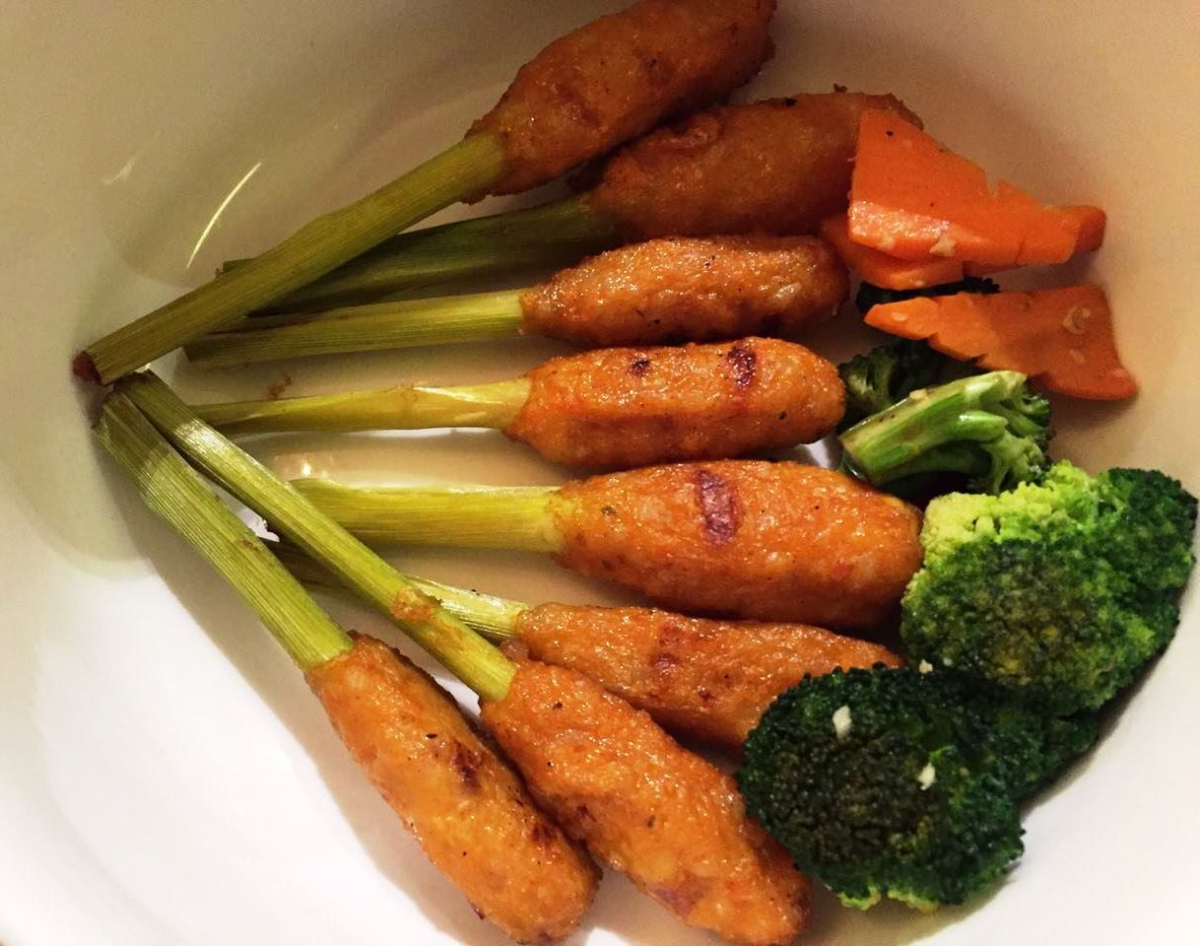
Sate lilit is made with a seasoned minced mixture wrapped around a skewer or stalk rather than the familiar cubes threaded onto a stick. Fish, chicken and other versions exist, so confirm the protein. The mixture may also contain coconut and spice paste. The name alone does not establish that it is vegetarian, free of shellfish ingredients or mild.
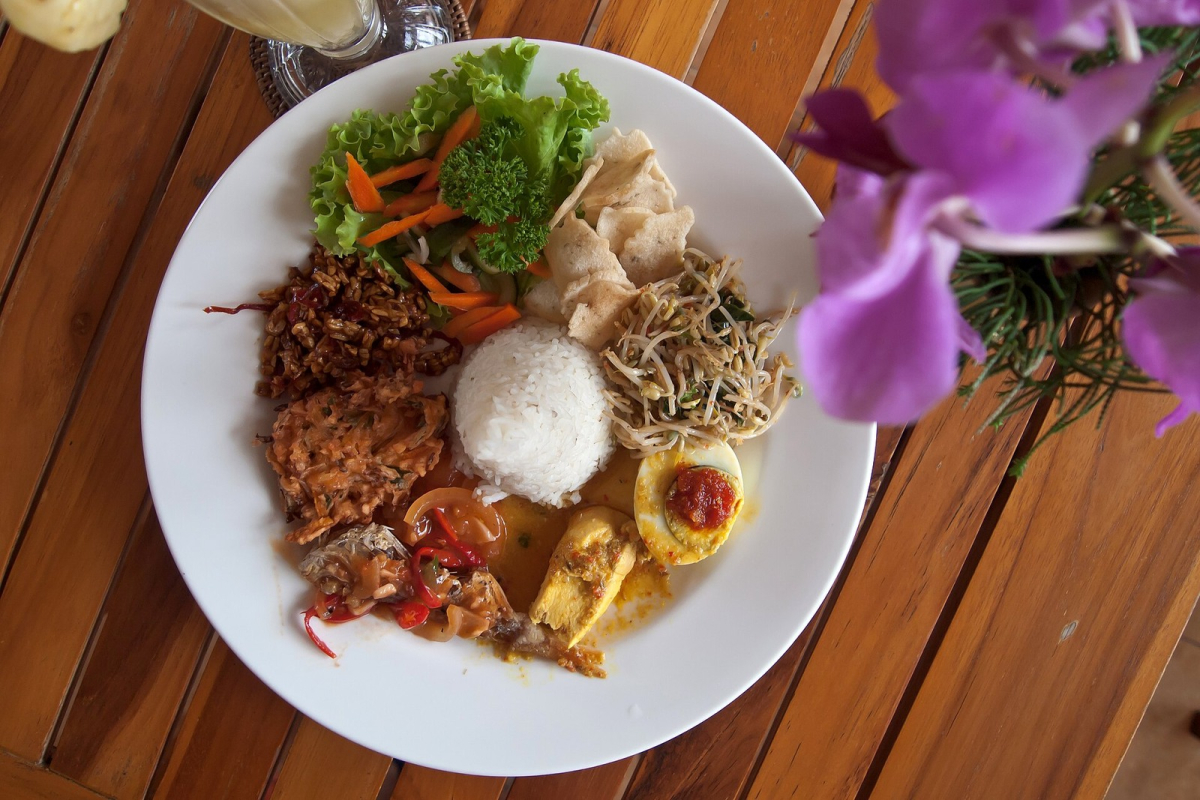
Nasi campur means a rice meal with a selection of accompaniments. In Bali, the plate can bring together several textures and preparations, but the contents depend on the kitchen and the day's service. Ask which meat, fish, vegetables, eggs or nuts are included. A photograph of one plate is not a guarantee of what will be served on your date.
The official Bali food overview is a useful introduction to these names. At the counter, however, the actual ingredients and portion arrangement matter more than a generic description. Let the server know when something must be excluded and ask whether that is possible.
Babi guling, lawar and vegetable dishes: ask what is inside
Babi guling is a pork preparation, often served as a rice plate with different accompaniments. It is unsuitable for someone avoiding pork, even if only a small component of the meal appears to be meat. Ask about sauces and side dishes as well as the principal protein when choosing an alternative.
Lawar brings finely chopped ingredients together with coconut and seasonings, and can include meat. Recipes and ceremonial contexts vary. Do not rely on the appearance of vegetables to infer that a serving meets a dietary requirement. Ask the kitchen directly about the version being served and choose a clearly explained alternative when the answer is uncertain.
Tofu, tempeh, greens and vegetable dishes can provide another route through a meal. The cooking medium, stock, sambal and garnish still matter. If you require vegetarian, vegan or halal preparation, state that clearly rather than using only “no meat”. For a severe allergy, choose a kitchen able to explain ingredients and cross-contact controls; no general guide can certify an individual meal.
Seafood and a sweet finish: order the quantity deliberately
At a seafood venue, check the species, portion or weight unit and the cooking method before agreeing the price. Grilled fish, prawns or squid may be sold individually, by weight or as a package. Ask which vegetables, rice, sauces and taxes are included. A large group should agree the order with one server so the total is clear.
For dessert, look for the ingredients as well as the English translation. Coconut, palm sugar, rice and fruit appear in many Indonesian sweets, but dairy, egg, wheat or nuts may be added in a particular version. A black-rice pudding, coconut-filled preparation and fried banana are different choices; ask what is freshly available and whether the portion is intended for sharing.
Choose food prepared and handled appropriately, and use safe drinking water. A busy setting or a traditional appearance is not a food-safety certification. If you have a medical dietary requirement, discuss travel preparation with your clinician and use the Health & Safety page for broader precautions.
Coffee, fresh drinks and alcohol

Kopi Bali can mean a locally served coffee rather than one uniform bean or brewing method. Ask where the beans were grown, how they are processed and whether the drink is filtered or served with grounds. If you are buying coffee to take home, a roast date, origin and grind choice are more useful than a dramatic plantation story.
Kintamani provides a coffee-growing highland context, while cafés elsewhere can serve beans from across Indonesia. A tasting can be useful if it explains origin and preparation rather than concentrating on a single novelty product. Choose a drink for flavour and transparent sourcing; avoid animal-handling attractions or unsupported health claims attached to a coffee sale.
For juices, iced drinks or coconut water, ask about added sugar, dairy and the water or ice used. For alcohol, the FCDO warns of methanol poisoning in Indonesia, including counterfeit branded products. Taste or smell cannot reliably identify methanol. Seek urgent medical help if poisoning is suspected, and use the separate safety guidance when planning evenings out.
Order clearly and build a meal that suits the table
Ask whether food arrives as individual plates or shared dishes. For a shared meal, tell the server the group's size and appetite, then confirm rice and accompaniments. At a fixed-menu restaurant, check that everyone can eat the menu before reserving. At a simple warung with one principal dish, a request for extensive substitutions may not be realistic.
Read whether prices include tax and service; a “++” amount is not the final total. Confirm the actual payment options and keep an alternative available. A cooking class can make later ordering easier, but it is a separate activity with its own dietary and participation questions, covered in Things to Do.
Frequently asked questions
Is Balinese food always very spicy?
Heat varies by dish and kitchen. Ask before ordering, request sambal separately where possible and recognise that a prepared spice paste may not be adjustable.
Is nasi campur one fixed dish?
No. It is a rice meal with selected accompaniments. Confirm the actual meat, fish, vegetables, eggs, nuts and sauces on the plate being served.
Are vegetable dishes automatically vegetarian?
No. Stock, shrimp paste, fish sauce, meat ingredients or garnishes may be present. State the dietary requirement and ask the actual kitchen.
What does ++ mean on a menu?
It indicates that tax and service are added to the listed price. Ask for the final amount and the current terms before confirming a set menu or large order.



