
INDONESIA · BALI TRAVEL GUIDE
Balinese Dance Photography in Ubud: Movement and Stage Light
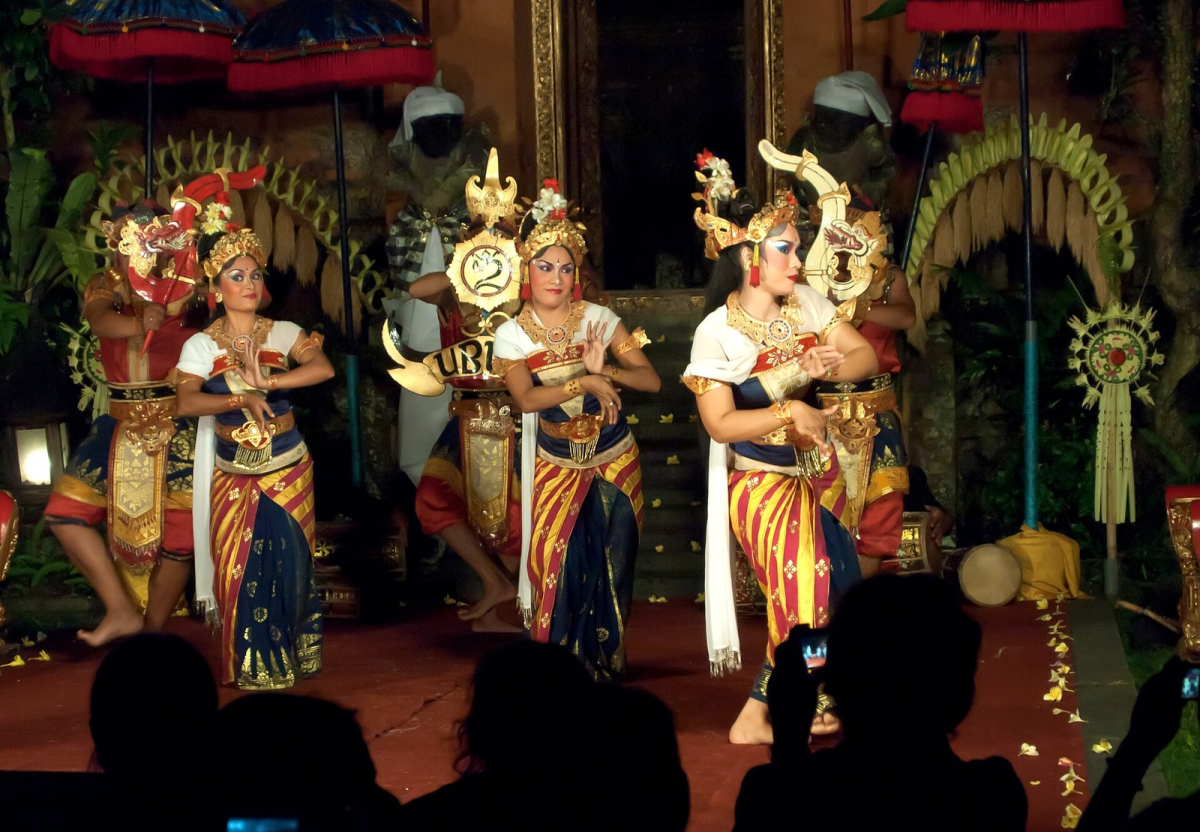

Several performers share the stage in this Ubud photograph, their costumes and headdresses highlighted against a darker background. The source records a cultural performance in 2010 and describes elements of the Ramayana and Baris. Although the original file title contains “Legong”, the available description does not support treating the whole performance as one precisely identified dance form.
Look at the relationships between performers
The photograph works as a group scene. Hands, faces and headdresses create repeated shapes, while different body positions keep the line from becoming static. Rather than looking only for a single leading dancer, notice the space between performers and how each figure contributes to the overall arrangement.
When photographing a stage, it can help to watch a sequence before raising the camera. Repeated movements give you a chance to anticipate a clearer separation of hands and faces. A slightly wider frame may explain an ensemble better than a close crop, especially when a gesture is meaningful in relation to the dancer beside it.
Let the stage light shape the picture
Bright costume details sit beside much darker areas in this image. That difference is part of the scene rather than a defect that must be removed. Check whether important faces and fabric retain detail, and accept that a theatre background may remain dark. Trying to brighten every part equally can make the image look flat.
A shutter speed fast enough for one pose may still blur a moving hand. Decide whether you want a crisp gesture or a sense of movement, then review a few frames rather than assuming every image needs the same treatment. Support your camera steadily from your seat; a tripod or raised equipment can obstruct another spectator’s view.
Choose the event before choosing the photograph
This is a historical record of a performance, not a current programme listing. The photograph does not establish the venue, ticket price, available seating or present-day permission to photograph. Use the Things to Do guide to consider the kind of cultural experience you want, then confirm the actual programme with the organiser.
Balinese dance is not one interchangeable attraction. Performances may have different religious, dramatic and social settings. Avoid assuming that a ticketed presentation gives permission to enter a ceremony or that every ceremony is suitable for spectators with cameras. Follow the organiser’s instructions and ask before using flash or recording a long video.
Write captions that match what you know
A useful caption can state the supported location, recorded date and visible subject without inventing the performers’ names or the title of a story. Here, “Balinese dance performance in Ubud, photographed in 2010” is more reliable than assigning an unsupported venue or claiming to show a current nightly show.
Keep portraits respectful. Costumes are part of a performance, not an invitation to follow dancers backstage or photograph them while changing. If you want a posed portrait after a show, ask the performer or organiser and accept a refusal. The Responsible Travel guide considers these wider visitor choices.
Frequently asked questions
Does this photograph show a confirmed Legong performance?
The original file title uses that term, but its description refers to a cultural performance with Ramayana and Baris elements. A more precise classification is not established here.
Is flash appropriate at a dance performance?
Follow the organiser’s rules and avoid disturbing performers or the audience. Stage lighting is often sufficient for a photograph without flash.
Can I use this image to choose a current show in Ubud?
It illustrates a performance recorded in 2010. Confirm the current venue, programme, ticket arrangements and photography rules independently.