
INDONESIA · BALI TRAVEL GUIDE
Kuta and Legian Beach Photography: Sunset, Shoreline and Beach Life
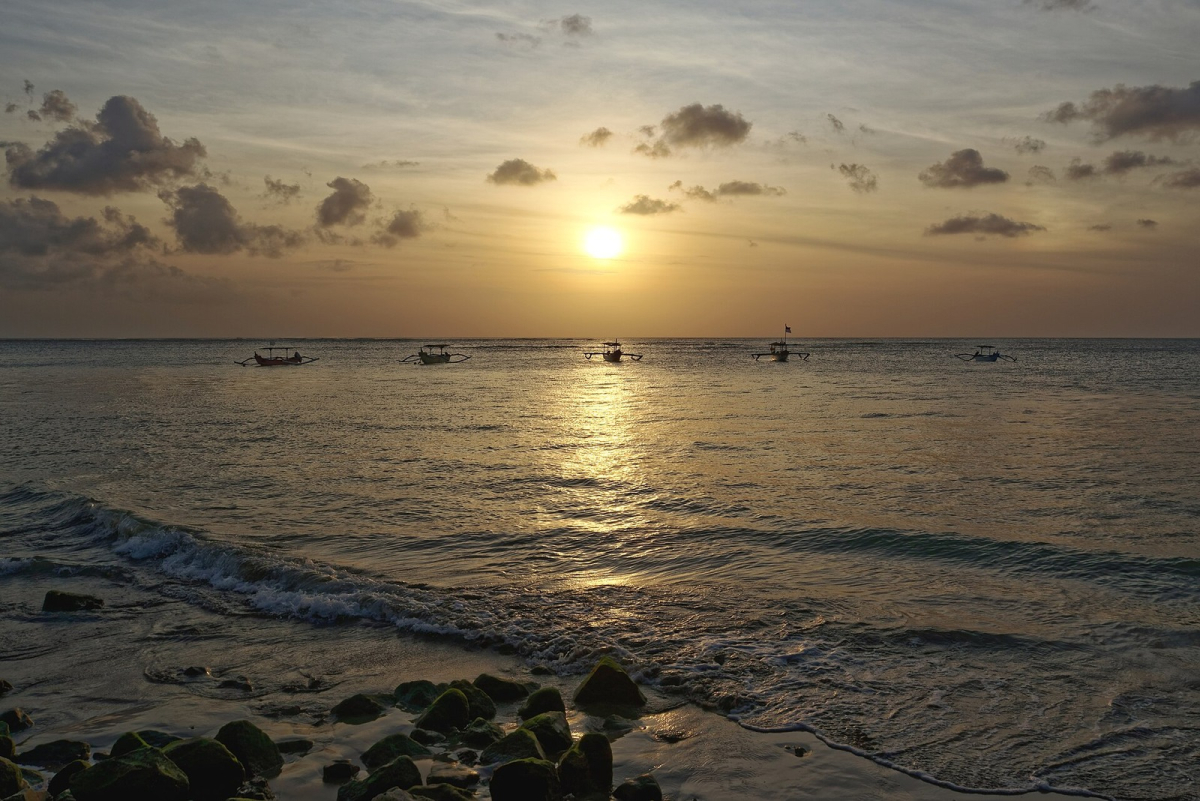
Kuta and Legian are neighbouring parts of Bali’s southwest coast. Their photographs can answer two parts of one outing: how changing sunset light shapes a shoreline, and how people, seating and the long beach create an environmental scene. The image sources still identify different places and dates; a shared page does not make the names interchangeable.
Kuta: sunset, foreground and changing light
A low sun, a band of cloud and a dark shoreline give this Kuta photograph its structure. The source records sunset on the beach at Kuta in August 2022. Water reflects the changing sky while small figures near the horizon provide scale. The foreground is darker and more textured, so the image is not simply a photograph of the sun.
Use the shore to give the sky a setting
The foreground rocks and uneven waterline help locate the view at the coast. Without them, much of the picture could read as open water and sky. Notice how the darker shapes lead towards the bright centre without covering the reflection entirely. That balance gives the eye somewhere to begin before it moves into the distance.
When making a similar picture, choose foreground deliberately. A rock, a patch of wet sand or a receding wave can each give a different rhythm to the scene. Move carefully on stable ground and check what enters the frame at its edges. A dark object can look much larger and more distracting in a photograph than it did when you first noticed the view.
Keep watching the light after one good frame
The sun is visible, but much of the picture’s colour comes from the surrounding clouds and their reflection. Exposure for the bright area can leave foreground almost black; a brighter exposure may lose detail around the sun. Decide which part carries your photograph rather than trying to make every area equally bright.
Sunset conditions change quickly. A cloud can cover the sun, break its reflection or redirect attention towards a coloured band near the horizon. Take a few carefully considered frames as that happens, then look away from the camera and reassess the scene. Avoid fixing on one composition so completely that you miss a clearer arrangement nearby.
Legian: beach life and the long shoreline
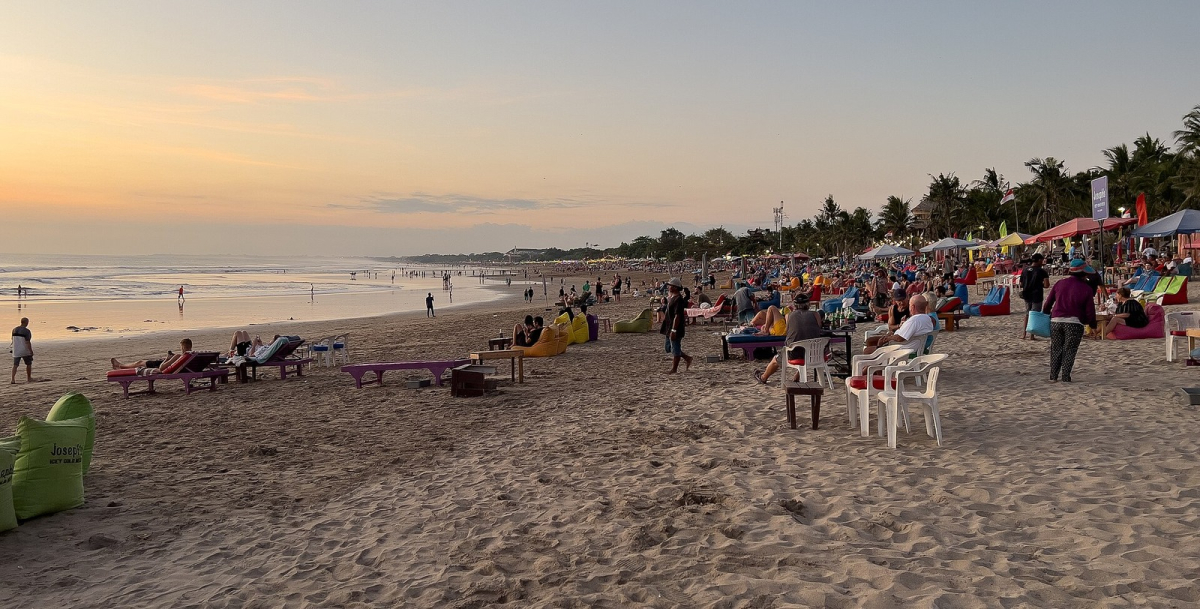
This Legian photograph gives considerable space to the beach itself: sand, seating, people and the long line where waves meet the shore. The source records Legian Beach in 2023. Compared with a tight sunset frame, it explains more about how the place is used, making beach activity part of the subject rather than something to exclude automatically.
Let the shoreline organise a busy scene
The water and beach create a broad diagonal into the distance. Chairs and small groups add repeated shapes on the landward side. That structure helps the viewer read a scene containing many details without needing one large foreground subject. The distant coastline also provides a sense of scale.
Before photographing a busy beach, choose the line that will hold the picture together. It might be the water’s edge, a row of seating or the rhythm of people walking. If everything receives equal emphasis, the image can become difficult to read. A small change of position can separate a group from a chair or keep a parasol from crossing another important shape.
Keep sand and people readable
The warm-toned light in this image gives the sand a softer appearance, while figures remain much smaller than the landscape. The source does not establish an exact camera position or a shooting-hour recommendation. Use the visible relationship between light and subject as an example, rather than expecting identical colours on another visit.
Check bright sky and darker people together when reviewing a frame. If your aim is a beach-life photograph, some detail in the human activity may matter more than a perfect outline of the sun. If you want silhouettes, make their shapes clearly separate. Either choice can work, but it helps to make it deliberately.
Include people and seating considerately
Small figures can establish scale without revealing who a person is or why they are on the beach. Keep captions within the recorded context. If you want a recognisable portrait, ask directly and accept a refusal; a silhouette or wider environmental view can work without following someone or interrupting a private moment.
Beach seating and services belong to the scene, but they are not props for a visitor to rearrange. Ask before moving furniture or making a close photograph of someone working. Keep bags out of walking routes and do not expect a vendor to interrupt service while you wait for a preferred composition.
Keep the place name and water conditions separate
The Indonesian tourism authority places Legian between Kuta and Seminyak. That is useful geographical context, but these neighbouring areas are not interchangeable in a caption. The recorded subject here is Legian; keep that name rather than using a broad “Kuta sunset” label for every southwest-coast image.
The sources record Kuta at sunset in August 2022 and Legian in 2023. Neither image identifies a current lifeguarded swimming zone, surf break or accessible route. Choose for the photograph while following present signs and local instructions; a calm-looking scene does not establish safe water. Use Beaches for the coast comparison and Surfing for a planned water activity.
Plan the session and the return
The most useful practical decision may be how you leave after the light fades. Keep bags and shoes together, protect equipment from sand and salt spray, and know where your return transport will meet you. Choose a meeting point you can identify after dark rather than relying on an unmarked stretch of beach.
Choose whether beach activity or light is your main subject before settling on a position. A busy Legian scene can be composed through its normal use, while a Kuta sunset may reward watching the same frame as clouds change. You do not need to cover both places in one session; choose a permitted, stable stretch and a route that suits your time and mobility.
Frequently asked questions
Are the two photographs of the same beach?
The sources identify Kuta at sunset in August 2022 and Legian in 2023. Legian lies between Kuta and Seminyak; keep each photograph’s recorded name even when planning the coast together.
Does a calm sunset scene mean the water is safe to enter?
No. The photograph does not establish current currents, surf or a permitted swimming area. Follow local signs and lifeguard instructions.
Which Kuta viewpoint was used?
The source identifies Kuta beach and the recorded sunset date, but an exact camera position is not established here.
Can I move beach furniture for a cleaner frame?
Ask the owner or staff first. Furniture and working areas should not be treated as props available for visitors to rearrange.
Do I need to visit both Kuta and Legian in one photo session?
No. Choose one stretch and a main aim: changing light, shoreline shapes or beach life. Time, mobility, current access and the return arrangement matter more than covering both names.


