
INDONESIA · BALI TRAVEL GUIDE
Padang Padang Beach Photography: Rocks, Waves and a Small Cove
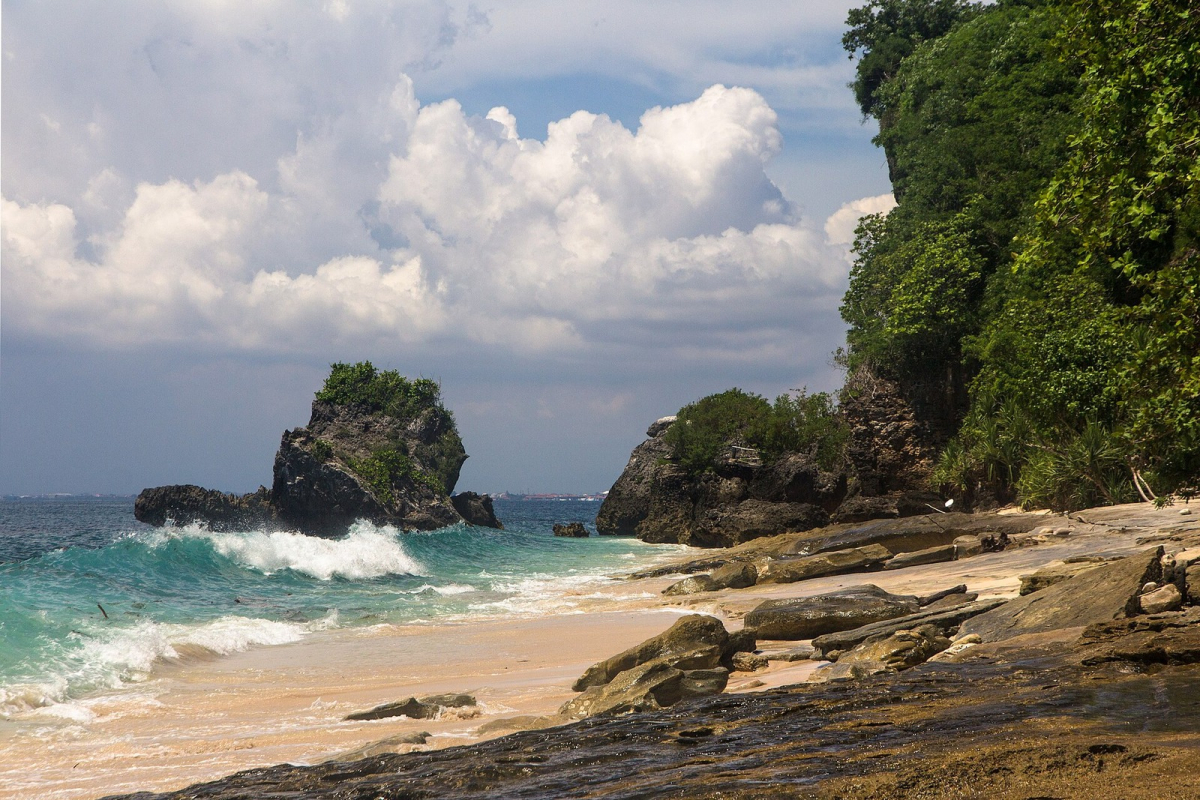

Rock formations and a small band of shore dominate this Padang Padang photograph. Water moves between the darker shapes, while clouds give the sky a separate layer. The source identifies Padang Padang Beach and records the image in March 2016. It is a coastal-landscape study rather than a map of the beach entrance or a guide to a surf break.
Let the rocks anchor the picture
The foreground rock surface gives the image weight, and the offshore formations create a second set of shapes. Water connects them. This helps a small cove feel more complex than a simple strip of sand: the photograph is about the relationship between solid forms and moving sea.
When making a similar frame, check whether one rock is obscuring another important outline. A small change of position can separate them and make the coast easier to read. Keep enough water around an offshore shape to show that it is separate from the foreground rather than letting everything merge into one dark area.
Choose how to show the water
The appearance of water changes from frame to frame. A faster exposure can retain the shape of a breaking wave, while a slower one may emphasise movement around a rock. Decide which result explains the coast you want to show, and review the edges where bright water meets darker stone.
A long exposure is not a reason to work from a wet or unstable platform. Observe the area from a safe position, keep a clear retreat and follow local restrictions. This historical photograph does not establish the reach of waves, the tide stage or the safety of the place where another visitor might stand.
Plan the beach approach before carrying equipment
The Indonesian tourism authority describes a stepped approach through a narrow rock opening. That is a different practical question from whether the beach looks attractive in a photograph. Carry a compact kit, leave hands free where possible and think about the return climb as well as the descent.
Do not block the narrow approach while adjusting a tripod or changing lenses. Give people moving in the opposite direction space to pass. If steps or confined passages are unsuitable for your group, use the Beaches guide to compare another coastal setting rather than assuming every Bali beach has the same access.
Keep the photographic plan flexible
Cloud, waves and the amount of available shore may differ from the 2016 image. A viewpoint that works at one time may be crowded or unsuitable at another. Look for an alternative frame from a permitted, stable position rather than trying to reproduce a reference picture exactly.
Padang Padang also has a surfing context, but a photograph of rocks and water is not evidence of conditions suitable for a particular surfer. The Surfing guide considers that separate activity. For a photographer, a useful visit can remain on land and focus on the cove’s shapes, changing light and the space between the rocks.
Frequently asked questions
Does the photograph show the beach entrance?
No. It shows the rocky coastal scene. The stepped, narrow approach is a separate access consideration.
Can the same amount of beach be expected on another visit?
No. Water conditions, tide, weather and local arrangements can change the space available. The image records one visit in 2016.
Does a scenic Padang Padang photograph indicate suitable surf for beginners?
No. Scenic appearance and surfing suitability are different questions. Seek current local advice appropriate to your ability.