
INDONESIA · BALI TRAVEL GUIDE
Balinese Architecture Photography: Thatch, Texture and Framing
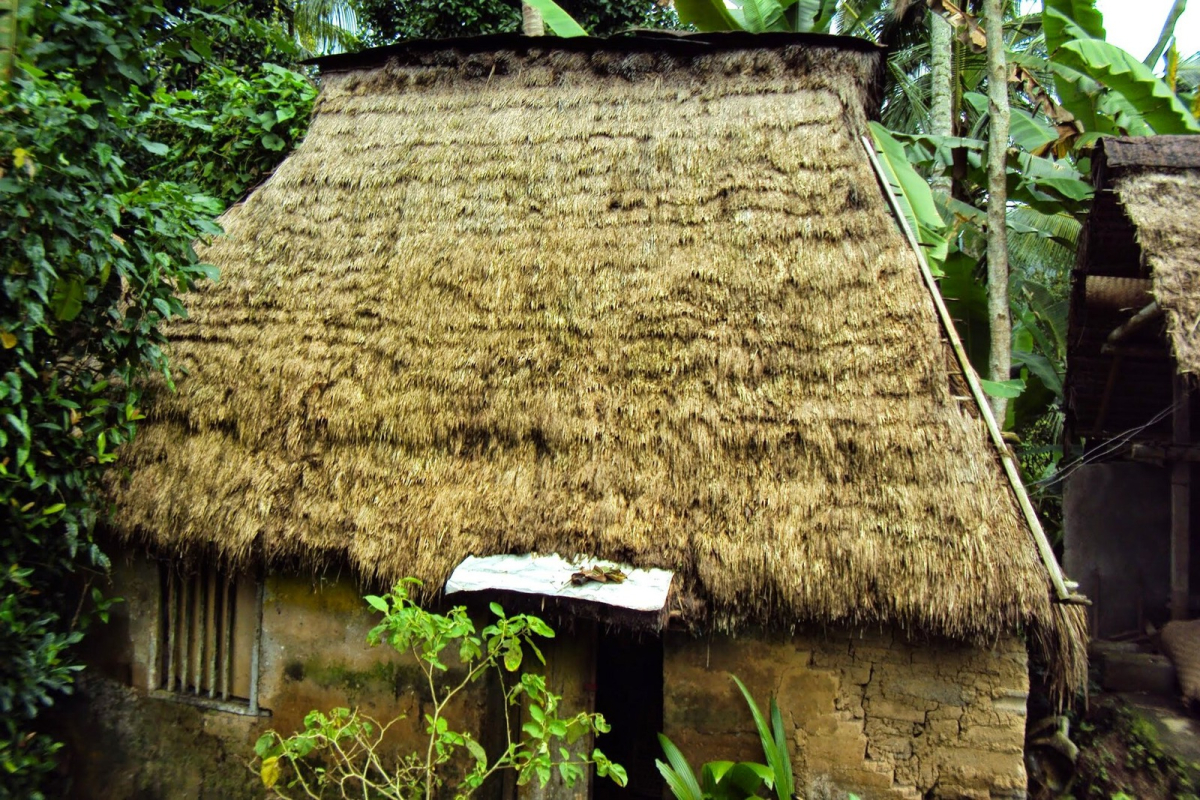

A thick thatched roof, a small shaded structure and surrounding greenery are the main subjects of this photograph. The source describes a traditional Balinese house and records the image in 2009. It does not establish a named spa, a particular village or a visitor attraction. Read the image as a study of a building detail rather than a complete survey of a Balinese home.
Start with the roof texture
The roof takes up much of the composition. Its uneven surface catches light differently from the darker area underneath, making the eaves particularly important. The contrast lets the shape remain legible even though foliage partly surrounds the building. A similar photograph can be more effective when it includes a complete roof edge rather than cutting it accidentally at the frame boundary.
From an image alone, avoid naming the exact plant material, age or construction method unless the source identifies it. What can be observed here is the layered thatch and the relationship between the covering and the space below. The photograph is not evidence that every building in Bali uses this form or that the visible condition remains unchanged.
Choose a frame that explains your subject
Vegetation makes the setting feel enclosed, while the roof supplies a strong central shape. Before taking a picture, ask what you want the viewer to understand: roof construction, a doorway, a courtyard arrangement or the relationship between a building and its garden. Each question calls for a different distance and viewpoint.
For a roof study, watch for branches that obscure the eaves and bright patches that pull attention away from the subject. For a wider architectural record, keep enough context to show how people approach the building. Moving back may be more useful than forcing the whole scene into an extreme wide-angle frame. If you correct perspective later, preserve the building’s proportions.
Do not assume every gateway is open to visitors
A visually interesting compound may be a home, a place of worship, a business or a combination of uses. A doorway or open gate does not establish permission to enter. Ask before walking into a courtyard, photographing private domestic space or setting up equipment that changes how residents use the area.
The History & Culture guide provides wider context, while Temple Etiquette addresses visits to religious sites. Keep the categories separate. A domestic roof detail should not be labelled as a sacred shrine merely because it resembles another building seen elsewhere on the island.
Use changing light to reveal surfaces
Side light can make overlapping thatch more visible, but deep shade may hide the space below the eaves. Cloud cover can reduce that difference and help when the aim is a descriptive record. Neither condition guarantees a better photograph; choose according to whether texture or overall form matters most.
Take a wide contextual frame before concentrating on details. That gives you a reference for a roof corner, stone element or patch of carving later. Captions should identify what is actually known about the building and leave uncertain names out. This is especially useful when sorting several similar compounds after returning from a trip.
Frequently asked questions
Which building is shown here?
The source identifies a traditional Balinese house but does not provide a verified named property.
Can the exact roof material be identified from this photograph?
The layered thatch is visible, but a precise botanical or construction identification is not established by the available source.
May visitors enter an open Balinese compound to take pictures?
An open gate is not permission. Ask the occupants or staff, respect private areas and follow any religious or photography restrictions.