
INDONESIA · BALI TRAVEL GUIDE
Ogoh-ogoh Photography in Ubud: Craft, Scale and Parade Preparation
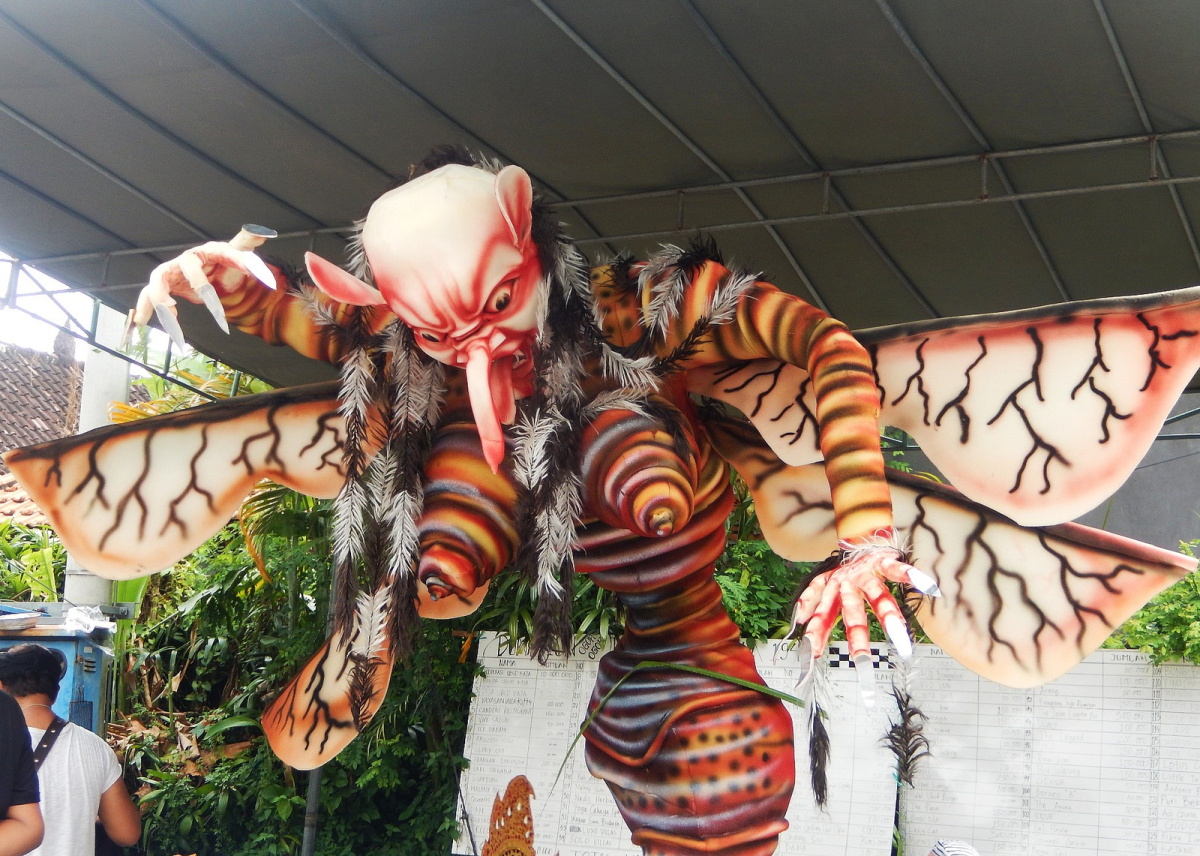

A large, brightly painted ogoh-ogoh figure leans forward under a roofed structure in this Ubud photograph. Its hands, face and patterned costume are more prominent than the people and buildings around it. The source identifies preparations for a street parade and records the image in 2018. It shows a figure being displayed or readied, not a moving procession or a burning ceremony.
Look at gesture and construction
The forward-reaching hands and exaggerated face create a sense of movement even though the figure is stationary. Orange and dark patterns on its costume contrast with the paler face and surrounding structure. Details become easier to understand because the image is close enough to show how the different parts relate to one another.
A preparation scene offers a different photographic opportunity from a night parade. You may be able to study scale, painted surfaces and the relationship between the figure and its support. That does not make a workshop a public studio: ask before approaching, and leave room for anyone moving materials or working on the structure.
Keep the cultural context accurate
The Buleleng cultural authority describes ogoh-ogoh in the period around Nyepi. This context matters, but it does not identify the maker or specific story of the figure in the photograph. Avoid assigning a mythological name or a political meaning from its appearance alone.
The source location is Ubud. Other Indonesian communities also make and parade ogoh-ogoh, so a photograph from elsewhere should not be relabelled as Bali merely because it shows a similar figure. Here, the supported place and preparation setting provide enough information for a useful caption without an invented narrative.
Photograph around people who are working
Keep a clear route around the figure and do not touch painted surfaces, props or supports to improve a composition. A large effigy can involve awkward movements and limited space. Ask where visitors may stand, and move promptly if the group needs the area.
If a craftsperson agrees to a portrait, explain whether you want a close view or a picture of the wider work. Do not assume permission from one person covers everyone nearby. A photograph of the figure alone can still show the care and visual imagination involved without interrupting a task.
Plan a parade visit as a separate activity
A historical preparation image is not a timetable. Confirm the current local programme, street arrangements and any photography restrictions before travelling for an event. The Festivals & Events guide places Nyepi-related plans in their wider travel context, including the practical differences between parade activity and the following day of silence.
During a procession, keep out of the carriers’ route and avoid backing into a crowd while looking through a camera. The still figure in this picture is useful for studying design; the experience of photographing it in motion will involve different light, space and movement. Neither situation justifies crossing a barrier or ignoring an organiser’s instruction.
Frequently asked questions
Is the ogoh-ogoh moving in this photograph?
The source identifies preparations on the streets of Ubud. The image shows a stationary figure rather than a moving parade or burning ceremony.
Can the figure’s exact character or maker be named?
Those details are not established by the available source. Describe the visible form and supported Ubud setting without inventing an identity.
Does this image confirm the next parade route?
No. It is a historical record from 2018. Check the current local programme and follow organisers’ instructions.