ASIA · MALDIVES GUIDE
Thulhagiri Island Photos: Water Bungalows and Reef Views
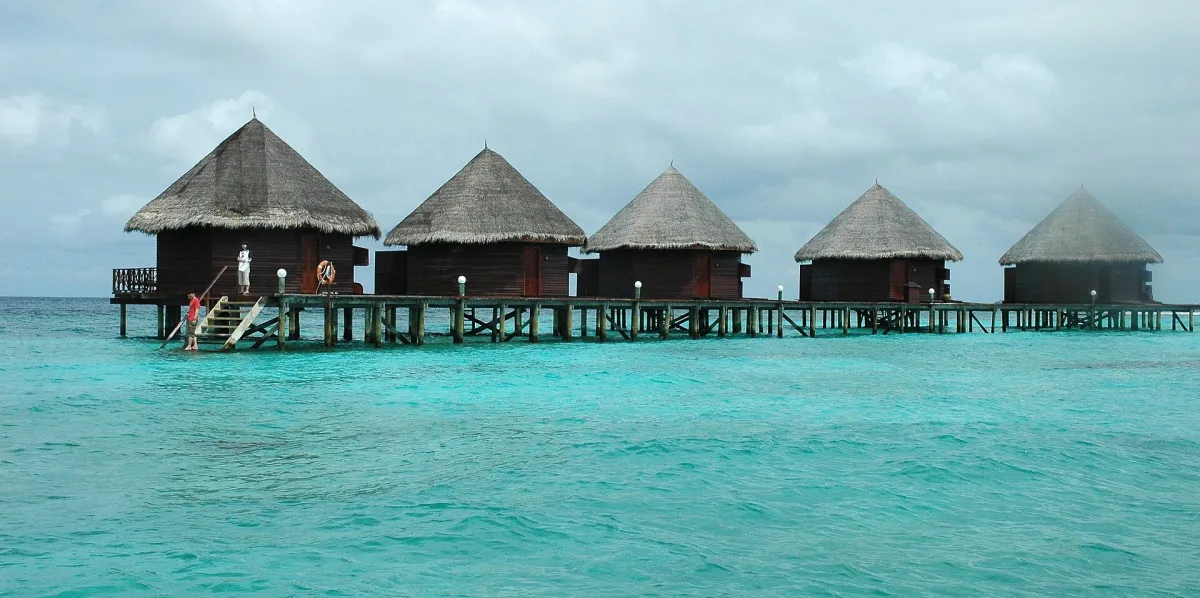
A line of overwater bungalows makes Thulhagiri easy to approach as a photographic subject. Repeated roof forms, supporting posts and the space between buildings give the viewer a rhythm to follow. The lagoon supplies a contrasting surface: soft, changing and open where the structures are regular and clearly defined.
The licensed bungalow photograph on this page was made in August 2007. It is presented as a historical view of the island’s overwater architecture, not as an inspection of current accommodation. This guide explains what can be read from the frame, how to build a more varied photographic sequence and which practical details need to be checked before a visit. Use the broader resort guide for accommodation selection and the snorkelling guide for water-activity planning.
Read the repeated bungalow forms
The photograph shows several overwater structures in a nearly horizontal arrangement. Their roof shapes give the scene a clear pattern, while the posts beneath them preserve a visual connection with the lagoon. Small gaps matter: they stop the buildings from becoming one continuous dark band and allow the sea and horizon to remain part of the composition.
When looking at a row like this, notice where one roof overlaps another and where a supporting post disappears into a reflection. Those relationships can change with a modest shift in viewpoint. A photograph does not need to contain the complete row to explain it. Sometimes three separated forms communicate the rhythm more clearly than a much longer sequence of partly hidden buildings. Keep the first and last structures comfortably inside the frame, or crop deliberately enough that the choice appears intentional. Avoid letting a roof tip touch the edge by accident.
Understand what a 2007 photograph can establish
The source identifies the location as Thulhagiri Resort in Kaafu Atoll and records the capture month as August 2007. That provides a reliable historical context for the visible row. It does not establish current room names, recent renovations, terrace furniture or the exact facilities included in a booking today.
The resort’s current official site describes beach accommodation and more than one kind of overwater accommodation. Use those present-day descriptions and a current plan when comparing categories. Do not attempt to map every roof in the old photograph onto a current category or room number without confirmation. The historical picture remains useful because it shows the relationship between architecture and lagoon. Its value does not depend on pretending that nothing has changed. If your aim is to compare old and new photographs, look first for broad alignments and then identify which details require an updated source.
Keep rooflines and the horizon distinct
Low structures against a sea horizon can easily merge into a flat strip. Look for a viewpoint where the roofs have enough sky behind them and the posts remain visible against the water. A small difference in camera height can alter that separation. Work only from a stable permitted position; do not climb a railing, roof or tree to imitate an angle.
A level horizon is particularly important when the buildings form an otherwise orderly line. Before taking a series, check the camera’s guide or level indicator. With a phone, leave a little space around the composition so a minor correction will not cut off the outer structures. Wide-angle lenses can make posts near the edge lean or stretch. If the photograph is intended as an architectural record, a less extreme focal length and a little more distance may produce a clearer result than trying to include the largest possible area.
Look below the roofline
The supports beneath overwater buildings can be as interesting as the roofs. They create a second rhythm, interrupted by water, shadows and reflections. A closer picture can concentrate on that relationship while a wider image explains the row as a whole. Keep enough context for the viewer to understand what the vertical shapes support.
Watch the water for a short period before choosing the exposure. Ripples may break a reflection into small strokes or briefly reveal a clearer line. Neither a perfectly still surface nor a long exposure is required. The right treatment depends on whether you want to describe structure or motion. Do not approach a building from the water unless that access is permitted and safe. Supporting posts are not swimming markers, and the visible lagoon in a photograph should never be used as a substitute for a current briefing on depth, currents and entry points.
Add the beach and a small detail to the sequence
A series made entirely of bungalow rows can become repetitive even when each individual frame is attractive. Add a photograph that explains how the buildings relate to the island, such as a permitted beach view with the overwater structures in the distance. Then change scale again with a texture or shadow that is specific to the setting.
Keep each image’s purpose clear. The broad view establishes geography, the row shows architectural rhythm and the detail adds material character. A palm leaf can frame the scene, but it should not hide the building you want to explain. A person can establish scale only with their agreement and from an ordinary safe position. Avoid photographing onto occupied terraces or through windows. The island’s visual identity can be communicated through roofs, water and vegetation without turning private accommodation into a subject that guests did not agree to share.
Confirm the visit and present-day access
Thulhagiri’s official visitor information places the island in North Malé Atoll and describes resort-arranged speedboat access from the international airport. It asks travellers to provide flight information in advance. Confirm the current requirements and costs for your booking, and ask separately about any proposed day visit. A photograph of a jetty or boardwalk does not imply public access.
If a specific photographic view is important, show the historical image to the resort and ask whether a comparable permitted viewpoint exists today. Explain whether you intend ordinary holiday photography or a more organised shoot. Keep the arrival and departure days realistic, allowing the operator’s required time for transfers. The airport guide and island transfer advice can help distinguish the boat crossing from the full journey and prevent a short advertised transfer time from becoming an overly tight photographic plan.
Edit and share an accurate island record
Overwater architecture often looks strongest with restrained editing. Correct a tilted horizon, keep bright roof details from becoming featureless and preserve the distinctions between shaded timber and clear water. Watch for halos where a dark roof meets a pale sky. A colour adjustment that makes the lagoon brighter should not turn the entire building green or erase natural differences in the water.
Caption the photograph with the correct island name and the historical date when relevant. Do not add a room category, private-pool claim or reef assessment unless it is supported by current information. Preserve the source and licence of acquired photographs, and keep your own original files before making edits. A concise, accurately identified sequence can contribute to the Maldives photo guide while leaving hotel selection and current facilities to the pages designed to answer those questions.
A different perspective beneath the surface
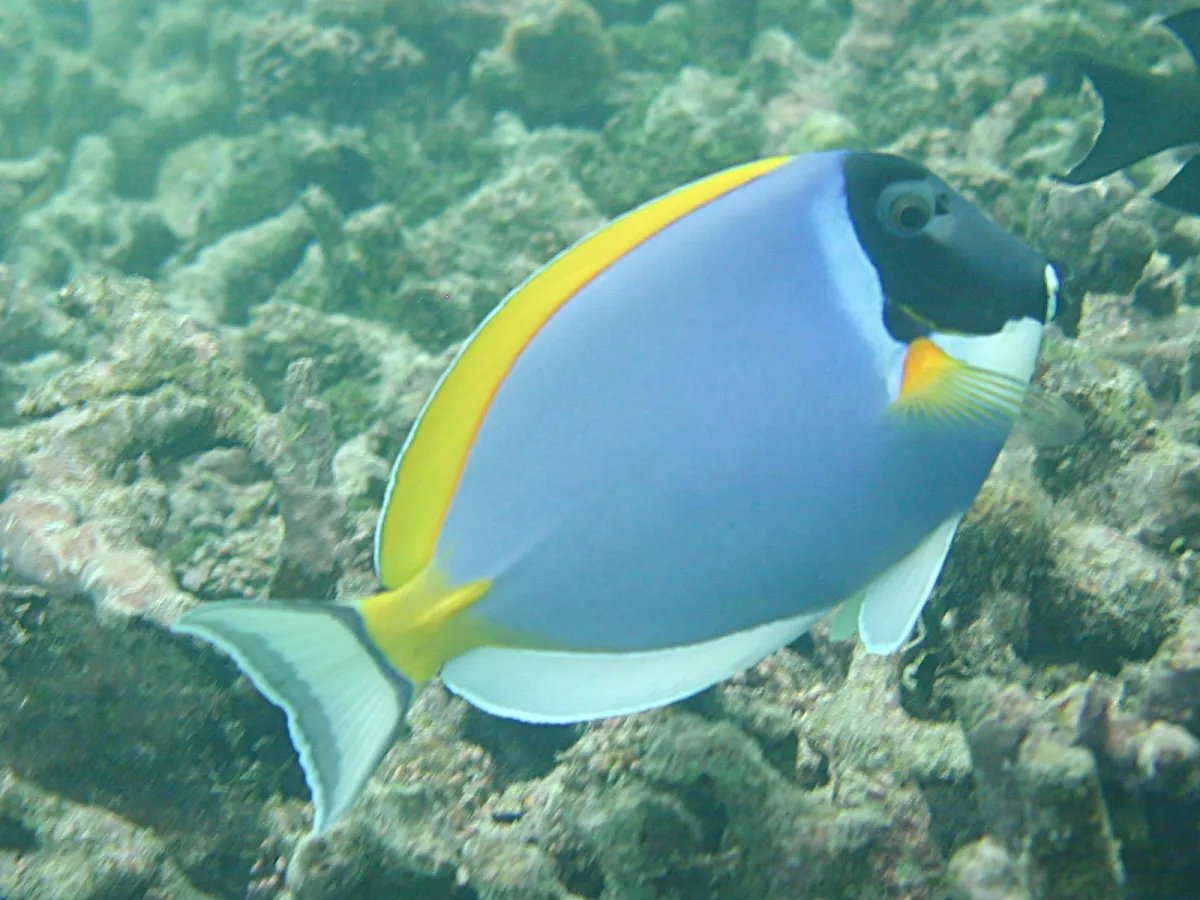
The powderblue surgeonfish photograph is also identified by its source as Thulhagiri in August 2007. It offers a useful contrast with the bungalow row: a moving animal rather than fixed architecture, and the texture of the reef rather than an open horizon. The historical image does not establish present reef condition or guarantee that the same species will be seen during a future visit.
Underwater composition begins with comfortable, responsible movement. Stay within the local briefing, maintain distance and let the fish keep its route. Do not touch coral, pursue an animal into a confined space or sacrifice awareness of your surroundings for a close frame. A broader picture showing the fish in its habitat can communicate more than an extremely tight crop. The old airport view elsewhere in this sequence provides historical arrival context, while present airport and transfer arrangements require current information.
Frequently asked questions
Is Thulhagiri in North or South Malé Atoll?
The resort’s official visitor information places it in North Malé Atoll. Confirm transfers through the property rather than inferring a route from a photograph.
Does the 2007 photograph show the current bungalow categories?
It records a historical row of overwater structures. Current room categories, layouts and facilities must be checked separately with the resort.
Can I enter the lagoon to photograph the bungalows from below?
Only where the current local briefing permits it and conditions are appropriate. A clear-water photograph does not establish safe access, depth or currents around the structures.