
ASIA · MALDIVES GUIDE
Getting Around the Maldives: Boats, Seaplanes & Domestic Flights
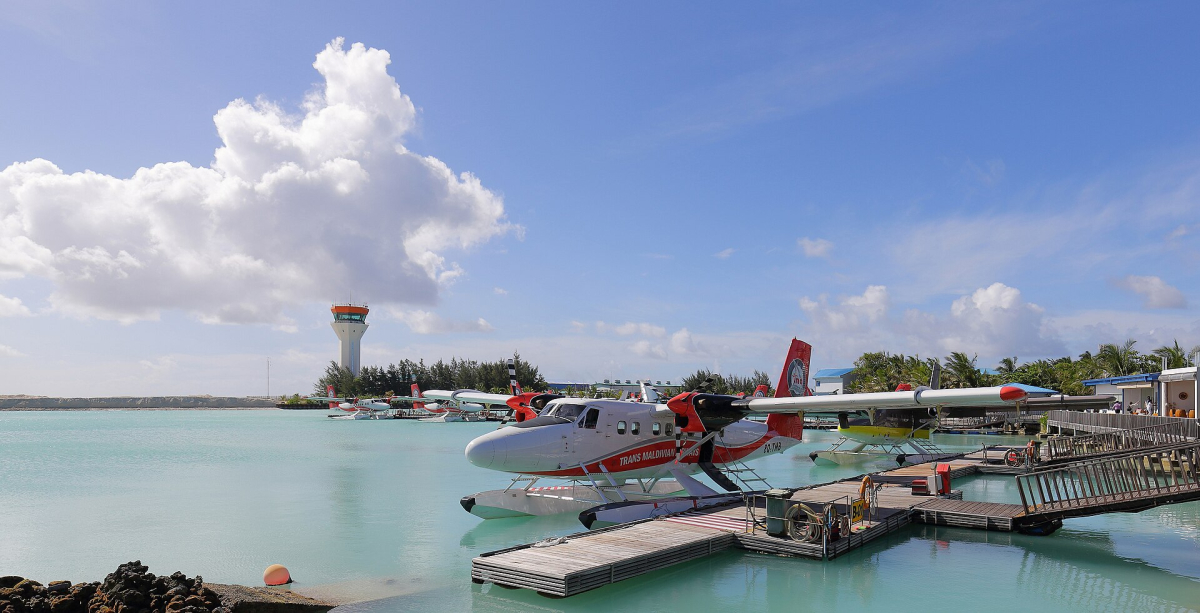
Getting around the Maldives is an exercise in choosing the right connection, rather than hiring a car and driving between sights. Water separates your base from airports, other islands and many activities. The transport strategy should therefore shape the holiday from the start.
Use this guide to compare modes and judge how much moving around your trip can comfortably support. It explains which questions belong to the airline, boat operator or accommodation and why a direct line on a map does not prove a passenger connection exists. For the international arrival process, use airports and arrival transfers; for boat networks, ports and island-to-island details, continue to ferries and island transfers.
Choose the number of bases before choosing transport tickets
Start with the total number of usable days and the experiences you want from each base. One well-chosen island can support a satisfying short holiday with fewer handovers, while a longer trip may justify a second area. Add a move only when the new island contributes something substantial: a different type of accommodation, a particular activity or time in a local community. A second beach alone may not justify another complex connection.
Write the complete sequence from arrival to departure, including every boat, flight, waiting period and possible transit night. Then ask the relevant suppliers to confirm it. Do not assume neighbouring islands have a scheduled passenger service between them or that a resort boat will accept an independent traveller. Some journeys need a return through an airport or another hub. Compare those actual routes before paying two non-refundable room deposits.
Compare transport by what it can actually deliver
| Mode | Useful fit | Main question |
|---|---|---|
| Public passenger ferry | A confirmed local-island route that suits your dates | Does it serve the right port on your exact travel day? |
| Scheduled speedboat | A route with a suitable departure and available seats | Who operates it and what is the weather/change policy? |
| Resort or private boat | A prearranged connection for a specific property or group | Is the price per person or for the whole boat? |
| Seaplane | A property served by the booked operator | Can the daylight schedule and baggage rules fit the journey? |
| Domestic flight plus local transfer | A confirmed route via a regional airport | Who coordinates the airport-to-island final leg? |
Scroll the table sideways to compare all columns.
No mode is the best for every trip. A convenient nearby base may make a boat connection attractive; a remote island can justify a flight. Compare reliability, comfort, assistance, schedule and the full price rather than selecting a mode for its photograph alone.
Understand the difference between public and property transport
A public ferry is a passenger service on a particular network and timetable. A scheduled tourist speedboat may use a different operator, booking system and departure point. A resort transfer is part of an arrangement for a specific property and need not behave like either. Confirm the product you are buying before comparing the fare. A cheap service to a local island is not automatically transport to a nearby private resort.
Ask about seating, shade, ventilation, luggage storage and the availability of appropriate life jackets. Discuss motion sensitivity, pregnancy, back problems or assistance needs before choosing a long exposed trip; individual suitability belongs with the relevant clinician and operator. Keep essential medicines and documents accessible in a protected bag. If sea conditions change, follow the crew’s directions. Do not pressure an operator to depart because the rest of the itinerary was booked too tightly.
Treat seaplanes as an operating connection, not only a scenic extra
Seaplanes can be a memorable part of reaching an island, but the transfer is subject to aircraft, water and operating conditions. The TMA FAQ explains its resort-booking arrangements and daylight operation. Check the actual operator, the property’s current connection policy and whether the flight can include other stops. Do not assume a published flying time is the total time from international arrival to your room.
Before paying, obtain the baggage allowance, dimensions, excess policy and approval for anything unusual. A domestic or seaplane aircraft may not accept the same large equipment case as your international flight. Ask about infant arrangements, mobility assistance and the possibility that luggage is carried later. Keep essentials with you subject to cabin rules. If the aircraft experience itself is a priority, request the confirmed transfer type rather than assuming every resort uses the same aircraft or terminal.
Include the final boat leg in a domestic-flight decision
A domestic flight can put you closer to the intended atoll, but the journey may still require transport from the regional airport to the property. Ask who meets you, how long the local section is expected to take, and whether it uses a shared or dedicated service. Compare that complete route with any seaplane alternative offered for the same booking. A shorter flight does not necessarily produce the shorter door-to-door journey.
Use the booked carrier’s rules for baggage and special items. Maldivian’s before-you-fly information provides airline-specific policy channels; check your actual fare and route rather than generalising one allowance across all carriers. If flights are on separate tickets, establish missed-connection responsibility and whether bags must be rechecked. The supplier arranging the room should understand your exact flight details, even if you decide to purchase the air segment independently.
On land: buses, taxis, bicycles and car hire

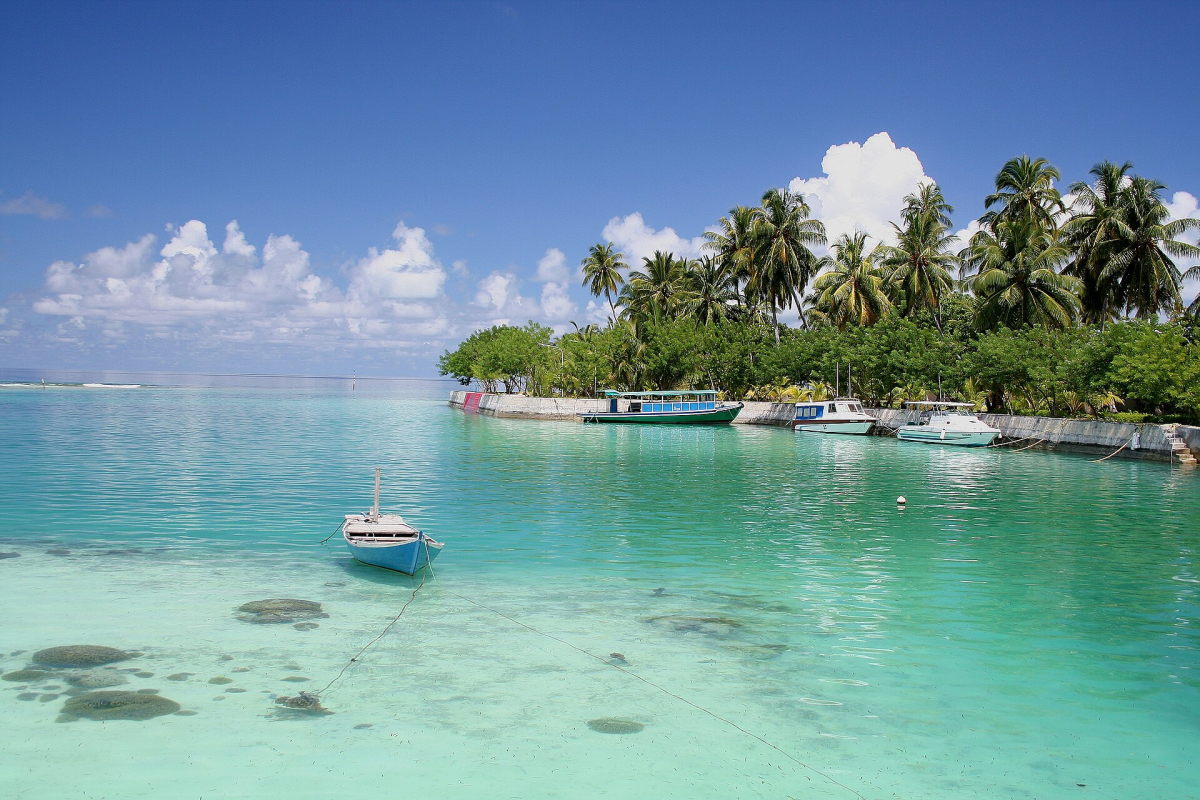
Road transport is a separate local decision in the places that have a connected road network. In the greater Malé area, ask the accommodation about a suitable taxi, pickup or public bus for the actual hotel and terminal. The Sinamalé Bridge links Malé and Hulhulé, while the airport area and Hulhumalé have their own road connections. Confirm the pickup point, luggage capacity, fare, payment method and the date-specific service rather than assuming a boat is necessary for every urban journey.
MTCC identifies RTL bus operations in Malé, Addu, Fuvahmulah and Laamu, and a Malé taxi service among its developments. Check the current route through the operator; archived maps and Ramadan timetables are not proof of an ordinary departure on your date. In Addu, some islands are linked by roads, but not every part of the atoll is one continuous road journey. The official Addu guide also identifies cycling as an activity. Ask which route, surface and equipment suit your ability, heat tolerance and return plan.
A hire car or scooter can make sense only where the actual road itinerary justifies it; it cannot connect distant atolls. Compare a prearranged driver or bus with rental cost, parking, deposit and insurance. Check the licence and permit requirements for your nationality and vehicle category through the responsible authority and your own government’s guidance before renting. Supplier acceptance is not proof of legal eligibility or insurance cover. For a small resort island, establish walking routes and any property transport instead of assuming a rental vehicle is available or useful.
Decide whether a split stay improves the holiday
Compare two versions of the trip: one base with excursions, and a split stay with the actual connection included. Count packing, checkout, waiting and check-in as part of the move. Ask whether the second property can collect you directly or whether you must travel through a hub. Obtain the one-way terms for both accommodations and the transfer between them; a package priced for return airport travel may not adapt automatically.
For a short trip, a local island plus a resort can create useful variety if the route is simple and confirmed. A pair of remote properties can be a poor fit when each move consumes much of a day. Avoid making the transfer day your only chance for a particular excursion or a difficult flight connection. The Maldives itineraries offer a framework for allocating time; final timings still need confirmation from the services you book.
Keep one clear transport record for the whole trip
For every segment, save the operator, booking reference, departure and arrival points, reporting time, luggage rules and contact number. Add the name of the party responsible for changes. When a property supplies a package, ask it to show the separate route components rather than only writing “transfers included.” Keep this record offline and share an appropriate copy with your travel companions.
Reconfirm time-sensitive services before each move, using the operator’s current instructions and official weather information where relevant. If a segment changes, tell the next supplier promptly; an accommodation cannot rearrange a pickup it does not know is affected. Retain receipts and written cancellation decisions if you need to contact an insurer. A good transport plan is easy to understand when tired or offline, and leaves enough room for the people running the services to make safe operational decisions.
Frequently asked questions
Can I travel freely between all Maldives islands?
Passenger transport is route-specific, and access to private resorts or protected places can require prior arrangements. Confirm the service, port and permission for the actual island. Do not assume that a ferry to one local island also stops at nearby resorts.
Is a speedboat always better than a seaplane?
It depends on location, route, timing, comfort and the complete price. Compare actual confirmed options for your property rather than modes in the abstract. A simple boat connection can suit one trip, while a flight can be appropriate for another island.
Can I use the same baggage allowance on every flight?
No. International, domestic and seaplane rules can differ by operator and ticket. Check weight, dimensions and special equipment for every segment. Paying for extra kilograms does not necessarily solve an aircraft-size or capacity restriction.
How many islands should I include?
Choose the smallest number of bases that delivers the experiences you want. Add an island when the benefit justifies the real connection time and cost. A short holiday can work very well with one base and appropriately planned excursions.



