ASIA · MALDIVES GUIDE
Conrad Maldives Rangali Island Photos: Evening Light and Waterfronts
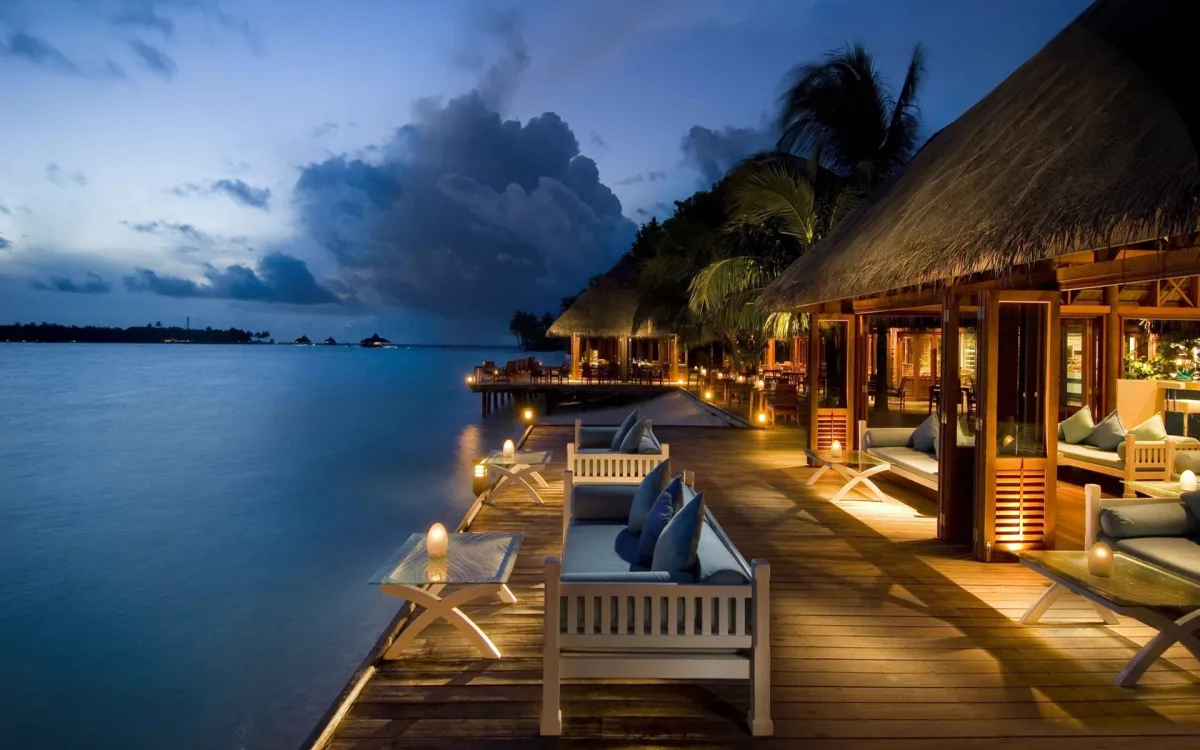
Evening photographs of Conrad Maldives Rangali Island bring a different visual language to the Maldives: warm lights under deep eaves, boardwalks leading into blue water and the last colour in a large tropical sky. The contrast between an illuminated building and the darker lagoon can make a modest section of waterfront feel expansive. It can also conceal detail that matters when interpreting a resort image.
This guide concentrates on reading and making those evening pictures. It does not treat a historical photograph as a current room review, nor does it identify an underwater restaurant from an unrelated waterfront view. For comparing properties and planning the journey, use the Maldives resort guide and airport and transfer advice.
What the waterfront scene communicates
The licensed waterfront photograph by Ranojit Chakraborty dates from June 2016. Its principal subjects are the terrace, timber structures and transition from artificial light to the surrounding sea. It shows a particular place and moment. It should not be labelled as Ithaa, The Muraka or a named room category unless the visible structure has been independently identified.
Look at the way the nearer deck establishes depth while more distant lights create a second line through the composition. The picture works because there is an understandable route for the eye to follow. The dark water is not empty material to discard: it separates the built environment from the horizon. A crop that removes all of that space can turn an island scene into a conventional hotel-terrace photograph. Conversely, too much featureless darkness can leave the building looking small and accidental. The useful balance depends on which relationship you want to describe.
Work with twilight rather than a fixed clock time
The strongest balance between a lit interior and the remaining sky can last only a short while, but there is no universally correct minute to begin. Cloud, the direction of the view and the lighting of the building all affect the result. Start observing before the sun has disappeared and keep a few frames as the sky darkens. Compare them later instead of assuming the final, darkest photograph must be the most atmospheric.
A phone’s night mode may brighten a scene substantially. That can reveal useful detail, but it may also make the photograph look unlike the evening you saw. Hold the device still, check whether people or palm leaves have blurred and retain a less processed version when possible. With a camera, review the brightest lamps as well as the overall exposure. A terrace that looks pleasantly bright on the screen may contain clipped white patches around every light fitting. Reducing exposure slightly can preserve a cleaner relationship between the building and its surroundings.
Use reflections and boardwalks with purpose
A reflection can double the apparent height of a low building, but perfect symmetry is not the only useful approach. Small ripples can turn individual lights into long, broken strokes across the lagoon. Let those strokes reinforce the scene rather than trying to remove every trace of movement. Make one frame that gives water a substantial share of the image, and another that uses it as a narrow foreground.
Boardwalks and deck edges are equally powerful. Begin with a stable stance and check where the lines enter the frame. A rail that runs directly into a roof corner may create visual clutter; a slight shift to one side can separate them. Do not walk backward while looking through a viewfinder. Resort paths still carry people, luggage and service activity after sunset. Set up where you are allowed to stop, and keep tripods, bags and cables out of the clear walking route. If a place is busy, a handheld composition may be the more considerate choice.
Understand the twin-island setting
Hilton describes Conrad Maldives Rangali Island as a property spread across Rangali and Rangali-Finolhu in South Ari Atoll. Its current policy distinguishes the family-oriented island from age restrictions applying to certain water-villa accommodation on Rangali. That distinction is relevant when matching a photograph with a stay: the same property name does not mean that every room has the same surroundings or guest policy.
Ask the resort to identify the island and current category shown in any image you are using to choose accommodation. Do the same for a photographed restaurant or pool. A scenic view can be genuine while still being a long walk from your room, or subject to access arrangements that differ from those of another facility. The family travel guide covers the practical questions to ask before booking a water villa with children. This page focuses on the visual setting, not on recommending one accommodation category for every traveller.
People, interiors and private moments
Evening public areas can be attractive precisely because people are enjoying them. Include identifiable guests only with their agreement, and avoid turning a romantic dinner or a family table into a background prop. A photograph taken from behind someone is not automatically anonymous: clothing, companions and context may still identify them. Staff also deserve a clear request and a comfortable opportunity to decline.
For an architectural study, wait for a quiet interval or frame a smaller detail. Timber joinery, the meeting of a roof and its posts, a sequence of unoccupied chairs or a reflection can establish atmosphere without including a dining table. Avoid flash in restaurants and around wildlife unless the relevant staff explicitly permit it. Commercial shoots, large equipment and any operation affecting other guests need arrangements beyond ordinary holiday photography. Describe the intended use when asking for permission so the resort can give a useful answer.
Plan access independently of the photograph
The resort’s location information describes seaplane access and domestic-flight-plus-boat options, with arrangements coordinated around arrival details. Confirm the appropriate transfer and current restrictions for your actual international flight. An evening waterfront photograph is not evidence that an international arrival can connect directly to a seaplane after dark.
If the purpose of your stay includes sunset or night photography, make the first arrival day flexible. Weather, baggage handling and transfers can reduce the time available. Avoid planning an important shoot before you know when you will reach the island. On departure day, follow the resort’s transfer instructions even if the morning light looks particularly promising. Photographing during the stay is easier when it fits around a workable journey, rather than forcing the journey to support a narrow photographic deadline. Use the property’s current map and staff guidance for permissible locations, not the camera position you imagine from somebody else’s picture.
Edit and caption the scene accurately
Twilight files often benefit from modest adjustments to shadow detail and colour temperature. Keep a reference frame so warm lighting does not become an unnatural orange cast and the sea does not acquire a colour that was never present. Remove accidental horizon tilt before deciding whether the frame needs a crop. If editing out a boat, person or structure materially changes the scene, do not present the result as an unaltered record of resort conditions.
Hilton publishes a specific drone policy that limits operation to arrangements approved by its team. Permission to stay is therefore not permission to fly or to reproduce a drone viewpoint. Ground-level photographs can communicate the island just as effectively. A clear caption should name the property, describe the visible terrace or waterfront and include the historical capture date when relevant. Preserve the photographer’s source and licence. Those details help future readers distinguish a photographic interpretation from a current promise about facilities.
Add marine photographs with clear location context
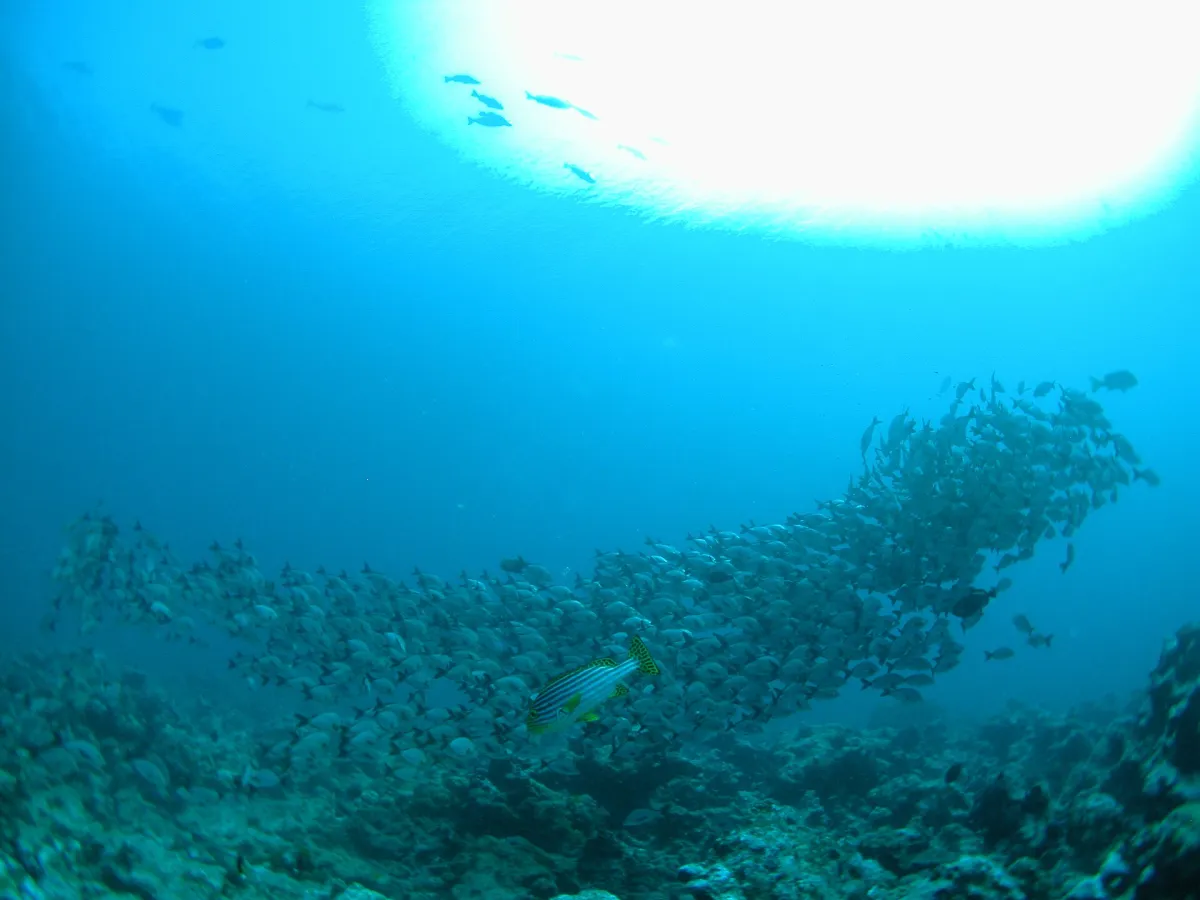
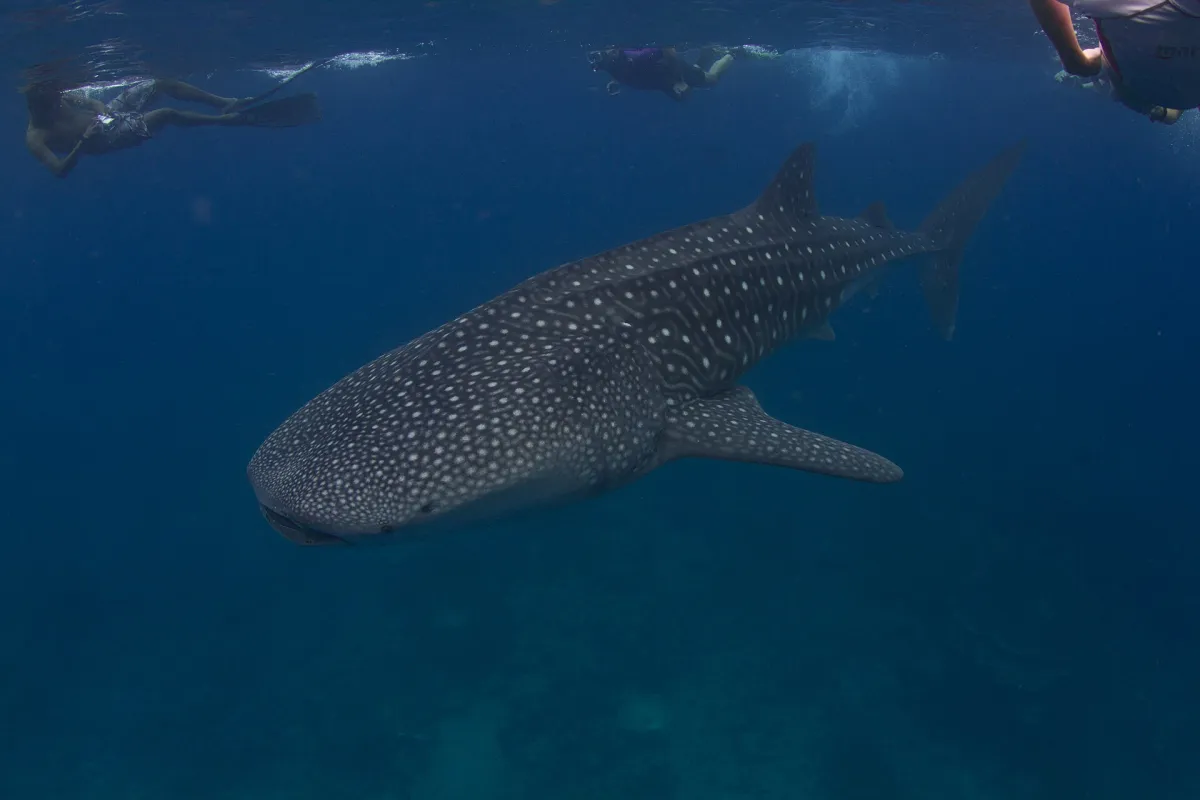
A waterfront picture can be complemented by a very different view of the sea. The sweetlips photograph in this sequence is sourced to Rangali in the Maldives; it adds an underwater perspective to the resort’s island setting. The whale-shark image is a broader Maldives illustration. Its source does not assign the encounter to Conrad’s house reef, so it should not be read as a promise about a particular excursion.
For an underwater study, let the animal’s direction of movement guide the frame and leave space ahead of it. Work within the guide’s instructions, avoid blocking a route and let wildlife approach or move away freely. The photographic task differs from an evening terrace: subject movement and responsible distance take priority over precise architectural alignment. Keeping the two kinds of image clearly captioned produces a richer island story without confusing a scenic photograph with guaranteed wildlife access.
Frequently asked questions
Does the evening photograph show Ithaa Undersea Restaurant?
No such identification should be inferred from an ordinary waterfront image. Use Hilton’s current venue information and images to identify Ithaa or another named facility.
Can guests fly a drone at Conrad Rangali Island?
Hilton publishes a controlled drone policy. Operation requires arrangements with the resort team and is limited to approved areas and times; recreational ownership of a drone does not provide permission to fly.
Are the photographs a current room inspection?
No. The licensed waterfront view dates from 2016. Room appearance, island allocation and access rules should be checked using current property information before booking.