ASIA · MALDIVES GUIDE
Malé Photos: Reading the Island Capital from Above
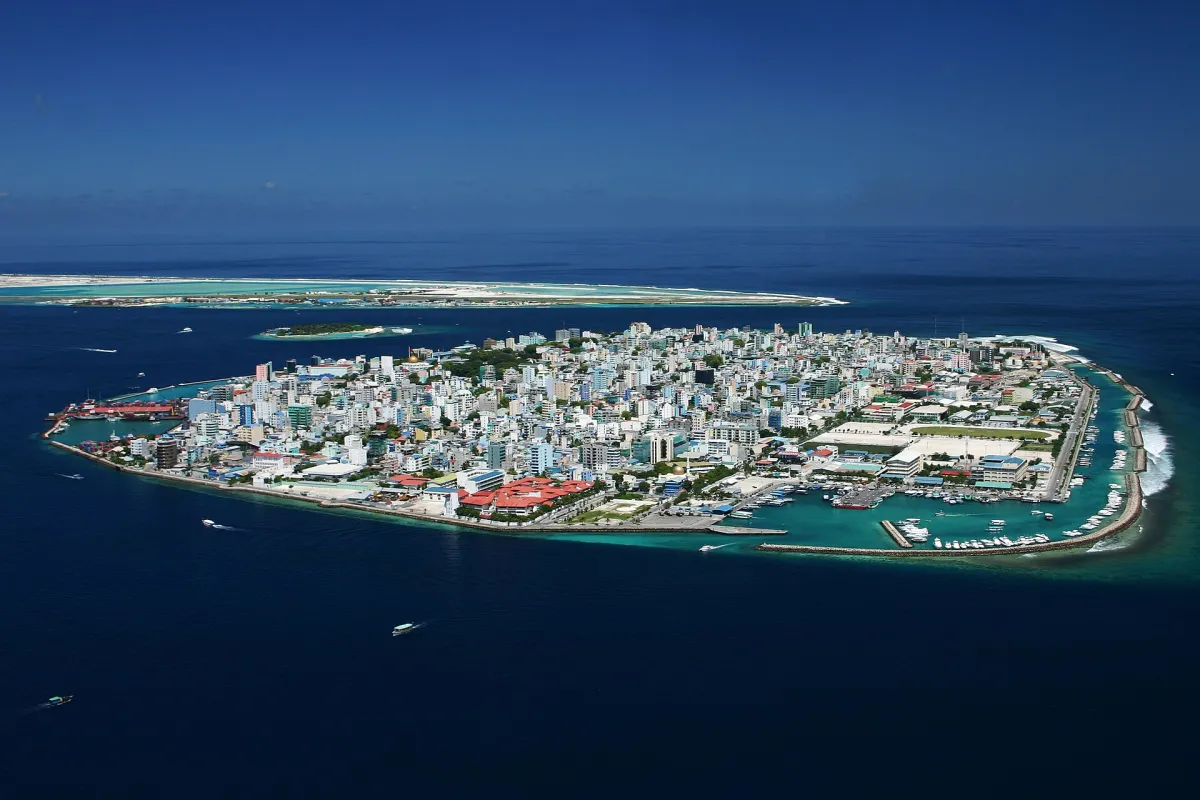
Seen from above, Malé offers a striking contrast to the familiar Maldives resort photograph. Dense blocks of buildings occupy a compact island, with streets, rooflines and harbour edges taking the place of a broad band of palms. The surrounding sea makes the outline especially readable. It is a city photograph and an island photograph at the same time.
The aerial view associated with this page is historical: the source record for Shahee Ilyas’s photograph dates it to October 2004. That date is essential to understanding the picture. Later reclamation, transport links and construction mean it should not be used as a current navigation map. This guide examines what the image shows and how to plan a respectful photographic visit to the capital, alongside the broader Maldives attractions guide.
Read the historical aerial photograph
Begin with the outline of the island, then look inward. The surrounding water provides a simple shape against which the city’s density becomes apparent. Within that outline, repeated roof patterns create texture, and occasional larger buildings interrupt the rhythm. You can understand the photograph without being able to identify every street or landmark.
The image is evidence of Malé at a particular stage in its development. It does not show present-day connections, the latest waterfront works or every feature that now appears in the skyline. When comparing it with a modern view, first match broad coastlines and established landmarks, then look for changed sections. Do not assume that an open-looking patch in an old aerial picture remains a public space. A caption that says simply “Malé today” would remove the most important context. The capture date turns a scenic view into a useful record of an island capital’s changing built environment.
Use scale and visual contrast
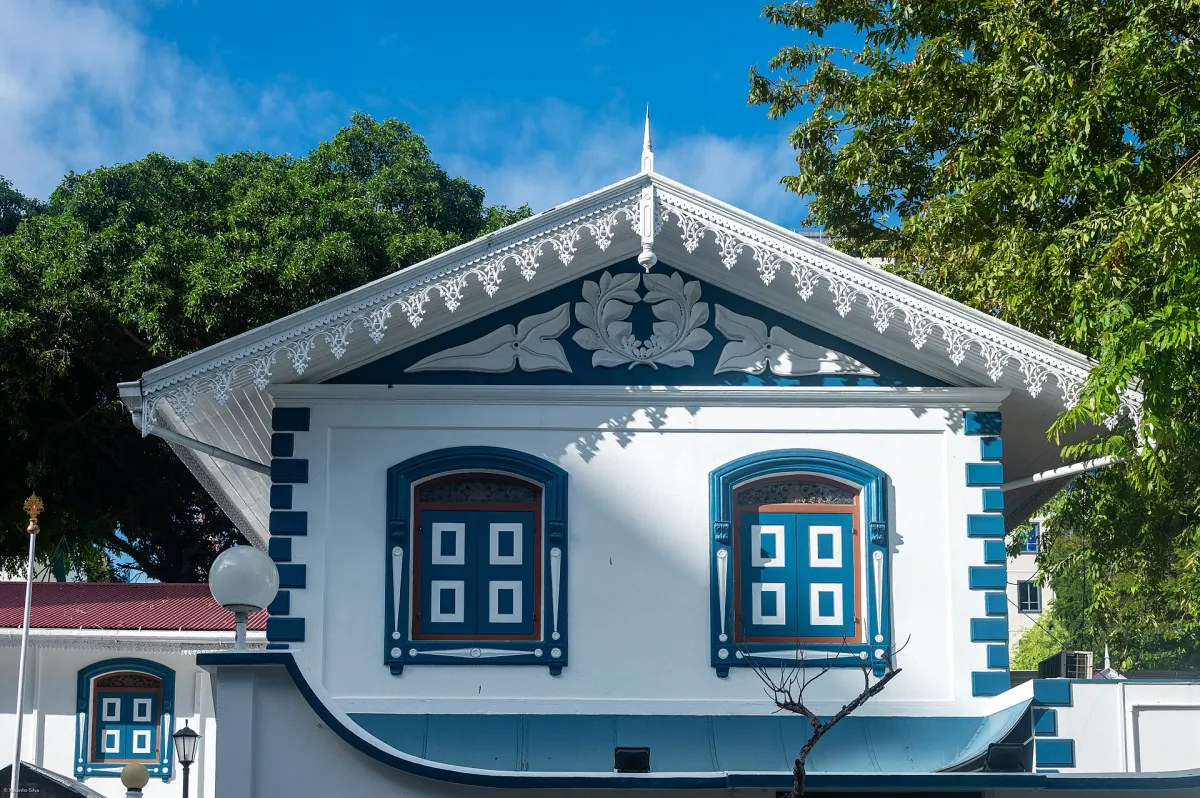
The sea explains the scale of Malé more effectively than a photograph filled entirely with buildings. If you are making a permitted aerial or elevated photograph, leave enough surrounding space for the island setting to remain legible. Decide whether the shape of the whole city or a particular waterfront relationship is the subject. A very tight crop can communicate urban density, but it will no longer explain the island’s outline.
At street level, the same principle can work in reverse. A narrow glimpse of water between buildings can remind the viewer of the city’s coastal setting. A person beside an architectural detail can establish scale when they have agreed to appear. Avoid using a wide lens so close to a building that its walls lean dramatically unless that distortion is an intentional part of the picture. A more distant position or a modest zoom can create a clearer record, particularly when photographing a façade rather than an atmosphere.
Build a ground-level photographic story
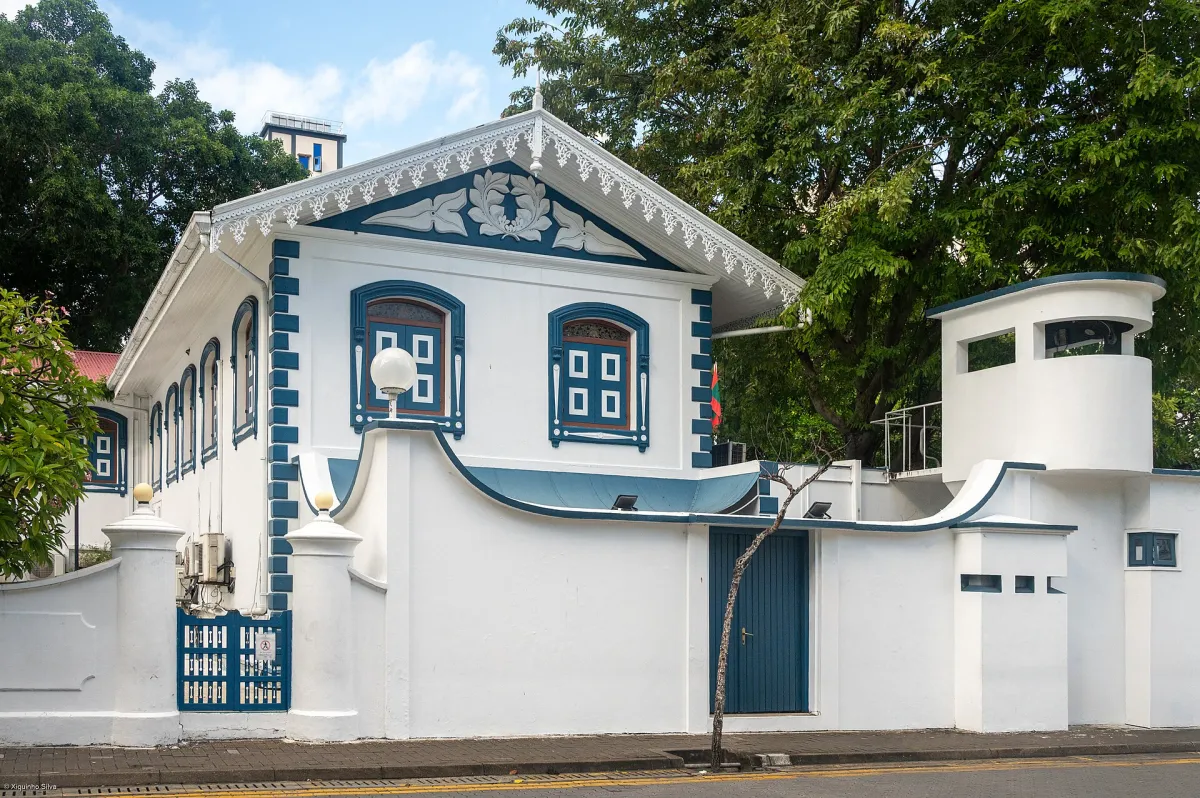
A city sequence can begin at the waterfront and gradually move to smaller subjects. An establishing photograph might show buildings facing the harbour. A second frame can concentrate on an authorised view of a mosque exterior, a shaded street or a market setting. Finish with an architectural or material detail that adds something the wider view could not show.
Choose a compact route that works with the time available and with the city’s ordinary activity. Malé is a working capital, not a resort backdrop. Deliveries, traffic, prayer and daily shopping should take priority over an uninterrupted photographic composition. Rather than waiting in the middle of a route for an empty frame, step aside and look for a smaller picture. The history and culture guide provides context for religious and heritage sites; current opening arrangements and permission should be checked separately when an interior visit is important.
Photograph religious and heritage settings carefully
The Old Friday Mosque, Hukuru Miskiy, and the Grand Friday Mosque associated with the Islamic Centre are different places. Use their correct names in captions. Visit Maldives describes the Old Friday Mosque’s coral-stone construction and the Islamic Centre’s more recent architecture. Those distinctions can make a small photo sequence more informative: material, carving and roof form are different visual subjects from a city-scale golden dome.
Ask before photographing inside a religious building and follow the current instructions on access, dress and timing. Permission to enter is not permission to photograph worshippers. Avoid blocking entrances, steps or a route used for prayer. Historic tombs also deserve care: remain on permitted paths and do not step onto graves or touch carvings to arrange a picture. If access is limited, a clearly described exterior view is preferable to an interior photograph made without consent. No photograph needs an invented claim of privileged access to be worthwhile.
People and market photography
Market scenes offer colour, repetition and a sense of the city’s working life. They also involve people at work, so begin with a request. Show what you intend to photograph, accept a refusal without negotiation and avoid aiming into someone’s face while pretending to photograph a display. A brief interaction can produce a more accurate caption as well as a more comfortable photograph.
Work without obstructing a counter, an unloading area or the route through a market. Flash can be intrusive at close range; available light often communicates the setting better. A detail of stacked produce or a permitted wide market scene may tell the story without an identifiable portrait. Check what an image implies before publishing it. A single untidy corner should not be presented as a fair summary of the whole city, just as a perfectly arranged stall does not describe every shop. Specific captions are a practical form of respect.
Aerial views, flights and drone assumptions
An aerial photograph does not establish that its camera position is legally or practically available to a visitor. Do not assume that a rooftop is open, a flight will pass a particular side of the city or a drone can be launched near the airport and busy urban areas. Check current aviation requirements, property permission and local restrictions before planning any such activity.
If taking a photograph through a passenger-aircraft window, follow the crew’s instructions and remain in your assigned seat. Window reflections, haze and scratches may affect the result. Use a small lens or phone, keep the camera away from the window rather than pressing against it and avoid flash. An ordinary ground-level photograph is a better choice than changing travel arrangements solely to imitate an old aerial view whose exact flight path is unknown. The purpose of the historical image here is interpretation, not a promise that visitors can reproduce it.
Allow time for the real city and the return journey
A Malé visit can be part of a stay near the airport or an arranged excursion, but it should fit the transfer arrangements you actually have. Keep a separate allowance for reaching your onward departure point, collecting luggage and meeting the operator’s required check-in time. A short road or boat crossing does not describe the whole airport journey. Use the airport and transfer guide to plan those steps.
Carry a manageable amount of equipment and protect it from sudden rain and salt spray. A camera that stays accessible is more useful than a large kit that must be unpacked in a busy street. Before sharing the day’s photographs, verify place names and distinguish a view made in Malé from one on Hulhulé or Hulhumalé. Keep the 2004 aerial image labelled as historical. That simple distinction lets old and new photographs complement each other without confusing a reader’s expectations of the present-day capital.
Frequently asked questions
Is the aerial photograph a current map of Malé?
No. Shahee Ilyas’s source photograph dates from October 2004. It predates later construction and transport changes and is presented as a historical visual record.
Are the Old Friday Mosque and Grand Friday Mosque the same?
No. Hukuru Miskiy is the historic coral-stone mosque; the Grand Friday Mosque is associated with the Islamic Centre. Identify the actual building before captioning a photograph.
Can I reproduce the aerial view with a drone?
Do not assume so. Current aviation rules, airport proximity, local restrictions and property permissions must be established separately. The historical photograph supplies no flight permission or public take-off location.