ASIA · MALDIVES GUIDE
COMO Cocoa Island Photos: Dhoni Villas and Lagoon Views
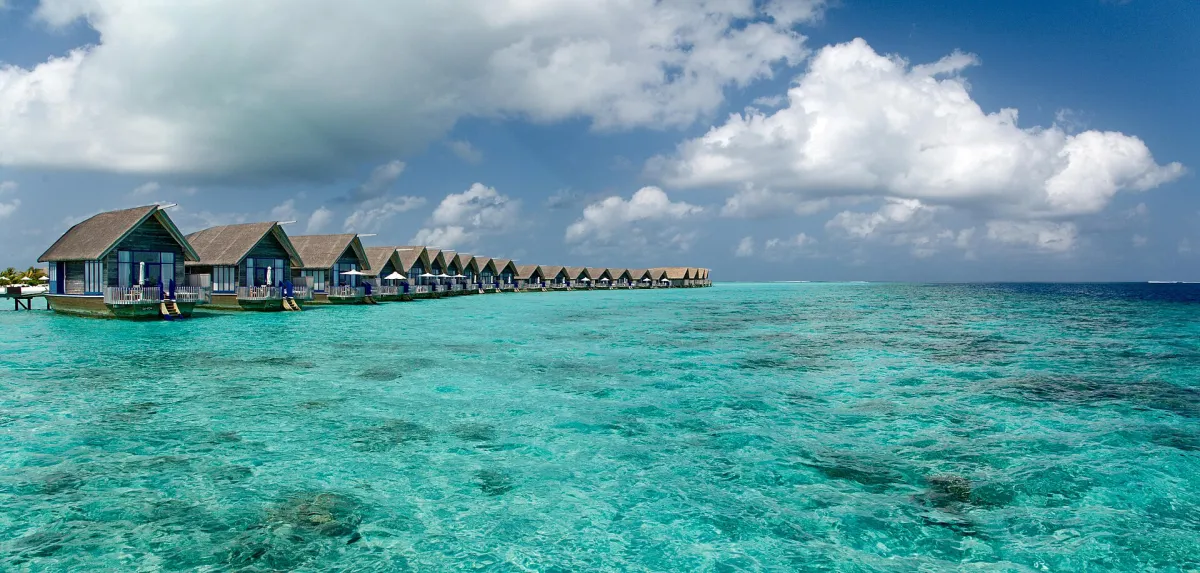
COMO Cocoa Island is particularly recognisable in photographs because its overwater accommodation takes its curved form from Maldivian dhoni boats. A row of roofs and decks becomes a long, low line against the lagoon, rather than a wall that fills the horizon. The result rewards a patient approach to photography: small changes in viewpoint can separate one building from another, reveal the water beneath a walkway or turn a strip of pale sand into the main subject.
This photo guide examines those visual relationships. It is intended for travellers interested in the island’s architecture and for readers interpreting older resort photographs. For choosing an island, comparing room types or understanding transfers, use the broader Maldives accommodation guide and resort selection.
Reading the Cocoa Island photograph
The historical lagoon view shows repeating overwater villas on one side and a large area of open sea on the other. That balance is the photograph’s strength. The buildings supply rhythm and scale; the unoccupied water gives the eye somewhere to rest. Looking closely, the roofs are not interchangeable dark triangles. Their curves and relative heights help identify the dhoni-inspired design that the property still describes in its current accommodation information.
The featured Chi King photograph was taken in 2008, according to its source record. It is useful evidence of the resort’s appearance at that time, not a current room inspection. Deck furniture, structural details and accommodation categories can change. When using it for trip planning, distinguish permanent visual relationships—the low island, open horizon and overwater setting—from details that require recent photographs or a current floor plan. A beautiful historical view can help you understand a place without establishing what will be outside a particular booked room.
Photographing the dhoni-inspired architecture
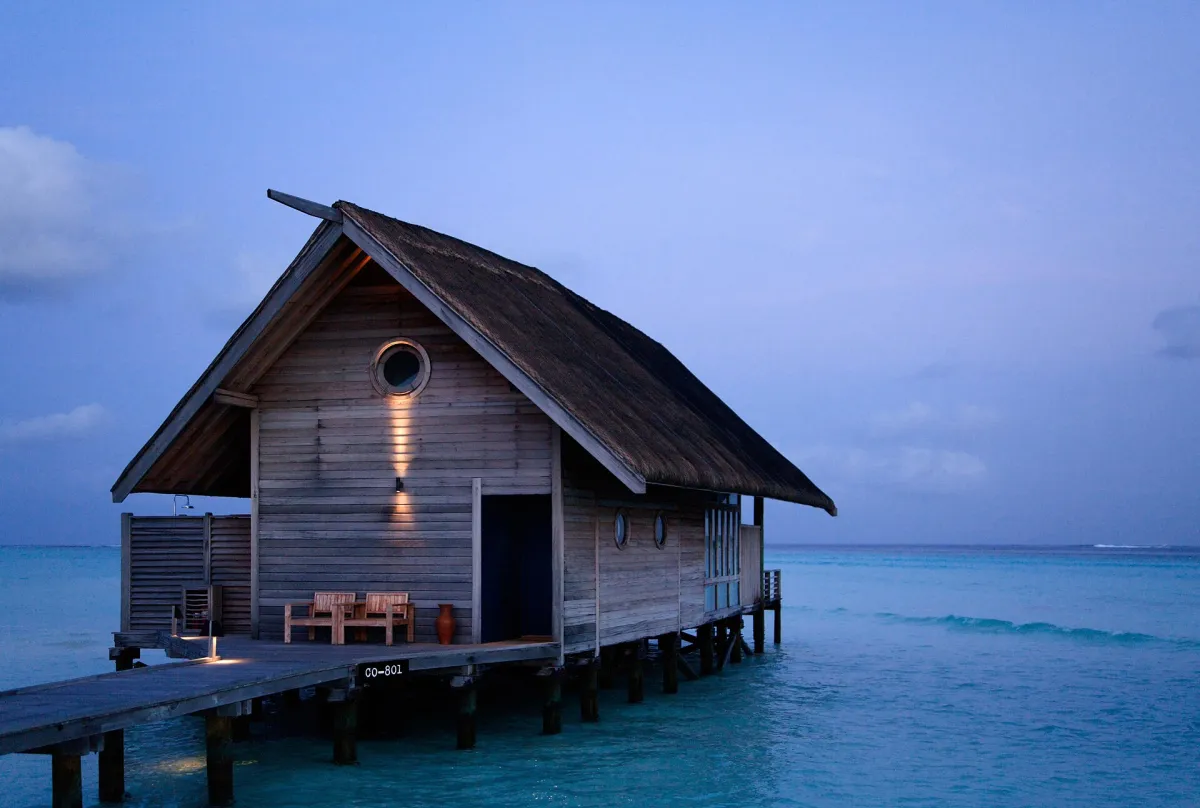
Choose whether the shape of one villa or the rhythm of the whole row matters more. A closer view can show the rounded roof, timber siding and meeting point between the structure and its supporting posts. A wider view explains how accommodation is arranged along the lagoon. Trying to include every building and every nearby palm often weakens both ideas.
From a permitted public walkway, move your position slightly rather than immediately changing the camera’s zoom. The same roof can overlap with the next building from one angle and become cleanly separated from another. Keep the distant horizon level, and leave enough space around the first and last roofs so the row does not look accidentally cut short. If a handrail divides the image, consider using it deliberately as a leading line. Do not cross a gate, step onto an occupied terrace or photograph through a window to improve a composition.
Lagoon colour, glare and the position of the sun
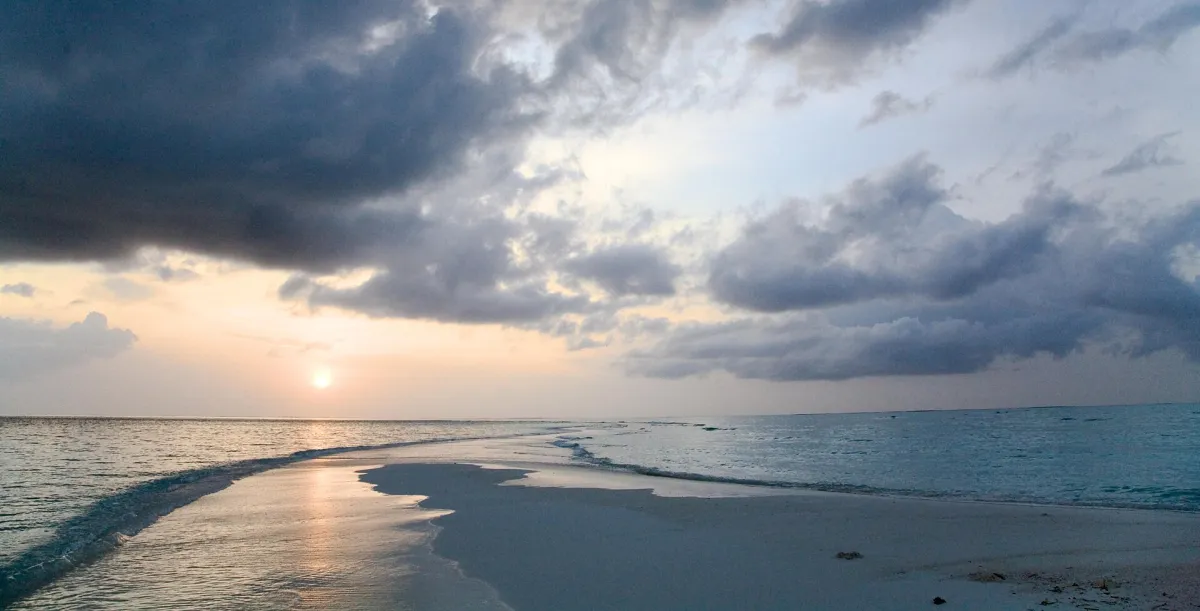
In daylight, the shallow lagoon can show several colours within a single frame. Pale sand beneath the water, darker submerged patches and reflections from the sky all contribute. A photograph cannot establish the depth or safe swimming route from colour alone. Treat the patterns as visual information, and use the resort’s current water-safety briefing for access.
For an architectural picture, softer side light can make timber and roof textures easier to distinguish. For an abstract lagoon photograph, stronger daylight may make the shallow-water patterns more obvious, although reflections can become distracting. A polarising filter can sometimes reduce glare, but its effect changes with the camera’s angle to the sun and may create uneven skies with a very wide lens. On a phone, test exposure by tapping on the water and then on the roofline. Keep a version that preserves pale surfaces instead of automatically choosing the brightest possible image.
Build a small photographic sequence
A short sequence can communicate Cocoa Island more clearly than several nearly identical postcard views. Start with an establishing frame that includes the overwater row and the surrounding lagoon. Follow it with a closer architectural study, then finish with a quieter detail: water moving around a supporting post, a shadow on the boardwalk or a roof reflected in calmer water.
The connecting idea matters more than a prescribed number of pictures. Use the same aspect ratio if you want a tidy album, but let the subject determine how much of the scene you include. A person can provide scale only when they agree to be photographed; a distant passer-by should not become an unexpected identifiable portrait. Check the edges of each frame for private deck areas and other guests. The most useful travel sequence can convey how an island feels through structure, light and space without intruding on somebody else’s stay.
Access and planning for a photographic stay
COMO identifies Cocoa Island locally as Makunufushi in South Malé Atoll and describes access by a resort-arranged speedboat from Malé’s international airport. That establishes its general location and transfer type; it does not make the island a public photography stop. Confirm guest or visitor access directly before trying to incorporate it into a day trip. A passing boat route is not permission to land or enter a resort jetty.
If photography is an important reason for booking, ask about the view from the actual room category, the orientation of its terrace and any current maintenance near the accommodation. Request a current resort map rather than choosing a villa number from an old online image. Arrange any sunrise departure or late transfer with staff in advance. The airport and transfer guide explains why a boat crossing time is only one part of the full arrival journey.
Keep equipment and the lagoon protected
Work from stable, authorised places. The temptation to take a low photograph over exceptionally clear water is understandable, but wet decking, salt spray and a narrow jetty are a poor combination for walking while looking at a screen. Stop before composing, keep straps away from loose fittings and leave a clear passage for guests and staff. A small cloth and a dry bag are more useful than carrying several lenses that you cannot change comfortably.
For pictures from the water, follow the local briefing and choose equipment you can manage while swimming. Never stand on coral, move wildlife or encourage a close encounter for a better frame. Nor should a shallow-looking photograph be used as evidence that it is safe to enter beside a particular villa. If you want underwater subjects rather than architecture, use the diving and snorkelling guide to plan an appropriate supervised activity.
Use current information alongside historical photographs
The resort’s accommodation pages describe several villa categories, including dhoni-inspired options and larger pool villas. Their differences matter to a booking, but a historic external photograph cannot identify the facilities included in every category. Compare the current category description, layout and booking conditions before drawing conclusions about pools, stair access, occupancy or terrace size.
Likewise, do not infer an empty island from a carefully timed photograph. A wide frame can exclude the adjacent boardwalk, boats or other guests. For your own pictures, a precise caption is more useful than an exaggerated claim of isolation: name Cocoa Island, identify the visible subject and add the capture date when it explains the scene. Preserve the photographer’s credit when sharing a licensed image. The aim is an accurate visual record that remains enjoyable to look at after the details of a particular holiday offer have changed.
Frequently asked questions
Is Cocoa Island the same as COMO Cocoa Island?
Yes. COMO identifies the resort island locally as Makunufushi in South Malé Atoll. Use the current property name when checking access, accommodation and transfers.
Does the historical photograph show today’s room categories?
No. It records an earlier appearance of the island. Current layouts, facilities and category names must be checked with the property; the photograph is chiefly useful for interpreting the lagoon setting and architectural rhythm.
Can I visit simply to take pictures?
Do not assume access. Ask COMO about current visitor arrangements and permission before organising transport. The existence of a resort jetty or a boat passing nearby does not provide public access to guest areas.