ASIA · MALDIVES GUIDE
Taj Exotica Maldives Photos: Lagoon Colour and Island Perspectives
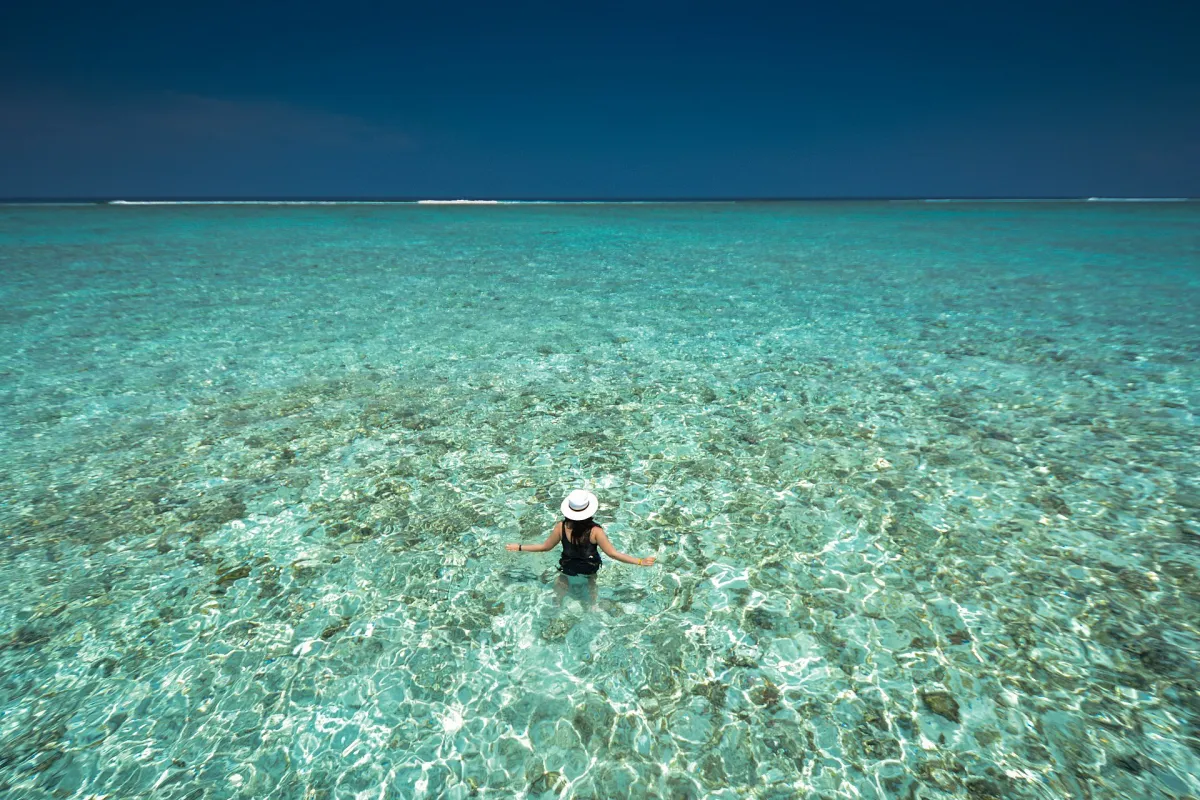
Some Maldives photographs describe an island through its buildings. Others make the surrounding water the principal subject. Taj Exotica Resort & Spa, on Emboodhu Finolhu in South Malé Atoll, is especially useful for considering that second approach: a small human figure or a line of overwater structures can give scale to a much larger lagoon.
The photographs on this page are visual references to that setting. They are not evidence of the depth, currents or safe swimming area at every point around the island. This guide explores the difference between a close lagoon view and an elevated perspective, with practical advice for planning your own photographs during an authorised visit. For deciding whether the resort suits your trip, use the wider where-to-stay guide and resort comparison.
Let the lagoon carry the photograph
The close lagoon photograph uses a large field of clear water and a small person to establish scale. Rather than relying on a recognisable building, it asks the viewer to look at surface patterns, colour transitions and the relationship between a human figure and the surrounding sea. The source identifies the location as Taj Exotica, but the image alone does not tell us which beach or villa access point was used.
When making a similar composition, decide how much information the viewer needs. A small part of the horizon can establish a seascape; removing it creates a more abstract study. A person can provide scale only with their agreement, and their position should be chosen for safety before appearance. Do not ask someone to move into unfamiliar water for the sake of a clearer outline. If a safe permitted position does not produce the composition you imagined, change the photograph rather than the safety margin.
Read elevated photographs critically
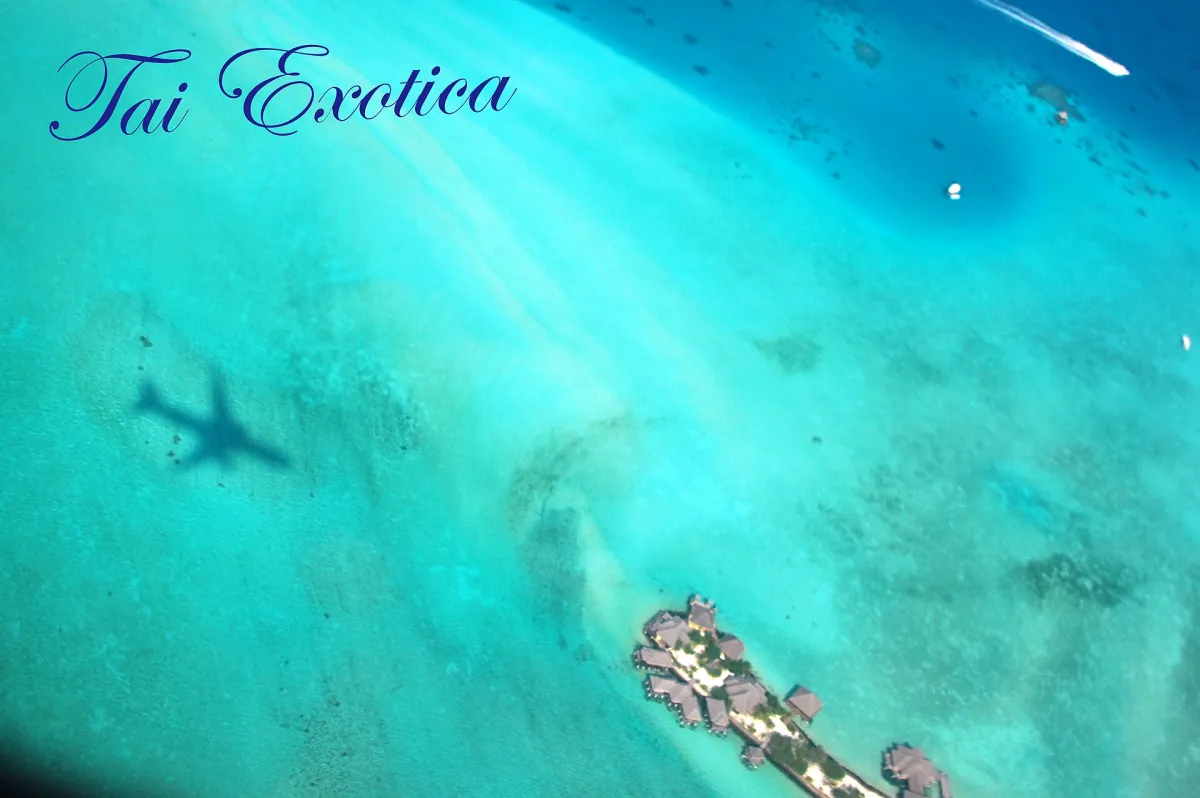
An elevated view can make the relationship between a narrow island, overwater buildings and the surrounding lagoon easier to understand. It also compresses information. A route that looks short from above may not be accessible on foot, while a pale area of water may be deeper or more exposed than it appears. Use the picture to understand broad relationships, then verify practical access through the resort’s current map and staff.
Do not treat an existing aerial photograph as permission to reproduce it with a drone. Its camera position may have been obtained under arrangements unavailable to an ordinary visitor. Nor does a source image establish the current rules around the airport or the property. A ground-level view that clearly connects the beach, a building and the lagoon can be just as informative. The useful question is what the picture explains, not whether it was taken from the highest possible point.
Use colour transitions rather than uniform blue
Lagoon photographs are often strongest when the water contains several related tones. Reflections, submerged sand, cloud shadows and changes in depth can create subtle transitions. Keeping those distinctions gives a photograph more depth than increasing saturation until the entire sea becomes one bright turquoise colour.
Watch the brightest reflected patches while composing. If they contain no useful detail, moving slightly may reduce glare and reveal a more interesting pattern. A polarising filter can help in some directions, but its effect is not uniform across every wide view. On a phone, compare exposures made by tapping on different areas of water. Select the one that keeps the scene’s tonal relationships rather than simply choosing the brightest frame. In editing, check the colour of skin, wood and sand as well as the sea; those references can reveal when an adjustment has pushed the whole image too far.
Connect the lagoon with the built island
To tell a more complete story, pair the broad water view with an architectural detail. A permitted view along a boardwalk can show how a building sits above the lagoon. A roof reflected in gentler water can link the two subjects without requiring an extreme wide angle. Keep the subject identifiable and avoid filling the frame with several competing elements.
Choose captions carefully. A resort may have multiple restaurants, accommodation categories and shared facilities. Do not assign a name to a photographed structure from appearance alone. The current Taj site identifies the resort and its setting, but identifying a specific building requires a matching source or confirmation. The same applies to room photographs: a pool or terrace shown in one category should not be described as standard across every booking. A simple architectural caption can remain accurate when a more elaborate but unverified description would mislead a reader.
Plan for light, shade and changing conditions
Early or late light can add texture to a low island edge, while stronger daylight may make lagoon patterns more visible. Which works best depends on the subject and direction of the view. Begin by observing the actual scene rather than following a rule that all tropical photography must happen at sunrise or sunset.
Shade can be useful for details of timber, vegetation and a person standing on land, especially when the surrounding sand is very bright. For a wide view, look for an understandable transition between shaded foreground and brighter water. Avoid exposing only for the darkest area and losing every highlight in the lagoon. A cloudy interval can be a good time for a closer architectural study instead of a sweeping seascape. Keep equipment protected from rain and salt spray, and stop photographing if conditions make a path or water activity unsuitable. The seasonal planning guide provides broader context, not a promise about one afternoon’s light.
Arrange access and transfers through the resort
Taj’s current information places the property on Emboodhu Finolhu and describes speedboat access from the international airport. Confirm the arrangements for your own flight and booking, including any charges and visitor restrictions. A short published crossing time is not the whole airport arrival process, and a nearby island is not automatically available as a photography stop.
If you are visiting from elsewhere, ask whether the proposed visit is permitted and which areas are included. Explain if you intend to use a tripod, arrange a portrait session or publish images commercially. Ordinary guest photography and a planned production can require different arrangements. Keep the first day flexible until you know when you will reach the island. The airport and transfer guide explains the practical steps that an attractive resort image cannot show, from meeting the operator to allowing time for the return journey.
Keep the image useful beyond one holiday
A good caption should identify the known location and explain what the photograph actually shows. For example, a lagoon view can be labelled as a lagoon view at Taj Exotica without guessing at a villa number, tide or water depth. Add the capture date when the image is historical or when a later comparison could otherwise create confusion. Do not infer current landscaping or facilities from a much older picture.
For your own album, keep a short note linking each photograph to the correct place and any permission that matters. Preserve original files before editing, and retain the source and licence when reusing an acquired image. A small sequence of lagoon, architectural relationship and carefully chosen detail can convey the island’s visual character without duplicating a hotel brochure. It also fits more naturally into the broader Maldives photography story than a collection of images whose locations and subjects cannot be distinguished.
Use a boat to explain scale in a lagoon photograph
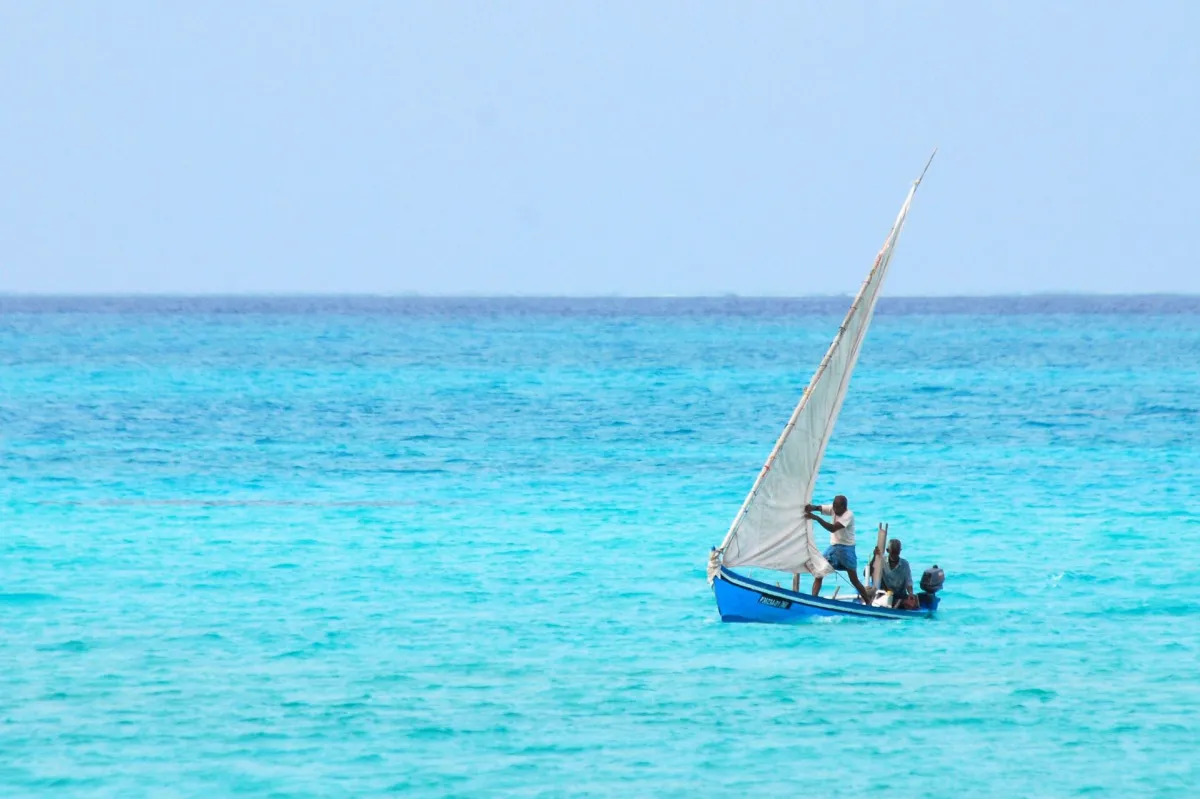
A small sailing dhoni is included here as an illustrative Maldives boat study. Its sail and hull give the viewer an immediate scale reference within a large field of water. The surrounding open space is part of the subject: a tight crop may describe the boat, while a wider frame explains its relationship with the lagoon.
Try placing the boat away from the centre and leaving room in its apparent direction of travel. Watch whether the sail, mast and horizon overlap clearly. If photographing from another vessel, follow the crew’s instructions and keep equipment manageable; moving around to improve a frame must not interfere with normal boat operations. The example is useful for studying shape and scale, while access to Taj Exotica and its own current transfer arrangements remain matters to confirm with the property.
Frequently asked questions
Which island is Taj Exotica Maldives on?
Taj identifies the resort on Emboodhu Finolhu in South Malé Atoll. Use the current official property information when checking transfers or planning a visit.
Does clear turquoise water mean it is safe to swim anywhere?
No. A photograph cannot establish currents, depth, permitted entry points or safe conditions. Follow the current local briefing and use an appropriate supervised activity when needed.
Can I reproduce an aerial photograph with a drone?
Do not assume permission. Current aviation requirements, airport restrictions and resort approval must be checked separately. The source image provides neither an approved flight location nor permission to fly.