
COSTA RICA TRAVEL GUIDE
Costa Rica Surfing Photos: Beach Action, Viewpoints and Responsible Photography

Choose the story in the surf scene
A surf photograph can show a rider's movement, the shape of a wave or the relationship between a beach and its community. Decide which story you want before choosing equipment and position. A wide frame with the shoreline may explain the setting, while a longer lens can isolate action from a suitable place on land.
Do not assign a particular beach to an unidentified photograph because the wave or vegetation looks plausible. Costa Rica has many surf settings, and a location tag needs actual source evidence. Keep the nearest town, exact beach and viewpoint with your image notes.
Read the Witch’s Rock action photograph
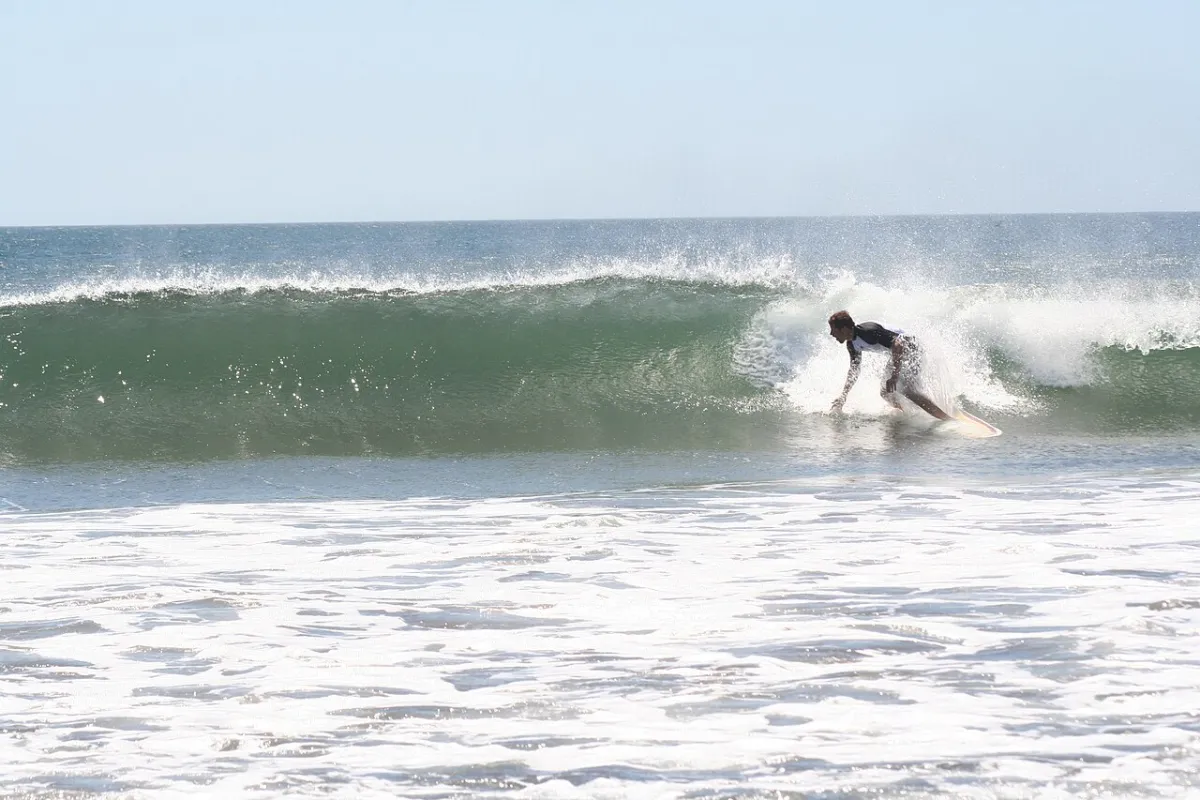
The source identifies the 2006 photograph as Witch’s Rock in Guanacaste. The frame itself concentrates on one rider, the breaking wave, spray and the water in front; the named rock is not visible. That distinction matters when using it as a reference: a location can be supported by the source record without being uniquely recognizable from the wave. Do not infer the original photographer’s exact beach position, lens, shutter speed or distance from the rider from this single image.
The useful compositional relationship is the rider within the moving wave. Leave space in the direction the action appears to be developing and decide how much of the breaking section explains the manoeuvre. A tighter crop may emphasize body position, while a wider frame can show the size and shape of the wave around the surfer. Keep enough context to avoid making the conditions appear different merely through a dramatic crop.
Work from a suitable shore position
Choose stable ground above changing water and keep the return route in view. A dry-looking rock, sandbar or river mouth can change with tide and swell; do not move onto an exposed point to imitate a frame. Follow local warnings and keep clear of areas used by surf schools, beach operations and other visitors.
This guide concerns visitor photography from land. Entering the surf with a camera is a separate specialist activity that requires appropriate skills, equipment and local knowledge. A camera's waterproofing or a photographer's wish for a closer angle does not establish that the water is suitable.
Let action and light guide the camera
For an action photograph, anticipate the area where the rider is moving rather than chasing every wave across the whole beach. A short sequence can reveal the change in body position and water shape. Check your result periodically for focus and blur, while keeping attention on your surroundings.
Light from behind or to the side of a rider can make spray visible, while a different direction can reveal the face or board. The useful choice depends on the actual beach orientation and conditions; there is no universal hour that guarantees the same effect everywhere. Keep colours and wave scale believable when editing.
Follow one action through a short sequence
Choose one stretch of water that is visible from your stable shore position. Watch a few waves before raising the camera, then follow a rider through the part of the action you can see clearly. A short sequence can show the approach, turn and release of spray. Select the frame in which the body, board and wave read together, rather than keeping every near-identical image. Check focus and exposure between sets while remaining attentive to people and changing water nearby.
If the rider is small within a bright scene, inspect whether the person has become an unreadable silhouette or whether that is the effect you intended. Bright spray can provide an outline, but it can also lose texture when overexposed. Try a different camera setting from the same permitted position before assuming you need to move closer to the sea. A wider environmental photograph is a valid alternative when your equipment cannot isolate distant action convincingly.
Choose the beach for the trip, not only the image
Tamarindo, Guiones/Nosara and Santa Teresa offer different town layouts and travel approaches. A beach photograph does not explain where you will sleep, how far you will walk or where a lesson begins. Choose a base that fits your time and interests, then research the current local session or subject.
The Costa Rica Tourism Board's surfing guide introduces the range of settings. Its list is not a live surf forecast or proof that a spot suits a beginner on a particular day. Our Beaches guide helps distinguish the broader coastal choices.
Witch’s Rock belongs to Santa Rosa National Park in the tourism board’s surfing overview, so it needs a different access check from a town-beach session. Confirm the actual park route and current arrangements before choosing it for photography; the historical action image is not a road or boat-service guide. Tamarindo or another base already on your itinerary may offer a more practical opportunity to observe a session. Choose the place for the journey and permitted viewing position, then let the action provide the picture.
Respect riders, schools and the place
Do not stand where you obstruct lessons, board handling or a normal access route. Ask before making a close identifiable portrait, particularly when photographing children or a private lesson. A public beach setting is not a reason to treat every person's activity as a commissioned photo session.
If you plan to share or use identifiable images beyond a personal travel record, discuss that clearly with the people involved. Keep protected dunes and coastal vegetation intact, take waste away and avoid leaving equipment unattended. A longer lens can reduce intrusion without granting permission to disregard someone's expressed wishes.
Separate photography from a decision to enter the water
Good surf and suitable swimming conditions are different questions. Follow local flags and reliable advice, and do not assume that being near a surf school makes every part of the beach safe for swimming. If you want a lesson, let a qualified instructor assess the section and conditions for your level rather than choosing from a photograph.
Read water-activity planning and current travel safety guidance for context. Sources were checked on 2 November 2026; actual sea conditions and local instructions determine the day.
Surfing FAQs
Can I photograph surfing without entering the water?
Yes. A suitable shore position can show action and the wider coastal setting. Choose stable ground, respect access routes and keep clear of changing tide and wave conditions.
Does a surf photo show whether a beach suits beginners?
No. Conditions, the specific section and the participant’s ability matter. Ask a qualified instructor to assess the day rather than using a dramatic reference image as a lesson recommendation.
Can I identify the beach from the wave alone?
Not reliably. Use the actual source location or travel notes, and avoid assigning a famous beach to an unidentified image because it looks plausible.
Do I need permission to photograph a close portrait of a surfer?
Ask before making a close identifiable portrait and be especially careful around children or private lessons. Discuss intended sharing or use when relevant.
Is a waterproof camera enough to take photographs from the surf?
No. In-water photography is a separate specialist activity requiring suitable skills, equipment and local knowledge. Waterproofing does not establish that entering the sea is appropriate.