
COSTA RICA TRAVEL GUIDE
National Theatre, San José Photos: Architecture and Visitor Photography
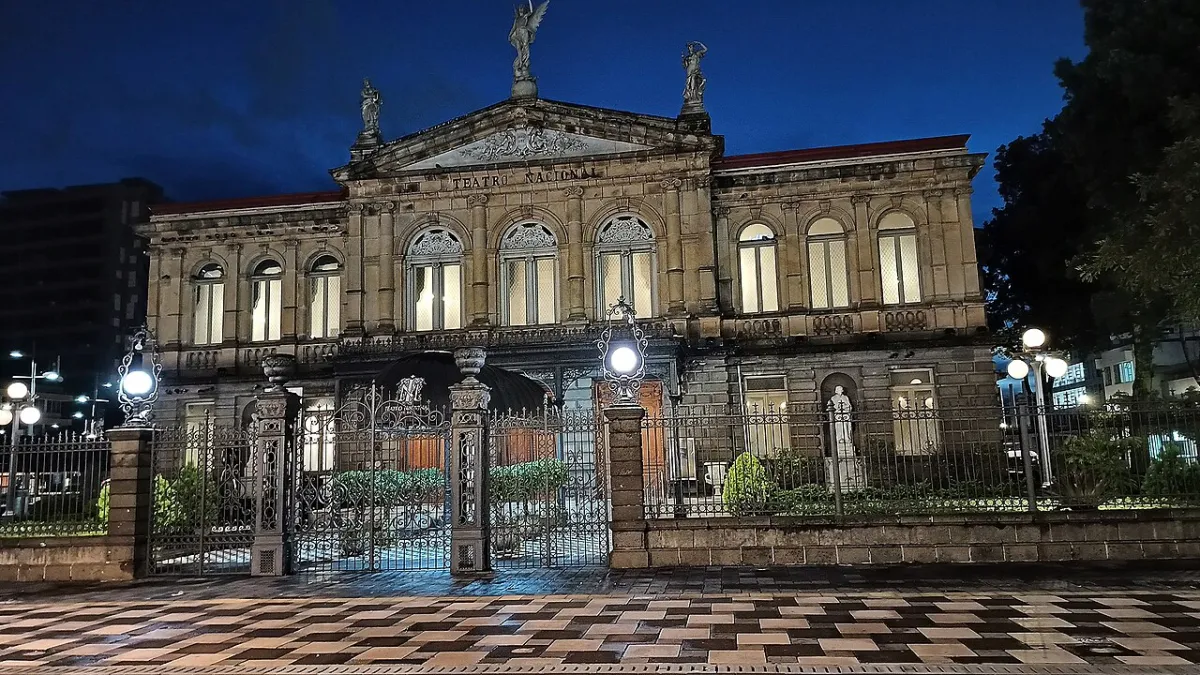

Read the building before choosing the frame
The National Theatre is an architectural subject within a working city, not an isolated monument. Begin by noticing the façade, nearby public space and the way people move around it. A wider frame can show its urban setting; a closer composition can focus on a doorway or sculptural detail without pretending the surrounding city is absent.
Work from a permitted position and keep pedestrian routes open. Do not step into traffic, block an entrance or lean equipment against the building to correct a perspective. Choose a safe standing point before concentrating on the camera, particularly when using a screen that draws your attention away from the street.
Treat the facade, boxes and foyer as separate scenes
The October 2023 exterior image shows the illuminated facade beneath a dark blue sky, with the fence, lamps and patterned foreground still visible. It explains the building’s public setting as well as its architecture. When making your own exterior frame, decide whether you want that relationship or a more selective architectural study. Include the roofline deliberately and check whether a lamp overlaps a sculptural detail. Adjust the composition from a permitted public position; you do not need the exact viewpoint or lighting conditions of the source photograph.
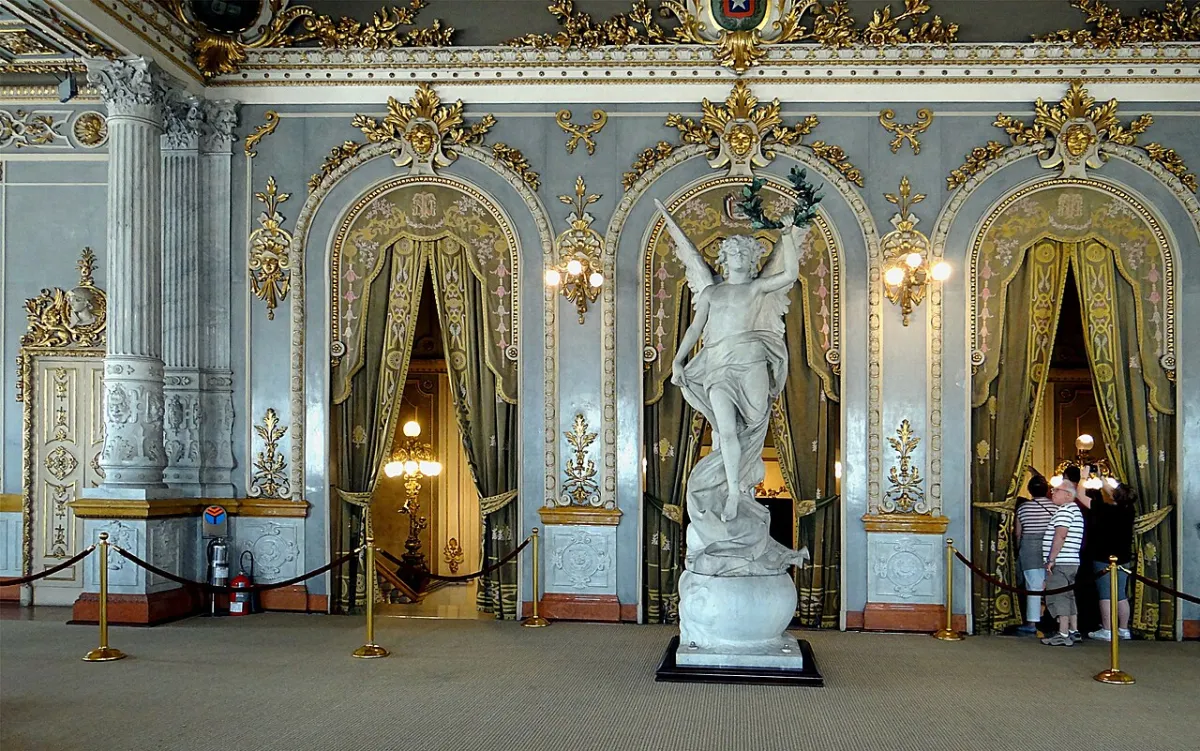
The auditorium photograph is different: curved tiers, columns and lamps create depth inside a much darker space. The foyer photograph uses a central statue, doorways and reflected light to organize the room. Keep those identities separate in a photo sequence. An auditorium image is not evidence that the foyer has the same lighting, and a visitor photograph of either room does not establish that it will be included during a performance or the next guided visit.
Separate an interior visit from an exterior photograph
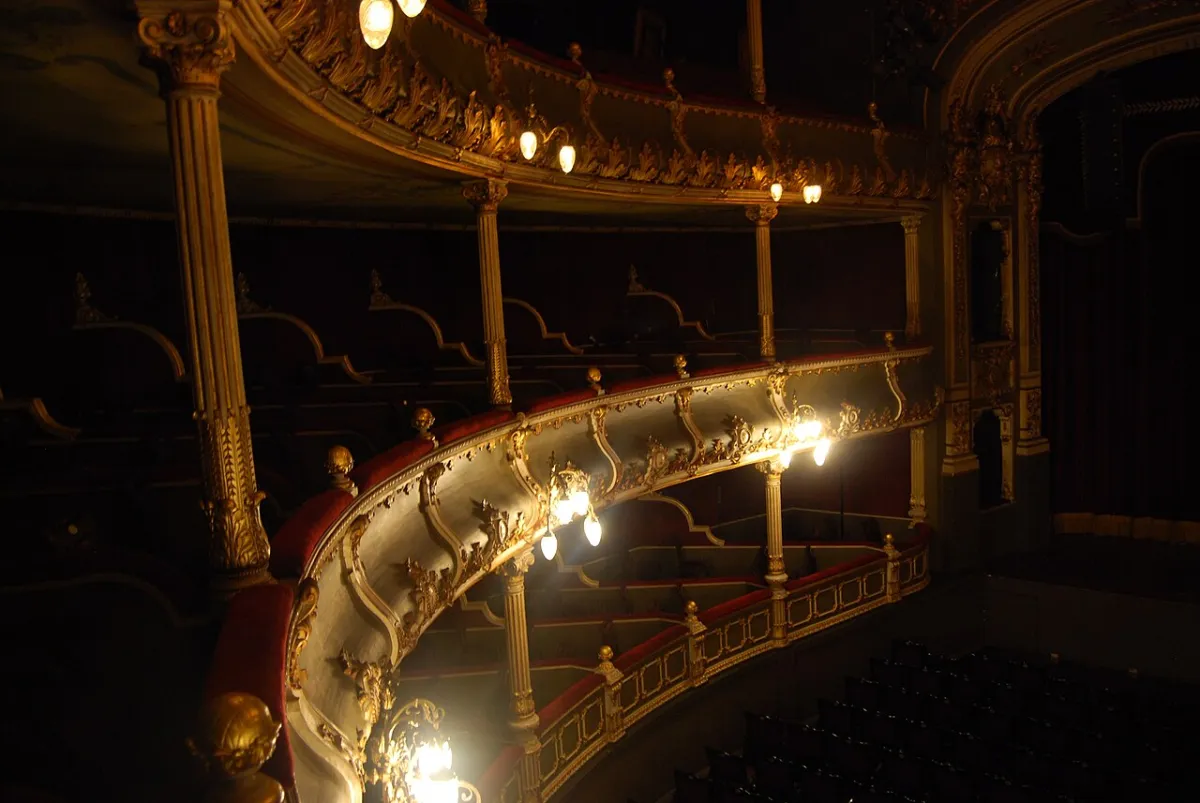

An exterior view does not establish access to the foyer, auditorium or every decorative room. If interiors are your main interest, check what the current visit actually includes and follow the guide's route. Maintenance, rehearsals or events can affect the spaces available, so an older interior image is not a complete description of your visit.
Look carefully at light, materials and decoration rather than trying to photograph every surface in one frame. A detail can convey the interior more clearly than a hurried wide shot. Keep the actual room and subject in your notes so that a later caption does not call every decorated space the auditorium.
Look for reflections before taking an interior detail. In the foyer reference, mirrors and doorways repeat parts of the room, so a bright shape may be a reflection rather than a second opening. Check whether your own camera, a lamp or another visitor unintentionally dominates that reflected area. You can choose a more deliberate frame without removing people digitally or claiming that the room was empty. Record the actual scene as part of a shared visit.
Follow the distinction between visits and performances
The theatre's official frequently asked questions say that photography is allowed without flash during visits, while photographs during performances are not permitted. Follow staff instructions and the terms of your particular visit; a sightseeing camera is not permission to photograph a show.
Check any additional restrictions on bags, tripods and use of images before setting up. Respect other visitors' opportunity to listen to the guide and see the room. If a staff instruction is more specific than a general webpage, clarify it before taking a photograph rather than assuming your preferred interpretation applies.
Work with available light

Outdoors, the building's appearance changes with the direction of light and the sky. Avoid promising yourself a particular illumination without checking the actual scene. Indoors, follow the no-flash rule and choose a manageable camera setup; holding the camera steadily and allowing for a darker atmosphere may be better than trying to make the room look artificially bright.
Review a frame for blur and perspective, then give yourself time to look away from the screen. The visit should still let you understand the building. Do not touch ornament, rest a bag against decorative surfaces or use furniture as a camera support unless staff explicitly permit it.
Choose the interior detail you want to preserve
In a dim interior, a bright lamp or window can dominate the camera’s reading. Inspect a frame to see whether the detail that interested you is readable: the curve of a balcony, an ornament’s outline or the texture around a doorway. If it is not, try another exposure or a tighter composition. Raising brightness across the entire image may reveal more noise without improving the subject. Follow the no-flash visit rule and keep the support method within what staff allow.
For a room with a central axis, compare a balanced frame with an intentionally offset one. The first may emphasize symmetry; the second can show the relationship between a statue, doorway and surrounding surfaces. Keep vertical lines consistent enough to explain the room, while accepting that a handheld visitor position has limits. Do not climb onto furniture, cross a rope or ask others to leave a room to obtain a perfectly empty architectural photograph.
Connect the theatre with a manageable San José visit
Use the theatre as one cultural stop rather than racing between several buildings for photographs. A museum, a meal and time in a small part of the centre can provide a fuller picture of the city. Check the official visit-planning page and arrange the actual return to your accommodation.
See San José photography for the wider city subject and History & Culture for visit context. Official photography guidance was checked on 2 November 2026; confirm current access and conditions for the date you choose.
Build a small sequence that answers three questions: what is the building’s city setting, which interior or detail did your visit actually include, and what distinguished that experience? Record the room names supplied during the visit while they are still clear. The theatre’s official FAQ separates no-flash visit photography from its ban on photography during performances. Plan the camera’s role accordingly: a performance evening may contribute an exterior photograph and a memory of the show, without an auditorium picture made from your seat.
National Theatre FAQs
May I photograph inside the National Theatre?
The theatre’s official FAQ permits photography without flash during visits. Follow staff instructions and confirm which rooms are included in your particular visit.
Can I photograph a performance from my seat?
The official FAQ does not permit photographs during performances. A performance ticket and permission to make sightseeing photographs are different matters.
Does a façade photograph mean the interior is included?
No. Exterior views, guided visits and performances have separate access arrangements. Confirm the actual visit and spaces available rather than relying on an old image.
Can I bring a tripod into the theatre?
Ask the theatre about the current equipment rules before bringing one. Do not assume that permission to take a no-flash photograph includes setting up a tripod.
How should I caption an interior detail?
Record the actual room and subject during the visit. If the exact location or work is uncertain, use an honest descriptive caption rather than calling it a different space or inventing an attribution.