
COSTA RICA TRAVEL GUIDE
La Paz Waterfalls Photos: Forest Trails and Waterfall Photography
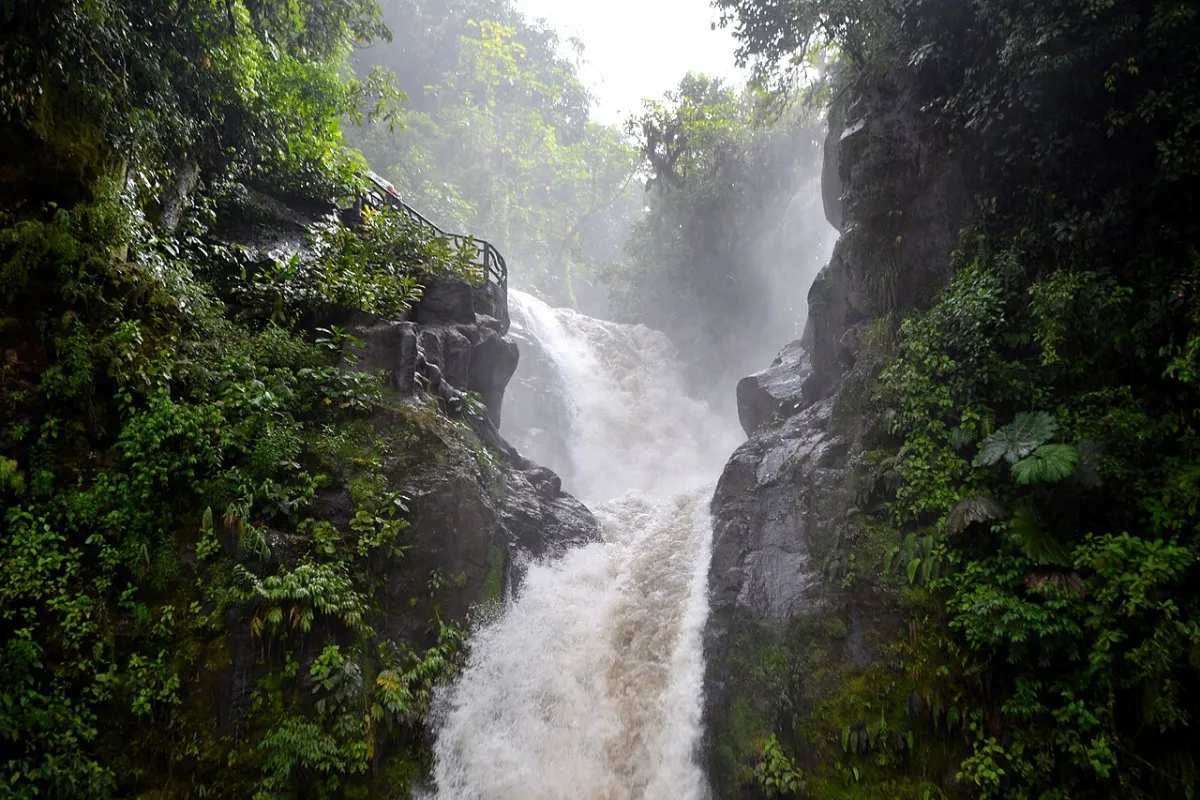

Photograph the waterfalls in their forest setting
La Paz Waterfall Gardens offers a sequence of waterfalls within a managed visitor site near Vara Blanca. A close view of falling water and a wider frame containing the forest tell different stories. Choose the composition from the actual authorized trail rather than trying to find an unmarked shortcut to the angle of an old image.
The waterfalls are distinct subjects. Record the name given at the viewpoint if you want to identify a particular fall later; do not label every image La Paz or Magia Blanca solely because it belongs to the same visit. When the exact fall cannot be verified, a general honest description of the waterfall setting is preferable to a confident guess.
Read the gorge around the falling water
The source photograph on this page places the bright fall between steep, dark rock and dense vegetation. Spray and light soften the upper part of the scene, while the darker sides keep the water visually distinct. That relationship is the useful lesson from this 2014 image. It does not reveal the photographer’s exact standing place, original exposure settings or the visitor route currently available. Use it to choose a subject within the view you are permitted to use, rather than as directions to an unmarked position.
A narrow frame can emphasize the fall’s movement through the gorge; a wider one can show how vegetation and rock contain it. Check the upper and lower edges before deciding. Cropping away the surrounding land can make the water abstract, while including too much undifferentiated foliage can hide the subject. Neither choice needs an exaggerated colour edit. The bright fall, dark canyon and soft spray can remain different tones and still form a readable photograph.
Understand the trail before carrying the kit
The operator describes paved trails and steps with handrails through the waterfall area. That does not make the whole walk level or universally accessible. Ask about the specific route, stairs, return arrangements and any section that can be skipped before committing, especially if you need a step-free option.
Carry a camera setup that you can manage while using the route safely. Put equipment away on steps, use secure footwear and protect the bag from spray and rain. A photograph cannot establish how far the visitor walked, which stairway they used or whether the same route meets your needs.
Choose how to show moving water
A shorter exposure can retain the texture of falling water, while a longer exposure changes its appearance. Neither is inherently the right way to describe the place. Choose the result you want, then check whether you can make it from a permitted position without blocking other visitors.
If a tripod is allowed, keep it within the space that staff permit and leave a clear path. Rain or spray on the lens can soften an image unintentionally, so review a frame before moving on. Keep the forest's natural light and colour believable rather than trying to make every shaded surface equally bright.
At a stop where photography is permitted, make a simple comparison rather than changing everything between frames. Keep the composition similar and try a shorter and a longer exposure, reviewing what each does to the white water and nearby moving leaves. A smooth ribbon can describe flow; visible breaks and spray can convey its force. If light or visitor movement makes a careful comparison impractical, take the simpler frame and continue. The trail is a shared route, and a useful image does not depend on controlling the space around it.
Separate the paid site from a roadside view
The managed waterfall trail is part of a privately operated attraction, not a SINAC national park. A roadside glimpse of a waterfall and admission to the site's trail system are different visits. Check the operator's waterfall information and park visitor page for the actual access and current arrangements.
Do not stop or set up equipment in an unsafe traffic position simply because a waterfall can be seen from a road. The attraction's name also includes other visitor experiences; a waterfall photograph does not prove those are included in every booking or that they fit your interests.
Know which waterfall and which access you mean
The operator’s waterfall page names five separate falls: Templo, Encantada, Magia Blanca, Escondida and La Paz. Those names are useful for recording the actual viewpoint and avoiding a set of captions that all identify a different fall as the same one. Follow the sign or your guide’s identification at each permitted stop. If a name was not recorded reliably, retain a descriptive label rather than trying to identify the fall later from the shape of white water alone.
Separate that identification task from admission. A road view of La Paz does not establish access to the managed sequence above it, and a general hotel or regional excursion name does not settle which trail and services are included. The operator describes paved paths and steps with handrails. Ask how your chosen route works from beginning to end, including any return transport or section you might skip. A photographed waterfall can be the reason to investigate a visit without proving that its particular viewpoint is suitable for you.
Make the waterfall visit its own part of the day
Leave time to pause, walk and return without turning photography into a race between waterfalls. If combining the visit with Poás or another highland stop, confirm both operating arrangements and the actual travel plan separately. The volcano can have different access controls, and a general proximity claim does not make two reservations interchangeable.
See Poás photography for that separate subject and Costa Rica Photo Spots for the wider photography route. Official operator information was reviewed on 2 November 2026; confirm current trail, access and booking conditions before travelling.
If you photograph more than one fall, give each image a distinguishing feature: the surrounding gorge, an approach visible from the permitted route, or the way the water divides. A sequence of nearly identical white ribbons may be harder to identify later. Review one image and its recorded name before moving on, while the viewpoint is still clear. Keep that brief record separate from guesses about which historical photograph you have reproduced.
La Paz Waterfalls FAQs
Is La Paz Waterfall Gardens a national park?
It is a privately operated visitor site. Its admission and trail arrangements are separate from SINAC national-park tickets.
Is the waterfall walk step-free?
The operator describes paved trails and stairs. Ask about the exact route and current alternatives for your needs rather than treating paving or handrails as a step-free guarantee.
Does a roadside waterfall view include the managed trails?
No. A roadside view and admission to the attraction’s waterfall trail system are different arrangements. Confirm the actual entrance and permitted access.
How can I identify the particular waterfall in a photo?
Record the name at the viewpoint and check it against reliable source information. If identification remains uncertain, use an accurate general caption rather than assigning a specific fall.
Can I use a tripod for a long exposure?
Check the operator’s current equipment rules and the space at the viewpoint. Any permitted setup still needs to leave the visitor route clear.