
COSTA RICA TRAVEL GUIDE
Red-Eyed Tree Frog Photos: Identification and Responsible Wildlife Photography
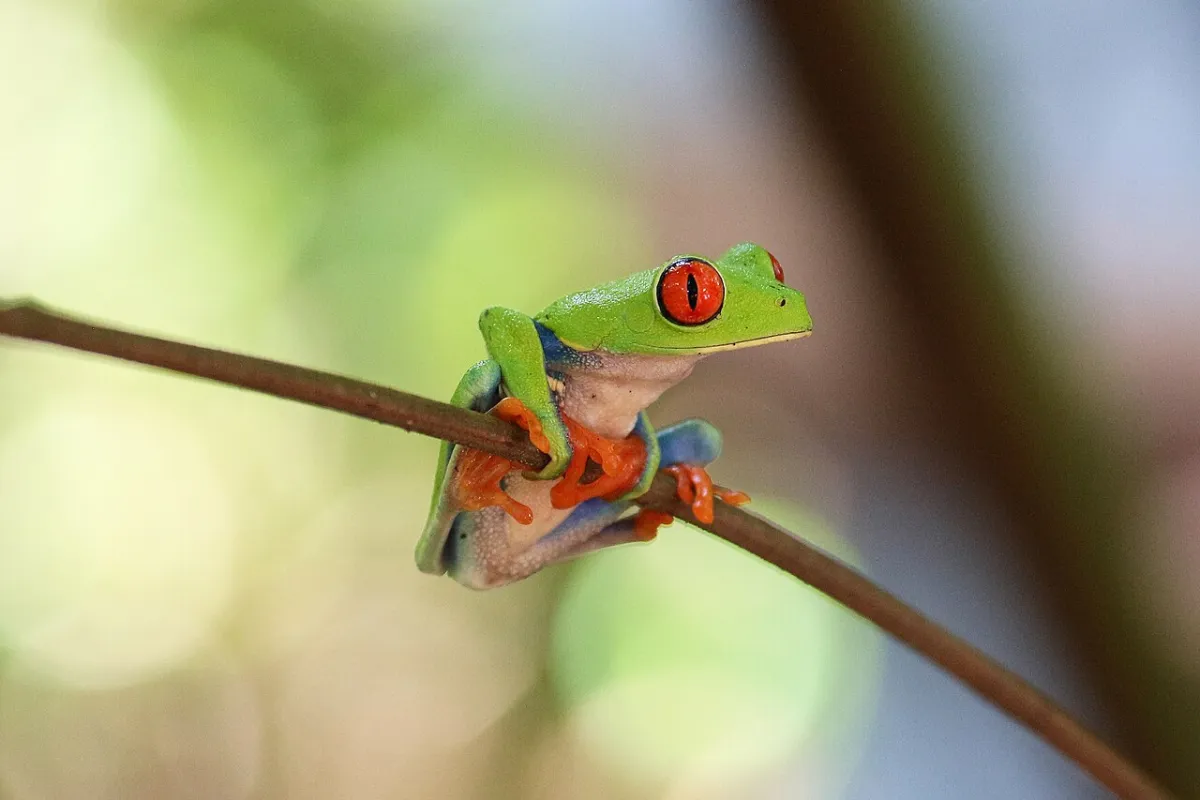

Look at the whole animal, not only the red eye
The red-eyed tree frog, Agalychnis callidryas, is a familiar photographic subject, but a green frog with reddish eyes should not be identified from that single feature. Look at the full animal and a reliable source record rather than a search tag. Similar-looking amphibians can be incorrectly labelled in image collections.
The Smithsonian National Zoo's species introduction describes the frog's striking eyes, body colours and toes, together with its nocturnal behaviour. Use that context to understand the animal, rather than as proof that a particular image was taken at a named Costa Rica reserve.
Observe without arranging the encounter
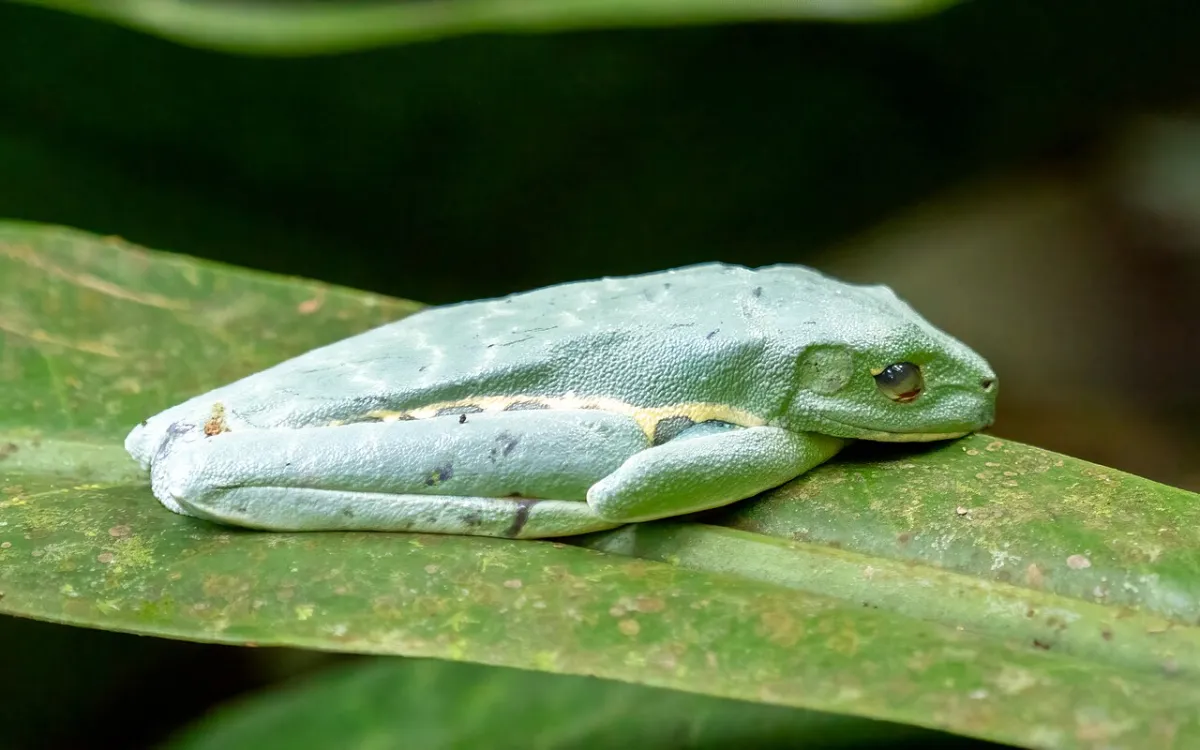

A sleeping or partly hidden frog is still an animal behaving naturally, not a failed photograph. Do not touch it, lift a leaf to expose it or move it onto a colourful flower. An image that looks attractive may have involved handling; its composition is not a model for acceptable visitor behaviour.
Keep your distance and listen to the guide's instructions. If a position does not offer an unobstructed frame, change your composition or leave the camera down. Do not ask a guide to reposition an animal for you, and avoid providers that make handling wildlife part of a souvenir-photo experience.
Choose detail without crowding the animal
A close-focusing lens can show eye, toes and the relationship to a leaf from a more considerate working position. You do not need to fill every frame with the frog's face; an environmental composition can explain the perch and habitat more clearly. Keep equipment off vegetation and avoid surrounding the animal with several cameras.
Prepare settings before the encounter so that you do not prolong it unnecessarily. A photograph made from the permitted route with a simpler setup is preferable to one that requires stepping into vegetation or holding a light close to the animal. Let the guide end the observation when appropriate.
Compare the branch and resting-leaf photographs
The first reference shows a frog gripping a narrow branch, with a visible red eye, orange toes and some flank colour against a soft background. The second shows a frog resting low on a leaf, with limbs tucked close and the eye largely covered. They tell different stories about the same photographic subject. The Smithsonian’s species introduction describes daytime resting and nocturnal activity; an eyes-closed posture can therefore be a worthwhile observation, rather than something a photographer should try to change.
For a branch composition, pay attention to how the feet relate to the perch and whether the eye is readable. For a resting frog, the outline, folded limbs and relationship to the leaf may carry the photograph. Keep the background in mind, but improve it only through a permitted change in your own framing. Do not rotate a branch, lift the leaf or ask the guide to make the frog reveal the colours hidden by its natural position.
Ask about lighting before the walk
Nocturnal observation needs a clear discussion of the reserve's rules and the guide's methods. Permission to bring a camera does not establish permission to use flash or an independent light. Ask before booking if a particular photographic method is essential to you, then follow the actual site's limits.
Do not treat advice from a general photography article as a guarantee that repeated flash or close illumination is acceptable for every amphibian encounter. Keep the animal's behaviour and the site's rules ahead of the image. If photography is restricted, observing without a photograph is a valid outcome.
Prepare focus before extending the encounter
Choose the part of the animal that matters to the frame, then inspect whether that feature is sharp. Focusing on a leaf in front of the frog can leave the eye soft even when the camera reports focus. A wider frame may give a clearer account of the perch and posture than an extremely tight close-up. Test the camera’s controls on an ordinary nearby subject before the encounter so that unfamiliar menus do not keep the group waiting beside the animal.
A soft background in a reference image does not mean the photographer stood close enough to touch the frog, and it is not evidence of a particular lens or aperture. Use the equipment you can operate from an appropriate distance. If the available light and permitted methods do not produce the picture you wanted, take a wider habitat frame or simply observe. A technically imperfect record made within the rules is preferable to a clearer one produced through handling or unwanted illumination.
Book the habitat and guide, not a guaranteed frog
A night walk is a visit to a living setting, with changing weather and wildlife activity. Ask the provider which reserve or property you will use, what the route involves and how the return is arranged. A list of possible animals is not a promise that a particular frog will be visible and positioned for photography.
Wear suitable closed footwear and carry only what you can manage on the actual trail. Keep essential medication and the meeting details accessible. Use our National Parks & Wildlife guide to distinguish site access, admission and guiding before booking.
Keep the image's identity and location accurate
Record the guide's identification, actual place and whether the image was made in a wild, managed or captive setting when known. Do not present a zoo or staged photograph as evidence of a free-living encounter in a Costa Rica national park. If identification is uncertain, say so until reliable confirmation is available.
Read wildlife photography guidance for the wider approach. Species-source information was checked on 2 November 2026; the photograph's own provenance and the current site's rules are separate checks.
Keep the two reference locations distinct when describing the examples: the branch photograph is source-labelled Frog’s Heaven in Sarapiquí, while the resting-leaf photograph is source-labelled La Fortuna. Neither establishes a particular park admission, present-day tour route or guarantee that a visiting photographer will find a frog in that position. Record the source’s setting and any reliable guide identification separately from what you personally observed, so that an attractive example does not become an unsupported claim about a future encounter.
Red-Eyed Tree Frog FAQs
Does a red eye prove the frog is Agalychnis callidryas?
No. Use the complete appearance and a reliable species or source record. Search labels and one eye colour alone are not enough to identify every green frog.
May I move a frog onto a better perch?
No. Do not touch, handle or reposition wildlife for a visitor photograph, and do not ask someone else to arrange the animal for you.
Can I use flash during a frog walk?
Ask the actual reserve and guide before the walk, and follow their current rules. Permission to carry a camera does not establish permission for flash or close illumination.
Will a night tour guarantee a frog photo?
No. Wildlife, weather and viewing positions vary. Choose the habitat, responsible guiding and learning experience rather than a guaranteed posed photograph.
How should I describe a photograph if its exact location is unknown?
Use an accurate subject description and preserve the known source record. Do not assign a national park, wild encounter or specific place that the evidence does not support.