
COSTA RICA TRAVEL GUIDE
Poás Volcano Photos: Crater Views and Photography Planning
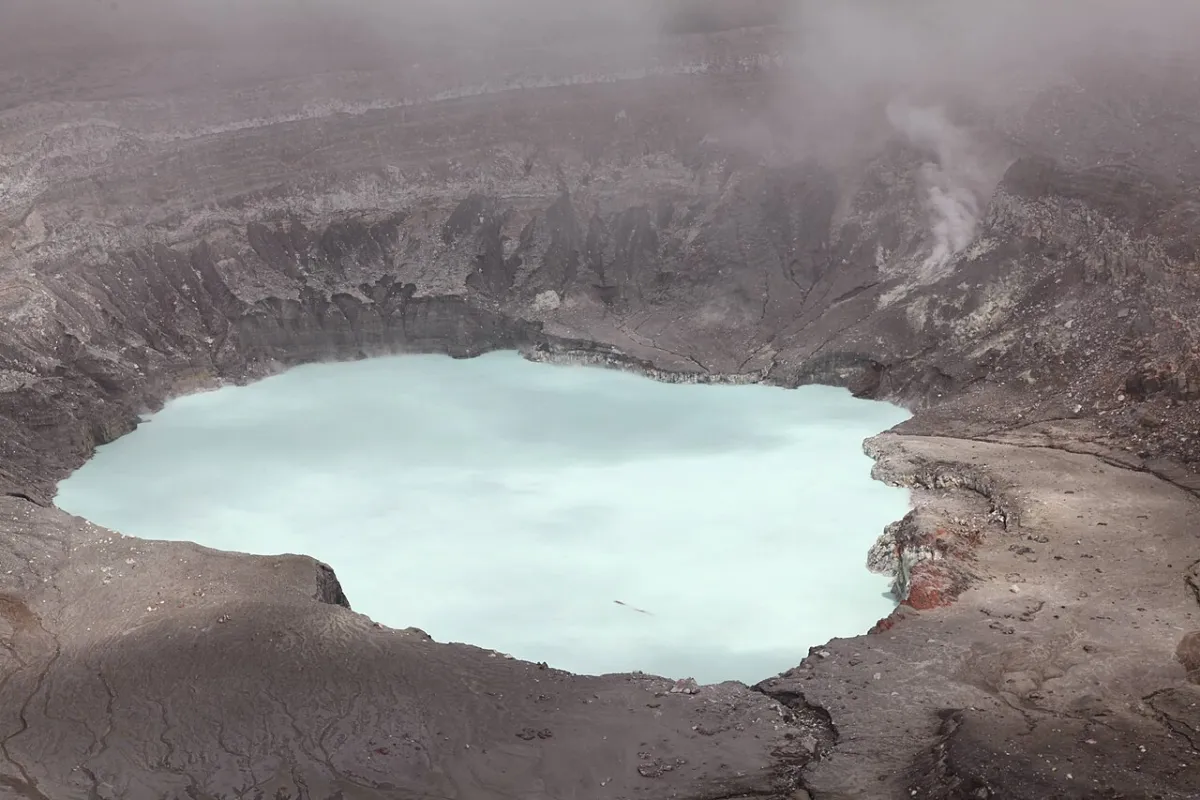

Photograph the crater as a changing landscape
A Poás crater photograph records one state of an active volcanic landscape. The appearance of the crater, water, vapour and surrounding cloud can differ from an older image, so choose the visit for the landscape you can responsibly observe rather than a promise to reproduce a particular view. Keep the photograph's date and actual viewpoint in mind when using it to plan.
The authorized visitor viewpoint is the starting point for photography. Do not leave marked public-use areas or seek a lower angle beyond a barrier. A longer lens can isolate details from a permitted position; an unobstructed composition is not a reason to move closer to the crater.
Read the February 2022 reference frame
The photograph on this page concentrates on the pale crater lake, the dark surrounding rim and a plume rising toward the upper right. Its February 2022 date matters: those visible features belong to that recorded volcanic scene. They are useful compositional references, but the image does not establish the present lake level, gas conditions or the exact position available to a visitor. Decide which relationship interests you—the lake within the crater, the rim’s texture or the meeting of vapour and cloud—before choosing a tighter crop.
The contrast between the light water and darker ground gives the frame a clear centre. In your own permitted view, look around the edge of the picture before pressing the shutter. A cut-off strip of bright sky or an indistinct foreground barrier can draw attention away from the crater. Change the framing from where you may stand, using the zoom or a modest crop later, rather than moving across a boundary. Keep enough surrounding rock to explain scale when a lake-only detail becomes visually ambiguous.
Let visibility guide the composition
Cloud and vapour may conceal the main attraction even during a permitted visit. A morning booking is not a visibility guarantee. Look for shapes in the crater rim, changing layers of cloud and the relationship between exposed ground and vegetation when a wider scene is unavailable. If staff end or restrict a visit, pack away promptly.
Use a stable stance and protect the lens between frames. In bright conditions, review the image to see whether pale cloud and dark rock retain useful detail; in mist, avoid editing away the weather that shaped the view. A photograph that honestly conveys partial visibility can describe the visit better than one made to look unrealistically clear.
Prepare a wide frame and a detail
Make the wider composition first while the landscape is readable, then investigate a detail from the same authorized position. This produces two different records instead of several nearly identical zoom levels. A wide frame explains the crater’s shape; a detail may concentrate on the irregular shoreline, rock layers or a gap between vapour and cloud. If the scene changes quickly, choose one of those subjects and wait briefly for it to become legible without extending the visit beyond staff instructions.
Review pale areas as well as the dark rim. If the brightest lake or cloud has become a featureless white patch, a darker exposure may retain more of its visible structure; review the result rather than assuming the camera’s first reading is ideal. Preserve some shadow where it describes the actual scene. This is an exposure choice, not a reason to recolour the water or remove every trace of haze. The reference photograph’s apparent brightness is not a required target for a different day.
Confirm access before arranging the journey
Poás is an active volcano and access arrangements can change. Read SINAC's Poás National Park guidance and the current reservation information before travelling. An existing ticket, an old photograph or a hotel tour advertisement does not establish that every trail and viewpoint will be open on your date.
For volcanic context, use OVSICORI-UNA rather than treating a scenic image as evidence of current activity. Follow park staff and official notices for the actual visit. This guide makes no claim that the park or every visitor route is presently operating.
Keep visitor access and volcanic reporting as two separate checks. SINAC’s park page describes the public visit and reservation requirement; an OVSICORI report explains volcanic observations. A scientific report is not a ticket or permission to use a closed route. Conversely, a reservation confirmation does not predict a clear view. Save the current visitor instructions with the booking and decide which nearby alternative you would actually enjoy if the permitted visit changes. Keep that alternative independent of reproducing this historical crater-lake photograph.
Keep the equipment practical
Carry a rain layer and equipment protection that can be fitted quickly. A compact camera setup lets you move through the public viewpoint without filling the space or delaying others. Ask about any tripod, bag or other equipment restrictions before bringing a kit that depends on setting up in a busy area.
Choose an outfit and footwear for a mountain setting, not the temperature at a lowland hotel. Keep essential medication accessible and consider your own health needs before a volcanic-area visit. Follow current official restrictions; a simple mask or camera cover is not a substitute for an authorized opening decision.
If autofocus keeps shifting between vapour and the background, choose a visible, stationary part of the permitted landscape and check a test frame for sharpness. A camera’s confirmation does not prove it focused on the rim rather than something nearer. In rain or condensation, inspect the lens before assuming the whole view has become soft. Wiping an accessible lens when you are stationary can solve a different problem from atmospheric haze, which cannot simply be removed by cleaning the glass.
Keep the rest of the day flexible
Plan a nearby alternative if visibility or access changes, rather than racing to a distant attraction to rescue an overfilled schedule. A cultural stop or a prearranged visit in the wider highland area can be a useful different experience. Check its actual approach and booking requirements separately.
Use Costa Rica Attractions for the wider place comparison and Photo Spots for other subjects. Official source pages were reviewed on 2 November 2026; current opening and volcanic conditions require a fresh check for your visit.
Poás Volcano FAQs
Does a Poás photo show what I will see on my visit?
No. Crater appearance, vapour, cloud and authorized access can change. Treat a photograph as a record of one moment, and check current official visitor information.
Does an early booking guarantee a clear crater view?
No. Visibility varies. Plan a composition that can work with changing cloud, and keep the day flexible if the main view is obscured.
Can I move beyond a barrier for a better angle?
No. Work only from authorized public-use areas and follow park staff. A clearer view or an older image does not justify crossing a boundary.
Where should I check access and volcanic information?
Use SINAC for visitor arrangements and current official instructions, and OVSICORI-UNA for volcanic context. Confirm the actual opening for your travel date.
Should I bring a large tripod kit?
Check equipment restrictions first. A compact setup is easier at a shared viewpoint; bringing a tripod does not establish permission or space to use it.