Never infer swimming safety from a photograph or a warm air temperature. Designated seasons, supervision, flags, currents and local advice matter. An attractive coast can still be unsuitable for entering the water on the day you visit. Use the following comparison to narrow the choice, then check the current beach or operator information.
Choose a coast that fits the route
On smaller screens, swipe or scroll horizontally to read the full table.
| Area | Useful for | Main constraint | Stay decision |
|---|---|---|---|
| Kamakura / Shonan | A coastal addition to a Tokyo stay | Short managed swimming season and busy summer days | Day trip or a deliberate coastal night |
| Izu Peninsula, including Shimoda | Beach time with a regional coastal stay | Rail plus local bus or car; check the exact beach | An overnight stay gives more flexibility |
| Shirarahama, Wakayama | A beach and onsen combination | Different location from Shirahama in Izu | A separate Kansai regional stay |
| Okinawa main island | Coast, resort time and Ryukyuan culture | Urban Naha and northern resorts have different transport needs | Choose the base before the property |
| Kerama and other Okinawan islands | A focused island or marine holiday | Flights or boats, weather and operator arrangements | Add a disruption buffer before an international departure |
Okinawa: decide between city, resort and outer island
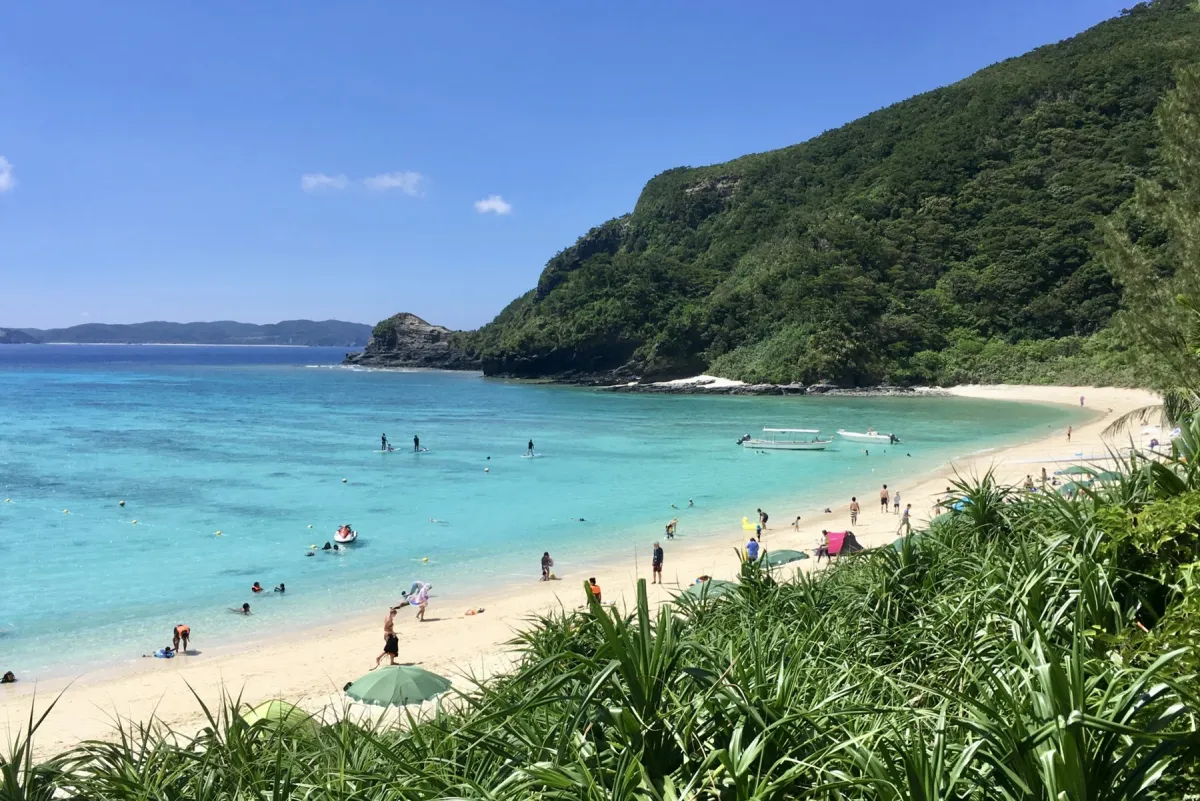
Okinawa's main island offers both Naha's urban services and coastal resort areas farther from the city. Staying in Naha can suit food, cultural interests and airport access, but it is not equivalent to sleeping beside a northern beach. A resort can offer convenient coastal time while making independent sightseeing and evening dining more transport-dependent.
Outer islands require another decision. Tokashiki and other Kerama destinations involve boat arrangements, while Ishigaki and Miyako have their own flight and local transport patterns. Do not assume that a route shown on a regional map operates on the day or at the hour you need. A morning boat and an afternoon activity should be checked together.
For snorkelling or diving, choose an operator that explains the site, equipment, supervision, medical requirements and cancellation policy. Coral and marine life need appropriate distance. A sandy beach near a reef is not evidence that every part of the bay is safe for swimming or that you may land wherever you wish.
Izu: a coastal stay from the Tokyo side
The Izu Peninsula can add a more substantial beach stay to a Tokyo-centred holiday. Shimoda and nearby beaches require a regional rail journey and then the local approach. A fast train connection to the peninsula is not the full trip to the sand. Consider an overnight stay if you want unhurried coastal time rather than a long day dominated by transport.
The JNTO Shirahama Beach page for Shimoda describes the Izu location and its bus approach from Izukyu-Shimoda. Check the current timetable and beach operating information for your date. There are several places called Shirahama in Japan; use the prefecture and nearest station to avoid booking the wrong coast.
Choose accommodation for the actual beach and your evening needs. A hilltop view may involve a steep walk, and a property away from the town may offer limited dinner options without a car. Families and travellers with mobility needs should ask about the route between the room, road and beach rather than relying on the word beachfront.
Shirarahama in Wakayama: beach and onsen
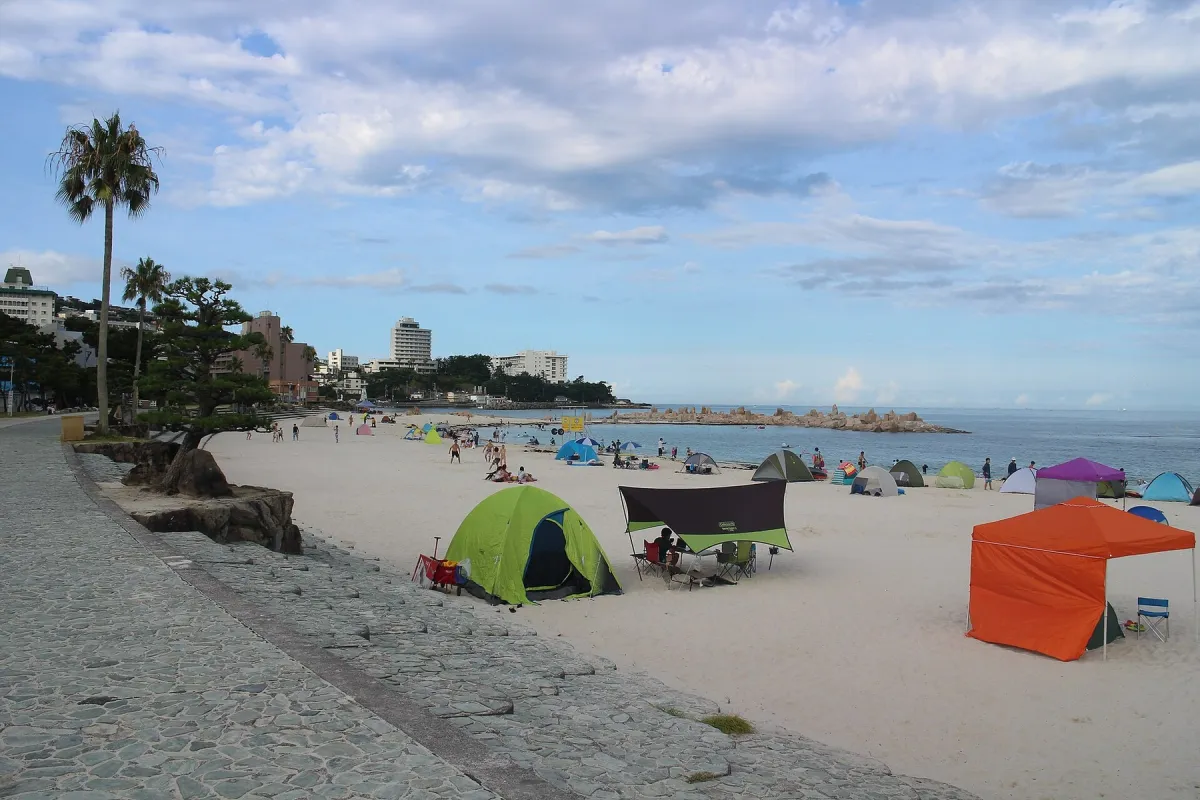
Wakayama's Shirahama area suits a deliberate coastal extension from Kansai, particularly when hot springs are also a priority. The sandy beach, town and accommodation choices can support a relaxed break, but they are not immediately beside central Osaka or Kyoto. Include the intercity journey and the final local transfer.
Managed swimming dates and services should be checked for the particular year. A winter photograph may show the beach clearly while saying nothing about summer supervision, water conditions or the facilities available during your visit. For an onsen property, check whether bathing and meals are included and how arrival time affects the evening.
Compare a central coastal stay with a property requiring repeated taxis or driving. A good location can make a short break feel slower and easier, while a low room price farther away can add substantial inconvenience. Keep the beach and the accommodation decision connected, especially when you are travelling without a car.
Kamakura and Shonan: a coastal day from Tokyo
Kamakura can combine a temple visit and a beach walk, but that is different from planning a full swimming day. Yuigahama, Zaimokuza and nearby coast have distinct access points and seasonal arrangements. Choose a manageable route rather than combining every temple, the Great Buddha, Enoshima and several beaches into one day.
The official Kamakura beaches overview explains the different strands and approaches. Use local current information for the operating season and swimming conditions. The existence of summer beach facilities does not imply they are open throughout the year.
On a busy day, allow for crowded trains and a slower return. Keep wet or sandy equipment contained and respect shared transport space. If you stay into the evening, check the last useful connection to the part of Tokyo where you are sleeping. A sunset at the coast still leaves a substantial journey back to some hotels.
Swimming, weather and facilities
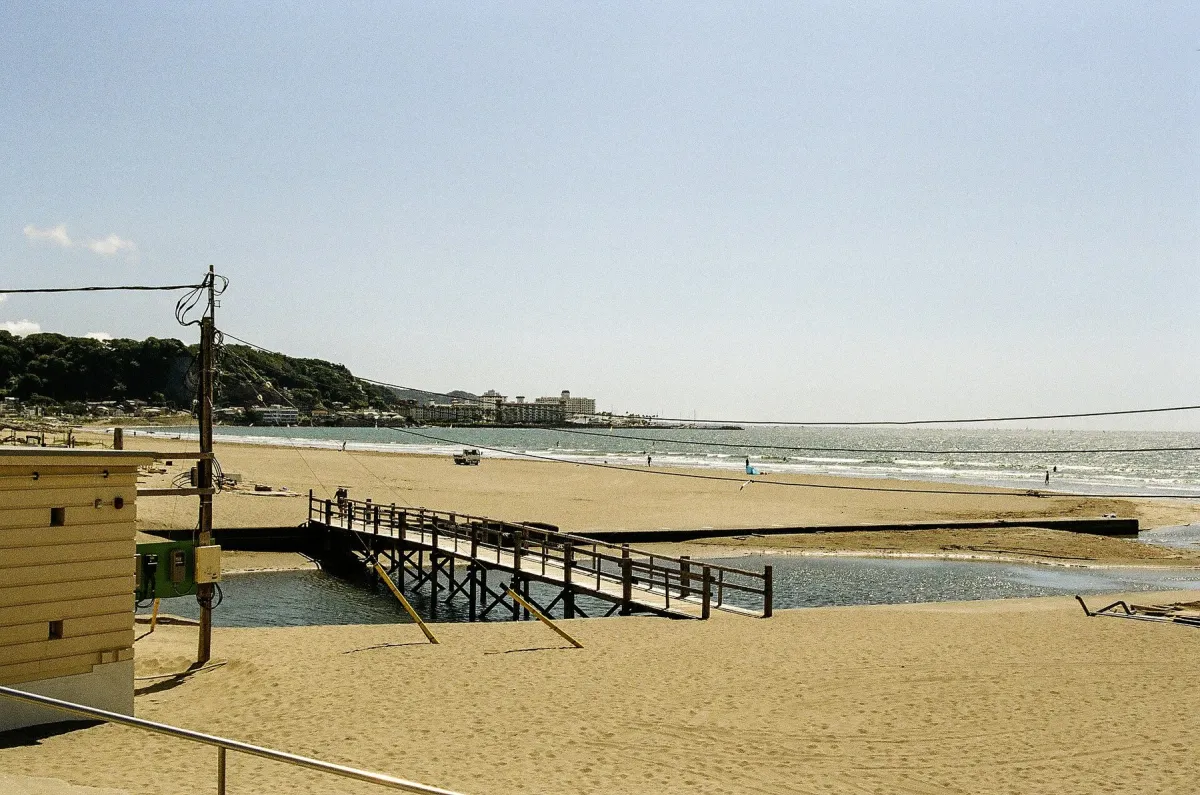
Use designated swimming areas when available and follow the instructions of lifeguards or the responsible operator. Flags, waves, currents, weather and marine warnings can change the plan. A beach that is suitable for a walk can be unsuitable for swimming, and a protected-looking bay can still have hazardous conditions.
Check toilets, showers, changing facilities, shade and access before committing a family day to the coast. Some facilities are seasonal or paid, and a quiet remote beach may have little support. Bring what you need without assuming that a shop or rental hut will be open. For accessibility, ask about the surface from the road to the beach and the availability of an appropriate facility.
Take local advice seriously during typhoon or heavy-rain conditions. Do not go to the water to watch dramatic waves, and do not treat a cancelled boat as an invitation to find an unofficial crossing. Our Health & Safety guide links the relevant assistance and hazard information.
Plan the night before the journey home
Island and coastal holidays deserve a sensible final buffer. A weather-sensitive boat, a separate domestic flight and an international departure on the same tight schedule can create a difficult chain. Consider spending the last night nearer the international gateway when the consequences of a missed connection are significant.
For a mainland beach stay, check the first train and local connection if your flight is early. A property near the sea may be far from the railway station, and a taxi may require advance arrangement. A beach hotel name does not establish a shuttle or early checkout service.
Keep the coastal part of the holiday focused. One suitable base with time to rest can be more satisfying than moving between several beaches with similar scenery. Choose a different coast only when it adds an experience you value enough to justify the transfer.
Beaches FAQs
Is Shirahama in Izu the same as Shirarahama in Wakayama?
No. They are different coastal destinations in different prefectures. Check the address and nearest station before booking.
Can I swim whenever the beach looks calm?
No. Follow the current designated swimming arrangements, flags, lifeguard or operator advice and weather or marine warnings.
Should I stay in Naha for a beach holiday?
Naha is useful for urban services and cultural interests. A northern coastal resort or selected outer island may fit a beach-led stay better, with different transport requirements.