Every country welcomes the new year differently: Scots go first-footing, Spaniards eat 12 grapes at midnight, Japanese temples ring their bells 108 times and Brazilians dress in white on the beach. If you want to join one of the big public celebrations in 2026–27, Edinburgh, Sydney and New York are the easiest to plan, but each needs booking or an early start.
This guide was researched on 5 November 2026 using official event and tourism websites. Event details for 31 December 2026 can still change, so check closer to the date.
Traditions at a glance
Swipe or scroll horizontally to see the full table.
| Country | Tradition | Where to see it |
|---|---|---|
| Scotland | Hogmanay and first-footing | Edinburgh, 29–31 December |
| Australia | Harbour fireworks at 21:00 and midnight | Sydney Harbour |
| United States | The Times Square Ball drop | New York |
| Spain | 12 grapes, one for each chime at midnight | Puerta del Sol, Madrid |
| Japan | Temple bells rung 108 times; first shrine visit | Temples and shrines across Japan |
| Greece | Vasilopita cake with a hidden coin | Family tables on 1 January |
| Brazil | White clothes and offerings to the sea | Copacabana, Rio de Janeiro |
Edinburgh's Hogmanay
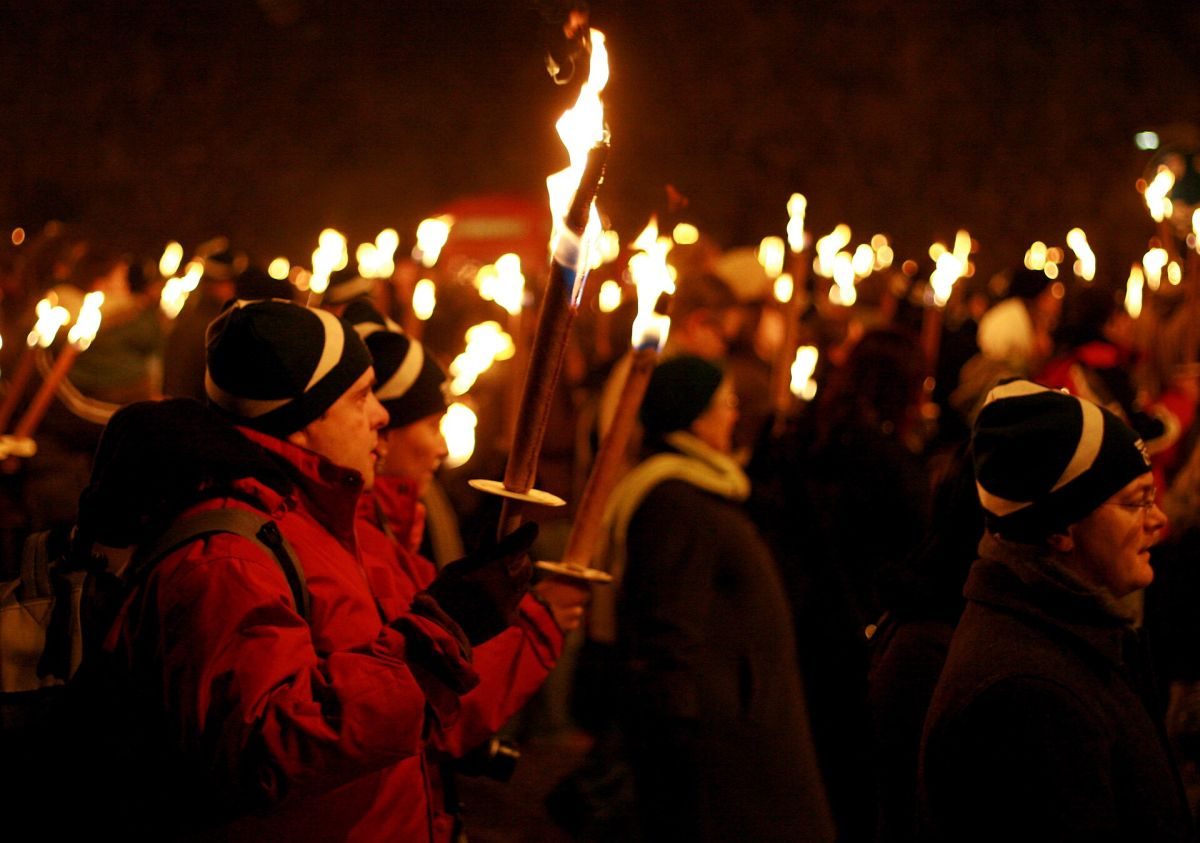
Scotland's New Year, Hogmanay, is a three-day festival in Edinburgh. In 2026 the programme starts with the Torchlight Procession on 29 December at 18:30, when around 15,000 torch bearers create "a river of fire" through the city. On 30 December, The Fratellis headline the Night Afore Party in Princes Street Gardens, and on 31 December the Street Party and a concert by Underworld in the Gardens begin at 20:00, ending with fireworks beneath the castle at midnight. Major events are ticketed, so book early.
Across Scotland, VisitScotland explains the tradition of first-footing: after midnight, friends and neighbours visit with gifts such as whisky, coal and shortbread to bring good luck. On 1 January, brave swimmers take part in the Loony Dook in South Queensferry.
Sydney
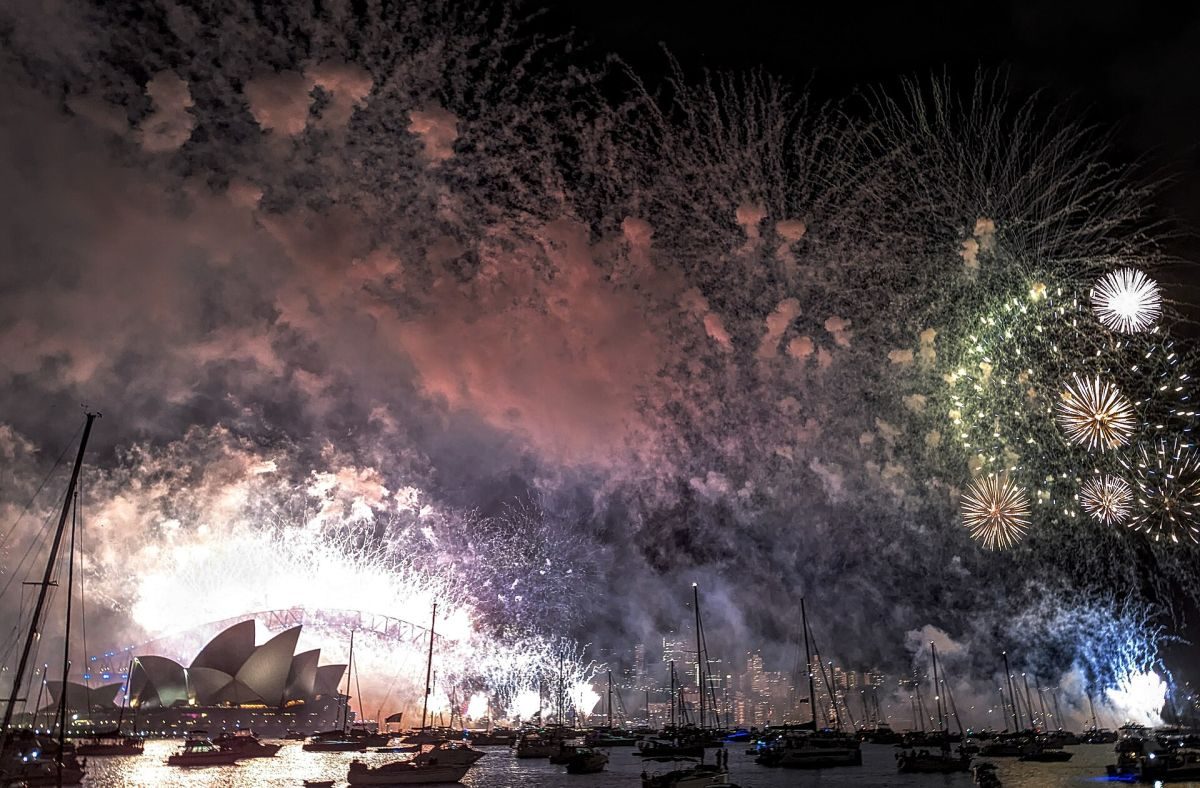
Sydney is one of the first major cities to welcome the new year. Fireworks light the harbour twice: at 21:00, with the Calling Country display celebrating Aboriginal and Torres Strait Islander artists, and at midnight, with the main show from the Harbour Bridge and the Opera House. Some of the best vantage points are free but ticketed or allocated by ballot, such as the Sydney Opera House forecourt (free tickets from 10:00 on 26 December), while others, including Taronga Zoo and the Royal Botanic Garden, are paid events. Many sold out months ahead.
New York's Times Square
The Times Square Ball makes its 60-second descent at 23:59, after a celebration that starts in the early evening. It is free and first-come, first-served, with viewing areas opening in the afternoon. Be prepared: there are no portable toilets, bags are searched, and large bags, backpacks, umbrellas and alcohol are not allowed. Many visitors prefer to watch on television or from a ticketed party nearby.
Spain and Japan
In Spain, people eat 12 grapes as the clock strikes midnight, one for each chime, for luck in each month of the new year. The most famous place to do it is the Puerta del Sol in Madrid, where the clock's chimes are broadcast nationwide; supermarkets sell tins of peeled grapes to make it easier.
In Japan, New Year (shōgatsu) is the most important holiday of the year. On 31 December, Buddhist temples ring their bells 108 times (joya no kane) to cleanse the 108 worldly desires, and in the first days of January, millions make their first shrine visit of the year (hatsumōde). Expect long queues at famous shrines such as Meiji Jingu in Tokyo, and note that many shops and restaurants close from 1 to 3 January.
Greece and Brazil
In Greece, families cut the vasilopita, a cake with a coin hidden inside, on New Year's Day; whoever finds the coin is said to have luck for the year. In Brazil, the biggest celebration, Réveillon, takes place on Copacabana beach in Rio de Janeiro, where millions of people dress in white for peace, watch the fireworks and leave flowers in the sea for Iemanjá, the goddess of the sea. Many also jump over seven waves for luck.
Planning a winter trip? See our European Christmas markets guide.
New Year traditions: FAQ
What is Hogmanay?
Scotland's New Year celebration. Edinburgh hosts a three-day festival from 29 to 31 December, and first-footing visits continue after midnight.
Why do Spaniards eat 12 grapes at New Year?
One grape for each chime at midnight, for good luck in each month of the coming year.
Is the Times Square Ball drop free?
Yes, but it is first-come, first-served, with long waits, no toilets and strict security rules.
Sources and planning checks
Event details were checked on 5 November 2026 against Edinburgh's Hogmanay, VisitScotland, the City of Sydney, the Times Square Alliance and Spain.info. Times Square information is based on the most recent published FAQ, and the descriptions of Japanese, Greek and Brazilian customs are general cultural information. Check event details closer to the date.
- Log in to post comments