Check the exact airport code, terminal, arrival time and final accommodation address before comparing transfers. A service's published travel time does not include immigration, baggage, the walk to the station, waiting for departure or the final approach to the hotel.
Compare the gateways with the itinerary
On smaller screens, swipe or scroll horizontally to read the full table.
| Airport | Useful for | Main transfer decision |
|---|---|---|
| Haneda, HND | Tokyo and nearby Kanto bases | Keikyu or Tokyo Monorail route, terminal and last service |
| Narita, NRT | Tokyo and international connections | Narita Express, Keisei services or airport bus for the hotel area |
| Kansai International, KIX | Osaka, Kyoto and Kansai | Namba versus other Osaka areas or a Kyoto-bound service |
| New Chitose, CTS | Sapporo and a Hokkaido route | Rail into Sapporo versus a regional onward journey |
| Fukuoka, FUK | Fukuoka and a Kyushu itinerary | International/domestic terminal arrangements and city connection |
| Naha, OKA | Okinawa main island | Naha urban transport versus a northern coastal base |
An open-jaw itinerary arriving in Tokyo and leaving from Kansai can reduce backtracking on a corridor trip. Compare its total fare and baggage conditions with the cost and time of returning to Tokyo. It is an option to price, rather than a guaranteed saving.
For a regional holiday, a connection into the relevant gateway may be more useful than a Tokyo arrival followed by another long transfer. Check whether flights are on one protected booking or separate tickets. The consequences of a delay can be very different, even when the itinerary appears as one line in your own calendar.
Narita: choose the service for your hotel area
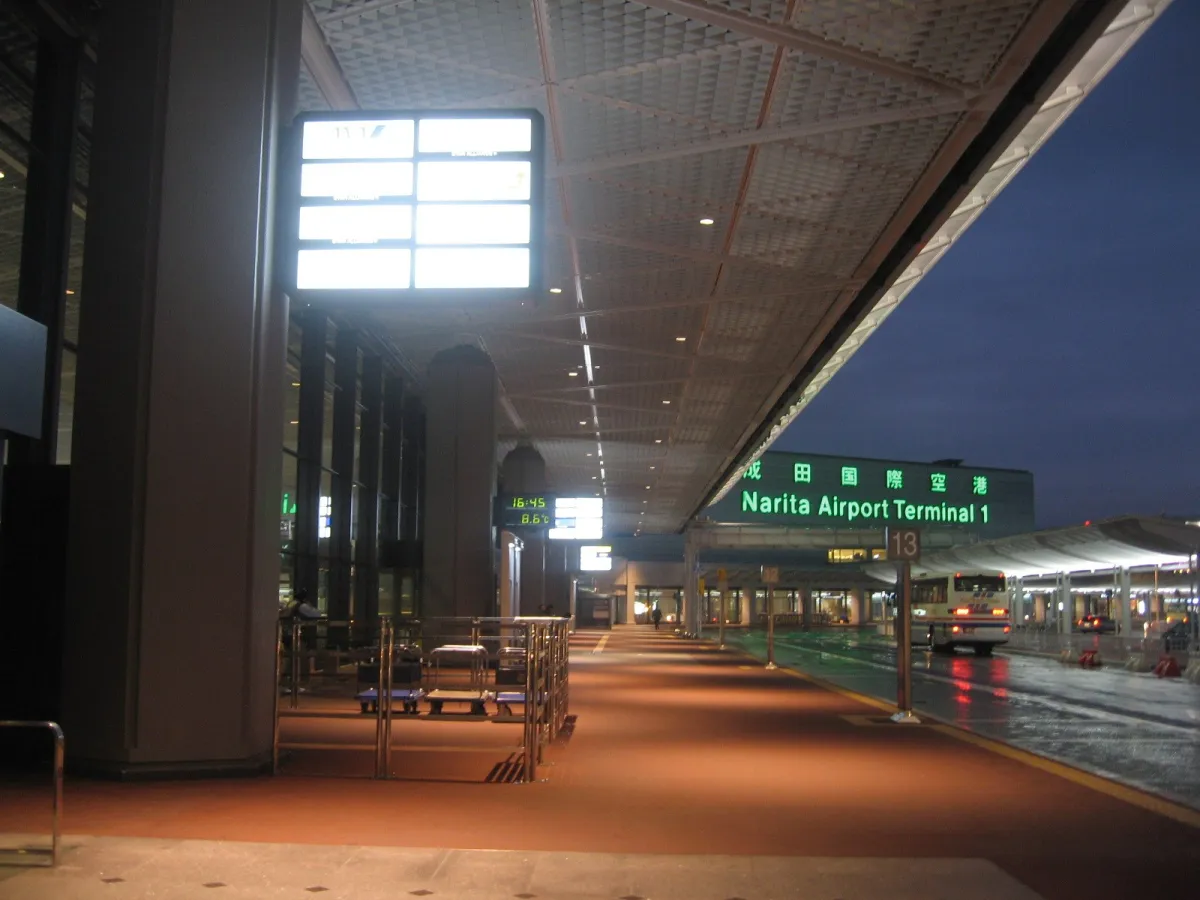
Narita is outside central Tokyo. JR's Narita Express and Keisei's Skyliner serve different station patterns, while other Keisei services and airport buses offer additional choices. A train being faster to one terminal station does not make it faster to every hotel. Include the final connection and any stairs or long station walk.
The official Narita access directory links the rail and bus modes and their operators. Use the operator information there to compare Narita Express, Skyliner and other routes. Check the current destination and ticket type before boarding; different trains can use the same broad railway network.
Terminal access also matters. A flight using Terminal 3 can involve a different walk or terminal arrangement from one using Terminal 1. Check the airport's current instructions for the terminal on your booking. An airport-station name containing multiple terminals does not mean every check-in counter is immediately above the platform.
Haneda: useful city access, with terminal details
Haneda's main rail choices are Keikyu and Tokyo Monorail. The useful route depends on whether you need Shinagawa and onward lines, Hamamatsucho and its connections, or a through service toward another district. Check the train destination as well as the line name, because through-running services can continue beyond the airport railway.
The Toei airport-access guide explains the relationship between Keikyu and the Asakusa Line. It also distinguishes Narita's Skyliner route from services that run toward the Asakusa Line. A reserved limited-express product and an ordinary through service have different ticket requirements.
For departure, verify the terminal from the airline booking and the airport's current information. Domestic and international operations should not be assumed to use the same building. Allow time for the airline's check-in and security deadlines, and check the first rail service before booking a very early flight.
Kansai: Namba, Osaka and Kyoto are different targets
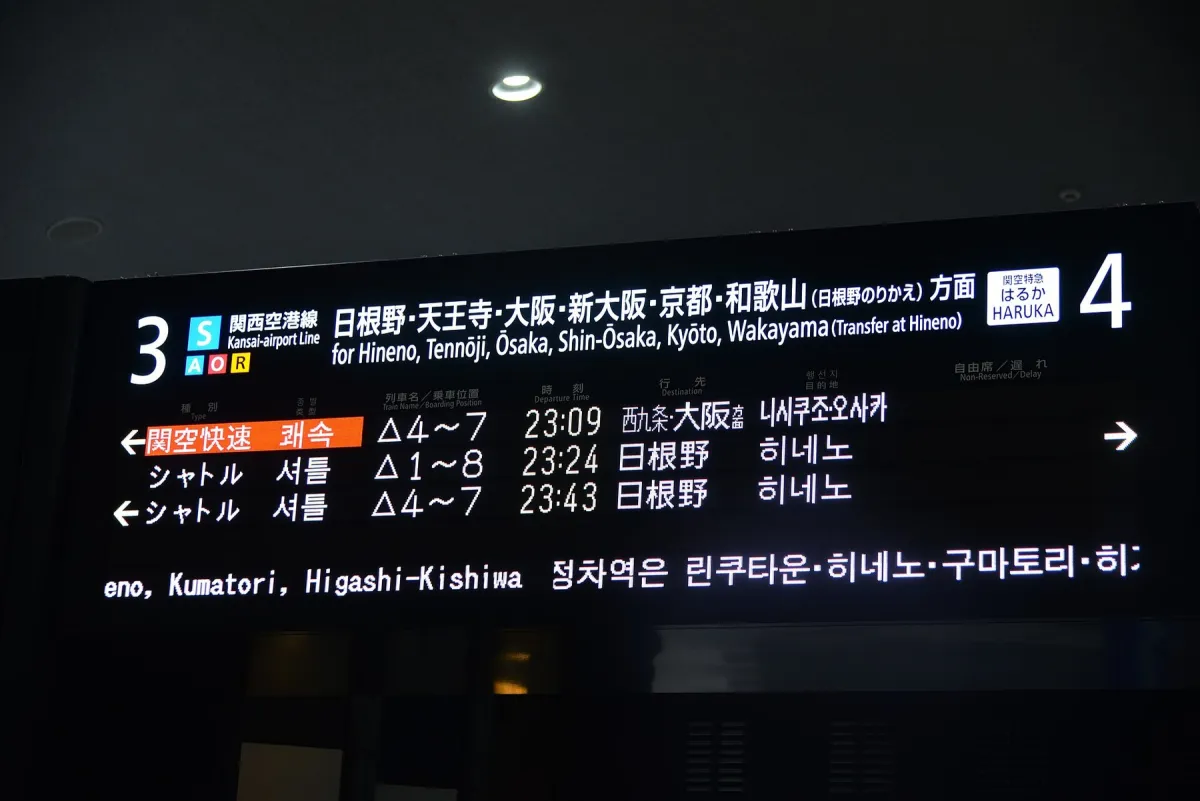
Nankai serves Namba, while JR services provide other Osaka and Kyoto options. Select the service according to the hotel, not simply the city name Osaka. A property above or beside Nankai Namba can be convenient for one arrival plan, while an Umeda-area hotel suits a different set of journeys.
Use the Kansai Airport access pages to reach current rail, bus and terminal information. Limited-express and other services have different ticket arrangements and stopping patterns. Check the exact train and the local connection needed after it.
Kansai's terminals are not interchangeable for the final approach. If the airline uses a terminal requiring a shuttle or additional walk, include that time. For a late landing, verify that the onward service operates after a realistic allowance for entry procedures. A timetable that technically follows the scheduled landing by a few minutes is not a practical plan.
Late arrivals, early departures and airport hotels
Keep the arrival evening light and confirm the property's check-in window. A hotel booking can be at risk if you arrive after the stated deadline without making arrangements. Save a direct contact method and tell the property if a delay is likely. Do not assume a late-flight note entered into a platform has been acknowledged.
An airport-area stay can be sensible when the final city service is uncertain or the next flight is early. Check the hotel's actual terminal access, shuttle hours and whether a reservation is needed. The word airport in a property name does not establish walkable access or a round-the-clock shuttle.
For an early departure from a distant city, consider spending the last night closer to the gateway. A pre-dawn taxi, a separate domestic flight or a long train connection can change the cost and risk of a supposedly cheap international fare. The final hotel should serve the departure plan, rather than simply repeat the first-night choice.
Airport changes and separate tickets
Narita and Haneda are different airports connected by a surface journey. Changing between them may require entering Japan, collecting bags and checking in again. Confirm the required documents and the airline's arrangements before buying the flights. A published bus or train duration is only one part of the connection.
For a domestic connection, ask whether baggage is checked through and where immigration and customs occur. The answer can depend on the airports, airlines and ticketing. Do not infer the procedure from a previous trip with a different carrier. Keep any minimum connection information from the airline alongside your booking.
Separate tickets can leave you responsible for a missed onward flight even when the earlier journey was delayed. Check the booking terms and insurance rather than assuming that a travel marketplace's display creates protection. Leave a generous practical buffer for a critical connection, and consider an overnight stay when the consequences of failure are substantial.
Families, mobility needs and the first transfer
Compare the journey from aircraft to hotel with the needs of the whole group. A direct bus may be easier with large luggage if it serves the right stop and accommodates your requirements; a train may be more predictable for a hotel near a suitable station. Neither mode is universally best.
For wheelchair or other assistance, contact the airline and relevant ground operator in advance. Check terminal facilities, lift-equipped station exits and the final approach to the property. A vehicle that carries a folding wheelchair is different from one that permits a passenger to remain in a wheelchair.
Keep the first hotel address and a backup payment method accessible before leaving the terminal. Arrange mobile connectivity or download the route while you have a reliable connection. For entry preparation use Visa & Entry; for journeys after the first base use Getting Around.
Airports & Transfers FAQs
Is Haneda always better than Narita?
It depends on the flight, terminal, arrival time and hotel location. Compare the complete journey and the usable services for your arrival.
Can I treat a Narita–Haneda transfer as an ordinary connection?
It is a surface journey between different airports and may require entry, baggage collection and new check-in. Confirm documents, time and protection with the airline.
Does an airport hotel guarantee a 24-hour shuttle?
No. Check the actual terminal, shuttle schedule, reservation policy and alternative access with the property.