
Sign in
For Photos4Travel editors and team members.
Hawaii · Lapakahi Photography
Lapakahi Photography: Read a Hawaiian Coastal Settlement
At Lapakahi, the most interesting photograph is often the one that connects the settlement with the coast. Stone remains are part of a lived landscape, not loose material for a composition. Give the interpretation time to explain what you are seeing before choosing a closer frame.
On this page · 4 sections ShowHide

Access update checked 11 November 2026: Hawaii State Parks’ notice dated 30 October 2026 lists Lapakahi as closed because of fallen trees. Confirm an official reopening before travelling; the trail advice below applies only when the park is open.
Photograph the relationship, not an isolated ruin
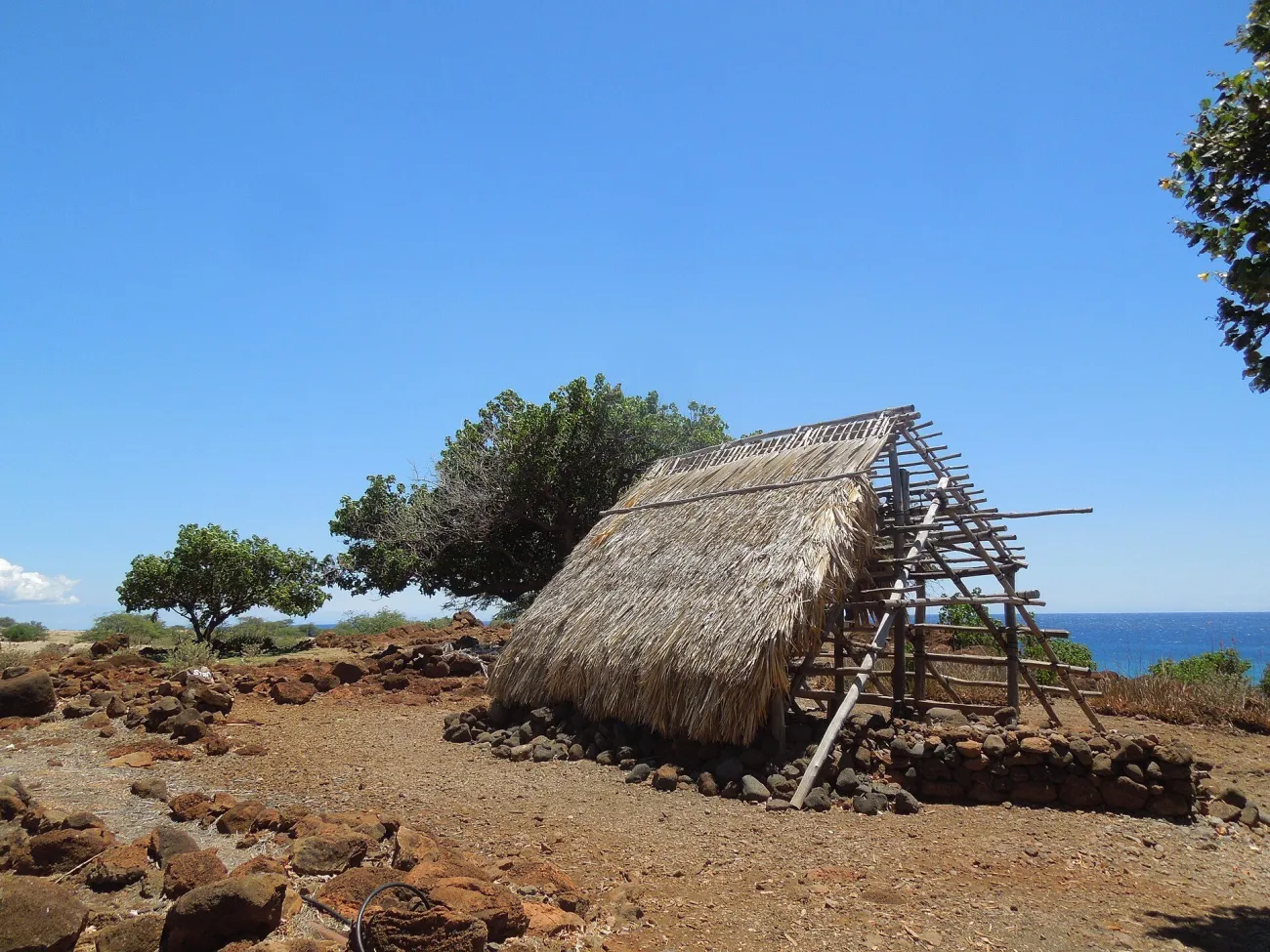
The reference shows a reconstructed hale with a thatched section and exposed timber framework, surrounded by stone features with the ocean beyond. The contrast between timber, thatch and volcanic stone gives the frame its texture. Treat it as a documented modern view of an interpreted settlement, not proof that every visible element is an untouched ancient structure.
Start with the setting. Look at how the permitted route relates the settlement, shoreline and surrounding terrain. A wider view can communicate more than a tight crop that removes all geographical context. Read the signs before naming a feature in your caption; an attractive stone outline does not tell you its function by itself.
Then choose a detail you can photograph from the route without touching or moving anything. The point is to show the material as it is, including weathering and the relationship to nearby features. Avoid describing every visible element as untouched or entirely original: the official park introduction identifies the remains as partially restored.
Use the interpretive trail and prepare for exposure
Hawaii State Parks describes a self-guided visit through the coastal settlement and lists no drinking water. Bring what you need and check current hours, notices and facilities before travelling. An exposed outdoor visit should fit the heat, weather and ability of the people with you.
Remain on the permitted route. Do not stand on walls to improve a view, enter a fragile feature or collect a piece of the site. A photograph can include a path or barrier honestly; editing a boundary out does not create a right to cross it.
Keep the coastline separate from a water-activity plan
The adjacent waters have marine-conservation rules, and the park lists shorebreak and current hazards. Treat the coast as part of the view unless you have separately checked the activity, access and regulations. A quiet-looking photograph does not show what conditions will be like on your visit.
Lapakahi is in the Kohala area of Hawaiʻi Island. Fit it into a geographically sensible day and avoid turning a heritage visit into a hurried photograph on a long cross-island drive. Use Map & Islands for orientation and Sacred Places for related cultural landscapes.
When sharing the image, name the site and describe what the interpretation establishes. The camera position, date and maker should come from the source record when known. Do not fill a gap with a plausible-looking story about who used a specific wall or platform.
Frequently asked question
Can I climb the stone remains for a better photograph?
No. Keep to the permitted route and leave stonework undisturbed. Choose a wider frame or another legal position instead.