
Sign in
For Photos4Travel editors and team members.
Hawaii · Map and Islands
Hawaii Map and Islands: Choose the Right Island and Coast
On this page · 8 sections ShowHide
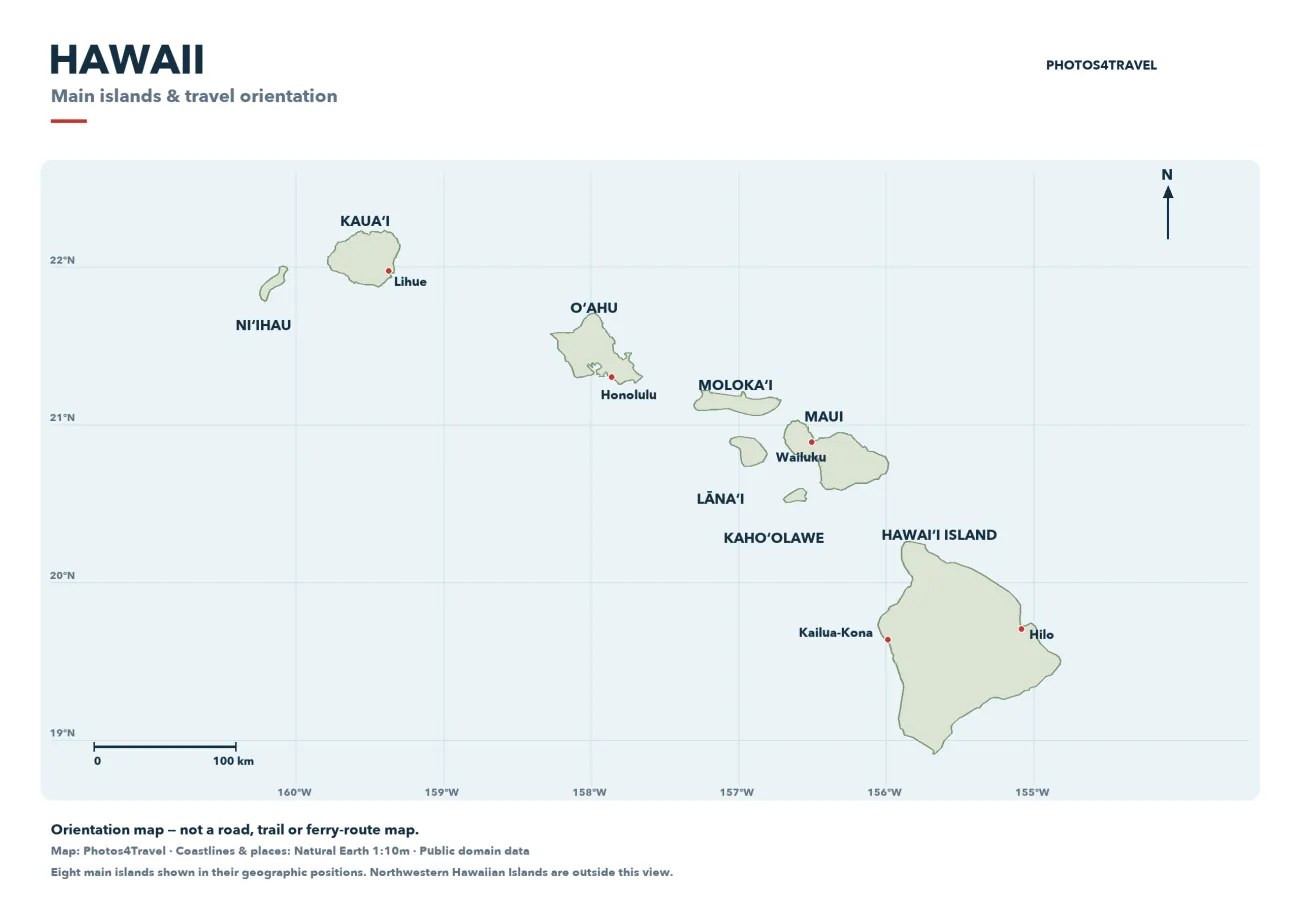
A Hawaii map is most useful when it stops you booking the wrong combination. Honolulu is on Oʻahu. Kona and Hilo are on opposite sides of Hawaiʻi Island. A hotel can be on the right island and still be a poor base for the days you want. Use the map to choose an island first, a coast second and an airport third; then check the complete journey between them.
Which Hawaiian island fits your trip?
The official visitor overview introduces six main visitor islands. Four commonly serve a first trip: Oʻahu, Maui, Kauaʻi and Hawaiʻi Island. Molokaʻi and Lānaʻi are meaningful choices with different services and access arrangements, rather than obligatory extra stops. Kahoʻolawe and Niʻihau should not be treated as ordinary self-guided holiday additions.
On a small screen, swipe the table sideways to compare island choices.
| Island | A useful reason to choose it | Main planning tradeoff | Principal arrival airport |
|---|---|---|---|
| Oʻahu | Honolulu culture, food and beaches with workable car-free days | Urban traffic and a very different pace outside Waikīkī | HNL |
| Maui | Beach stays, Haleakalā and a deliberately paced Hāna visit | Some headline outings require long drives and separate reservations | OGG |
| Kauaʻi | Hanalei, canyon scenery and carefully selected coastal/outdoor days | No road circuit around the whole island; weather changes plans | LIH |
| Hawaiʻi Island | Volcanic landscapes, Kona/Kohala coast and Hilo-side exploration | Long distances make base selection especially important | KOA or ITO |
| Molokaʻi | A quieter visit built around community-hosted experiences | Limited services; sensitive places have their own access rules | MKK |
| Lānaʻi | A compact town-and-resort stay with planned excursions | Ground transport and off-road access need advance checks | LNY; verify any ferry option separately |
Oʻahu: separate Honolulu from the rest of the island
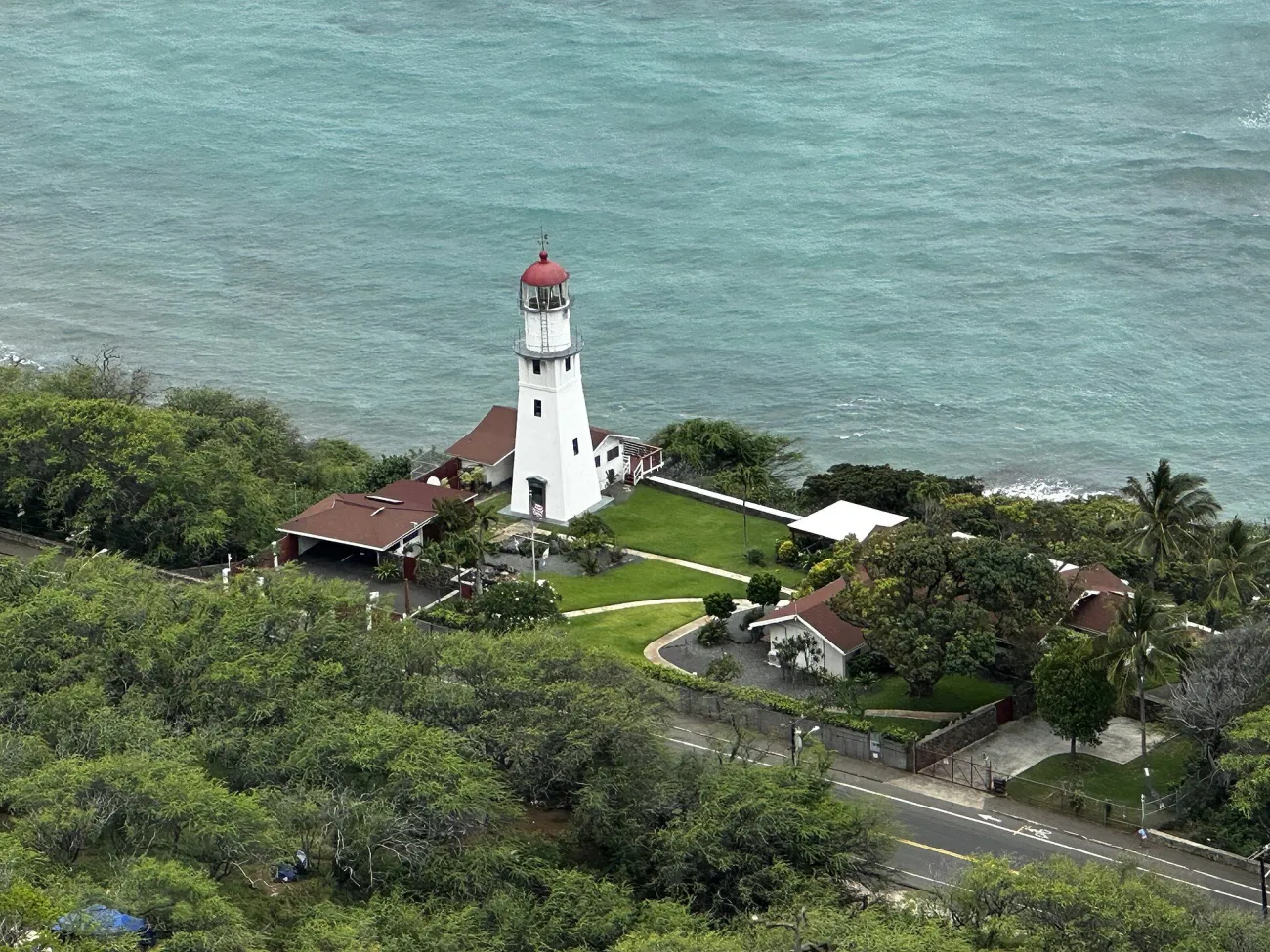

Honolulu occupies Oʻahu’s south side, with Waikīkī east of downtown. A Waikīkī base can put restaurants, beach time and organised departures within an easy local area. Downtown museums and the royal district are separate outings; “staying in Honolulu” does not mean every attraction is outside the hotel door.
The North Shore and the windward coast offer a different setting. Reaching them takes time, and a route that looks short on a map can meet traffic or limited parking. Make a coast the focus of a day instead of combining opposite sides with several fixed bookings. For a first visit without a rental car throughout, Oʻahu is the clearest place to test that approach.
The airport code is HNL. Confirm the final transfer to the actual accommodation address and which organised trips collect there. Our airports guide handles arrival; transportation explains travelling around after you settle in.
Maui: a central airport does not make every drive short
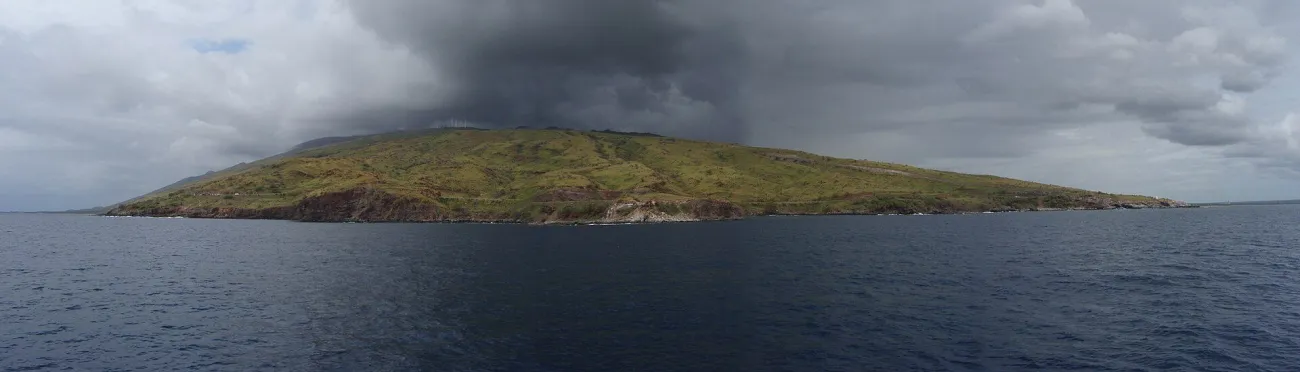

Kahului Airport, OGG, is the principal gateway. South Maui, West Maui, the Haleakalā summit area and the Hāna side should be considered distinct planning areas. A beach-based holiday with one major excursion is different from trying to cross the island for a new headline attraction every morning.
Choose your base around the days you will repeat. If most days are for the beach, prioritise the shoreline and services you actually want. If the summit or Hāna is central to the trip, examine the drive and the return as carefully as the outward journey. An early-start outing can become tiring when the same day also includes a distant dinner booking.
Check current Maui access information before treating an old road or town itinerary as usable. The map shows geography; it does not certify that a district, business, trail or parking area is open. Reservation and recovery information should come from the managing authority and local host.
Kauaʻi: there is no drive around the Nāpali coast
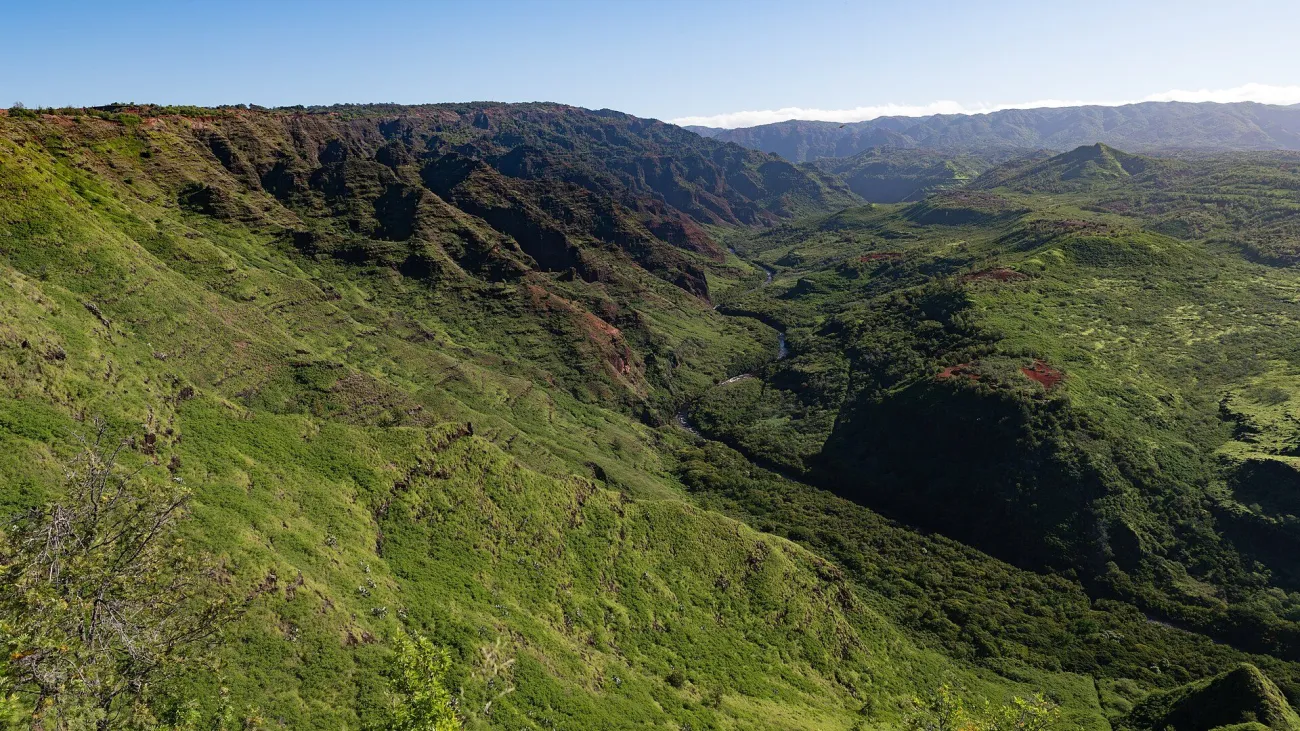

Līhuʻe Airport, LIH, lies on the east side. The north shore around Hanalei and Princeville, the east side and the south shore around Poʻipū give different daily starting points. The roads do not form a complete loop across Nāpali. A line drawn across the island’s northwest corner is not a road connection.
Keep a north-shore day together. Treat Waimea Canyon and Kōkeʻe as a separate west-side plan. A boat excursion has its own departure harbour; never assume a Nāpali tour leaves near your hotel simply because the scenery is on the same island. Check the departure address before choosing accommodation or a tour time.
Access to Hāʻena and the Kalalau Trail has specific arrangements. A reservation, shuttle booking and overnight permit are not interchangeable. Use the State Parks website to find the current park rules rather than relying on a map pin or an old social-media route.
Hawaiʻi Island: decide between one base and a split stay

Hawaiʻi Island is large enough for its name to conceal a major ground journey. Kona International Airport is KOA, on the west; Hilo International Airport is ITO, on the east. Kona, the Kohala coast, Hilo, Volcano and the south coast are not interchangeable hotel labels. Put the places that matter to you on the map before selecting a base.
A west-side stay can suit repeated coast time and Kona-area outings. If Hawaiʻi Volcanoes National Park is a major priority, compare a split stay with doing a long return drive. The right answer depends on how much luggage moving bothers you and how many days you intend to spend in the park. Neither a split stay nor a single resort base is automatically better.
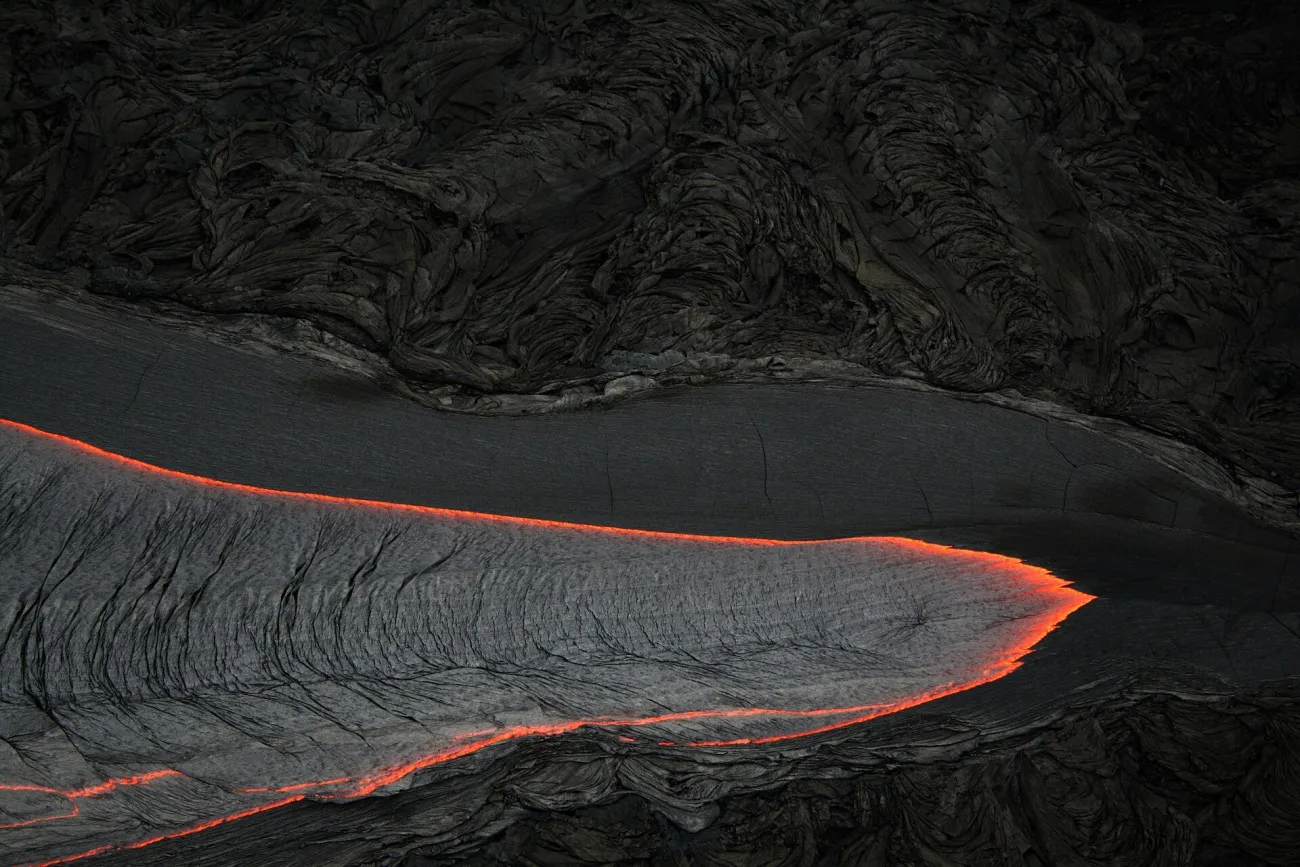
Volcanic features shown on a map are not promises of visible molten lava or open trails. Check Hawaiʻi Volcanoes National Park for present access and alerts. Add adequate fuel, food and rest opportunities to any longer drive; services are not evenly distributed across the island.
Molokaʻi and Lānaʻi need a deliberate reason to visit
Choose these islands because their particular hosts, landscapes or accommodation match your interests. Fewer visitors does not mean unlimited public access, a faster route or an empty island available for exploration. Confirm the actual transport, meal options and operating days before committing to a multi-island ticket.
A ferry line on a tourist diagram can become outdated. Verify current ports, sailing days and onward transport with the operator; do not infer a statewide ferry network from one island connection. When schedules are limited, an overnight stay may be more sensible than relying on the last return of the day.
Read windward, leeward and elevation together
Windward generally describes the side facing the prevailing trade winds; leeward is the sheltered side. These terms help explain broad landscape differences, but they are not weather guarantees. A sunny coast and a wet inland valley can be part of the same island day. Read the weather guide alongside the exact forecast for your outing.
Elevation matters as much as island choice. A high summit needs its own clothing and health planning, even when you leave a warm beach hotel. Ocean exposure also changes around a coastline. A photograph of flat water at one beach is no basis for predicting another beach, or the same beach on your travel date.
For routes, use a live navigation estimate as one input, then add the parts it cannot organise: legal parking, reservation windows, walks from the vehicle, meals and rest. Keep an alternative near the original area. Driving across an island in search of sunshine can use the very time you wanted outdoors.
Travel TipBefore booking, place your hotel, airport, first fixed reservation and last departure on one map. If they pull the trip in different directions, change the base or reduce the itinerary.
Frequently asked questions about Hawaii’s islands
Which island should a first-time visitor choose?
Oʻahu is a useful starting point for a mix of city culture, food and beach days with less dependence on a car. Choose Maui, Kauaʻi or Hawaiʻi Island when their particular landscapes are the main reason for your trip.
Can I drive between Hawaiian islands?
No. Plan separate island connections and ground transport. Check any available ferry route with its operator; there is no road network linking the islands.
Can I see Kona, Hilo and the volcano park from one hotel?
It is possible to organise a single-base stay, but compare complete return journeys. A split stay can reduce repeated long drives when the east side and national park are major priorities.