
Sign in
For Photos4Travel editors and team members.
Hawaii · ʻIolani Palace Photography
ʻIolani Palace Photography: Architecture and Hawaiian Royal History
ʻIolani Palace is a royal-history visit as well as an architectural subject. An exterior photograph can establish its setting in Honolulu, but it cannot explain the kingdom, the overthrow or the building’s later uses by itself. Give the history a place in the visit and choose camera positions that respect the palace and other people.
On this page · 4 sections ShowHide

Begin with the palace’s history
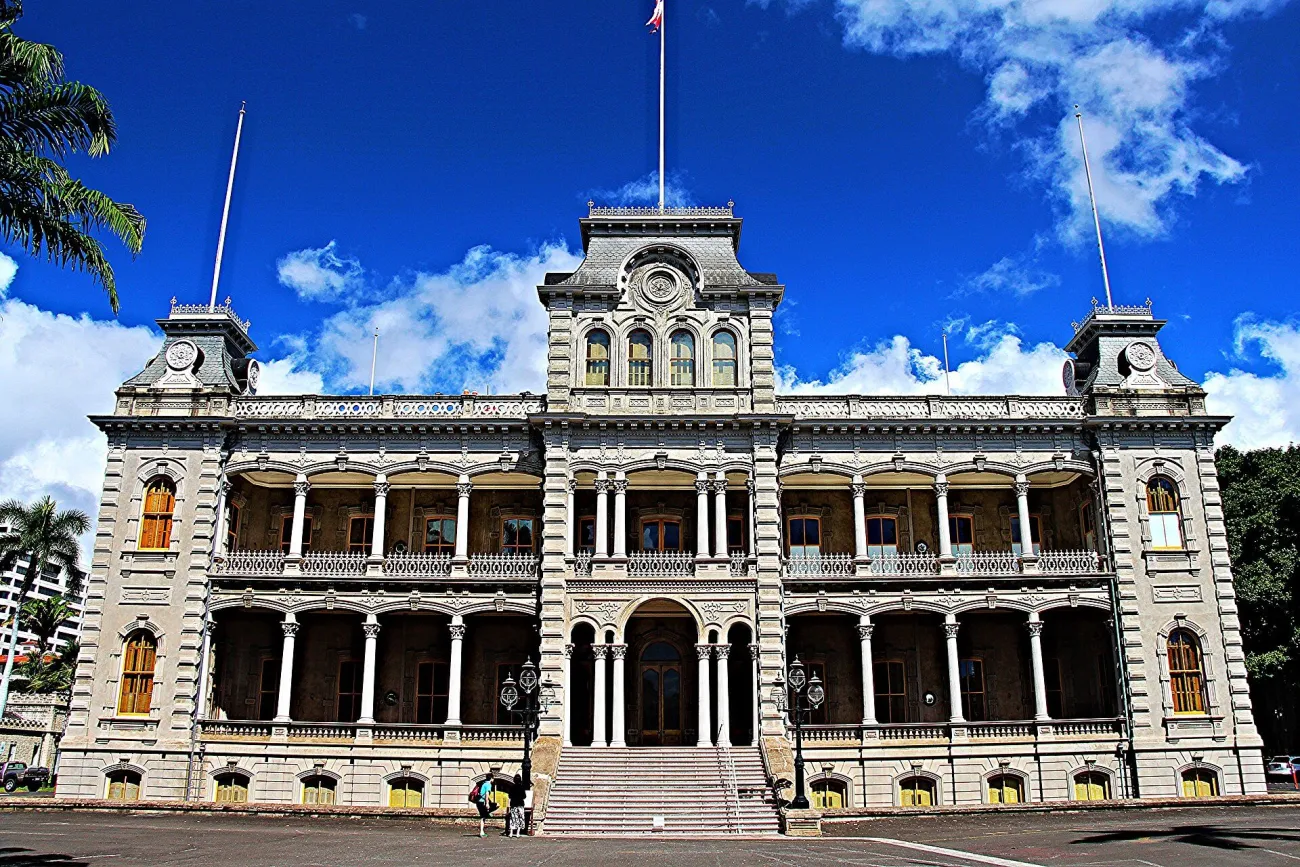
Jason Raia’s exterior reference places the central staircase and upper tower on a strong vertical line. Repeated columns and balconies spread across the façade, while the blue sky separates the roofline clearly. Keeping that symmetry visible gives the building more presence than a crop that cuts off its outer sections.
Completed in 1882, the palace was the residence of King Kalākaua and later Queen Liliʻuokalani. The Hawaiian monarchy was overthrown in 1893, and the building subsequently served government functions before restoration as a museum. The palace’s own account introduces those distinct stages.
That context changes a photographic walk. An architectural detail can be part of a larger story rather than a decorative close-up. Start with a view that explains the building and its surroundings where public access permits, then consider a smaller feature without touching or entering restricted areas.
Separate exterior photographs from interior access
Seeing the palace from outside is different from joining an interior tour. Check the actual admission product and arrival instructions on the official visitor page. Do not infer interior access from a grounds photograph or assume an exterior reference identifies the room a tour will visit.
The published rules allow personal-use photographs under restrictions. Flash, tripods, recording and certain other equipment are not permitted. Read the current list before arrival and ask about commercial work separately. Respect signs and staff instructions even if a photograph online appears to have been made differently.
Give the visit enough time
The palace is in downtown Honolulu, on Oʻahu. Plan the actual journey from your accommodation and keep time for the booked visit rather than squeezing it into a rushed transfer between distant parts of the island. Consider heat, rain and where you will keep belongings that are not allowed inside.
If photographing with companions, agree when the camera will be put away. Reading interpretation and listening during a tour can reveal details you would otherwise miss. For a closer portrait, ask first; staff and other visitors do not become subjects simply because they are inside the frame.
The Hawaii history guide connects this visit with the wider story. The Photo Spots guide helps combine an architectural visit with a separate coastal outing without repeating the same reference-image analysis.
Frequently asked question
Can I take a tripod into ʻIolani Palace?
The published visitor rules prohibit tripods. Check the current photography and belongings guidance before arriving, and seek separate permission for commercial work.