
Sign in
For Photos4Travel editors and team members.
Hawaii · Punaluʻu Black Sand Beach Photography
Punaluʻu Black Sand Beach Photography: Contrast and Coastal Care
Punaluʻu’s black sand offers a distinctive subject without needing an elaborate photographic setup. The useful decision is how much of the coast to include: a wider frame can explain the setting, while a closer study can emphasise sand and water. Build the visit around the conditions you find, not a promise of clear skies, calm surf or wildlife in a particular place.
On this page · 4 sections ShowHide

Start with the relationship between sand and water
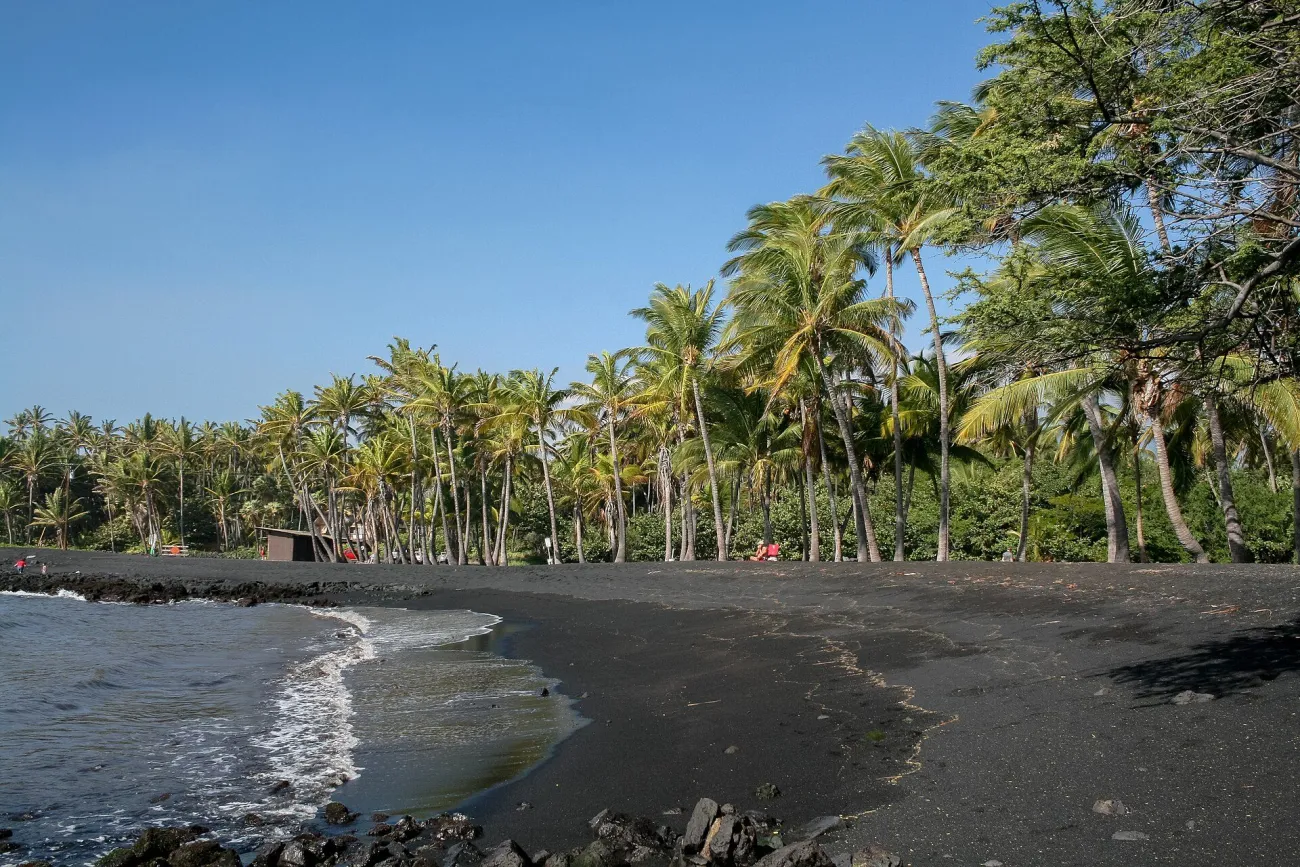
In Diego Delso’s reference photograph, the shoreline curves in from the left while palms form a tall, textured edge behind the dark sand. A thin line of pale foam separates water from beach. Keeping the palms and curve together explains the setting better than cropping tightly around a single patch of black sand.
Look at the boundary where the water meets the sand before choosing a frame. A bright strip of foam can draw attention across a darker surface; too much empty sky can weaken that relationship. Try a wider view first, then a smaller composition from the same safe area. The aim is to change the visual emphasis without moving into the reach of waves.
Keep texture believable when editing. Black sand can lose its surface detail if the dark areas are pushed too far, while bright water can become a blank white patch. A restrained edit that preserves both is often more useful than exaggerating colour. A photograph should help someone recognise the place, not create expectations the coast cannot meet.
Let wildlife determine the distance
If turtles or other protected animals are present, leave them space, follow posted guidance and keep access routes clear. A longer focal length or a wider environmental photograph can be the right choice. Do not move closer because another visitor has done so, surround an animal or wait in the route it is using.
Wildlife sightings are not guaranteed. Plan the photograph around the beach itself and accept an animal-free frame. Our Health & Safety guide links current official protection guidance; follow staff instructions where they are present.
Make this a coastal visit, not a swimming assumption
A black-sand beach photograph cannot establish safe swimming, present facilities or the conditions on your travel date. Check the beaches guide and local advice before deciding on an activity. Keep footwear and camera carrying arrangements suited to the actual surface, and protect equipment from sand and spray.
Punaluʻu is on Hawaiʻi Island. Match the visit to your island route rather than treating it as a stop from a Honolulu hotel. Leave natural material where it is; sand and stones are part of the place, not something to collect for a closer photograph back at the accommodation.
Frequently asked question
Will I definitely see a turtle at Punaluʻu?
No. Wildlife is unpredictable. The beach itself provides the photographic subject; if an animal is present, give it space and follow current guidance.