THAILAND TRAVEL GUIDE
Thailand Health & Safety: Roads, Sea Conditions & Preparation
Prepare for the risks that affect the journey you are actually taking: road travel, heat, sea conditions, remote access and current regional advice. This page helps organise those decisions; a qualified clinician should advise on individual medical needs.
Read current regional advice before choosing the route
Check the UK FCDO Thailand advice and the US State Department advisory, or your own government's current service. Their risk categories and geographic coverage can differ. Read the actual areas and implications rather than treating one overall country label as a description of every province.
As checked on 25 October 2026, FCDO advice includes areas near the Cambodia border and parts of the far south near Malaysia. Check the current map and wording before including those areas or a cross-border journey. A popular resort elsewhere in Thailand should not be used to infer the status of a distant border route.
Check how the advice affects insurance. Keep a route that can change if a crossing, road or local site becomes unavailable. Do not approach a closed area to see whether a restriction is being enforced. The Map & Regions guide provides geographic context, not security clearance or an operating-border guarantee.
Arrange health preparation for your itinerary
Seek travel-health advice early enough for the recommendations relevant to your route, length of stay, activities and medical history. The CDC Thailand destination page is a useful starting source, but it cannot determine your personal needs without that context.
Discuss routine vaccination, mosquito exposure, any remote forest or border travel and how to manage existing conditions. Carry essential medication in its original packaging with appropriate documentation, and check Thai restrictions where the medicine could be controlled. A medicine available over the counter at home is not automatically unrestricted abroad.
Insurance should fit the real activities and transport. Check medical treatment, evacuation, pre-existing conditions and exclusions for riding, diving or trekking. Keep the assistance number and policy details offline. An island clinic and a major-city hospital offer different levels of access; include the journey to care when assessing a remote stay.
Medicines and route-specific health documents
Check the active ingredient of any medicine through the Thai FDA traveller medicine verification and permit service. Narcotic and psychotropic medicines can require a different process from ordinary personal medication. Keep the prescription and original packaging, verify the quantity and apply in time when a permit is required. A prescription from home does not itself establish permission to bring every medicine into Thailand.
Entry-health documents depend partly on the route. Thailand's MFA yellow-fever guidance identifies certificate requirements for travel from or through listed risk countries. This is not a blanket vaccination requirement for every visitor. Show the full transit route to a qualified travel-health professional and confirm current border-health requirements with the responsible authority before departure.
Road travel deserves a deliberate choice
Thailand drives on the left, and government travel guidance highlights road-accident risk, particularly for motorcycles. A scooter should not be the automatic answer to an inconvenient hotel location. Compare a better-located room, organised transfers and occasional taxis before deciding to ride.
Check licence and permit requirements for your nationality and vehicle category, plus the rental agreement and insurance. A rental shop accepting payment does not prove legal entitlement or coverage. Wear the required protective equipment and do not ride after drinking. If you are inexperienced, a holiday is a poor setting to learn in unfamiliar traffic.
For a hired car or driver, consider seat belts, suitable child restraints, luggage and the driving day. A long intercity journey followed by a night activity can create avoidable fatigue. For walking, choose crossings carefully and remember that a short distance on a map may involve broken pavement, fast traffic or little shade.
Sea, boats and swimming
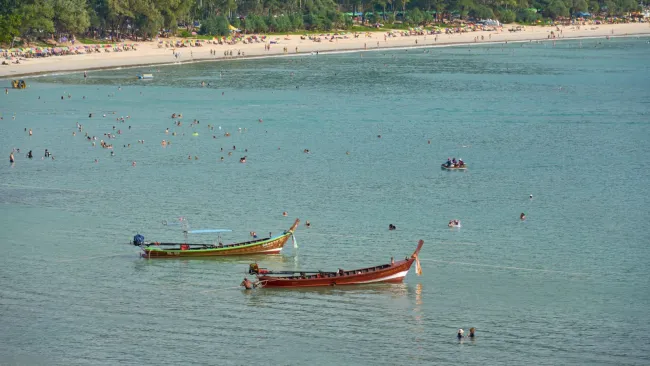
Follow the flags and instructions at the actual beach. Calm-looking water or a sunny forecast does not establish safe swimming conditions. If a red flag or closure applies, choose another activity. Do not copy the behaviour of other swimmers as evidence that the warning can be ignored.
Before a boat trip, assess the operator, lifejackets, boarding method, weather policy and the journey home. Ask about a child-size lifejacket where relevant. A faster boat is not automatically a safer or more comfortable option, and a cheap ticket is not useful if the operator's safety arrangements are unclear.
For diving or other specialised activities, check recognised training, equipment and the insurance terms that apply to you. Follow the qualified operator's guidance on the activity and subsequent travel. Do not rely on a general travel article for an individual fitness-to-dive decision or treatment advice.
Heat, mosquitoes and outdoor days
Schedule strenuous or exposed visits for a suitable part of the day and allow a real break. Carry drinking water and use shade rather than treating a long list of temples or viewpoints as a challenge to complete. Children, older travellers and people with health conditions may need a different pace.
Use appropriate mosquito protection and discuss route-specific prevention with a clinician. Clothing, repellent and accommodation measures work together. Do not assume an urban hotel or a dry-looking day removes the need for precautions. If you become unwell, seek qualified advice and describe where you have travelled.
Check current air quality if northern outdoor plans or respiratory comfort are important. Haze can affect both views and the suitability of an activity. Move a demanding day, shorten the route or use an indoor alternative when conditions warrant it. A prepaid tour does not make an unsuitable day safe.
Animal bites and scratches
Avoid touching or feeding unfamiliar dogs, monkeys and other animals, including at temples and viewpoints. If you are bitten or scratched, CDC's Thailand guidance advises washing the wound with soap and clean water and seeing a doctor immediately. Ask for urgent assessment of rabies exposure; do not wait until the end of the holiday or rely on how healthy the animal looks.
Floodwater and current health notices
On 25 October 2026, the CDC Thailand page highlighted increased leptospirosis cases and higher risk after flooding or heavy rain. Avoid swimming or wading in potentially contaminated water, protect cuts and use waterproof footwear where floodwater exposure is possible. Recheck the linked CDC notice before travel and seek medical advice if you become unwell, explaining any freshwater or floodwater exposure.
Forest, waterfall and cave access

Register with the responsible park service and follow current route rules. Some walks require a guide, and temporary closures can differ from a normal annual calendar. A short trail can still involve slippery surfaces, steps, stream crossings or difficult evacuation. Ask about the actual route rather than only its distance.
Do not enter caves, flooded paths or waterfall areas against local instructions. Rain elsewhere in a catchment can matter even when the sky overhead looks clear. Stay away from wildlife, avoid feeding animals and leave the road clear when an animal is present. A closer photograph is not worth changing an animal's behaviour or blocking a safe retreat.
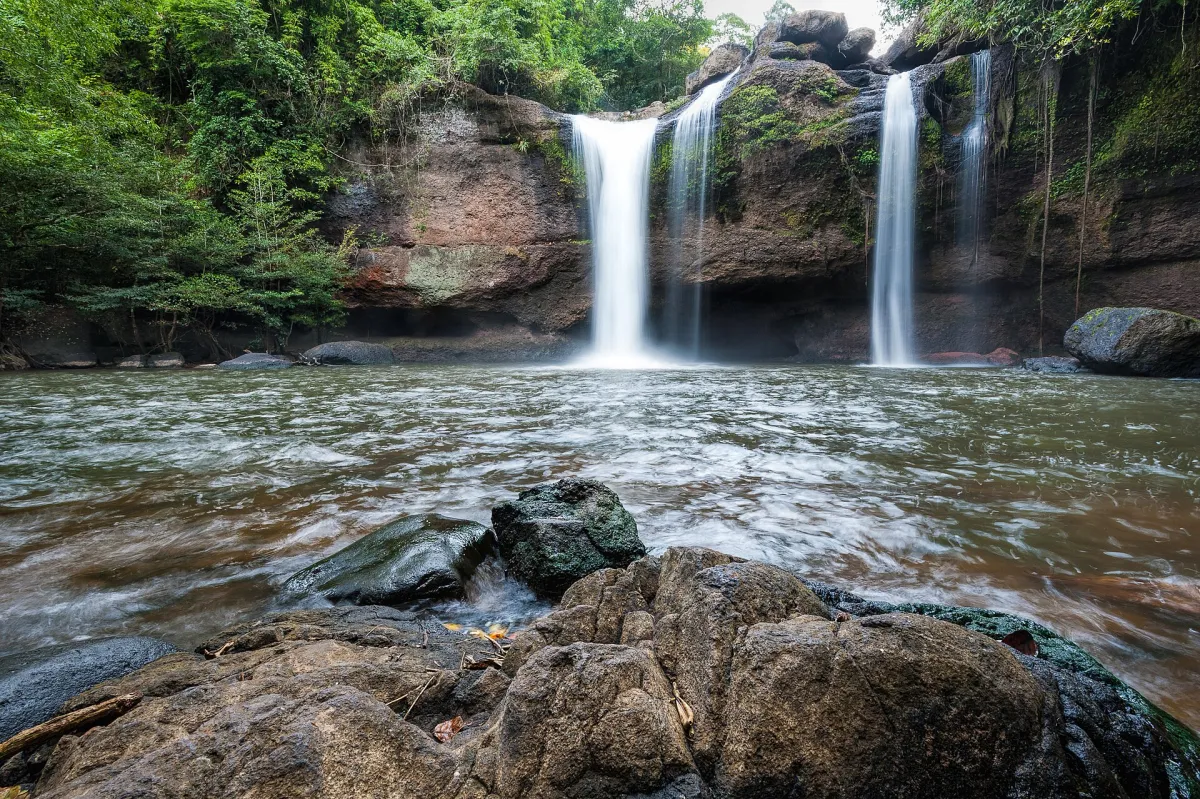
The official Khao Yai trail guide distinguishes route lengths and guide requirements. Check again with the visitor centre on the day. A photograph in this guide provides place context, not evidence that a particular viewpoint or trail is currently open.
Personal security and local rules
Keep valuables secure in crowded places and retain control of your payment cards. Agree the price or use the proper ticket channel before a service begins. If a claim, rental dispute or unexpected charge develops, move the issue to a documented and official channel where possible rather than escalating a confrontation.
Plan the return from an evening out before drinking. Stay aware of your drink, belongings and companions. Avoid isolated unfamiliar routes late at night and use transport you can identify. If somebody needs urgent medical help, seek it promptly; do not wait for a dispute over a bill or an insurance authorisation to resolve first.
Read the Local Laws & Common Scams section for specific preparation around restricted goods, public conduct, identity documents and rental disputes. Visa & Entry covers permission to enter separately.
Local Laws & Common Scams
Local rules need specific preparation. These points were checked on 26 October 2026; use the linked authorities for current details and follow instructions at the actual place.
Vapes, cannabis and restricted goods
Thai Customs lists e-cigarettes as prohibited imports. Leave vape devices and refills out of your luggage. Open sale is not evidence that possession or use is allowed. Current FCDO guidance on Thai laws describes cannabis as restricted to medical use with a Thai-issued prescription; recreational use is illegal. Do not take cannabis across a border without the required permission.
Public conduct, identity and alcohol
Insulting the Thai monarchy is illegal, including conduct online. Police can ask for identification; keep a secure passport copy and be able to produce the original through the proper channel. Alcohol sales and service have time, location and occasion restrictions. A venue's availability does not remove those rules; plan a sober return.
Unsolicited offers and rental disputes
If someone claims your intended temple or attraction is closed and proposes a replacement shop or tour, verify with the official entrance or operator before changing plans. Read a ticket's meeting point and inclusions, agree a tuk-tuk price before travelling and avoid a purchase made only to end an uncomfortable sales pitch.
Do not leave your original passport as security with a motorcycle or jet-ski rental business. Photograph the vehicle's condition where permitted, keep the contract and receipts, and document any disputed charge. If a disagreement escalates, move to an appropriate official assistance channel rather than paying an unexplained demand under pressure. Save the contacts in Useful Contacts.
Treat an unusually lucrative overseas job offer as something to verify independently, especially if somebody proposes taking your documents or arranging an unplanned border journey. Use your own bank's secure channel for payment problems and never give a helper your PIN or one-time codes. These practical checks complement the current regional travel advice above.
Accessibility and a practical backup
Ask for the details that match your needs: a step-free entrance, lift dimensions, bathroom layout, boarding assistance or vehicle type. A generic accessible label can hide a difficult pier, steep lane or high vehicle step. Get written confirmation where a specific feature is essential.
Keep a simple emergency plan at every base. Save the accommodation name in Thai, its entrance and a reliable location pin, plus the relevant assistance contacts. If you call for help, explain the location and immediate problem first. See Useful Contacts for verified emergency and assistance numbers and how to prepare the information a responder needs.
Frequently Asked Questions
Is a scooter a good default way to get around?
No. Consider experience, the correct licence and permit, insurance and protective equipment. A better-located base or a driver may be more suitable.
Can I swim when other people ignore a red flag?
Follow the local warning and choose another activity. Other swimmers do not establish safe conditions.
Does this page replace medical advice?
No. A qualified clinician should assess vaccinations, medication and prevention for your medical history, itinerary and activities.
Can I leave my passport as security for a scooter or jet ski?
Do not leave your original passport as rental security. Keep the contract and condition record and use an appropriate official assistance channel if a dispute develops.
Does a prescription from home permit every medicine?
No. Check the active ingredient, quantity and any permit through the Thai FDA traveller service before departure. Keep the prescription and original packaging.
What should I do after an animal bite or scratch?
Wash the wound with soap and clean water and obtain medical assessment immediately, including advice about rabies exposure. Do not postpone care until symptoms develop or until you return home.