
THAILAND TRAVEL GUIDE
Where to Stay in Thailand: Choose Your City & Island Base

Choose a Thailand base by the days you want to have, then choose the property. A river neighbourhood, a rail-connected city area, an old-town room and a beach district create different journeys to meals, activities and your next departure. This guide compares those area decisions. Use Hotels for named-property and room comparisons after you have a shortlist of bases.
There is no single best area for every Thailand trip. A useful first filter is city or coast, followed by your travel month, onward route and willingness to use cars or boats. The comparison below is an editorial planning aid rather than a promise about every street or accommodation within an area.
Choose a base for your trip
For a city-focused first visit, compare Bangkok and a northern base before adding a coast. For a beach-led holiday, choose the coast for your month and give one practical beach district enough time. For historical parks, compare sleeping near the park with sleeping in a service town. Check the regional map and itineraries before combining distant bases.
Scroll sideways on smaller screens to compare both columns.
| Base or need | Why choose it · what to check |
|---|---|
| Bangkok riverside | River-oriented days and a waterside setting; compare the bank, useful pier and evening return. |
| Bangkok near a useful rail station | Cross-city sightseeing and independent meals; confirm the station entrance, crossings and final walk. |
| Chiang Mai old city | Temple-and-food days around the historic centre; compare the street, room position and evening noise. |
| Chiang Mai Nimman or riverside | Cafe-led urban stays or a different riverside rhythm; check daily transport rather than assuming old-city walking access. |
| Sukhothai park area or modern town | Repeated historical-park visits or town services; these are separate locations with different arrival plans. |
| Phuket beach district or old town | Beach/resort time or food-and-streets days; road transfers and the actual shoreline access change the choice. |
| Ao Nang or Railay | Mainland services or boat-access scenery; luggage, tide and the final approach need different arrangements. |
| Ko Lanta | A longer stay on one selected island; choose the beach and access to meals and daily services. |
| Samui, Phangan or Tao | A Gulf-island stay matched to the actual pier and interests; a ferry connection is an additional travel stage. |
| Ko Chang | An eastern-coast island stay; compare the west-coast settlement and the entire mainland-to-room transfer. |
| Hua Hin or Pattaya | A mainland coastal base; distinguish a service-rich town location from a more vehicle-dependent resort setting. |
Bangkok: riverside or a rail-connected area
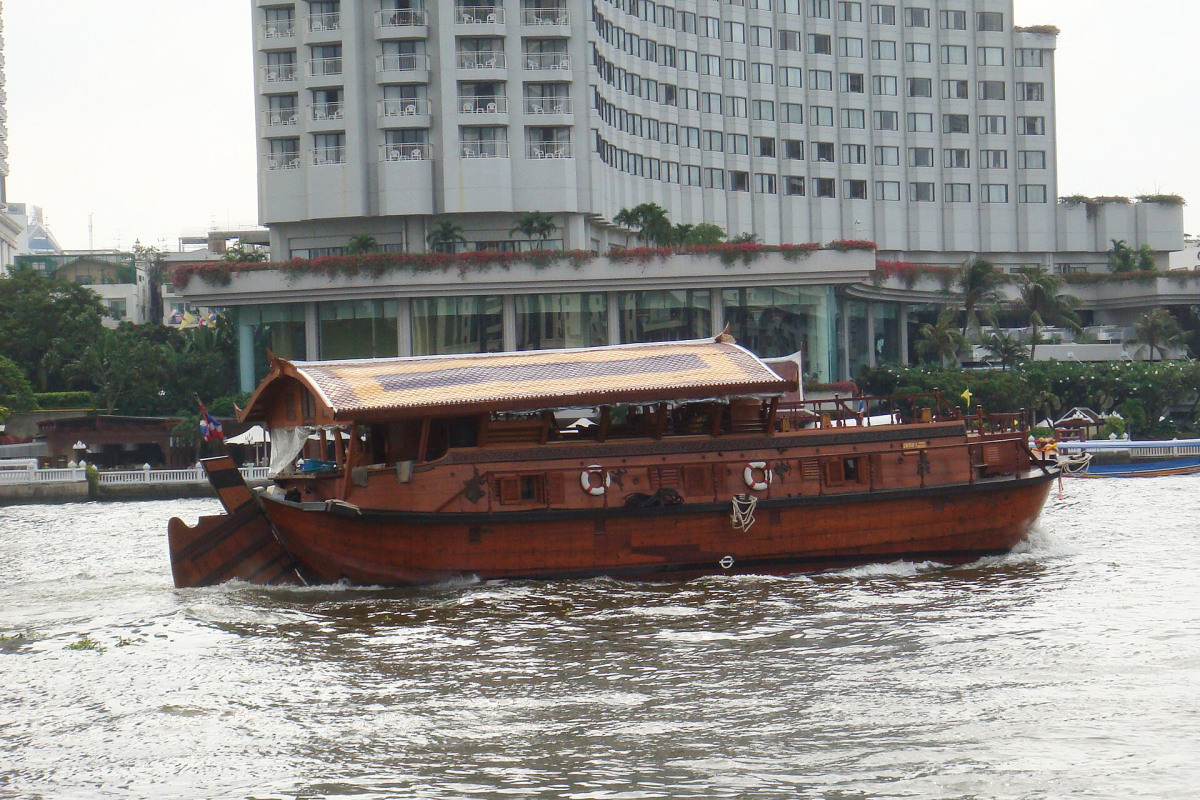
The Chao Phraya riverside suits a stay organised around boats, older neighbourhoods and time beside the water. Compare both the bank and the useful pier. A hotel shuttle, public boat and road crossing are different connections: ask how you will return after dinner and what happens if the service you expected is unavailable. A riverside address alone does not establish a simple route to every temple.
Siam, Silom and selected parts of Sukhumvit are alternatives when useful rail journeys matter more than a waterside setting. Start with your planned visits and an actual station, using the official BTS route planner. A broad district name is too imprecise: the hotel entrance, side street, crossings and station access can decide whether an otherwise convenient location works with luggage or a pushchair.
For a short city stay, changing accommodation between two Bangkok neighbourhoods can consume time without improving the trip. Prefer one well-connected base unless the second stay serves a different arrival, departure or river-focused purpose. Ask about room orientation and nearby venues rather than treating an entire district as uniformly quiet.
Chiang Mai: old city, Nimman or riverside

The old city is a useful starting point when nearby temples, local food and a compact daily route matter. Choose the exact lane and the visits you intend to make; a room inside the historic centre is not automatically quiet or step-free. Staying near an evening market can make meals convenient while making room position more important for light sleepers.
Nimman supports a different stay, with cafes and contemporary shops rather than the same temple-focused route. The Tourism Authority of Thailand's Nimman overview gives the neighbourhood context. Compare ordinary journeys to your chosen activities before assuming it substitutes for an old-city location.
A Ping riverside stay can suit travellers who value time at their accommodation and a different evening setting. Check the actual bank, street and vehicle approach. For any northern base, assess air quality and burning-season planning separately from the appeal of the room. A low rate or a mountain view does not settle that decision.
Historic towns: park access or everyday services
In Sukhothai, decide whether the stay is primarily for early and repeated park visits or for the services and arrival point of the modern town. The Fine Arts Department's park information places the historical park in Mueang Kao, west of the modern provincial town. Confirm which location your accommodation and transport actually use rather than treating both as one compact hotel district.
Apply the same practical test to an overnight stop around Ayutthaya: which monuments, meal and arrival point will you use, and how will you travel between them? A station-side room and a historic-area base support different daily routes. Compare these choices with the historical itinerary options; a short day trip and a multi-night base are different plans.
Choose the coastal region before the beach district
The Andaman coast, Samui-area Gulf islands and islands near Trat do not share one simple weather or transfer pattern. Use Best Time to Visit to choose a regional starting point, then use Beaches to compare the actual shoreline. A photograph of clear water does not establish the conditions for your dates.
Phuket: Patong, the Kata coast or old town
Choose Patong when a lively beach district and a broad choice of nearby services suit your holiday, while checking evening noise and the exact lane. Compare the Kata coast and other west-coast districts for a different beach setting, but inspect the actual route from reception to sand. A hillside room may need a vehicle or steps even when its map pin appears close to the water.
Phuket old town serves a food-and-streets stay rather than a room beside a west-coast beach. The Thai government's old-town overview describes its architecture and food culture. If both town and beach matter, compare a deliberate split stay with the time spent moving luggage; do not treat a daily road transfer as a trivial walk.
Krabi: Ao Nang or Railay
Ao Nang is a mainland choice for travellers who value independent meals, road access and boat excursions. The official Krabi overview identifies it as a launching point for islands and the Railay area. Ask where your chosen boat actually leaves from and how you get back to the room.
Railay is a different accommodation decision because the final approach normally involves a boat. Confirm the landing side, luggage handling and the route to reception, especially with a late arrival or limited mobility. A beachside stay can reduce the need to leave each day, but it also makes arrival arrangements and flexible onward travel more important.
Ko Lanta: choose a beach and daily services
Ko Lanta can suit travellers who want several nights on one island rather than repeated island moves. The official Ko Lanta guide distinguishes the island's beaches and identifies Saladan as a service and arrival centre. Compare a beach stay with the places you will use for meals, supplies and transport.
A more secluded bay may suit a resort-focused break and be less convenient for independent evenings or a longer stay without a vehicle. Confirm the full arrival route and a realistic way home after dinner. Do not choose a scooter-dependent location first and leave licensing, confidence and road conditions as an afterthought.
Samui, Phangan or Tao: match the island and pier
Samui, Phangan and Tao are separate bases. Choose the island for the kind of stay you want, then work backwards through the airport or mainland arrival, operator, pier and final road transfer. The Lomprayah route search shows multiple island and mainland combinations; it does not make every flight-and-ferry combination a protected connection.
For a late arrival, consider whether a mainland or Samui overnight is more practical than assuming the final ferry will fit. Compare a service-rich settlement with a remote bay in terms of meals, slopes, return transport and access to help. Check the particular trip date and pier rather than borrowing a timetable from another island.
Ko Chang: the settlement matters after the ferry
On the eastern coast, Ko Chang requires its own mainland-and-ferry arrival plan. The official Ko Chang guide describes accommodation settlements along its west coast. Compare White Sand Beach or another specific settlement with your food, beach and onward-transfer needs rather than booking only on the island name.
The ferry is one stage, not the hotel entrance. Ask how you reach reception, whether the final road and walking approach works for your party, and how you will return from meals. A quieter location can be appealing when the accommodation itself is the focus, provided you have allowed for those ordinary journeys.
Hua Hin or Pattaya: town services or a resort setting
Hua Hin is a mainland choice for a coast stay with town services and an overland approach; the official Hua Hin guide describes accommodation around the beach and nearby streets. Compare a central location with a more distant coastal resort by the daily route to meals and the actual beach entrance.
Pattaya also needs a precise area choice: a central urban stay and a headland resort create different evenings and transport needs. The Nightlife guide helps you decide whether proximity to evening venues is useful. Check the return after dark and the route to the waterfront rather than treating every coastal address as a walkable beach base.
Compare the base with your party's needs
Scroll sideways on smaller screens to compare both columns.
| Base or need | Why choose it · what to check |
|---|---|
| Without a car | Choose one useful station, pier or meal area and inspect the whole room-to-transport route. Include the evening return and luggage. |
| With children | Compare usable beds, nearby meals, shade and the approach with a pushchair. A family-friendly district does not confirm a particular room arrangement. |
| With reduced mobility | Request the entrance, lift or steps, path surface and bathroom details. A nearby station or sea view is not proof of step-free access. |
| For a longer stay | Compare groceries, cooking, laundry, workspace, utilities and ordinary transport; permission to stay and accommodation terms need their own checks. |
| For a split stay | Count packing, checkout, waiting, the full transfer and the next check-in. A short distance on a map can consume much of a holiday day. |
Longer stays and changing bases
For a short holiday, fewer well-chosen bases can produce more useful time than covering every region. A week split between one city and one coast is a planning pattern to test, not a requirement to add both. Compare arrival and departure days with the actual nights you can spend in each place, using the day-by-day routes.
For several weeks, daily services and a usable room can outweigh a dramatic first impression. Read Longer Stays & Costs for the monthly worksheet and terms, and Visa & Entry for the separate permission-to-stay questions. A convenient apartment does not settle immigration or permitted-activity requirements.
Before paying for a base, confirm the first arrival and the onward departure through Airports & Transfers and Getting Around. Then compare the named properties on Hotels. This keeps the area decision separate from the room and rate decision.
Frequently Asked Questions
How many bases should I use for seven days in Thailand?
Start by testing one or two bases against your actual arrival and departure. Seven calendar days leave fewer full days after transfers; a second base is useful only if it adds more value than the time spent moving.
Can I choose a Thailand base without renting a car or scooter?
Yes, but choose the specific station, pier, settlement or meal area you will use. Confirm the last approach and evening return; an island or beach label alone does not establish that the stay works without driving.
Is Railay the same accommodation choice as Ao Nang?
No. Ao Nang has mainland road access, while Railay normally adds a boat approach. Compare the landing side, luggage and reception route before deciding whether that arrival suits your party.
Should I change neighbourhoods during a short Bangkok stay?
Usually begin by testing one well-connected base. Change only when the second location serves a different practical purpose that justifies packing, checkout and another arrival.
What should I do if my flight arrives too late for an island transfer?
Build a realistic overnight stop into the plan instead of assuming a later boat exists. Confirm the actual operator, pier and reception arrangements before committing to the first island night.