
Vatican City
Vatican Photo Guide: St. Peter’s, Museums & Sistine Chapel
Plan your Rome trip: Travel Guide · Pictures · Attractions · Map & walking route · Travel tips
By Photos4Travel. Photography and art guidance reviewed October 5, 2026. Photographs illustrate composition and setting. Replacement images include source and licence links; consult their source pages for available capture information. Images do not establish current access or crowd levels.
Explore St. Peter’s Square and Basilica, then discover the Vatican Museums, Raphael’s School of Athens and Michelangelo’s Sistine Chapel frescoes. The guide combines exterior views, a basilica interior photograph and artwork reproductions, with sources and image rights beside each image.
On this page: Basilica interior · Vatican Museums · School of Athens · Sistine Chapel · Creation of Adam · Last Judgement
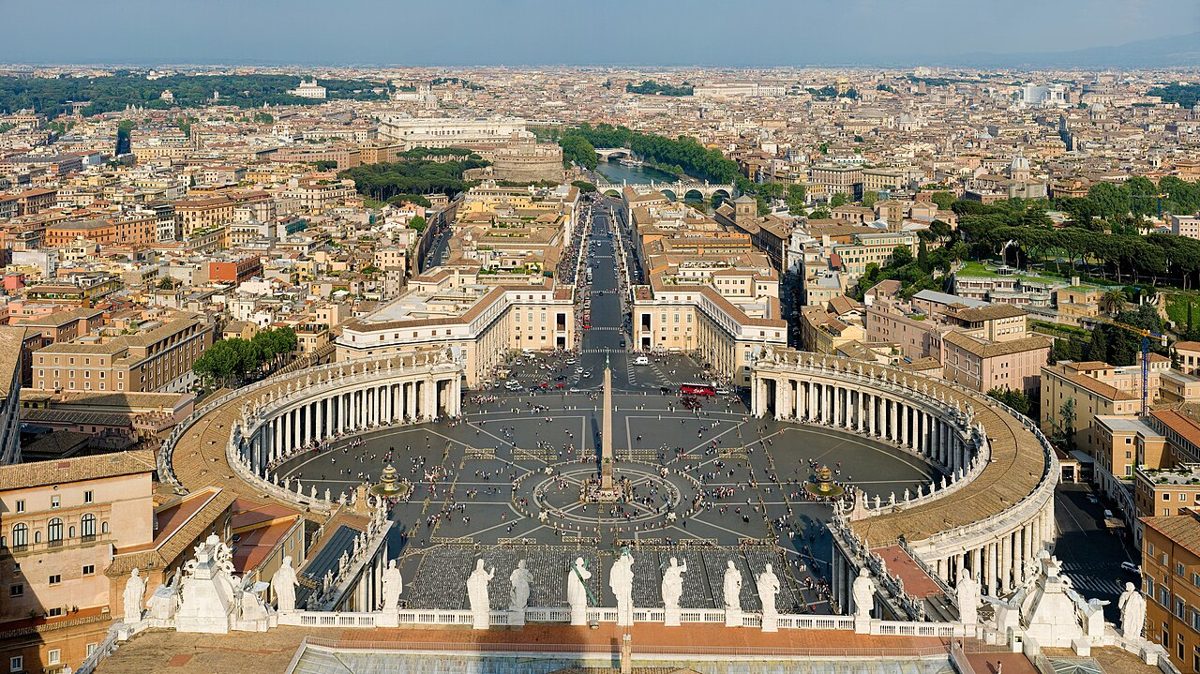
Photo: Diliff · Wikimedia Commons source · CC BY-SA 3.0. Resized and optimized for this website.

St. Peter’s Square and Rome seen from the basilica dome.
Start with the square and approach
From permitted public areas, compare a view showing the square’s overall scale with one concentrating on the basilica facade. Via della Conciliazione offers a street perspective toward the basilica. Keep to pavements and follow temporary barriers, queues and event arrangements rather than recreating an archive camera position.
Use the collection to vary your framing
The elevated overview explains the square’s shape, while ground-level photographs show the obelisk, facade and public space. The dome and roofline statues work as tighter subjects. An image taken from above does not mean a comparable public viewpoint is available without admission or access checks.
Protect bright stone detail
Look at the contrast between sky, sunlit stone and shaded architectural parts. Make a test frame and inspect the areas that matter to you. A longer focal length may help isolate the dome or statues; a wide view may better explain the square. Equipment choice depends on your position and available space.
Separate museums, basilica and square
Vatican Museums access and the basilica’s visitor approach are different arrangements. The official Museums guidance prohibits photography and filming in the Sistine Chapel and sets other equipment restrictions. Follow posted rules in every venue. Allow for worship, security and events; a camera plan does not override visitor instructions.
St. Peter’s and the Vatican approach: image collection
St. Peter’s Square
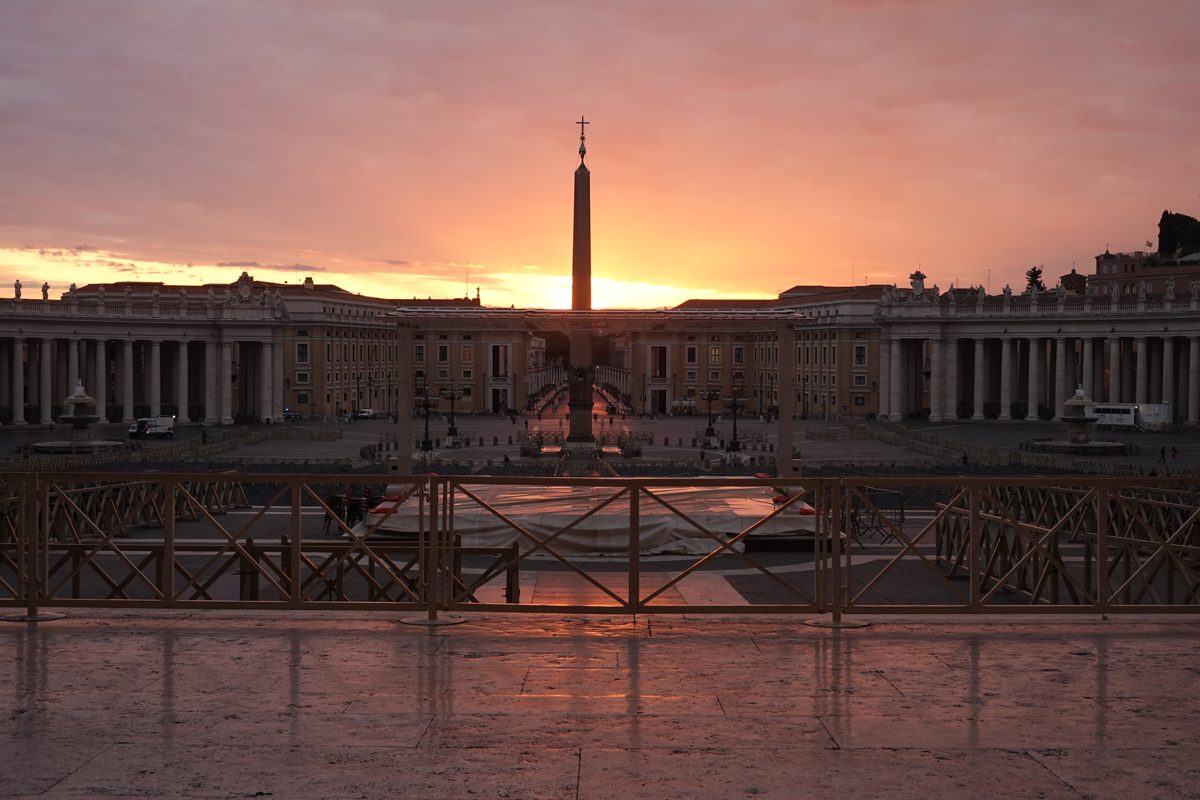
Photo: Timothy A. Gonsalves · Wikimedia Commons source · CC BY-SA 4.0. Resized and optimized for this website.

St. Peter’s Square and its obelisk at sunrise.
Inside St. Peter’s Basilica
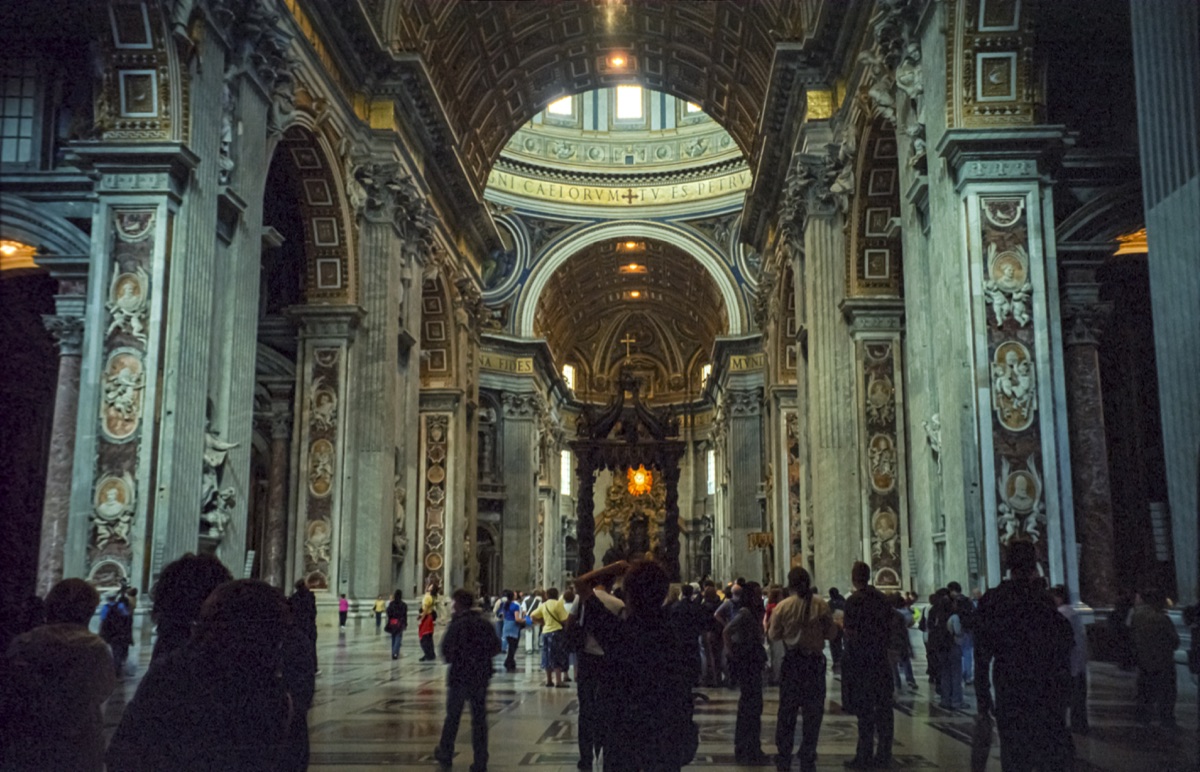
Photo: Jerzy Strzelecki · Wikimedia Commons source · CC BY-SA 3.0. Resized and optimized for this website.
.jpg)
The nave, decorated vaults and Bernini’s baldachin inside St. Peter’s Basilica. Archive photograph taken in September 2002.
St. Peter’s dome
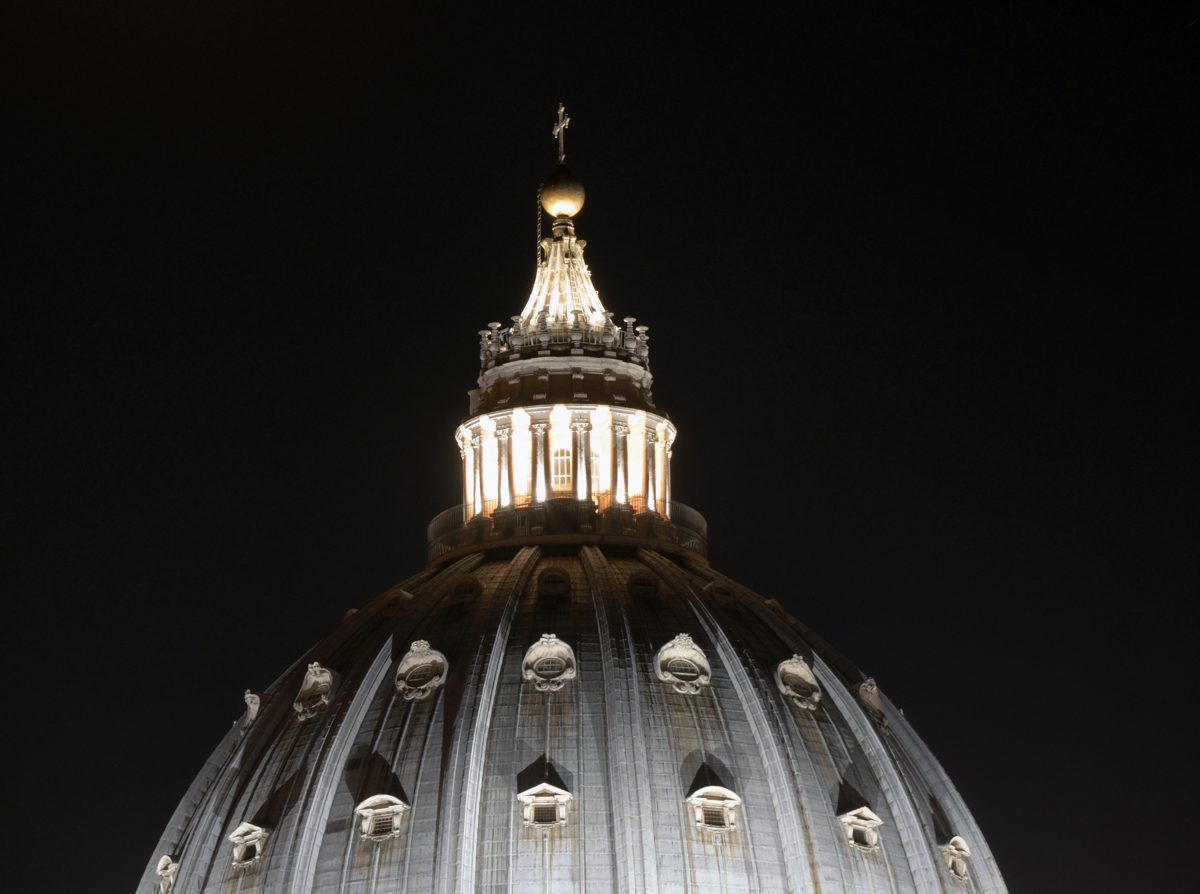
Photo: Livioandronico2013 · Wikimedia Commons source · CC BY-SA 4.0. Resized and optimized for this website.

Illuminated dome and lantern of St. Peter’s Basilica at night.
St. Peter’s Basilica facade
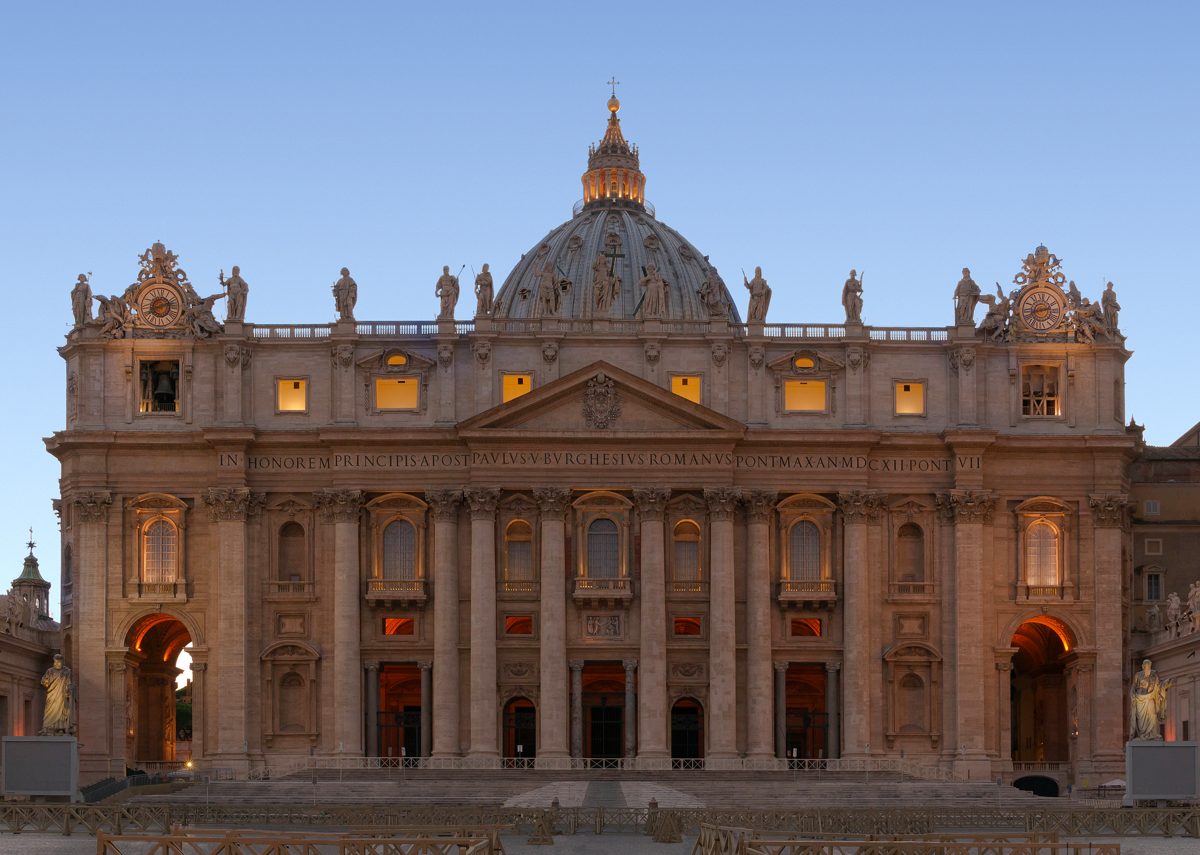
Photo: Jebulon · Wikimedia Commons source · CC0. Resized and optimized for this website.

St. Peter’s Basilica facade at blue hour.
Via della Conciliazione
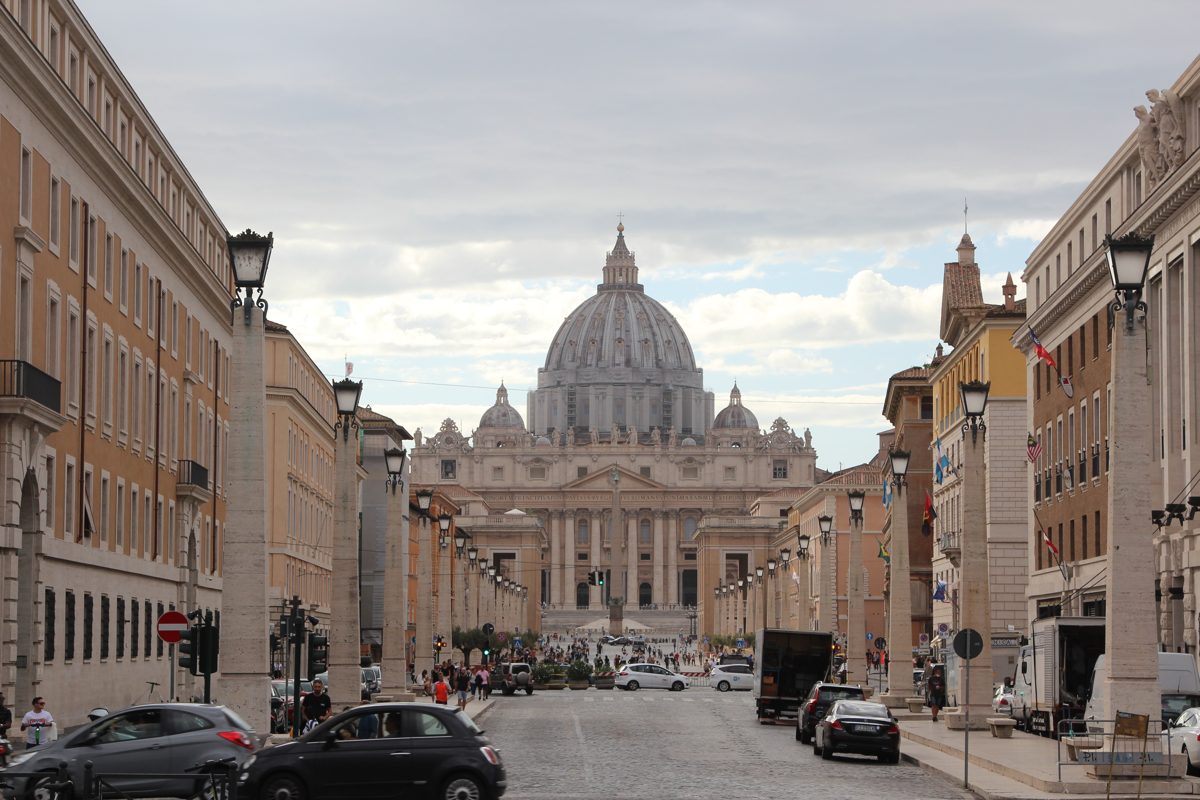
Photo: Fallaner · Wikimedia Commons source · CC BY-SA 4.0. Resized and optimized for this website.

Via della Conciliazione leading toward St. Peter’s Basilica.
Vatican Museums: galleries, maps and Renaissance art
The Vatican Museums bring together art collections, decorated galleries and the Raphael Rooms, with the Sistine Chapel forming a distinct part of the visit. St. Peter’s Basilica is a separate visitor destination: plan its entrance and security arrangements separately from the Museums.
The Gallery of Maps
Look along the corridor before focusing on an individual map. Its decorated vault and painted geographical views turn the architecture itself into an exhibition. Commissioned by Pope Gregory XIII, the gallery presents forty cartographical representations of Italian territories and Church dominions. The geographical programme was directed by the Dominican scholar Egnazio Danti. Compare the coastline, mountains and named settlements with the stories painted above them.
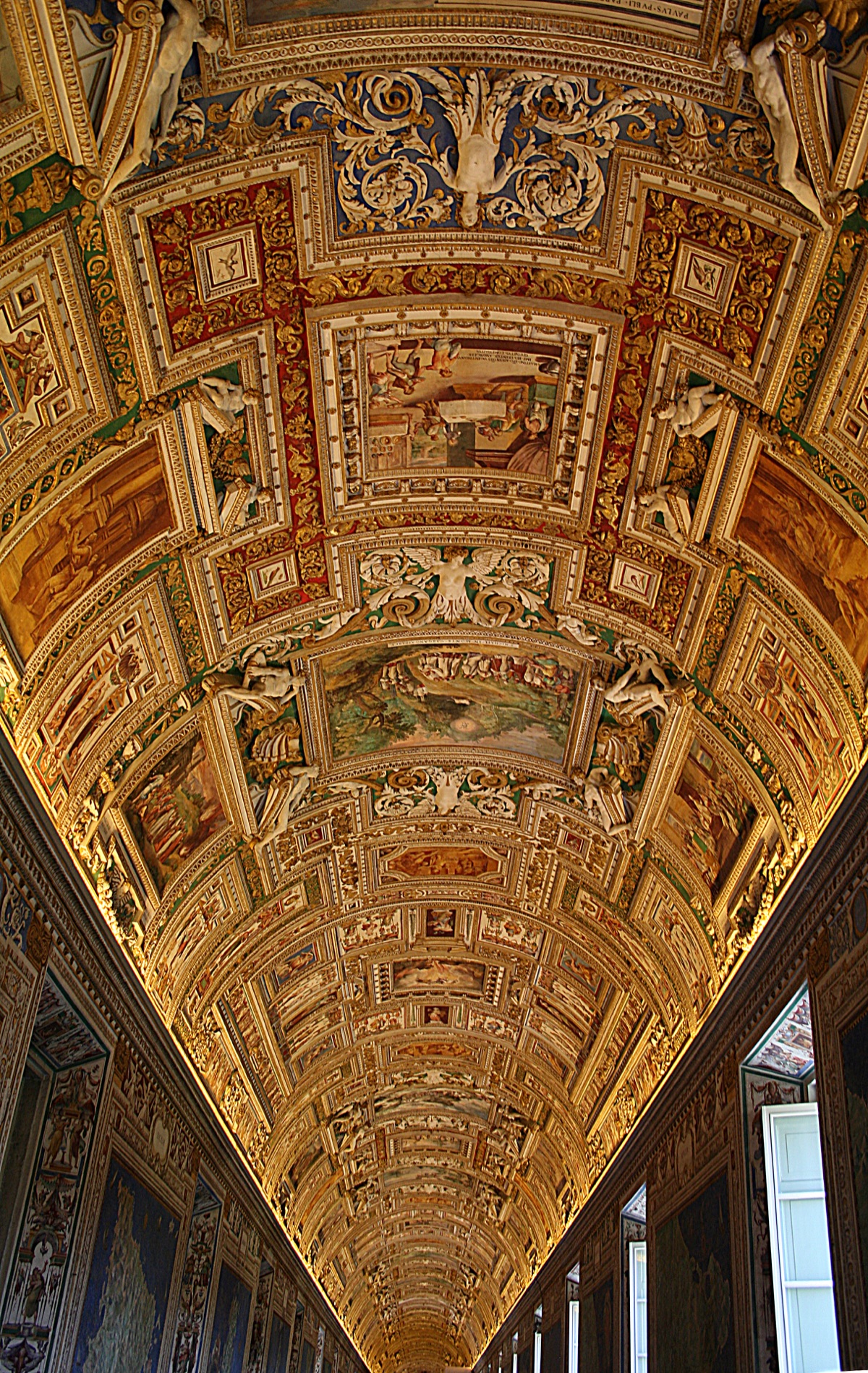
Photo: Jean-Pol GRANDMONT · Wikimedia Commons source · CC BY-SA 3.0. Resized and optimized for this website.
.JPG)
The Gallery of Maps in the Vatican Museums. Archive photograph taken on September 29, 2011.
Read the Vatican Museums’ Gallery of Maps guide.
Raphael Rooms: The School of Athens
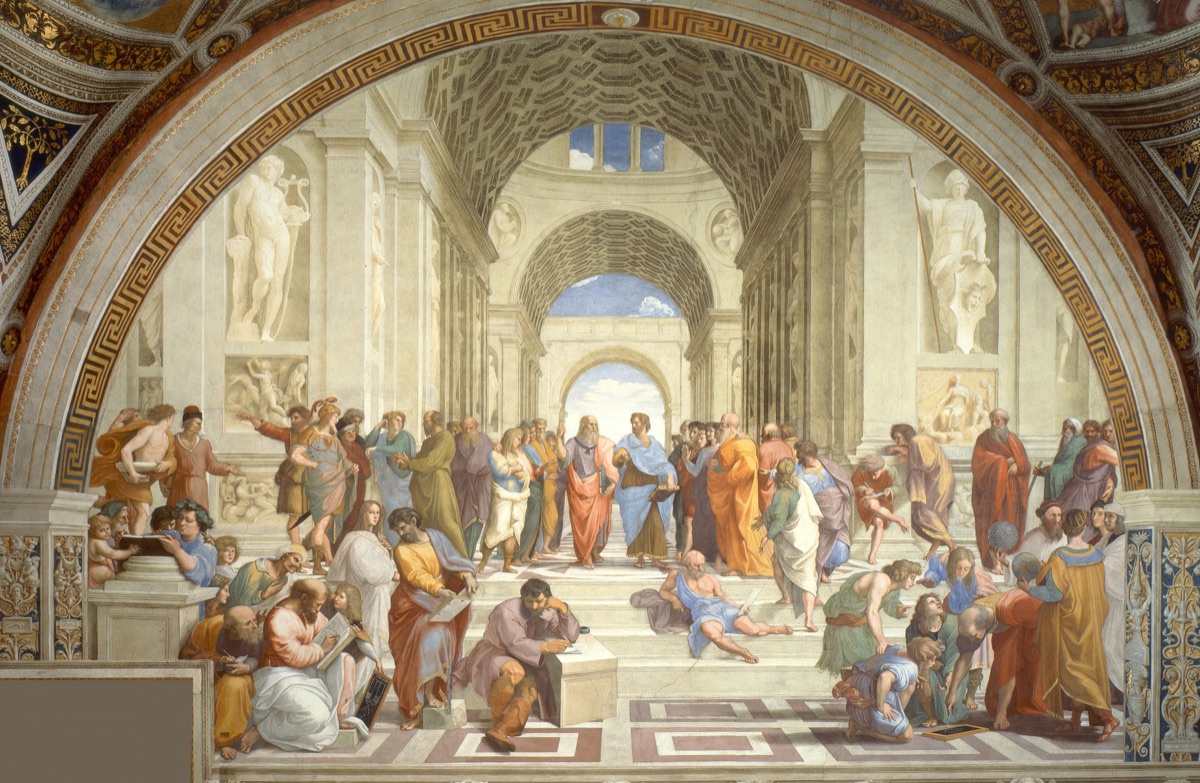
Location: Stanza della Segnatura, Raphael Rooms, Vatican Museums. Artist: Raphael. This fresco belongs to the Raphael Rooms; it is not inside the Sistine Chapel.
Artwork: Raphael · Wikimedia Commons source · Public domain reproduction. Resized and optimized for this website.

Raphael, The School of Athens, Stanza della Segnatura, Raphael Rooms. Reproduction of the fresco.
The School of Athens gathers ancient philosophers in an imagined classical building. Begin with Plato and Aristotle at the centre: Plato raises a finger toward the sky, while Aristotle extends his hand outward. Their contrasting gestures give the scene a clear focal point. The receding arches and floor pattern draw the eye toward this conversation.
Then explore the smaller groups: Pythagoras works with a book at the left, Diogenes reclines on the steps, and Euclid demonstrates geometry to students at the right. The figure leaning on a marble block represents Heraclitus with Michelangelo’s features. Raphael also includes his own portrait at the far right. This is a painted gathering of ideas and thinkers, rather than a record of one historical meeting.
Artwork details: official School of Athens description.
Sistine Chapel: how to read Michelangelo’s frescoes
Separate the ceiling from the altar wall when looking at the chapel. Michelangelo painted the ceiling between 1508 and 1512; The Last Judgement was added to the altar wall much later, between 1536 and 1541. The earlier ceiling is organised around nine scenes from Genesis, framed by painted architecture, prophets, sibyls and other figures.
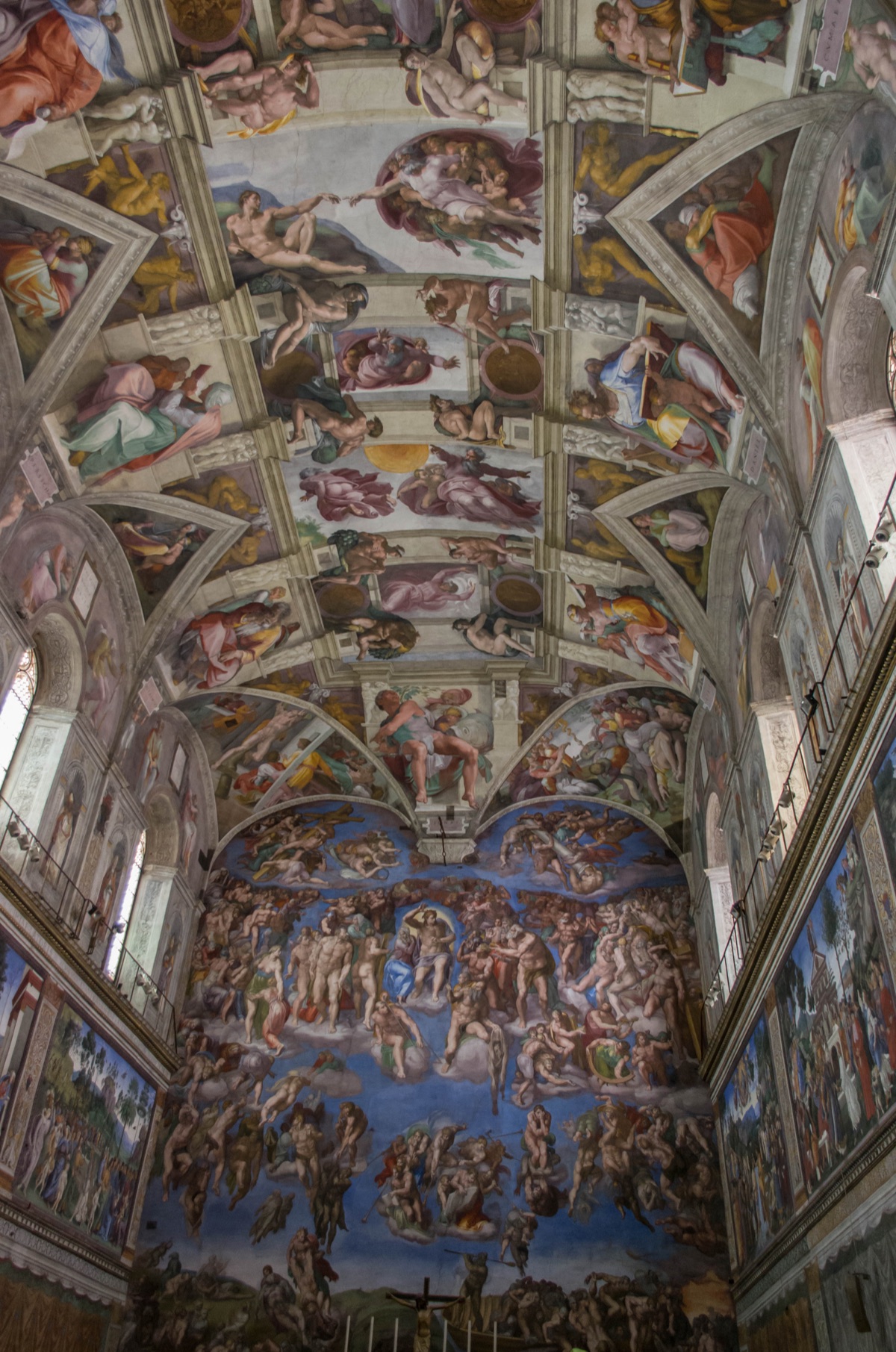
Artwork: Michelangelo · Photo: Antoine Taveneaux · Wikimedia Commons source · CC BY-SA 3.0. Resized and optimized for this website.

An archive view of the Sistine Chapel ceiling and altar wall, photographed on June 14, 2014.
Explore the official ceiling guide to locate the scenes before your visit.
The Creation of Adam
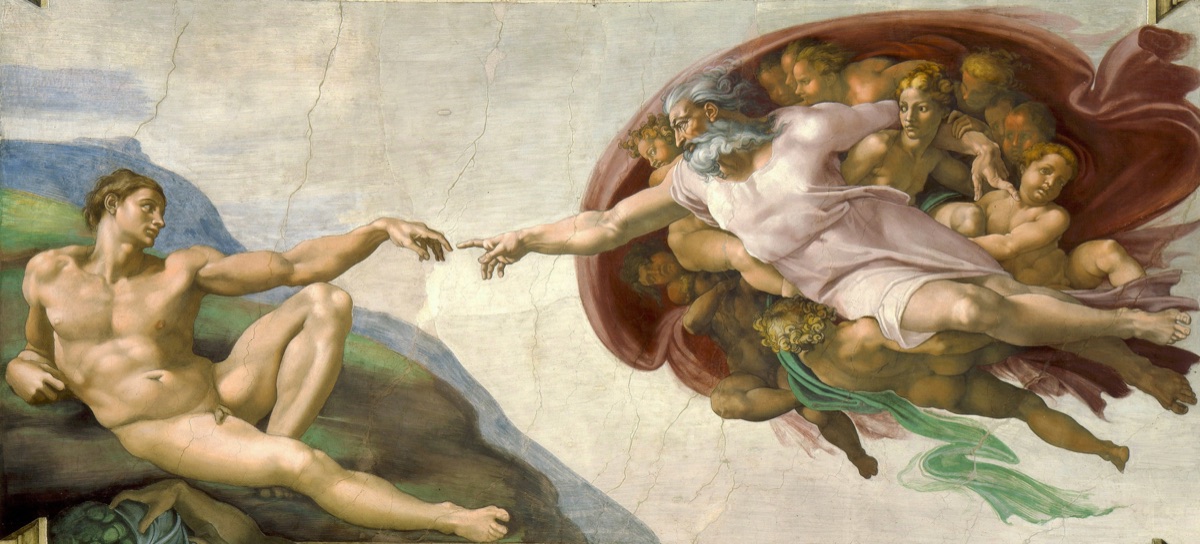
Artist: Michelangelo. Location: Sistine Chapel ceiling, within the Genesis sequence.
Artwork: Michelangelo · Wikimedia Commons source · Public domain reproduction. Resized and optimized for this website.
.jpg)
Michelangelo, The Creation of Adam, Sistine Chapel ceiling. Cropped reproduction of the central scene.
Adam rests on the ground at the left; God reaches toward him from a group of figures at the right. The small gap between their extended fingertips concentrates the story of life being given to Adam into one memorable gesture. Follow the long curve of Adam’s arm and compare his relaxed pose with the forward movement of the group opposite him. The scene is one panel within the much larger ceiling programme.
Artwork details: official Creation of Adam description.
The Last Judgement
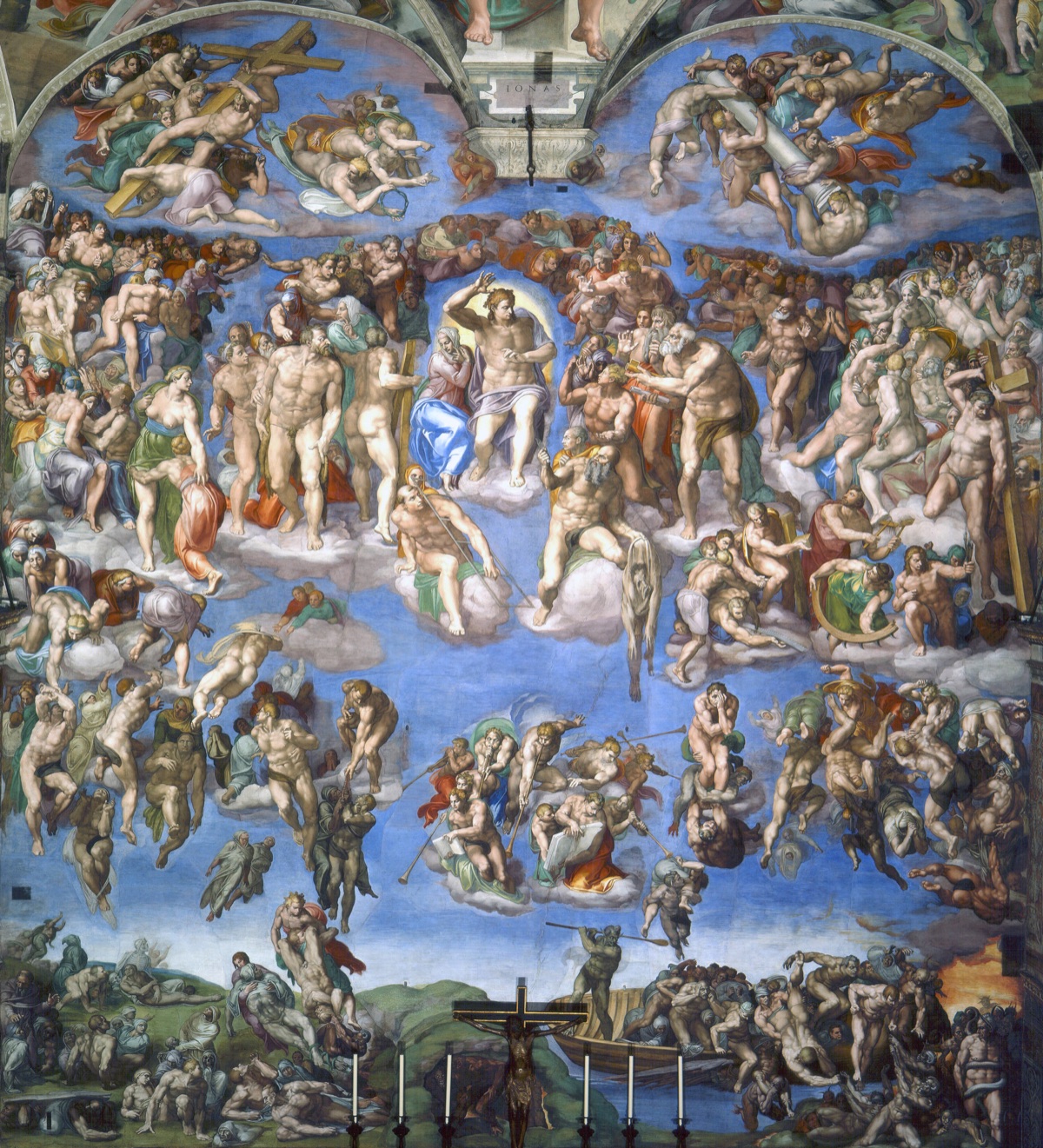
Artist: Michelangelo. Date: 1536–1541. Location: Sistine Chapel altar wall.
Artwork: Michelangelo · Wikimedia Commons source · Public domain reproduction. Resized and optimized for this website.
.jpg)
Michelangelo, The Last Judgement, 1536–1541, on the Sistine Chapel altar wall. Archive reproduction.
Christ occupies the central zone of this vast composition, surrounded by saints and groups of human figures. Follow the rising and falling movements around him: the fresco presents resurrection, judgement and the contrasting destinies of the saved and condemned. Unlike the ceiling’s separate narrative panels, this wall is conceived as one sweeping scene. Compare its crowded movement and blue background with the more clearly framed stories overhead.
Artwork details: official Last Judgement description.
Before visiting the Museums and Sistine Chapel
Use the official Vatican Museums ticket portal and check the chosen visit’s itinerary. Museum access and St. Peter’s Basilica access have different arrangements. In the Museums, personal photography is generally permitted without flash, subject to the official restrictions; in the Sistine Chapel, photography and filming are prohibited and visitors are asked to remain silent. The archive images on this page are for studying the artworks before or after a visit.
Check official visitor guidance for dress, equipment and access rules.
Map and visitor information
Find the starting area on Google Maps. This is a location search, not the exact camera position of the archive photograph. Consult official visitor information for the current site arrangements.
Continue with the Rome walking-route guide, attractions and admission planning, or complete Rome photo gallery.
Image credit and reuse
Each image is accompanied by its recorded photographer or artist, source and licence or public-domain status. Photographs and artwork reproductions may have different reuse conditions; follow the rights information on the linked source page. The archive views and reproductions illustrate the subjects and do not show current access, crowds or conservation conditions.

Compare Rome hotels on Booking.com
Affiliate link: we may earn a commission if you book, at no extra cost to you.