
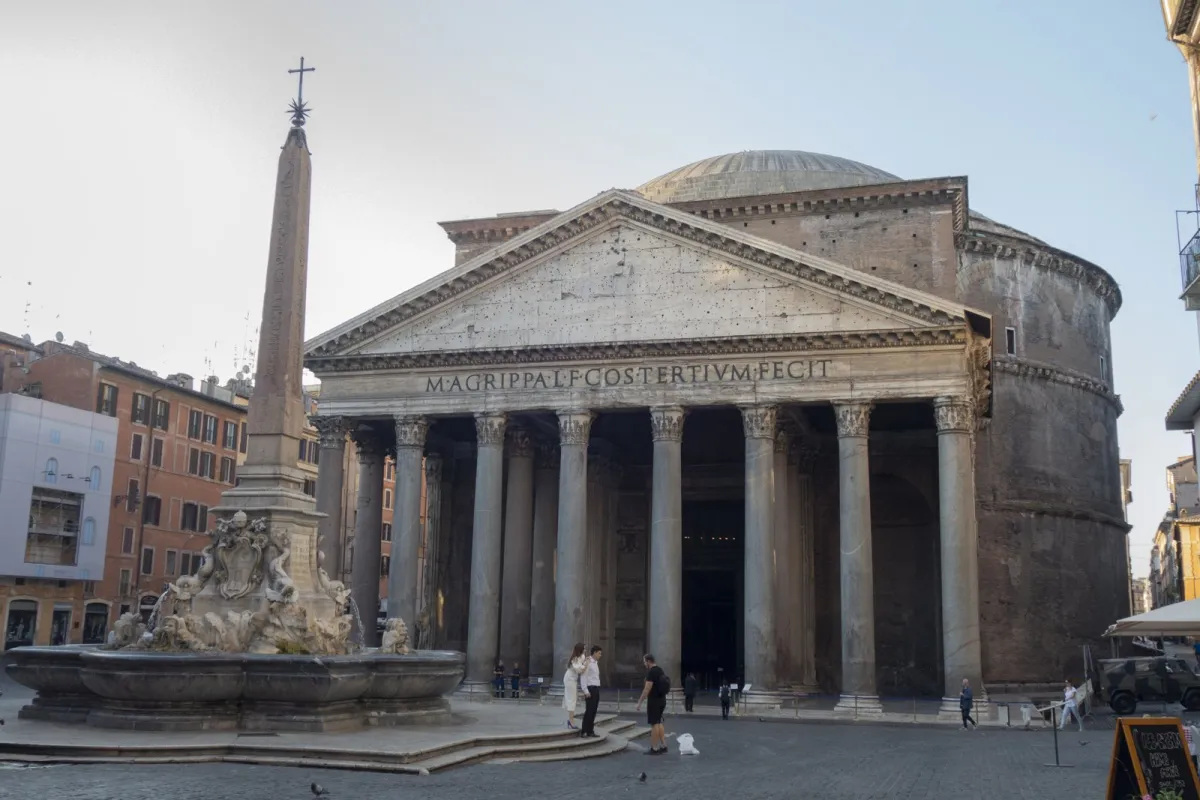

Work with the square
Begin in Piazza della Rotonda and choose between a full view of the portico and a tighter study of its columns. Include the fountain when it helps explain the setting, then make a second frame without it. Check whether the obelisk overlaps awkwardly with the roofline and change your position within the pedestrian area.
Use columns and scale
A close composition can emphasize the sequence of columns, stone texture and shadow beneath the portico. A wider view with people gives a sense of scale. If you tilt the camera sharply upward, inspect the resulting vertical lines and decide whether that effect suits the photograph.
Plan for changing light
The square and portico can have different brightness levels. Expose with the important detail in mind and inspect both the dark column area and brighter stone. Overcast light may help retain texture; stronger sun can give a more graphic image. Treat these as options, not a fixed best-time promise.
Keep exterior and interior plans separate
Passing through the square is different from entering the Pantheon. Check current admission, reservations and photography instructions on the official site. If you have an entry slot, build your route around it. Piazza Navona and Trevi are natural continuations on the historic-center route.
Map and visitor information
Find the starting area on Google Maps. This is a location search, not the exact camera position of the photograph. Consult official visitor information for the current site arrangements.
Continue with the Rome walking-route guide, attractions and admission planning, or complete Rome photo gallery.