

Compare your main visits
On smaller screens, swipe or scroll horizontally to read the full table.
| Area | Good combination | Planning block |
|---|---|---|
| Historic core | Red Square + one museum or cathedral visit | Half to full day |
| South of the centre | Tretyakov + Zamoskvorechye lanes | Half to full day |
| North | Cosmonautics + a selected VDNKh loop | Half to full day |
| South / southwest | Choose Kolomenskoye, Tsaritsyno or Novodevichy | A separate half day for each |
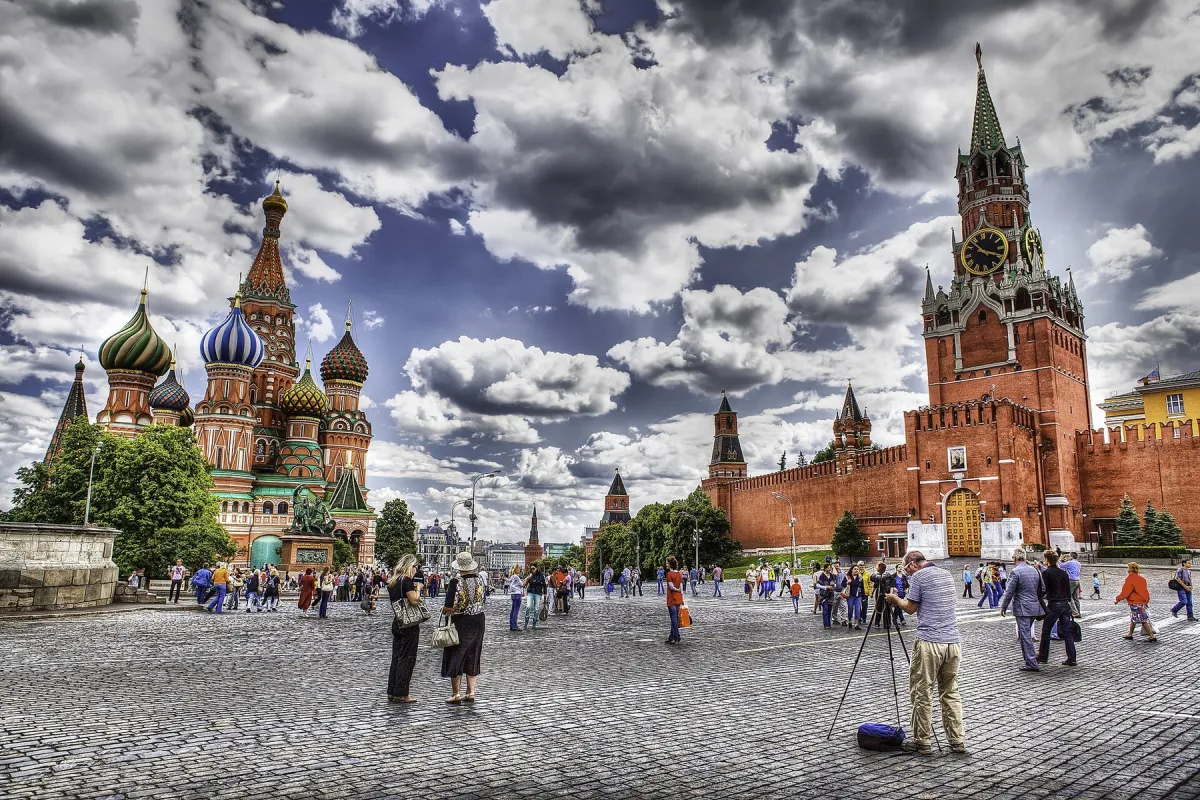
Red Square
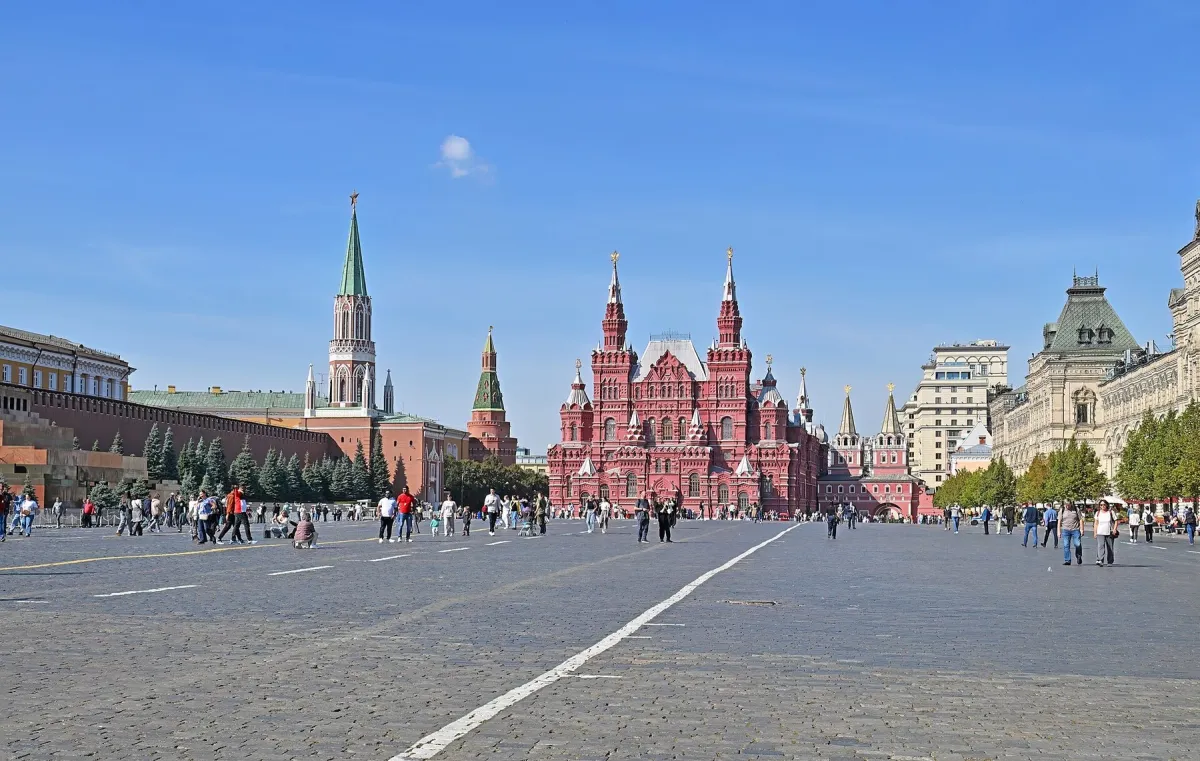

Start with the relationships between the Kremlin wall, St Basil’s, GUM and the State Historical Museum. They frame a public space with different architectural scales rather than a single all-inclusive attraction. The UNESCO listing explains the ensemble’s heritage context.
Allow roughly 45–90 minutes for an unhurried outdoor orientation, excluding security delays and interiors. Access can be restricted for official events or security. Pair the square with one nearby interior, not an assumption that all surrounding buildings can be visited on the same ticket.
Kazan Cathedral beside Red Square
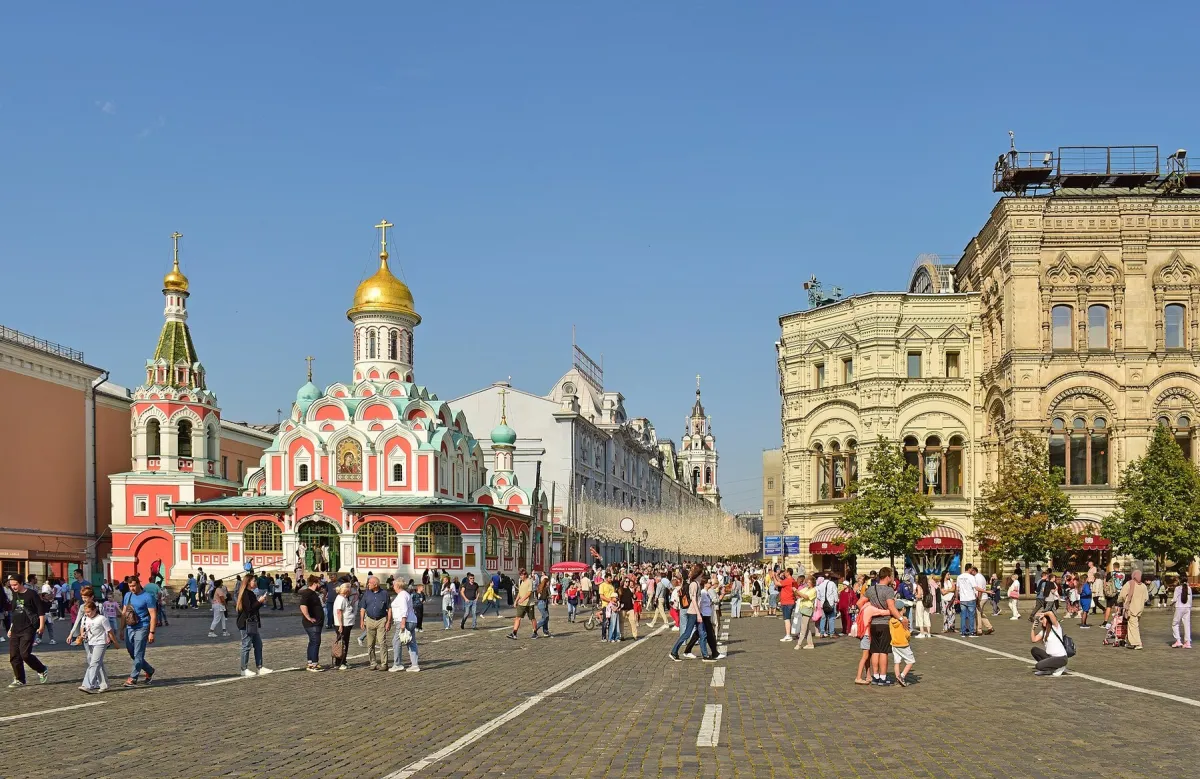

This is Moscow’s Kazan Cathedral by Red Square, distinct from the cathedral of the same name in Saint Petersburg. Pair an outside view with the northern part of the square and adjoining street. A context frame helps place the building; a smaller view can study colour and ornament without presenting a detail as the whole cathedral.
Keep the order flexible if crowd controls change the walking route. Entrance conditions and worship-related photography rules apply separately from a public street view. Ask before photographing worshippers, and do not infer permission to photograph a service from an exterior reference image.
Red Square: a wide frame and a winter reference
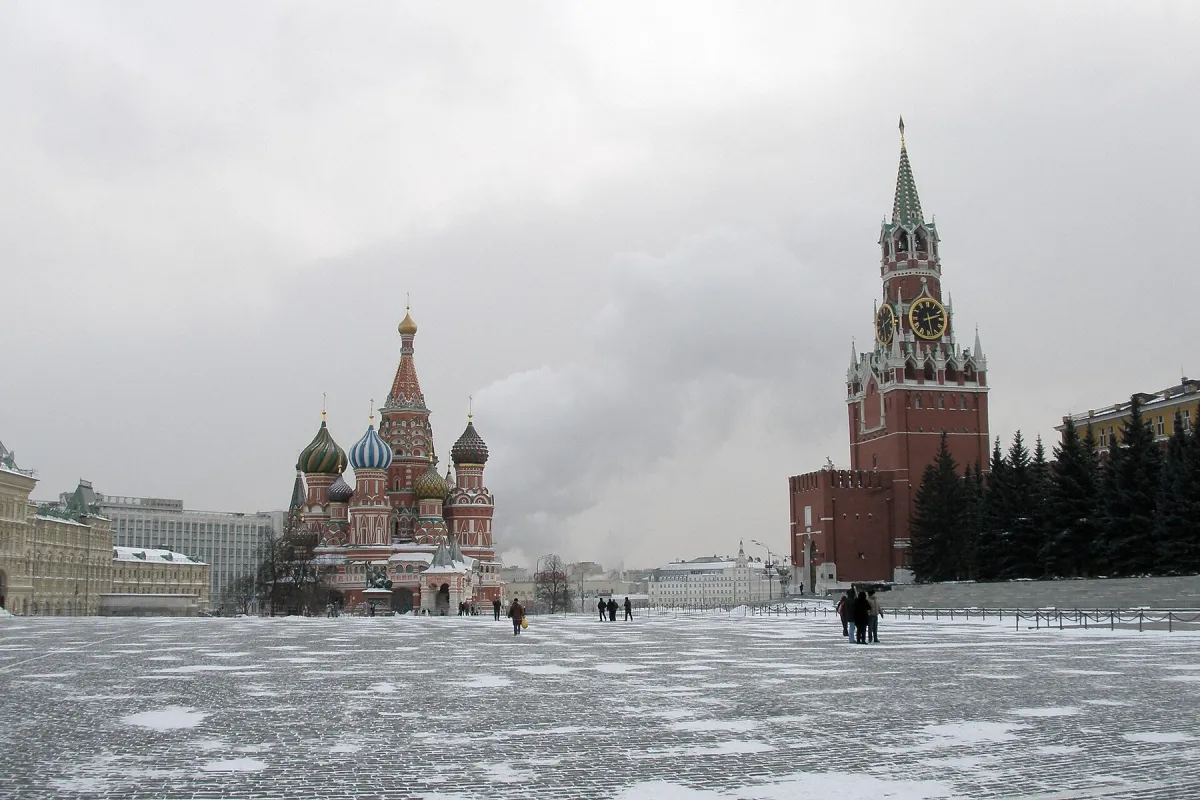

A broad establishing photograph explains how the buildings frame the square. A smaller view of one edge can reveal architectural rhythm without requiring every landmark in the same image. People give scale, provided the photograph respects their space and leaves the route clear.
The winter reference below shows one set of cold-weather conditions. Snow, temporary displays, events and crowd controls can change both the appearance and the usable route. Separate a short exterior photography stop from a museum or cathedral visit, and leave room to change the order of your central walking block.
Kremlin Museums and Cathedral Square
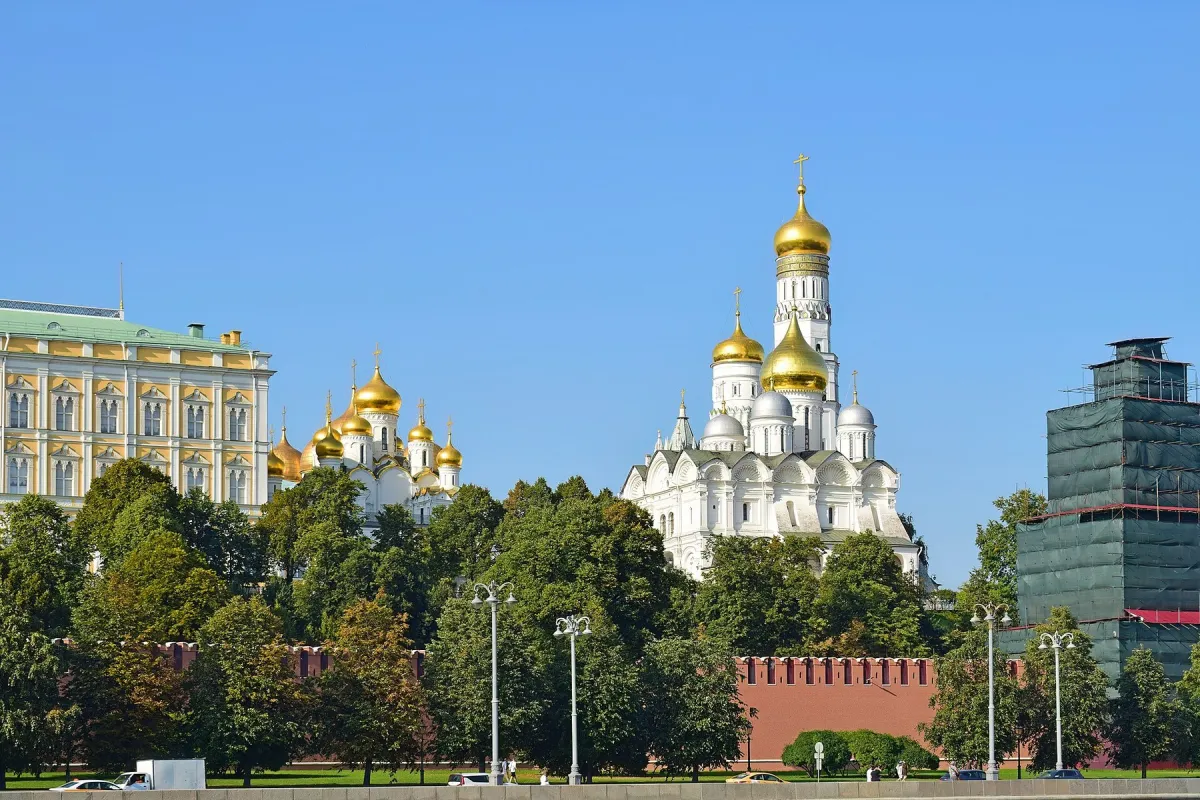

Choose Cathedral Square for the architectural ensemble and church history. The Kremlin is also a working government complex, so a visitor ticket does not provide free access throughout the fortress. The Armoury is a separate admission decision with its own session and entrance arrangements.
Plan a half-day block if the Kremlin is a principal interest, with security and ticket collection margin. The official visitor information identifies entrances and the usual Thursday closure. Check the current notice before fixing the date. Alexander Garden and Red Square are practical nearby outdoor partners.
Cathedral of the Annunciation
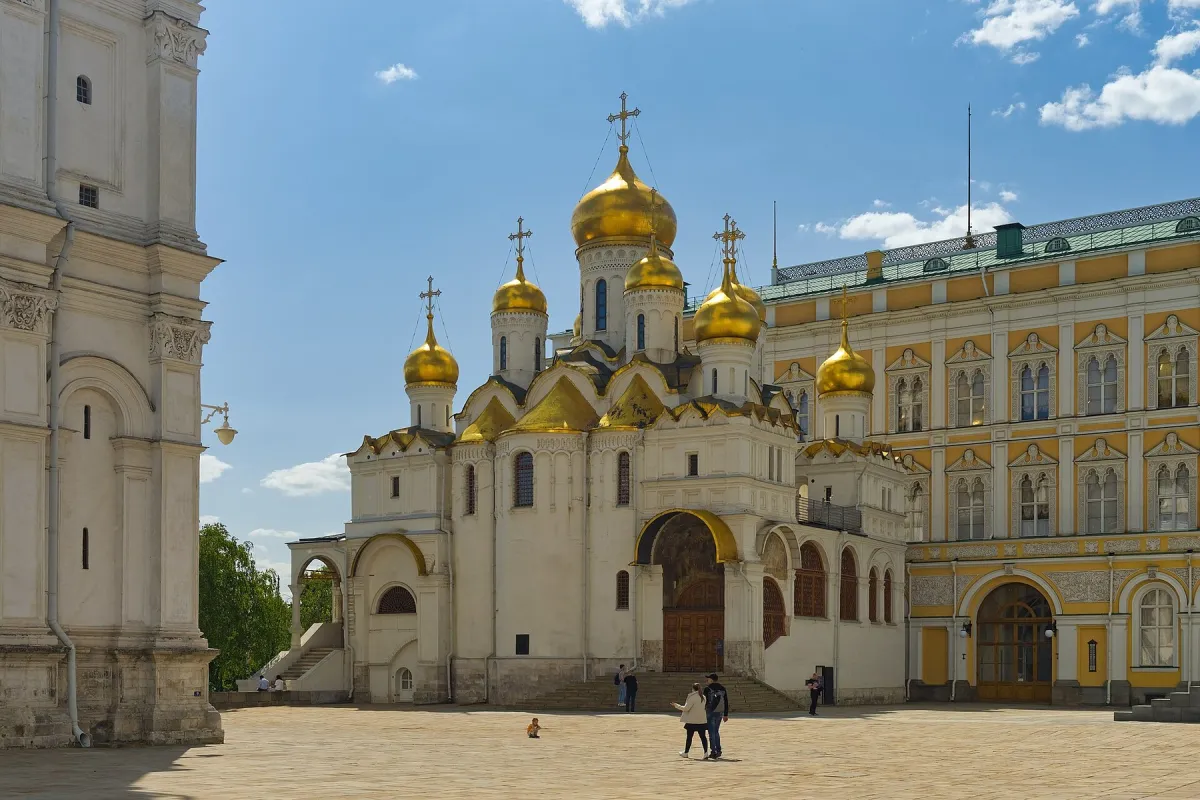

The Annunciation Cathedral belongs to the Kremlin ensemble and is distinct from St Basil’s outside the walls. Compare the grouping of domes and rooflines with the square’s ground plane before choosing a detail. A wider frame explains its relationship to neighbouring buildings; a tight dome image needs a precise building name.
Check the specific museum route and the instructions at the cathedral entrance. Admission to an ensemble does not establish that every interior is open or that photography is permitted inside. Allow the security and entry time of a museum visit, and follow restoration barriers and the authorized visitor route.
Dormition Cathedral / Assumption Cathedral
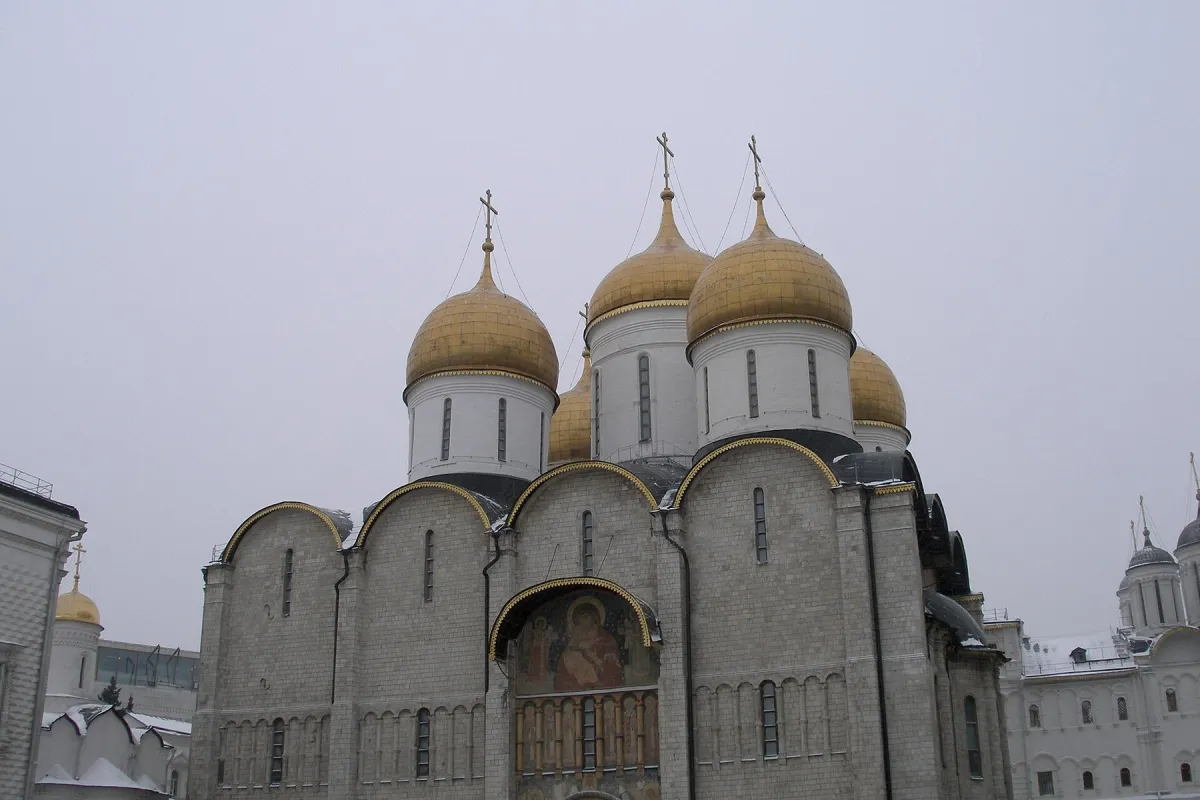

Dormition and Assumption are alternative English names for this cathedral. Keep both names together in your notes so they do not become two imagined stops. Its wall mass, grouped domes and position among neighbouring buildings make a useful comparison with the Annunciation Cathedral.
Make a context view before isolating a doorway or surface; label a detail as a detail. Check current museum access and room-specific photography rules, and follow staff instructions during worship-related activity or restoration. An exterior reference photograph establishes neither an open interior nor a repeatable camera position.
Grand Kremlin Palace: identify the building
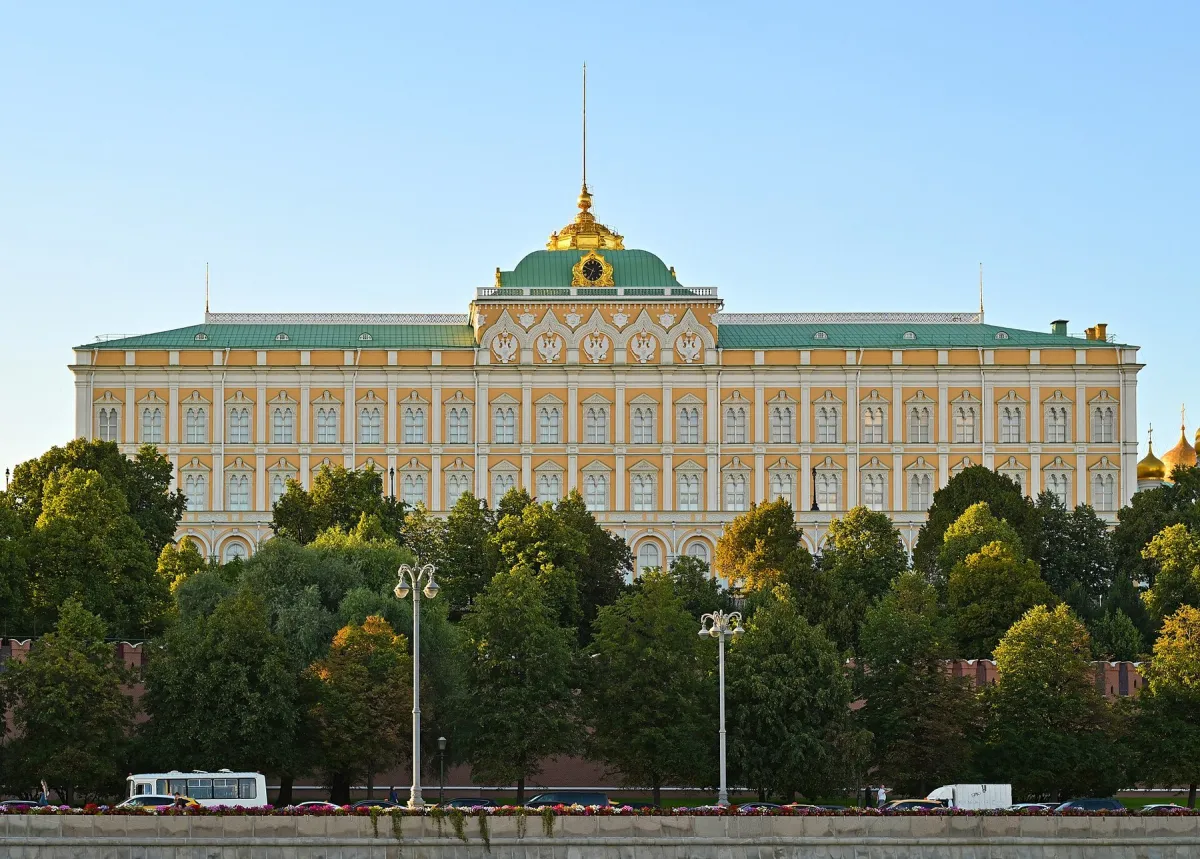

The Grand Kremlin Palace is distinct from the State Kremlin Palace performance venue. Its long façade and roofline make a different subject from the neighbouring churches and defensive walls. A wide image can explain those relationships; describing the entire Kremlin skyline as one palace would lose that distinction.
An exterior view does not establish that a standard museum ticket includes the palace interior. Use the official museum information for the authorized route and any separately stated access. If attending a performance, confirm the exact venue and entrance on the event ticket. Follow the visitor route and leave closed or guarded areas outside the plan.
Kremlin exterior and river context
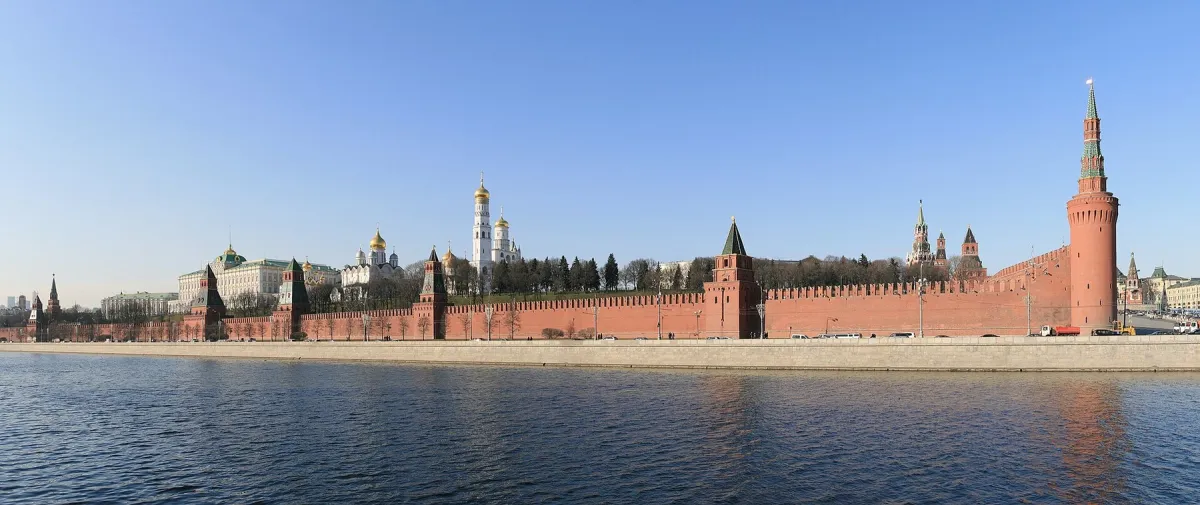

A river-side view can explain the relationship between water, walls, towers and the buildings behind them. Compare a wide establishing image with a smaller section of the wall; the foreground and angle tell the viewer more than a generic “best spot” label.
Treat this licensed image as a reference to study rather than proof of an unrestricted camera position today. Use currently permitted public space, follow local instructions and check museum admission separately if you intend to go inside. An exterior skyline does not establish access to palaces or working government areas.
St Basil’s Cathedral
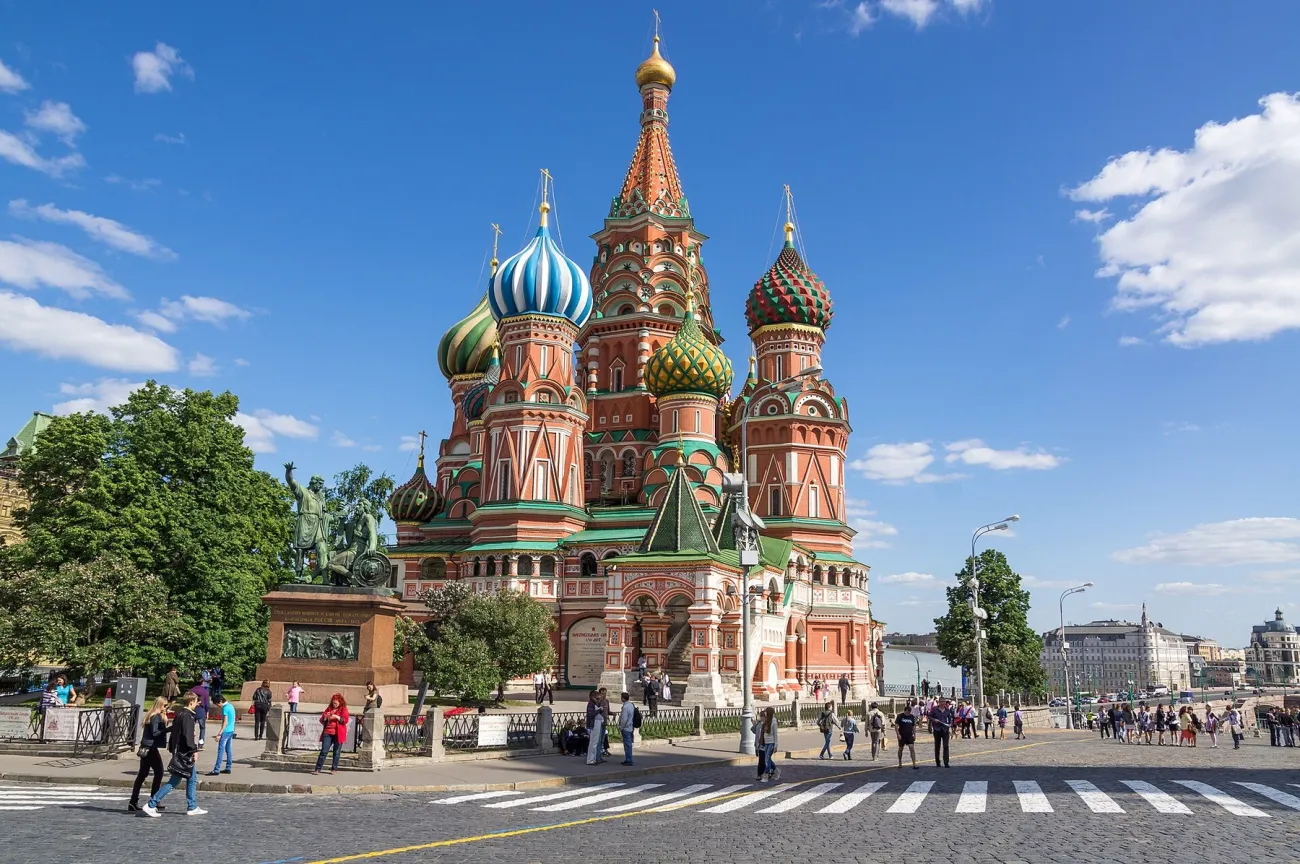

The colourful domes make the exterior immediately recognizable, but the interior is a network of smaller church spaces rather than one enormous open hall. Choose it if the building’s form and religious history interest you, rather than expecting a conventional large cathedral nave.
Reserve an approximate hour if an interior visit is available and suits you. Confirm access, steps and current admission with the State Historical Museum, which administers the monument. Pair the exterior with the southern end of the square; do not block circulation for a photograph.
St Basil’s: exterior form and interior scale
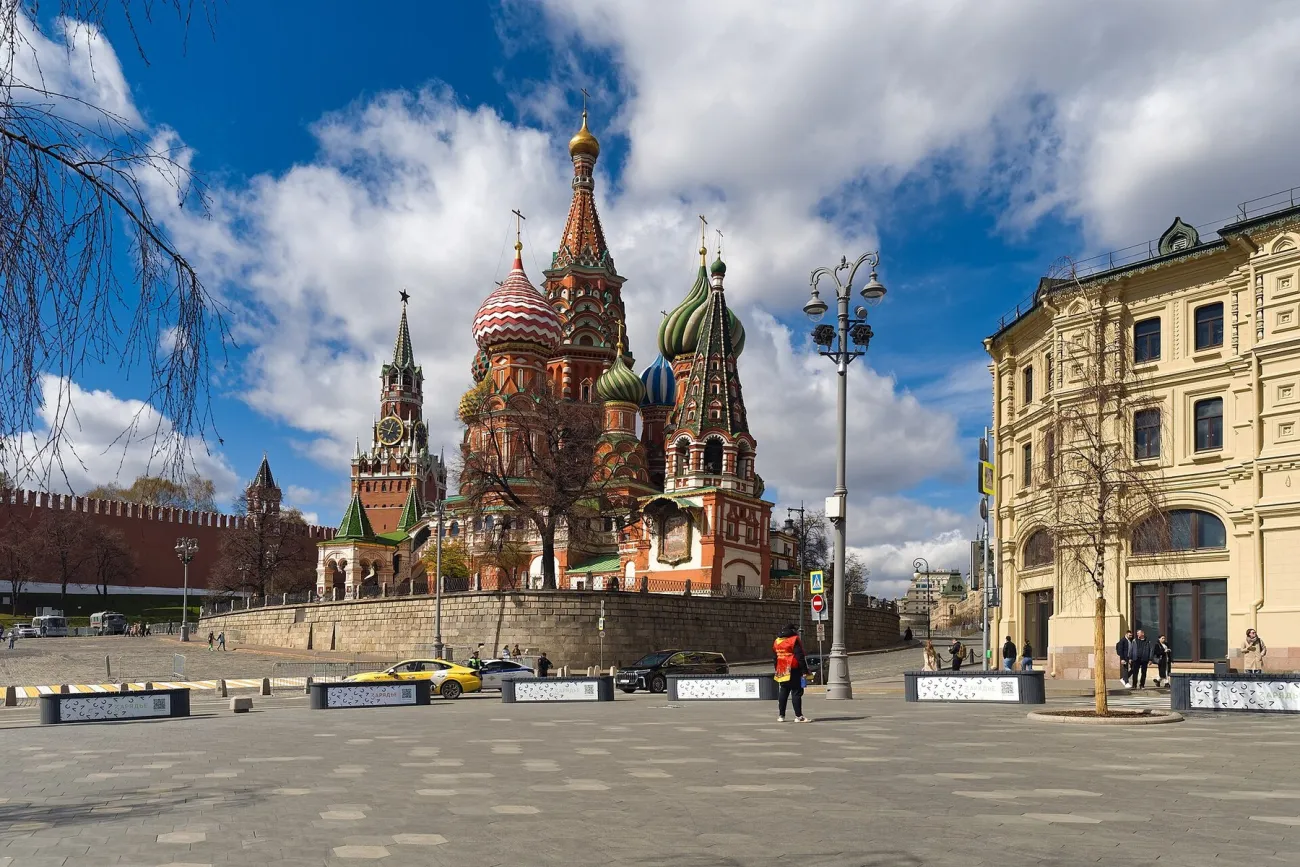

Compare a balanced whole-building exterior view with a smaller study of one dome or decorative surface. Judge the actual direction and quality of light: changing weather affects the colour relationships, and no fixed hour guarantees the same result. Keep the distinction between the broad exterior setting and the smaller church spaces inside.
For an interior visit, check current access and photography instructions for the exact room. Historical floors and thresholds can affect circulation. A camera setup that is manageable outside may be impractical inside; confirm any flash, tripod or specialist-equipment permission separately.
GUM
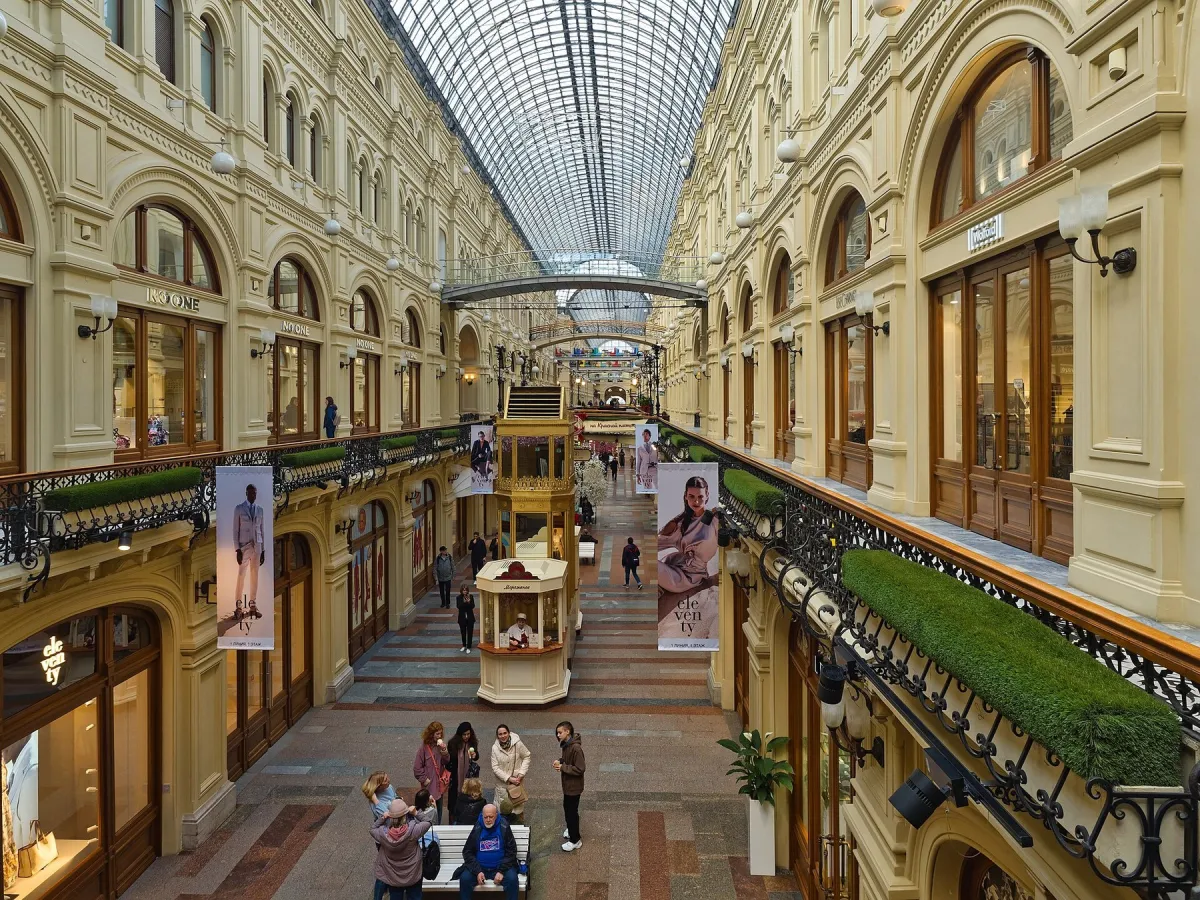

GUM provides a different view of the square’s history through its long covered passages and upper-level perspectives. It can be a useful sheltered stop, but the retail setting and seasonal decoration change; a historical interior photograph is not a promise of the same displays today.
Allow 30–60 minutes for a short architectural look, longer if shopping or dining. Shop, restaurant and building hours can differ. Pair it with the square and the Historical Museum end of the centre, and check permission before using a tripod or conducting a commercial shoot.
GUM interior: passages, roof and balustrades
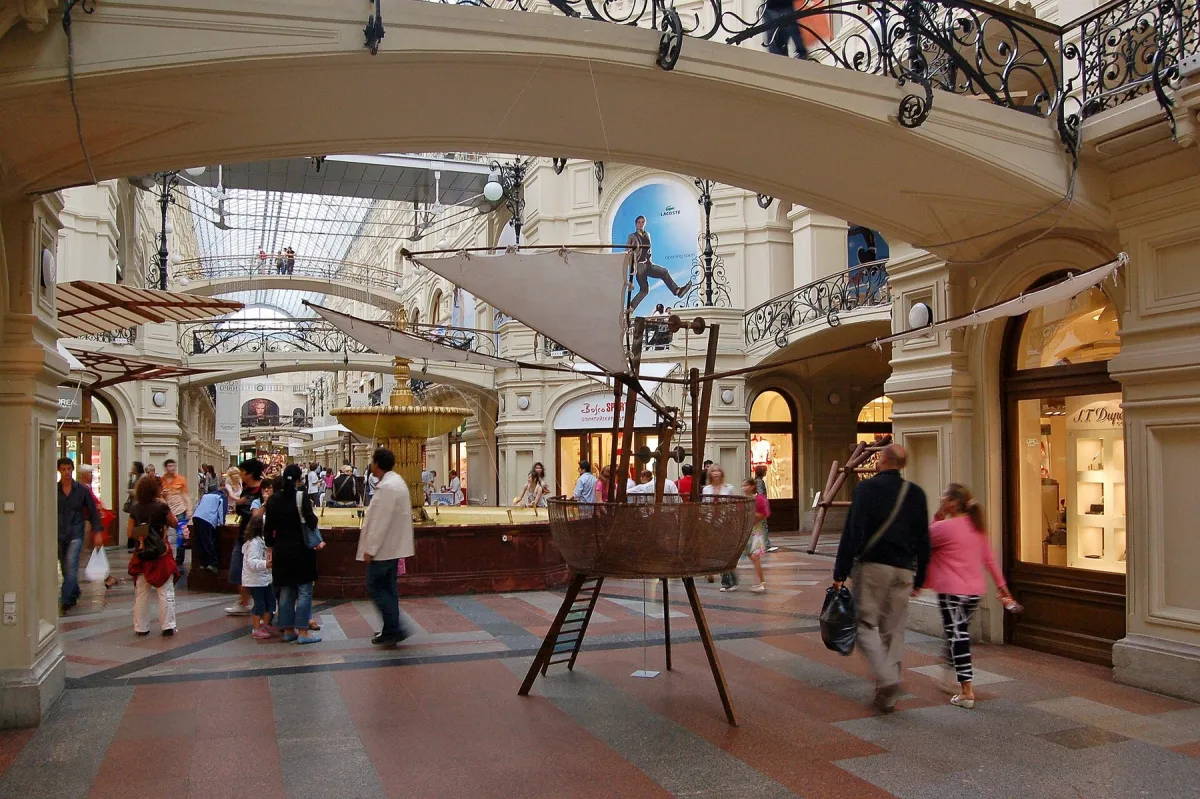

Use the long covered passages to study repetition and perspective, then compare a closer frame of the glazed roof or balustrade. Choose the treatment of verticals deliberately and keep pedestrian circulation clear. The reference photograph below records the interior in 2006; seasonal displays and individual shops can change substantially.
The building, shops and restaurants may have different opening arrangements. Ask about specialist equipment or a commercial shoot before setting up, and use only permitted visitor positions. An upper-level camera angle in an older image does not establish current access. Keep equipment securely on your side of a railing.
State Historical Museum
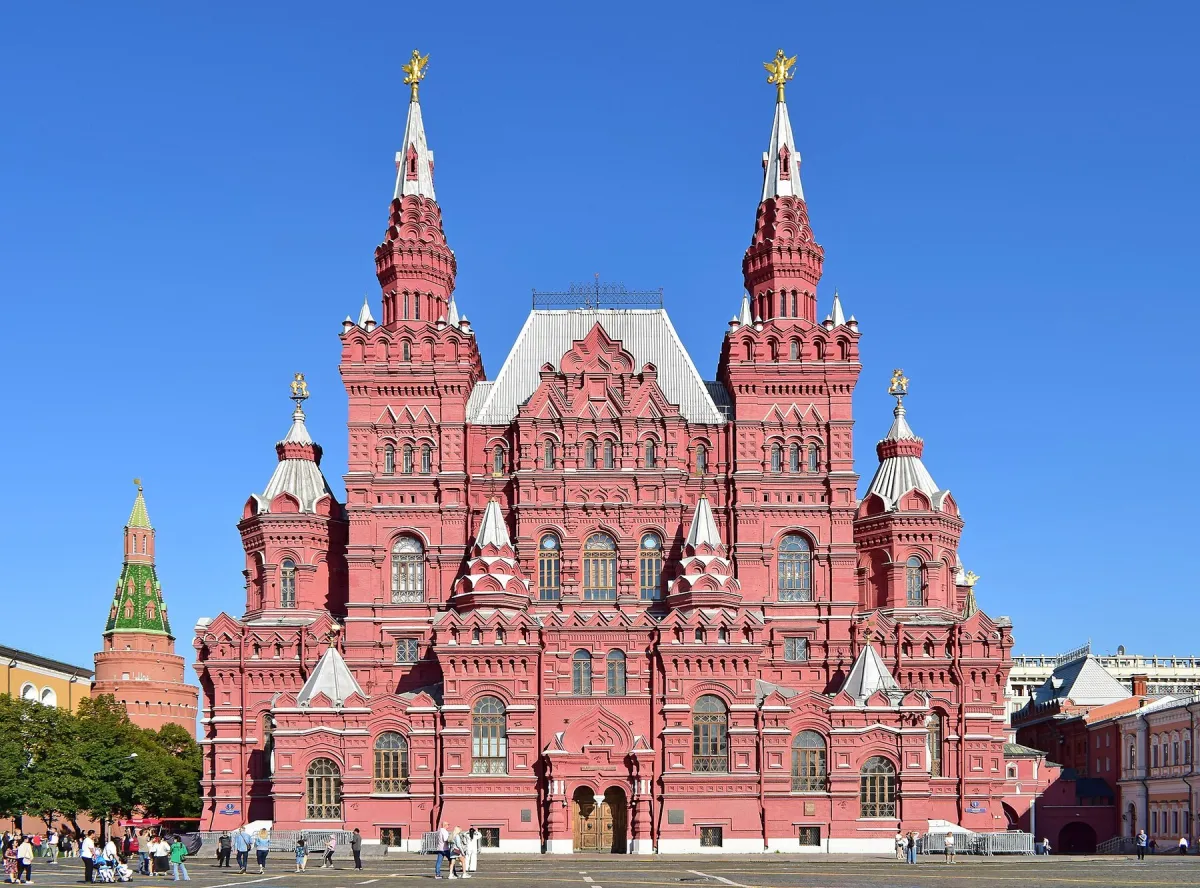

Choose this museum for historical material and a broader chronological perspective rather than expecting it to duplicate the Kremlin’s church-and-treasury visit. The red façade forms an important visual boundary at the northern end of Red Square.
Allow a focused 1½–3-hour collection visit rather than squeezing it between timed reservations. Check the current programme, building and ticket through the museum website. Exhibitions and affiliated sites do not automatically share one admission.
State Historical Museum: façade and collection
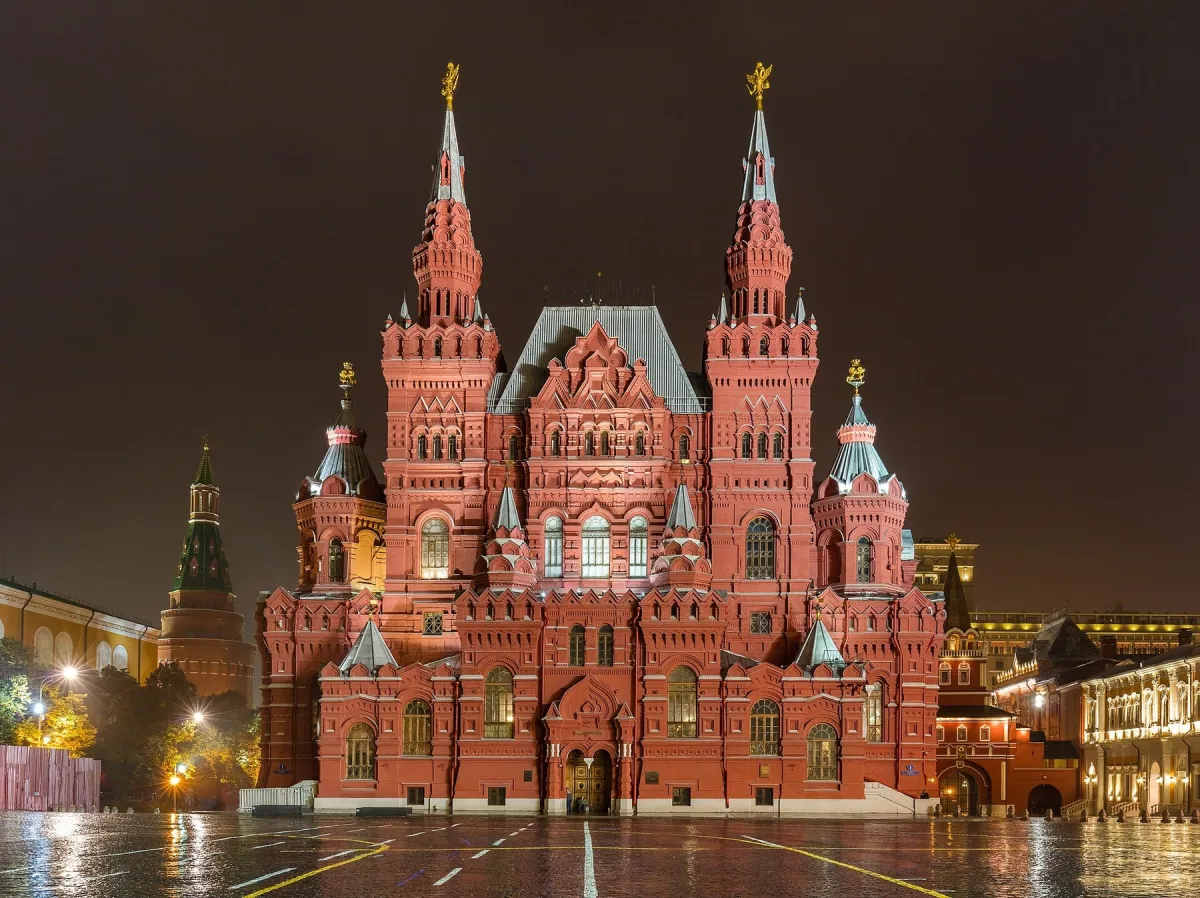

The museum’s red façade anchors the northern end of the Red Square ensemble. A wide frame explains that position, while a closer image can study material and ornament. Keep the perspective intentional so an extreme wide-angle view does not misleadingly describe the building’s proportions.
The reference photograph dates from 2016. An outside picture and a visit to the collection need different time allowances and access decisions. Check the precise building on a museum ticket and the current visitor information; affiliated monuments and exhibitions do not automatically share admission.
Tretyakov Gallery: historic building
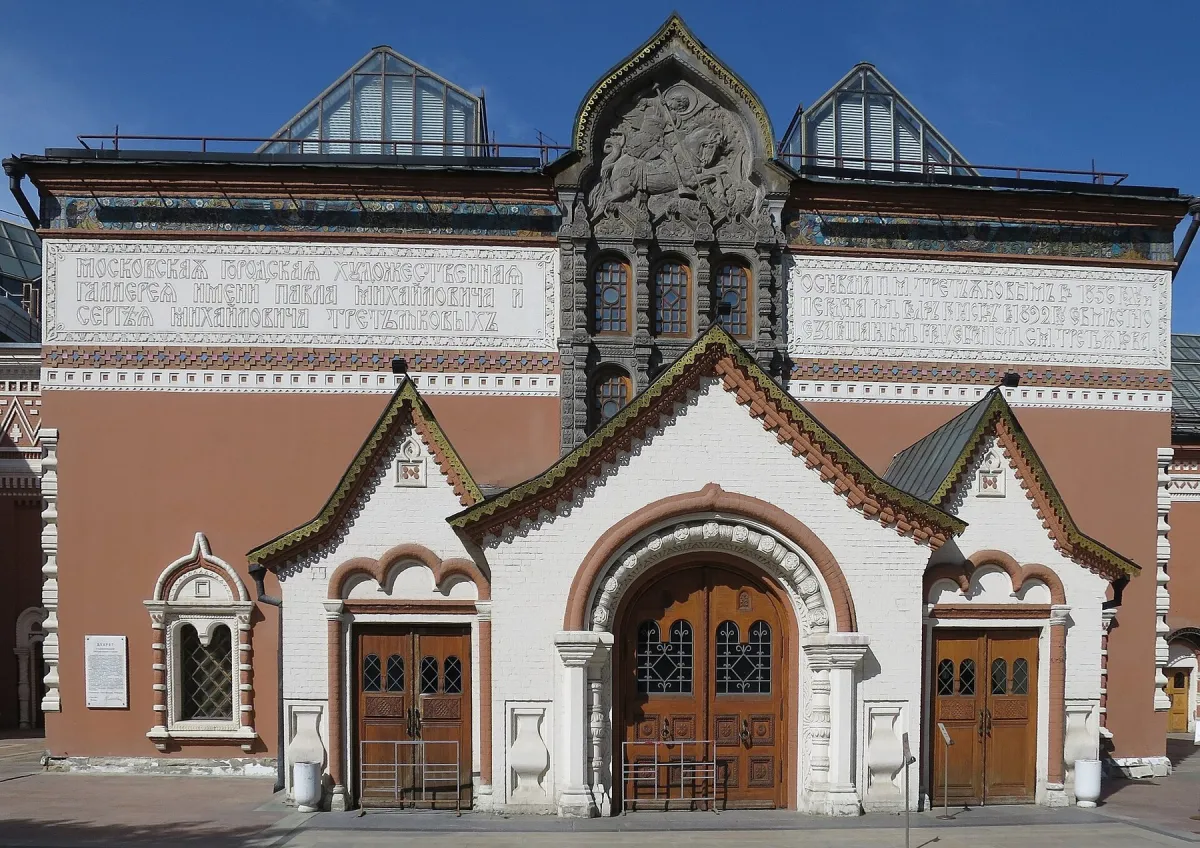

The historic collection is a strong choice for Russian art and a natural anchor for a Zamoskvorechye day. Choose a period or theme to keep the visit manageable; a focused look at landscape or portraiture can be more useful than rushing every room.
Allow around 2–3 hours plus a rest outside the galleries. Confirm the Lavrushinsky Lane venue on the official building page. Combine it with nearby lanes and a meal rather than another major collection across the river.
Pushkin Museum of Fine Arts
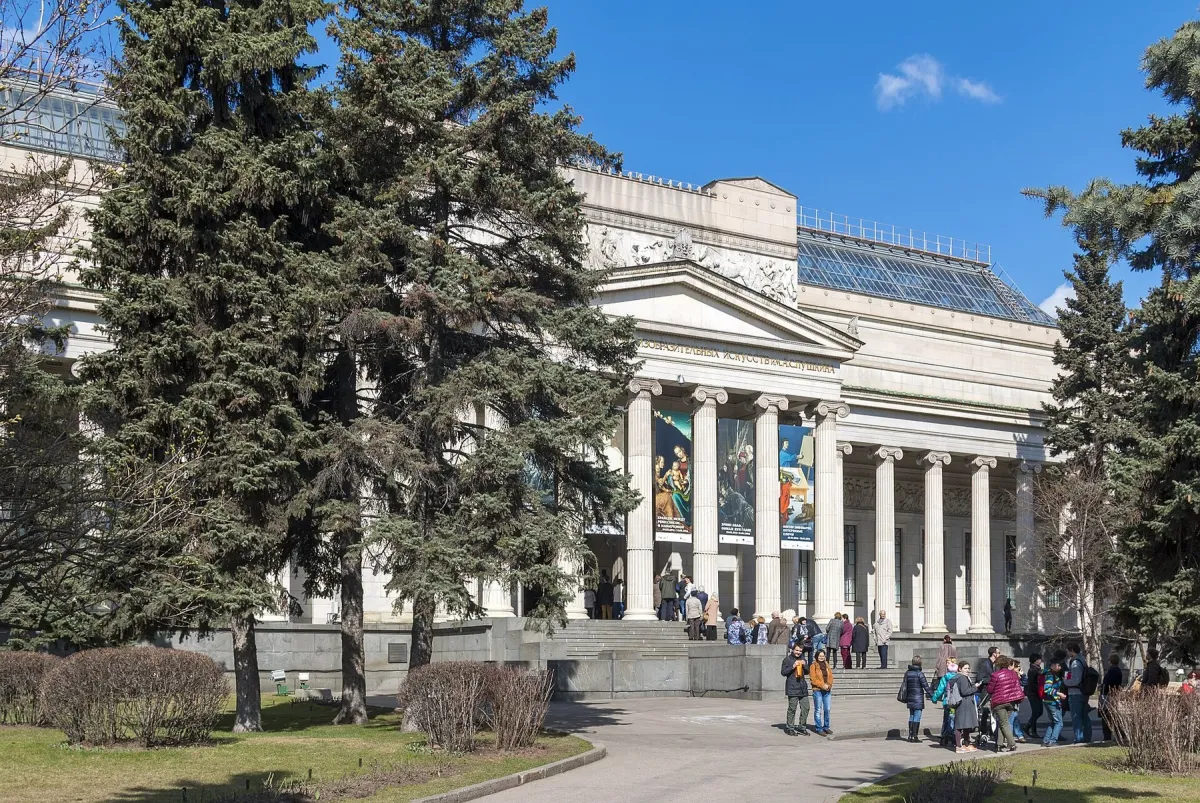

Choose the Pushkin Museum of Fine Arts for a different collection emphasis from the Tretyakov. The name can cause confusion with literary museums; confirm the Volkhonka museum and the exact building relevant to your ticket.
A focused 2–3-hour block is a useful planning allowance. The visitor information separates buildings, exhibitions and access guidance. Nearby central streets can form a short outdoor follow-up if the weather suits.
Bolshoi Theatre district
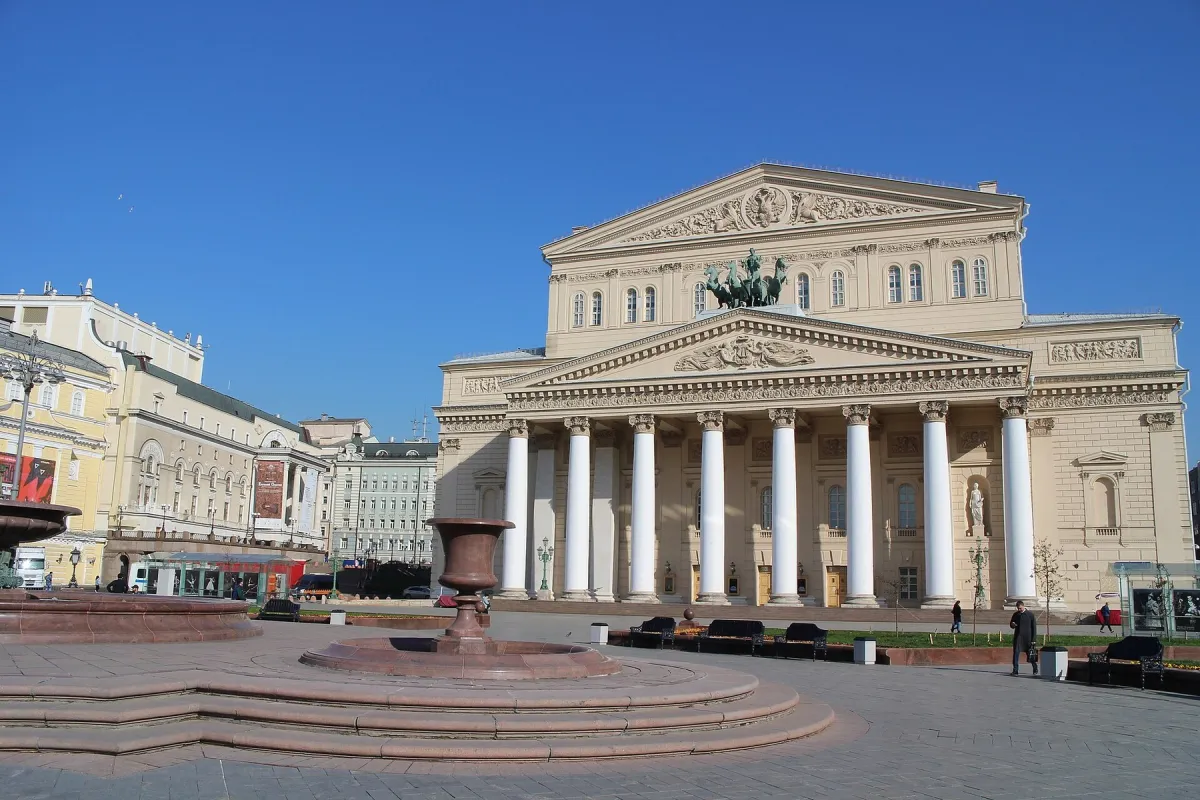

The theatre’s frontage and square work as a short architectural stop near the central historic route. Attending ballet, opera or another event is a different commitment: the company, stage, seat and date all need to match your booking.
Allow 20–40 minutes for an exterior look, or a full evening for the chosen event and entry process. Check the official performance announcements (Telegram, in Russian) rather than relying on street ticket offers. Pair the exterior with nearby Teatralnaya streets and a meal.
VDNKh
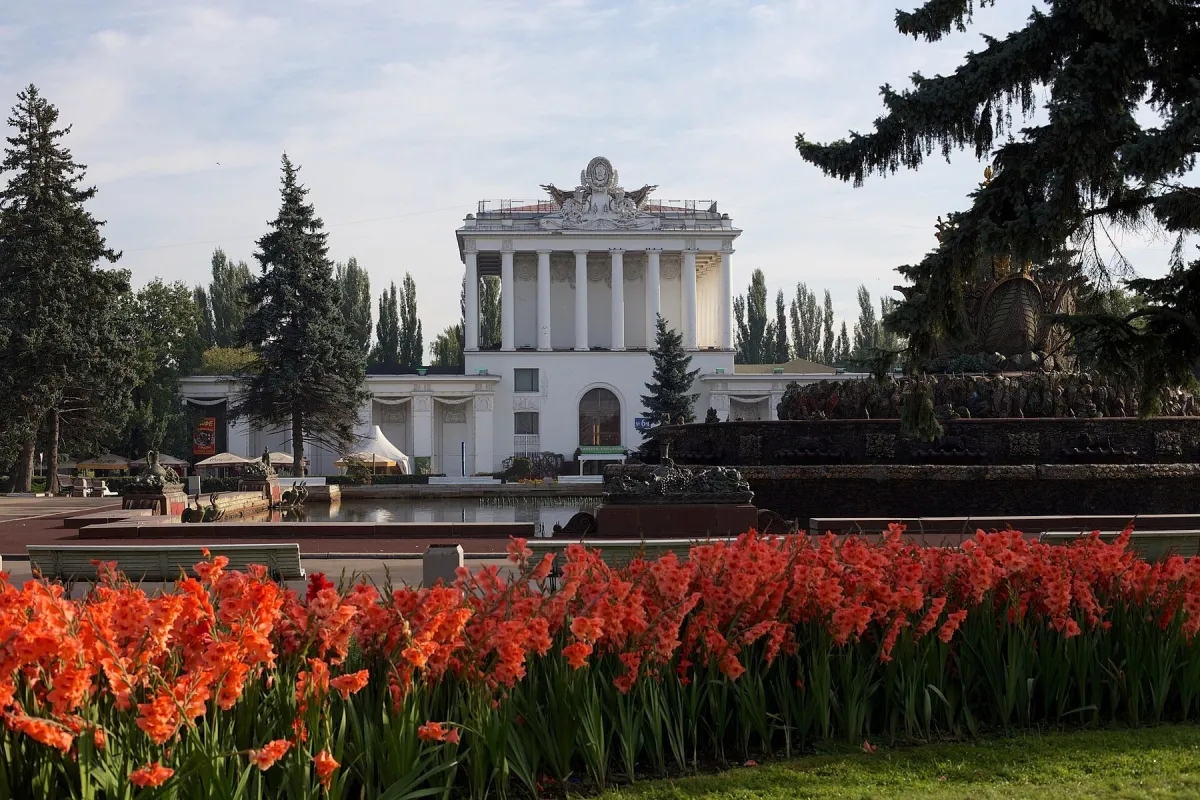

VDNKh suits exhibition architecture, public-space design and a selected pavilion visit. Its scale distinguishes it from a compact museum courtyard. Decide which part matters before starting along the avenues.
Allow a half day for a meaningful visit, longer only with a clear exhibition plan. Check separate event tickets and registration through the official visitor FAQ. Cosmonautics is a useful nearby partner, but keep the total walking distance realistic.
Museum of Cosmonautics
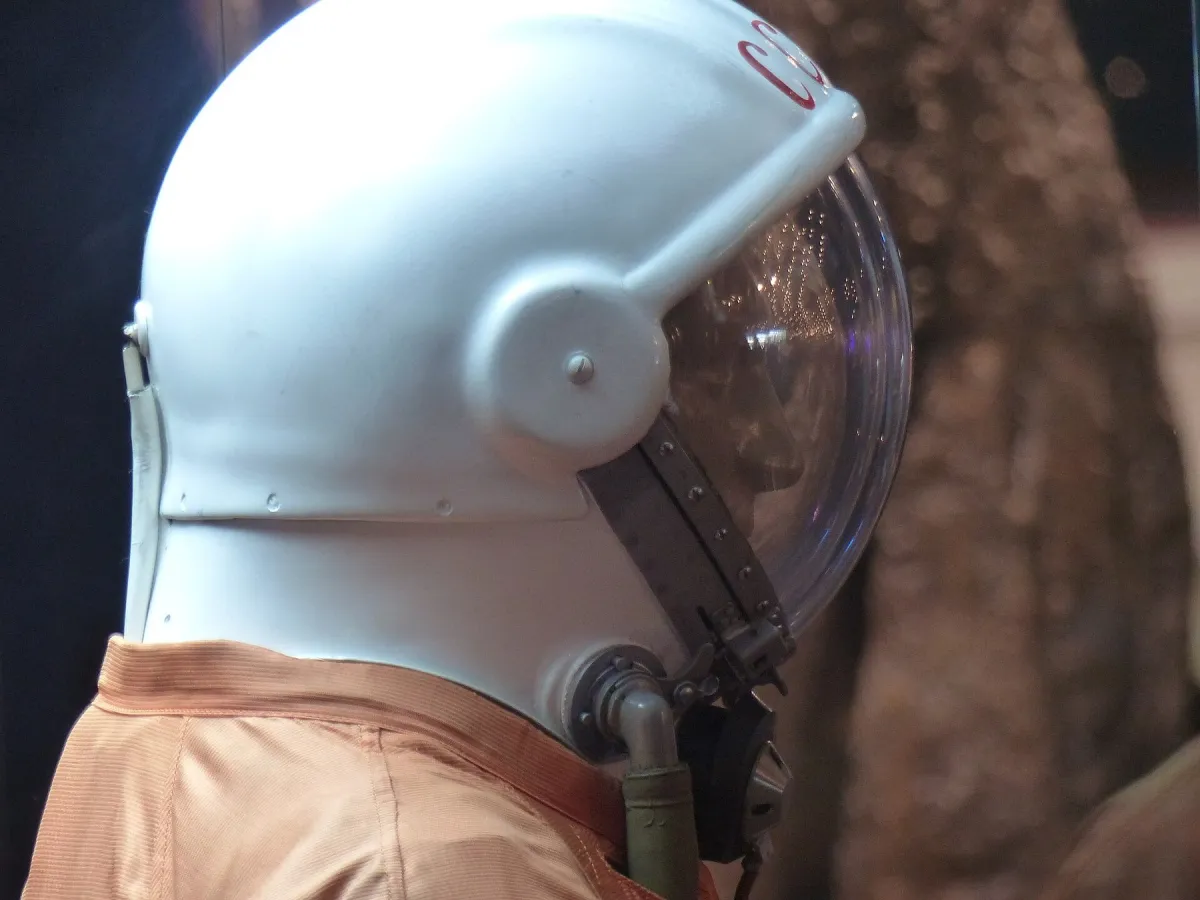

Choose this museum for space history and material exhibits rather than another architectural interior. It can work well with older children who have a specific interest in spacecraft and exploration; display language and tour availability matter.
Allow roughly 1½–2½ hours, with additional time for any booked activity. The official museum site publishes its calendar and visitor information. Combine it with a limited VDNKh loop, not every pavilion.
Novodevichy Convent and pond-side setting
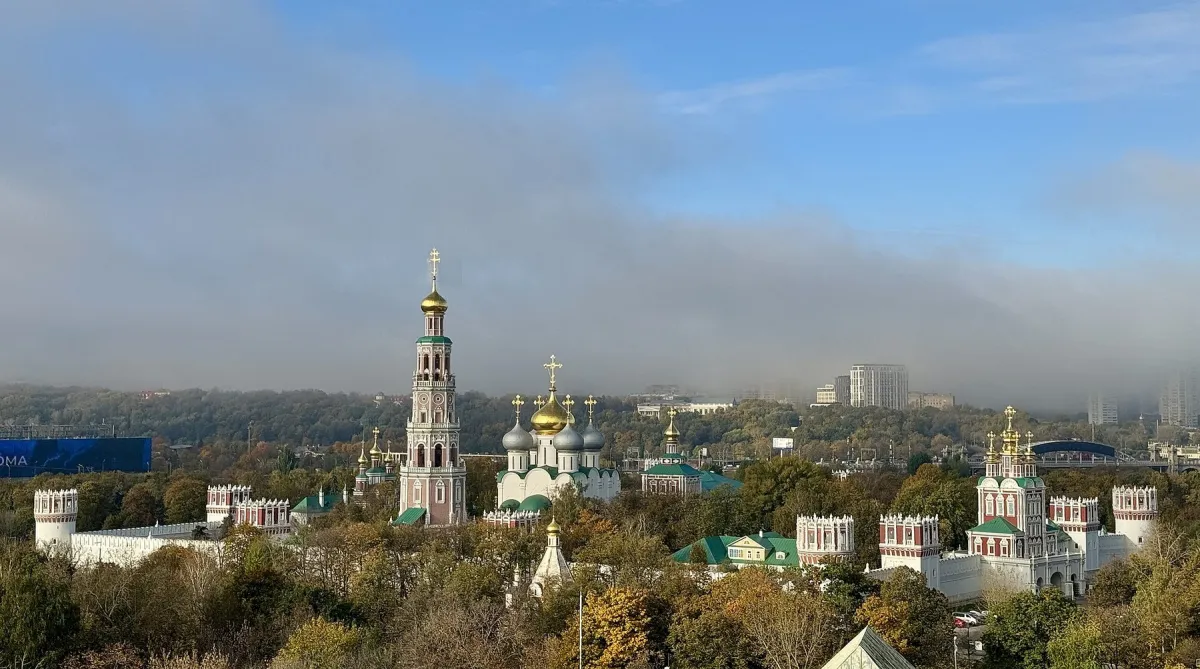

The fortified religious ensemble offers a different architectural context from the Kremlin. Its UNESCO record explains the convent’s historical and artistic importance. Treat it as a religious and memorial setting as well as a photograph subject.
Allow approximately 1½–3 hours depending on the accessible areas and your interests. Check current visitor information for the convent and cemetery separately. A pond-side walk does not guarantee entry to either; respect worship and memorial activity.
Novodevichy: pond view and architectural details
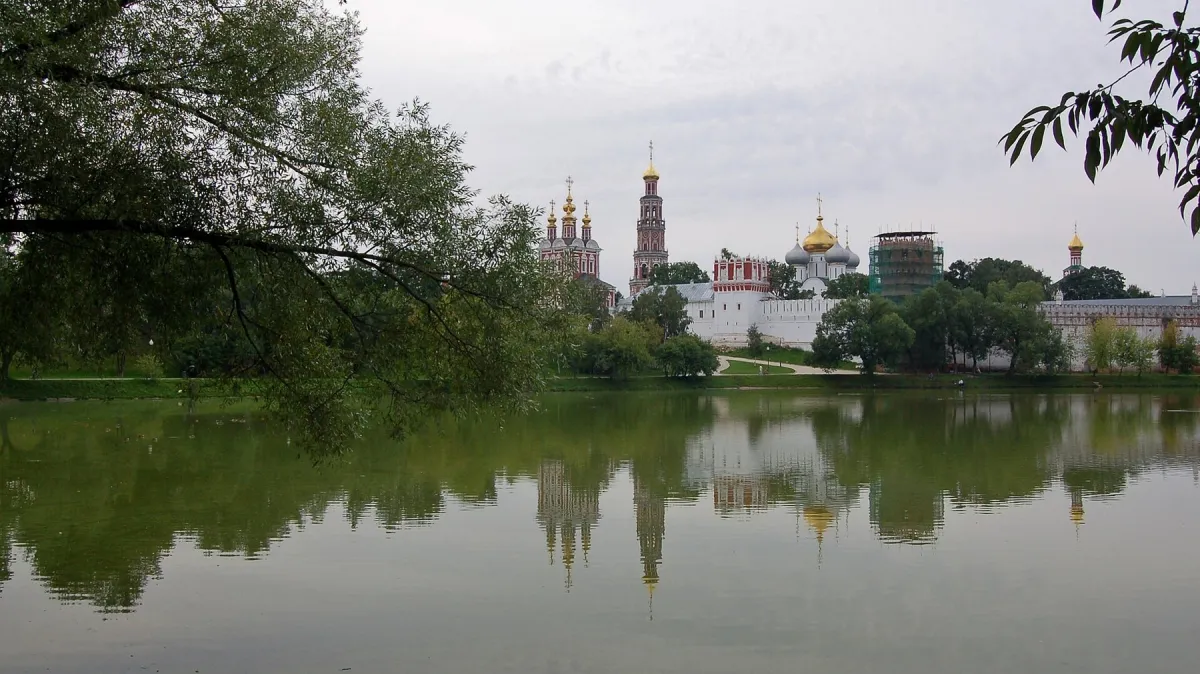

The photograph below records a pond-side view in 2006. Compare the whole ensemble with a smaller tower or wall detail where photography is permitted. Reflections depend on wind, water and the available position; the reference image does not promise the same conditions on a later visit.
Choose whether your priority is the outside landscape, convent or cemetery, then check the corresponding entrance and visitor conditions. A pond walk does not include admission to the other areas. Respect worship and memorial activity, and avoid an unstable waterside edge when composing a reflection.
Kolomenskoye Museum-Reserve
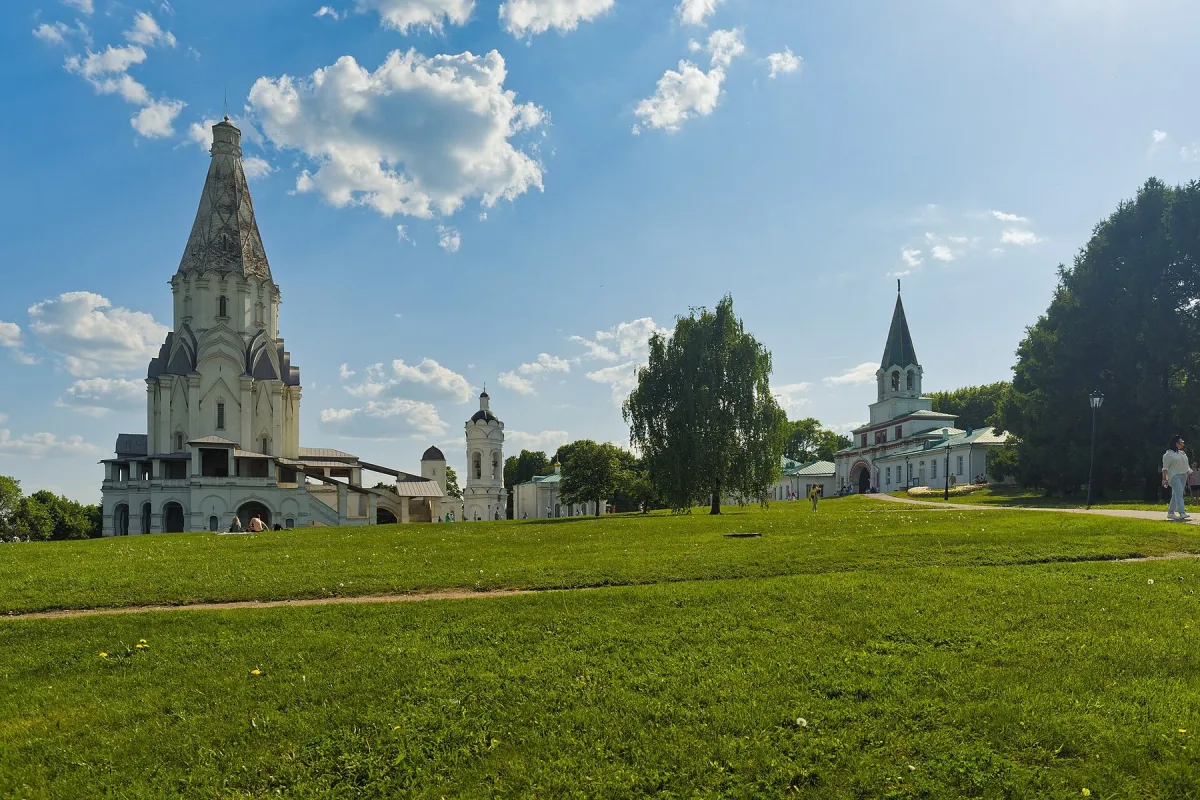

Kolomenskoye is a city museum-reserve, not Kolomna. The Ascension Church and the reconstructed wooden palace offer distinct architectural subjects, separated by a substantial landscape. Select the part of the grounds and entrance appropriate to your priority.
Allow a half day with walking and rest time. Check the museum-reserve website for each exhibition; a specific crypt closure does not mean that the whole park is closed. A visit here is an alternative to a northern VDNKh outing, not a quick addition to it.
Ascension Church: architecture in the landscape
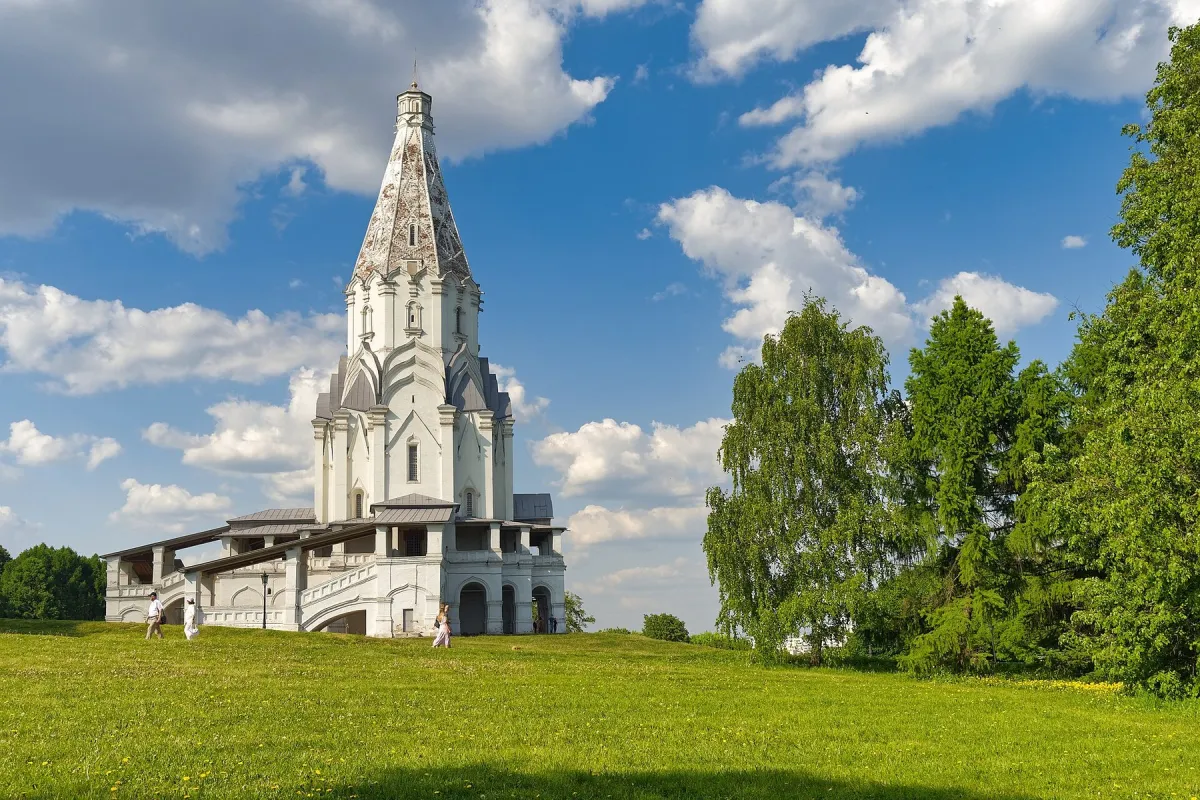

The Ascension Church, the reconstructed wooden palace and the wider reserve are separate subjects. For the church, compare its silhouette with the slope, trees or open foreground. A distant frame explains scale, while a close construction detail needs a caption that keeps the building and landscape distinct.
Choose the reserve entrance and metro approach for your actual priority. Grounds, religious interiors and exhibitions can have different access conditions. Keep to permitted paths and allow time for the return walk in cold or wet weather. Kolomenskoye is within Moscow; the separate city of Kolomna belongs to a different outing.
Tsaritsyno Museum-Reserve
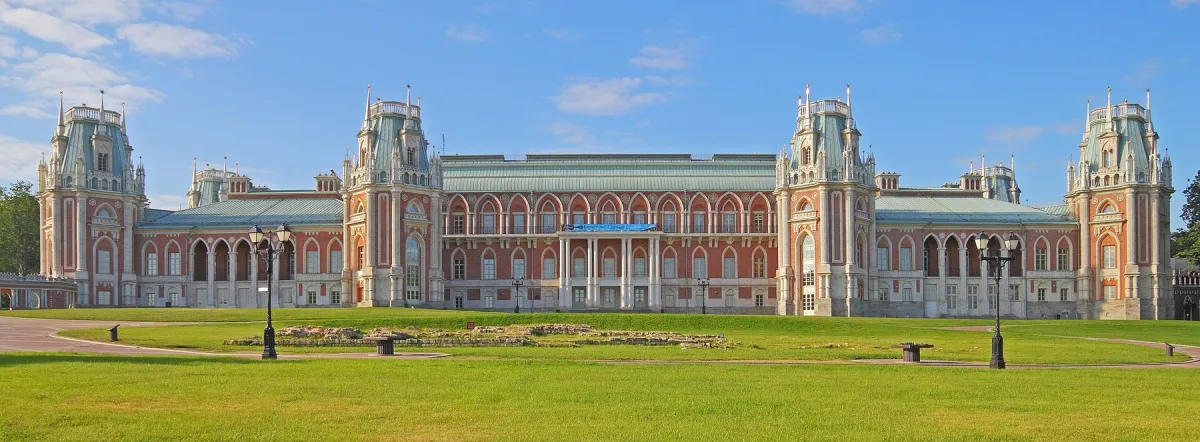

Choose Tsaritsyno for landscaped grounds and palace architecture on Moscow’s southern side. It has enough scale for a separate outing, especially if you include an exhibition or a concert. Do not treat every building as open simply because the park is accessible.
Allow a half day and consult the official programme and access notices. Temporary room closures can affect a particular date. Pair a chosen interior with a modest outdoor loop rather than a second distant reserve.
Moscow City and Sparrow Hills: choose a view
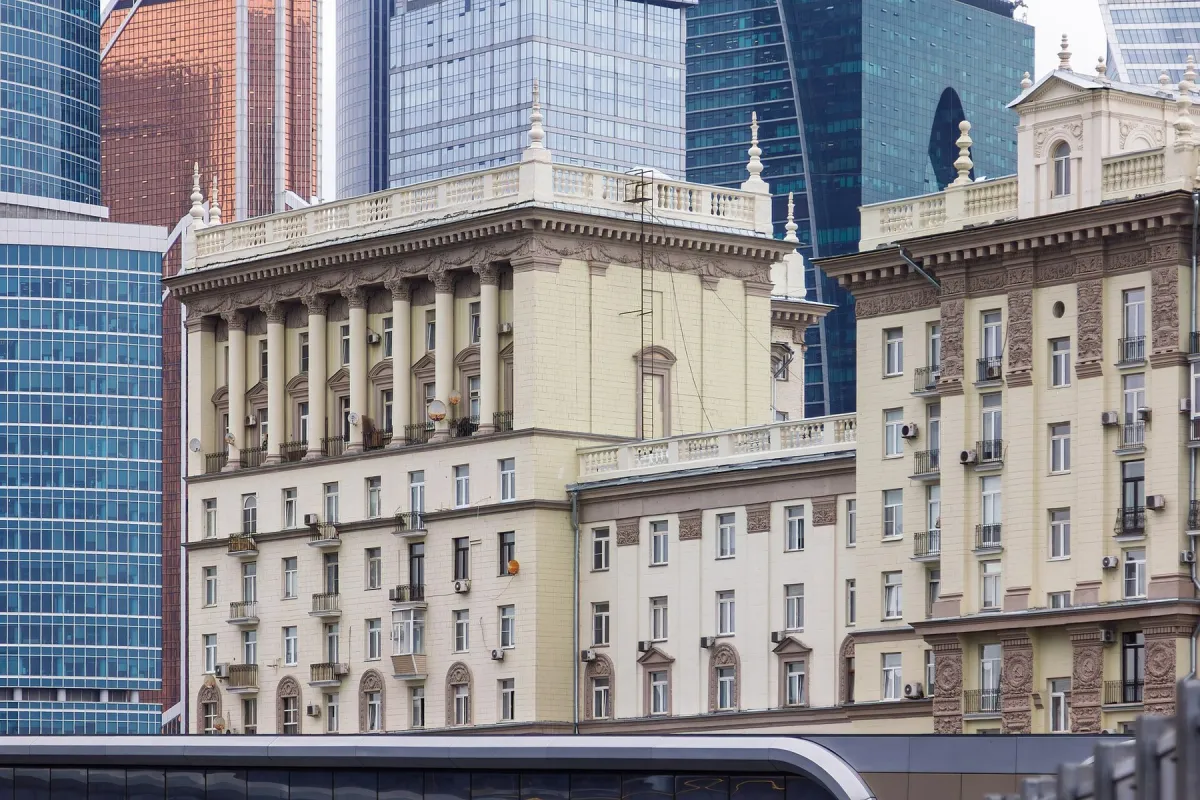

Moscow City suits close views of contemporary towers and a specifically booked observation venue. Sparrow Hills offers a wider landscape perspective in the university and river context. They are not interchangeable viewpoints or adjacent stops.
Choose one according to the light, weather and route. Allow at least 1–2 hours including the last approach, more for a reserved deck or a long park walk. A tower name alone is not an entrance address; verify the venue and visibility before paying for an elevated view.
Moscow State University and Sparrow Hills
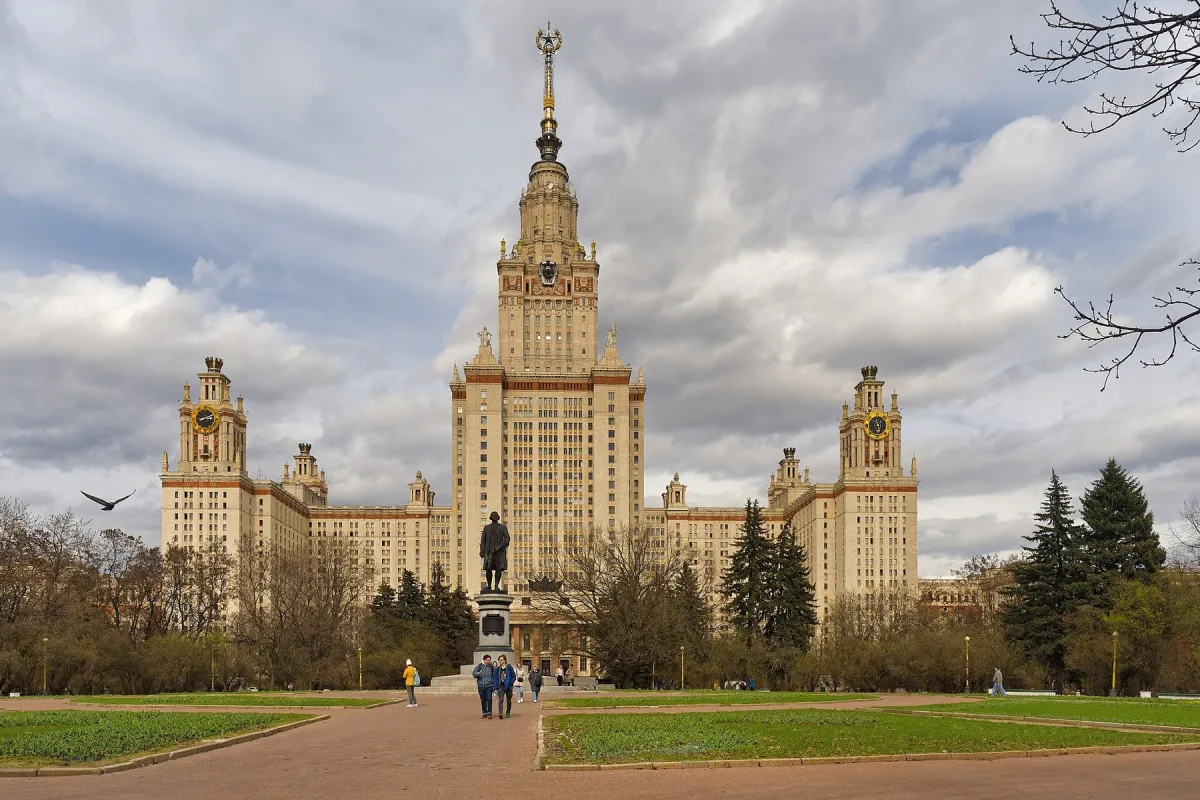

Moscow State University’s main building and the Sparrow Hills landscape are related subjects with different positions and approaches. For an architectural study, compare a centred view of the central tower with a wider frame showing the wings and foreground. Paths, trees or people can provide scale.
A campus building is not automatically a tourist interior, and a public landscape view is a separate choice from an authorized university visit. Select the actual walking route and finish point instead of treating a university map pin as a complete itinerary. Slopes, ice, rain or poor visibility can make a shorter permitted public view more practical than an extended hillside outing.
Access, tickets and nearby alternatives
Confirm the date, exact building, ticket type and entrance before travelling. Closed rooms, security restrictions and weather can change a route; keeping a nearby alternative is more effective than adding a replacement across the city. Read Itineraries for workable day sequences.
For mobility needs, check surfaces, steps, lifts and toilet access with the venue. A building photographed from outside is not evidence of accessible admission. The accessibility guidance explains how to plan the journey too.
Attractions FAQs
Are Red Square and the Kremlin one ticket?
No. The public square, Kremlin museum admissions and nearby monuments have distinct access and ticket arrangements.
Which museum should I choose first?
Choose by collection: Russian art at the Tretyakov, another fine-arts emphasis at the Pushkin, historical material at the Historical Museum, or space history at Cosmonautics. Verify the exact building and exhibition.
Can I see the major outer sights in one afternoon?
Choose one substantial outer district or reserve. VDNKh, Kolomenskoye, Tsaritsyno and Novodevichy are separate outings.
Are the visit durations guaranteed?
No. They are planning allowances; add time for your pace, security, closures, weather and travel.