
Transportation Guide for Moscow
Getting around Moscow is surprisingly smooth and efficient thanks to one of the world’s best public transport systems. This Moscow Transportation Guide explains how to navigate the capital by Metro, bus, taxi, and more — with practical tips, ticket options, and insider advice to help you travel like a local.
Top Highlights
- Moscow Metro: Fast, reliable, and stunningly beautiful — the city’s main transport backbone.
- Troyka Card: One smart card for Metro, bus, tram, and suburban trains.
- Buses & Trams: Cover every district with contactless payment options.
- Taxis & Apps: Yandex.Taxi and Citymobil are affordable and easy to use.
- Aeroexpress Trains: Quick and direct connections between airports and central Moscow.
Moscow Metro
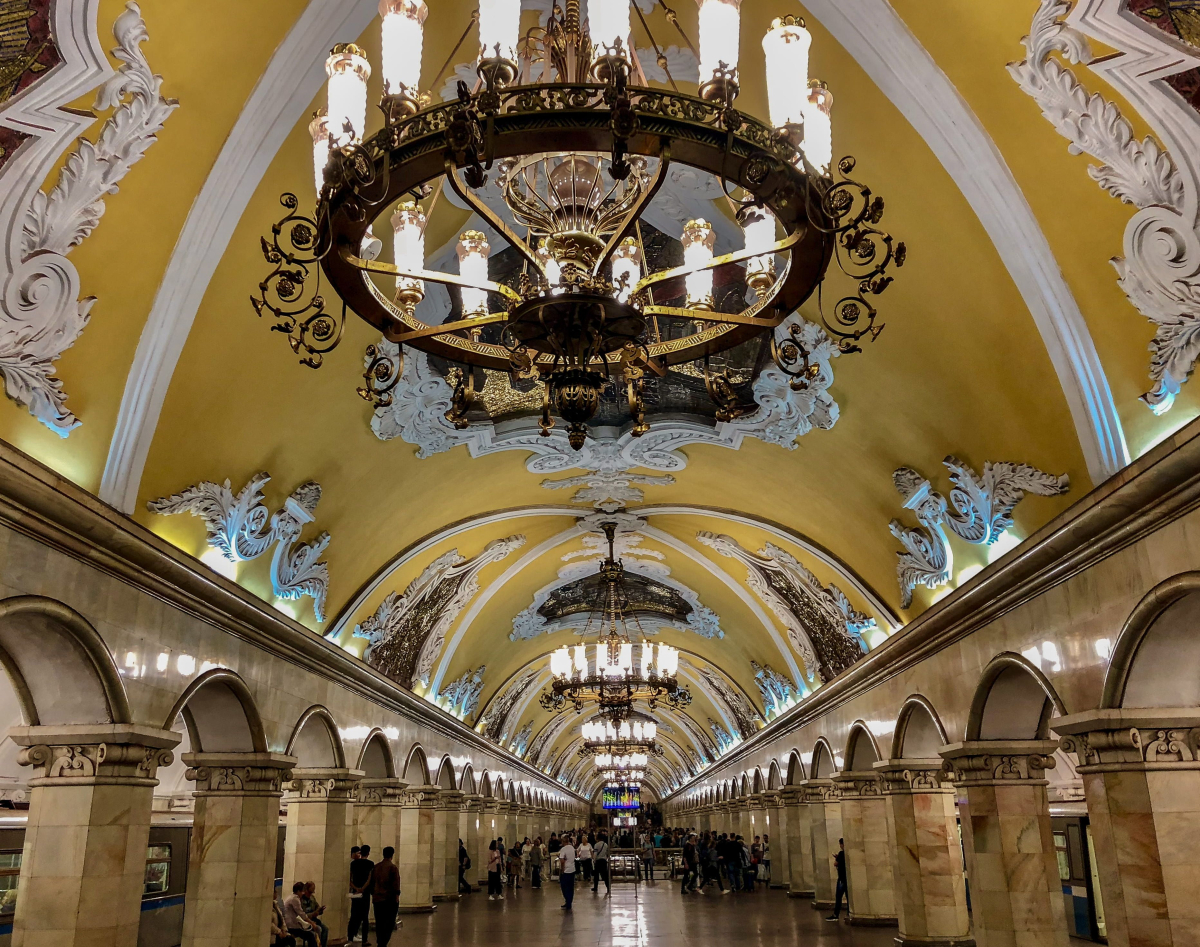
The Moscow Metro is not just transport — it’s an underground museum. Opened in 1935, it now includes more than 250 stations and 14 lines covering nearly every part of the city. Trains run frequently (every 1–3 minutes during rush hour) and operate daily from 5:30 a.m. to 1:00 a.m.
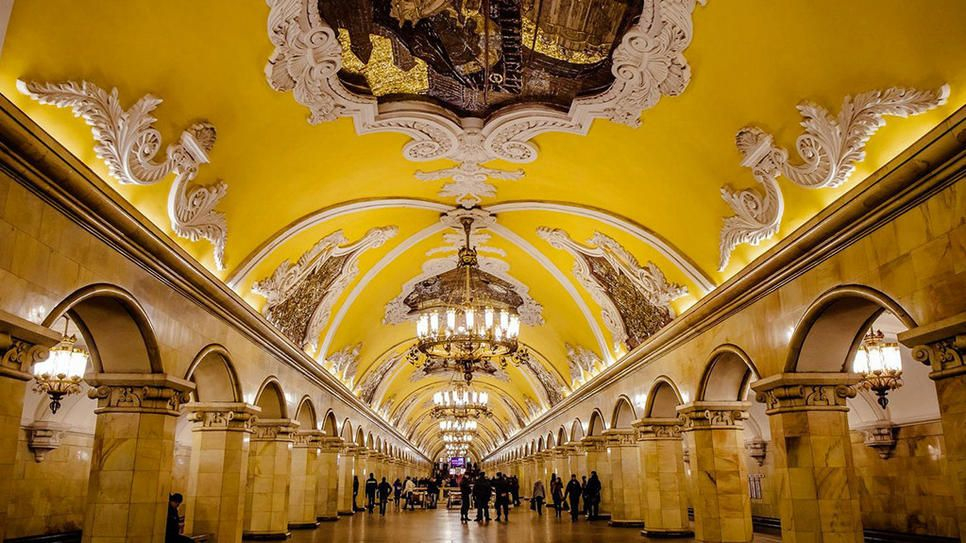
Each station has a unique design — from the chandeliers of Komsomolskaya to the mosaics of Novoslobodskaya and the Art Deco beauty of Mayakovskaya. Travelers should download the Yandex Metro app for navigation, or simply follow clear English-language signage throughout the system.
Metro Tickets & Troyka Card
The easiest way to pay for public transport in Moscow is the reusable Troyka Card. You can top it up at ticket machines, kiosks, or via mobile apps and use it across the Metro, buses, trams, and suburban trains. Simply tap the card at the gates and the fare is deducted automatically.
- Single Trip: 70 RUB (Metro, bus, or tram)
- Troyka Card Deposit: 80 RUB (refundable when returned)
- Unlimited 24-hour Pass: 265 RUB
- Unlimited 3-Day Pass: 500 RUB
Tips for Using the Metro
- Trains arrive every 90 seconds during rush hour.
- Hold onto the escalator rail — they move fast!
- Photography is allowed, but avoid flash during busy hours.
- Peak times: 8:00–10:00 a.m. and 5:30–7:30 p.m.
- English station names are displayed on maps and announcements.
Buses, Trolleybuses & Trams
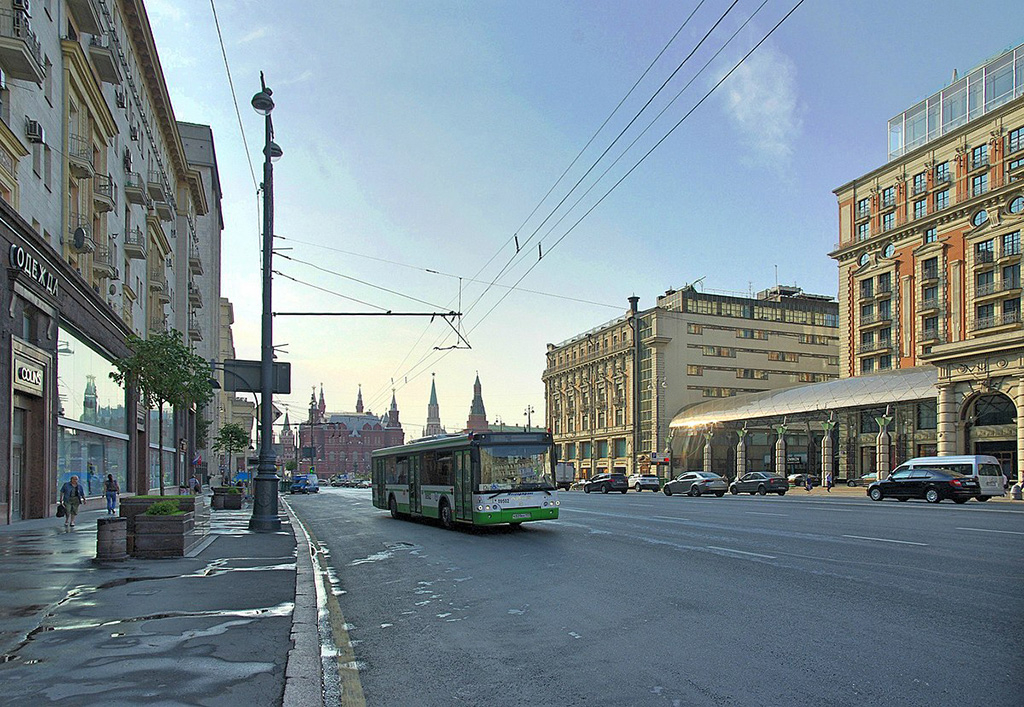
Moscow’s surface transport system complements the Metro with excellent coverage. Modern electric buses and trams are clean, safe, and environmentally friendly. They operate from early morning until around midnight, with night routes available on main avenues.
- Bus numbers are shown in blue and white; stops display real-time information.
- All vehicles are equipped with air conditioning and USB charging ports.
- Use your Troyka Card or contactless bank card to tap in.
- Routes integrate smoothly with the Metro network, making transfers seamless.
If you prefer scenic rides, try tram route A — it circles the Garden Ring and offers a relaxed view of downtown architecture.
Taxis & Ride Apps
Traditional taxis are rare, but Yandex.Taxi, Citymobil, and Gett dominate the app-based market. Prices are affordable, drivers are reliable, and cars arrive quickly. You can pay with cash, card, or app-based wallets.
- Yandex.Taxi: Equivalent to Uber, with live GPS tracking and English interface.
- Fixed fares: Displayed before booking — no negotiation needed.
- Airport rides: 1,000–2,000 RUB depending on distance and traffic.
Taxis are particularly useful at night when Metro services close. However, traffic can be heavy during rush hours, so allow extra time for airport transfers or business meetings.
Aeroexpress Airport Trains
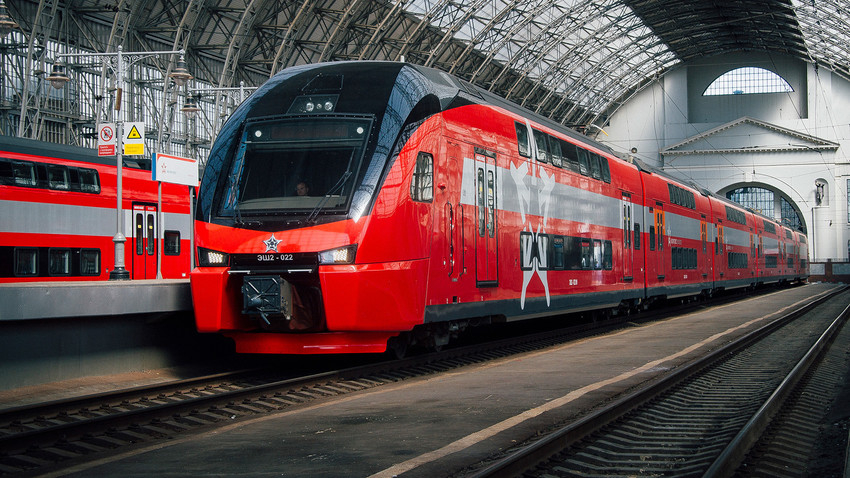
Moscow’s three main airports — Sheremetyevo (SVO), Domodedovo (DME), and Vnukovo (VKO) — are connected to the city centre by fast and comfortable Aeroexpress trains. They are the most reliable way to reach central Moscow, avoiding traffic jams.
| Airport | Departure Station | Duration | Fare (approx.) |
|---|---|---|---|
| Sheremetyevo (SVO) | Belorussky Station | 35 min | 600 RUB |
| Domodedovo (DME) | Paveletsky Station | 45 min | 600 RUB |
| Vnukovo (VKO) | Kievsky Station | 35 min | 600 RUB |
All Aeroexpress terminals are directly connected to Metro stations, making transfers easy even for first-time visitors.
Biking & Walking
Moscow is increasingly pedestrian- and cyclist-friendly. Wide sidewalks, underpasses, and riverside paths make walking a pleasure in summer. City bike rentals via Velobike are available across the centre — just register with a credit card at any docking station or use the mobile app.
- Velobike Day Pass: ~150 RUB
- 30-minute rides: Free within active passes
- Stations operate from April through November
Driving & Parking
While driving in Moscow is possible, it’s not recommended for short-term visitors. Traffic congestion, strict regulations, and paid parking zones make public transport a better choice.
- Parking in the city centre costs 100–380 RUB per hour, payable via parking meters or apps.
- Speed limits: 60 km/h in urban areas, 90–110 km/h on highways.
- Dash cams are common — follow rules carefully to avoid fines.
Accessibility
Moscow’s transport system has made major improvements in accessibility. Modern Metro stations have elevators, ramps, tactile paving, and voice navigation systems. Electric buses are equipped with low floors, making travel easier for passengers with disabilities.
Useful Apps for Getting Around
- Yandex Metro: Offline Metro route planner with live updates.
- Yandex Maps: GPS navigation, public transport routes, and walking directions.
- Mosgortrans: Official app for city buses and trams with live arrivals.
- Velobike: For renting city bicycles.
- Yandex.Taxi: For safe and affordable rides across Moscow.
Where to Go Next
- About Moscow – Learn about the city’s culture and history.
- Things to Do in Moscow – Explore top attractions and experiences.
- Food & Drinks in Moscow – Discover restaurants and cafés along Metro lines.
- Hotels in Moscow – Find stays with easy Metro and airport access.
With punctual Metro trains, efficient bus routes, and reliable taxis, Moscow is easier to explore than ever. Whether you’re gliding through marble Metro halls or cruising down the Moskva River, the journey itself becomes part of the Moscow experience.