
This guide helps you choose a subject, light and manageable route. The linked attractions guide covers landmark visits, History & Culture explains the neighbourhoods, and Things to Do develops the walks. Photographs illustrate the places and their source dates. They do not establish an exact camera position, current access or blanket tripod permission.
Choose Your Shanghai Photo Subject
Start with one main photograph and a nearby alternative. A skyline session needs an appropriate viewing bank and useful visibility. A close architectural detail can work when distant towers disappear into haze. A busy avenue rewards observation of movement; a garden asks you to work with framing, stone, roofs and water.
On smaller screens, scroll the table horizontally if needed.
| Subject | Starting area | Light to consider | Main planning check |
|---|---|---|---|
| Distant Pudong skyline | Bund riverfront | Daylight for structure; dusk for a possible balance of sky and lights | Visibility, available public positions and the return journey |
| Historic bank façades | Bund streets and promenade | Daylight or softer light for stone detail | Safe crossings and the space needed to frame the building |
| Towers from below | Lujiazui | Light between buildings rather than distant visibility alone | Actual pedestrian route and any ticketed viewpoint |
| Garden compositions | Yuyuan Garden | Soft light for shaded roofs and rockwork | Garden entry, permitted photography and narrow paths |
| Old-town street scenes | Nanshi and Fangbang area | Gentler light in lanes; movement matters as much as light | Current redevelopment, public access and working entrances |
| Residential street detail | Sinan Road area | Soft light beneath street trees | Public pavement versus private houses and courtyards |
| Retail signs and movement | Nanjing Road or a Huaihai segment | Daylight for architecture; dusk for illuminated signs | The exact road segment and pedestrian flow |
| Creek and bridge layers | Suzhou Creek and Zhapu bridge approach | Conditions along the selected creek segment | Correct bridge, safe standing space and an unobstructed crossing |
The Riverfront: Choose a Subject and a Bank
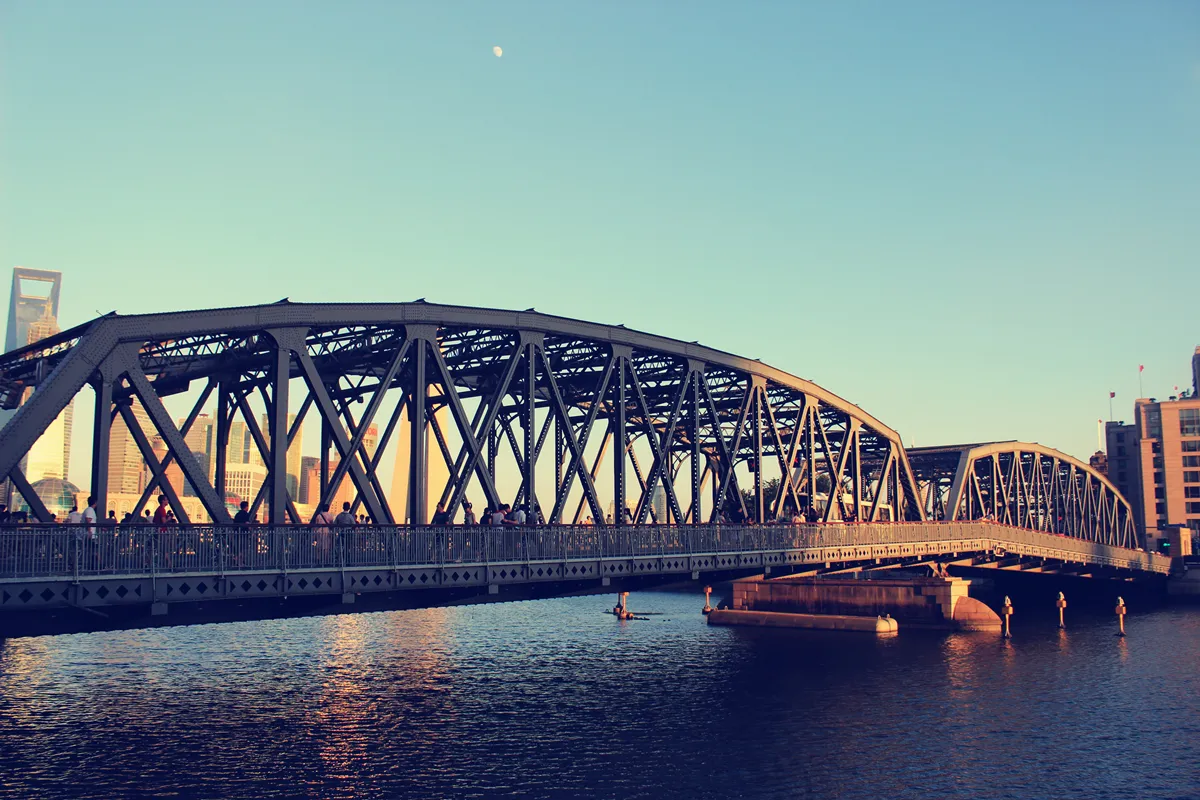

The Bund and the Pudong Skyline
From the Bund, look across the Huangpu towards Lujiazui for the skyline. Turn back towards Puxi for the bank façades. Treat these as two compositions: the panorama needs space between towers, river and sky, while the façade study needs readable vertical lines and a deliberate relationship with neighbouring buildings.
Arrive before the light you hope to use. Check haze, cloud, reflections and foreground obstacles before deciding between a wide panorama and a tighter frame. Dusk may retain some colour in the sky while buildings become illuminated, but the actual lighting and weather determine the result. A source photograph cannot establish a permanent lighting schedule.
Use the Bund visit and photography notes and Pudong skyline section for the related landmark context. Keep the promenade moving and follow temporary crowd controls. A tripod position must be permitted and leave circulation clear.
Lujiazui at Street Level
Across the river, the spaces between towers, pedestrian connections and riverside foregrounds give a different sense of scale. Decide whether you want a readable architectural view or the strong perspective of looking upwards. A very wide lens may stretch building edges; a smaller selection of structures can explain the place more clearly.
The Lujiazui street-level section distinguishes this experience from a distant skyline view. Pudong extends far beyond the tower cluster. Choose the actual walking route and any observation-deck entrance before crossing the river; a location inside a roof, mall or private building needs its own access check.
Old Town, Yuyuan Garden and Huxinting Teahouse
These nearby subjects call for different photographs. In Yuyuan, use a wall opening to frame another element, balance rockwork with a roofline, or choose one carved detail. Outside, old-town streets add signs, shops, people and the relationship between traditional-looking façades and the surrounding modern city.
The Yuyuan Garden notes cover the paid garden context. Huxinting’s roof, water and zigzag bridge form a separate exterior subject; an indoor tea service has its own conditions. Use the Huxinting section to keep these visits distinct. Keep bridges and entrances clear rather than waiting in a bottleneck for an empty scene.
Nanshi and Fangbang are useful for a wider streetscape. A gateway, the width of a lane or a row of shopfronts can tell more than an isolated ornament. Read the old-town context and Fangbang notes before interpreting every curved roof as original historical fabric. Redevelopment and business changes can make older photographs unsuitable as precise route instructions.
Lane Streets, Commercial Avenues and Everyday Shanghai
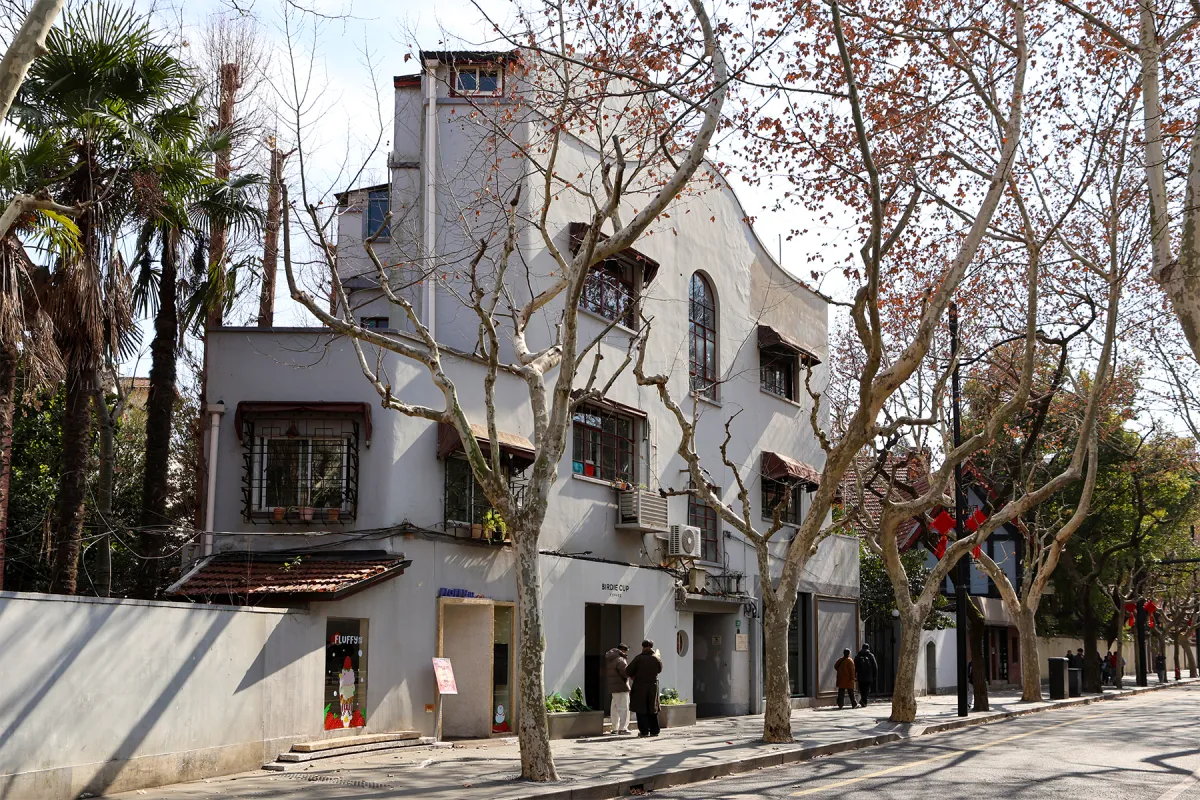

For a quiet architectural study, choose a compact street segment and watch how trees, boundary walls, windows and gateways relate to the pavement. Sinan Road provides residential context. Soft light can retain façade detail beneath trees; stronger sun may favour one doorway or shadow rather than a wide view containing bright and dark areas.
For avenue-scale movement, distinguish East and West Nanjing Road from Huaihai Middle Road. Choose the precise segment. A road name covering a long commercial corridor is not an exact photo pin. During the transition into evening, check illuminated signs for lost highlight detail before choosing a long exposure.
Fuxing East Road adds working street scenes and junctions; it should not be confused with Fuxing Park. Xizang Middle Road offers a broad civic and commercial corridor near People’s Square. Photograph from the pavement and use marked crossings. Passing traffic can provide scale without stepping into its path.
Keep residents’ doors, shop entrances and station exits clear. Ask before making a close portrait. A public-looking courtyard or open gate does not establish permission to enter. A shop sign in an older photograph records that moment; confirm the business separately before treating it as a dining or shopping recommendation.
Suzhou Creek, Zhapu Bridge and Indoor City Models
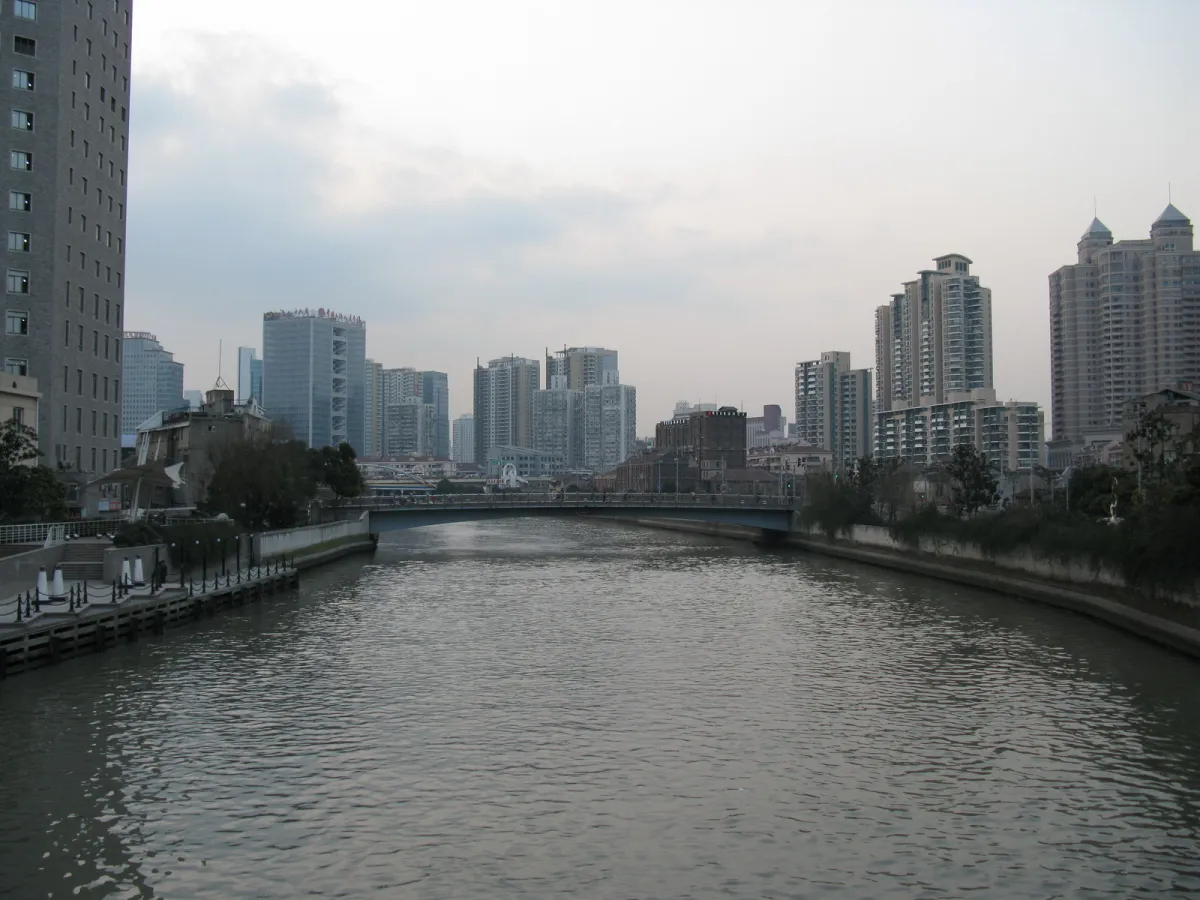

Along Suzhou Creek, select one bridge or short public segment. Water, bridge structure and neighbouring façades can create depth even when haze limits distant tower detail. The Zhapu Road and Bridge walk distinguishes the street north of the creek from the bridge approach. Waibaidu Bridge, Zhapu Road Bridge and the main Bund are separate positions.
For an indoor subject, the Urban Planning Exhibition Center adds models and interpretation of the city’s development. Confirm the current displays and photography rules first. Include a model’s edge or display setting when that helps explain scale; reflections, barriers and mixed lighting need more thought than a high viewpoint alone.
Three Flexible Shanghai Photo Sessions
Choose a session that fits your interests and the rest of the day. These are editorial planning suggestions rather than organised tours, verified walking times or venue opening hours. Check the city map for geographic relationships and the itineraries for combining photography with visits and meals.
- Old-town session: choose a garden visit or teahouse exterior, then one manageable Fangbang or old-town street segment. Allow separately for any garden queue, ticket and indoor tea service.
- Architecture session: select a short Sinan-area walk with time to observe trees, windows and entrances. Add a nearby meal or park break rather than a second distant neighbourhood solely for another picture.
- Riverfront session: choose one bank and one main subject before dusk. Make a wider and tighter version from a permitted position, then add a nearby detail. Keep an alternative composition for poor visibility and check your return route.
On a short visit, a carefully observed session can produce a more coherent set of photographs than rushing between famous names. Decide which location matters most and keep the second stop optional. Crossing the Huangpu, changing metro lines and finding a venue entrance all take time that a straight-line map cannot show.
Access, Equipment and Responsible Photography
Carry equipment that suits the session. A modest lens range and secure bag may be easier on a busy avenue than a large setup. A longer exposure from a moving ferry requires a different shutter strategy from a stable public position on land. A public ferry crossing and a sightseeing cruise have different routes and timings; use Getting Around to check the actual journey.
Museums and active religious places may distinguish casual photography, flash, tripods and commercial equipment. For Jade Buddha Temple, follow room-specific signs and staff directions. An exterior photograph does not establish permission to photograph sacred interiors. Read Responsible Travel for the wider approach to visitors, residents and public space.
Shanghai Photo Spots FAQs
Where should I start for the familiar Pudong skyline?
The Bund side provides a view across the Huangpu towards Lujiazui. Choose the actual public position according to visibility, foreground and the composition you want.
Is dusk always the best time?
No single light suits every subject. Dusk can balance sky and illumination, while daylight may explain architectural detail better. Cloud, haze, crowds and access affect the session.
Are the garden, bazaar and Huxinting the same visit?
They have different functions and access conditions. Check Yuyuan Garden’s admission separately from a bazaar walk, teahouse exterior or indoor tea service.
Can I use a tripod at every photo spot?
Check the rules at the actual site and follow staff instructions. Keep paths and crossings clear; a photograph of a place is not evidence of tripod permission.