
ASIA · CHINA GUIDE
China Travel Guide: Regions, Routes & Trip Planning

China rewards a trip built around a few connected regions. Beijing combines imperial architecture with Great Wall excursions; Shanghai and the lower Yangtze pair a major city with gardens, canals and tea country. Chengdu opens a different journey through Sichuan, while Guilin and Yangshuo suit travellers who want river scenery and slower rural days. Trying to include all of these in one short holiday usually produces more transfers than exploration.
This guide focuses on mainland China. Hong Kong and Macao have separate entry arrangements, currencies and transport procedures; the existing Hong Kong city guide remains a useful separate planning resource. Choose your route first, then confirm that your passport, entry permission and transport bookings support it. The detailed guides below divide those decisions into manageable steps.
Choose a first-trip route
For a first visit of roughly ten to fourteen calendar days, Beijing, Xi’an and Shanghai provide a strong history-to-modern-city sequence. They are not neighbouring sightseeing districts: each move uses part of a day, and a long railway journey should not be disguised as a full sightseeing day. An open-jaw flight into Beijing and out of Shanghai can reduce backtracking if its fare and entry conditions work for you.
For seven days, choose Beijing plus one additional base, or stay in the Shanghai–Suzhou–Hangzhou area. The latter gives gardens, waterways, food and urban photography without changing regions repeatedly. Travellers seeking landscape rather than monuments may prefer Chengdu with a nearby cultural excursion, or Guilin and Yangshuo with time reserved for weather changes.
Avoid adding Tibet, Dunhuang, Hainan or a remote mountain park simply because it appears close on a small map. Each changes the transport, climate or permission problem. Read the day-by-day China itineraries before reserving non-refundable hotels. Their day and night counts include arrival, departure and transfer days; they are planning examples rather than escorted packages.
On smaller screens, swipe or scroll horizontally to read the full table.
| Priority | Practical starting region | Main trade-off |
|---|---|---|
| Imperial history and major landmarks | Beijing and Xi’an | Longer transfer; reserve major museum visits |
| Gardens, canals and city life | Shanghai, Suzhou and Hangzhou | Several distinct local transport systems |
| Food and a slower urban base | Chengdu and nearby Sichuan | Mountain extensions need extra days |
| River landscapes and rural time | Guilin and Yangshuo | Rain and visibility affect outdoor plans |
| Warm-weather resort break | Sanya and selected Hainan bays | Separate flight and beach conditions |
Understand the distances
The east coast concentrates many of the easiest multi-city railway combinations, but “high-speed rail” does not mean that every scenic destination has a station at its entrance. The final approach to a village, mountain gate or riverside hotel may involve a separate road transfer. The China map and regional guide shows major bases in their geographic setting and explains which combinations are sensible.
Beijing belongs to a different seasonal pattern from tropical Hainan. Xi’an is inland; Chengdu sits in the Sichuan Basin; Guilin is in Guangxi, not in neighbouring Guangdong. Learning these few distinctions makes weather forecasts and transport searches much more useful. In Yunnan, altitude can change the experience substantially even when two towns share a province.
Use the exact station name in every booking. Shanghai Hongqiao is a major rail hub as well as an airport district, while Pudong is a different airport on the other side of the city. Beijing Capital and Beijing Daxing are separate airports. A transfer across a metropolis is a real journey, not an administrative detail. Keep your final night in a practical position for your departing flight.
Pick a season for your actual route
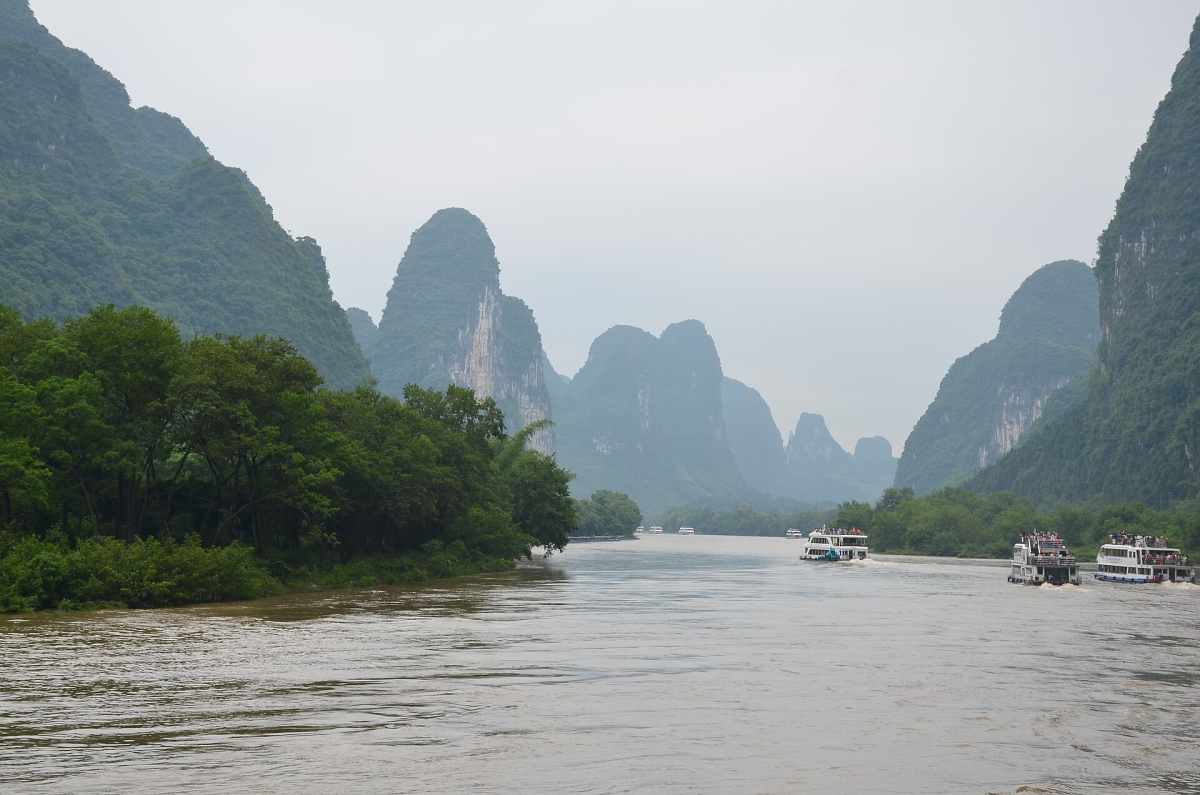
Spring and autumn are useful starting points for an eastern or northern sightseeing itinerary, but there is no single best month for the whole country. Northern winters can be severe, southern summers can be hot and wet, and mountain weather may close an otherwise attractive route. Hainan’s beach season follows a different pattern from Qingdao’s summer waterfront.
National holidays affect demand well beyond the headline festival date. Rail tickets, popular museums and hotel rooms can become harder to secure around Spring Festival, Labour Day and National Day. Published holiday calendars also include adjusted working days, so a weekday may behave differently from an ordinary working week. The best-time-to-visit guide compares regions and explains how to use that calendar.
Build one indoor or lower-effort alternative into each base. A museum day may replace an exposed wall walk; a city neighbourhood can replace a river excursion during poor visibility. Check actual opening and reservation requirements before moving plans. A wet-weather alternative is useful only if you can enter it.
Prepare entry, payments and connectivity
Start with the Visa & Entry guide. Visa-free tourism, visa-free transit and regional schemes have different passport, onward-travel and geographic conditions. A rule that works for a friend’s nationality may not apply to yours. Verify the current official conditions against the passport you will actually use, including any mainland re-entry after Hong Kong or Macao.
Mobile payment is common, and eligible international cards can be linked to Alipay or Weixin Pay. Set up and test the account before departure while your usual phone number can receive verification messages. Card eligibility and merchant acceptance still vary. Keep an independent payment method and a modest amount of usable cash rather than relying on one phone for every transaction.
Internet access also needs preparation. Some familiar services are blocked or restricted on mainland networks. Download accommodation addresses in Chinese, reservation details and essential maps before travel, and confirm your provider’s actual coverage and roaming conditions. The Travel Essentials guide covers phone preparation, language, electrical equipment and everyday routines without promising that a particular app will work everywhere.
Book accommodation around the journey
Choose a district before choosing a hotel. A lower room price can be poor value if it adds a long taxi ride to every museum, station or evening meal. In Beijing, the central sightseeing districts and the airports solve very different problems. In Shanghai, staying near the Bund and staying near Hongqiao are also distinct choices. The Where to Stay guide compares these bases, while Hotels examines named properties.
For rail travel, use China Railway 12306 to check the actual station pair, departure and document requirements. Passport details must match the traveller. Keep access to the original passport at stations and allow time for security and any staffed document check. Do not book a distant timed attraction immediately after a long intercity arrival.
An independent trip does not require a rental car by default. Rail, urban public transport and a clearly arranged last-mile transfer work better for many classic routes. Mainland driving requires appropriate Chinese authorisation; an international driving permit alone is not a solution. The Getting Around and Airports & Transfers guide explains how to separate airport access, intercity travel and local transport.
Make room for local experiences
A successful itinerary needs more than a list of famous buildings. Allow time for a regional breakfast, a garden viewed slowly, a teahouse visit or a neighbourhood walk. Food & Drink explains regional dishes and ordering; Things to Do helps you choose experiences and understand their practical demands.
For landscapes, compare the route and physical effort rather than just the photograph. Huangshan’s stairs, Wulingyuan’s dispersed viewpoints and Jiuzhaigou’s managed valley transport create different days. The Walking & National Parks guide distinguishes those choices. If beaches matter more, use the Beaches guide to compare Hainan with the seasonal northern coast.
Photography can be planned around the same route without repeating it. The Photos & Photo Spots guide covers light, river viewpoints and architectural scenes, including the subjects from the older photo pages. Respect operating barriers, people’s privacy and site-specific camera rules. UNESCO’s China heritage directory is a useful source of cultural and natural context, not a ticket or access permit.
China Travel Guide FAQs
How long should I allow for a first China trip?
Ten to fourteen calendar days can support a well-chosen two- or three-base route. With a week, reduce the geographic scope and protect arrival and departure days. More stops do not automatically create a better trip.
Can I combine mainland China with Hong Kong?
Yes, when your documents and route permit it, but mainland and Hong Kong entry arrangements are separate. Confirm mainland re-entry before treating a Hong Kong excursion as an ordinary domestic side trip.
Do I need to join an organised tour?
Many classic city routes can be planned independently. Specific regions, restricted areas and specialised activities can have additional requirements; Tibet requires particular attention. Match your route to current official rules and your own support needs.

