
The examples below are calculation tools, not current market quotations or promises of what a trip will cost. Amounts are in Chinese yuan, shown as CNY or RMB. Replace every assumed price with a quote for your dates, then add the transport and admissions your itinerary really uses.
Separate daily costs from trip costs
Start with accommodation per room per night and state how many people share it. Add meals and local transport per person per day. Then list intercity journeys, major admissions, guides, insurance and international flights separately. This avoids hiding an expensive transfer inside an apparently cheap daily allowance.
Use the same dates and cancellation terms when comparing hotels. A prepaid room without breakfast is not directly comparable with a flexible room including breakfast and taxes. For families, check child occupancy and extra-bed conditions before dividing the room price between travellers.
Keep a contingency in the currency in which you will spend. It can cover a taxi after a late train, an extra hotel night or a replacement transfer. A contingency is a planning choice, not a prediction that those costs will occur. Recalculate after a route change rather than carrying forward the old total.
On smaller screens, swipe or scroll horizontally to read the full table.
| Cost item | Assumed total for the pair | Per-person allocation |
|---|---|---|
| Room for one night | CNY 600 | CNY 300 |
| Meals for one day | CNY 240 | CNY 120 |
| Local transport for one day | CNY 80 | CNY 40 |
| Daily subtotal | CNY 920 | CNY 460 |
This hypothetical subtotal excludes flights, intercity rail, admissions, insurance, shopping and any deposit. It is not a budget category or a statement of typical prices. If the quoted room is CNY 900 instead, the pair’s subtotal becomes CNY 1,220 and the per-person allocation CNY 610. Changing one assumption should visibly change the total.
Understand the payment mix
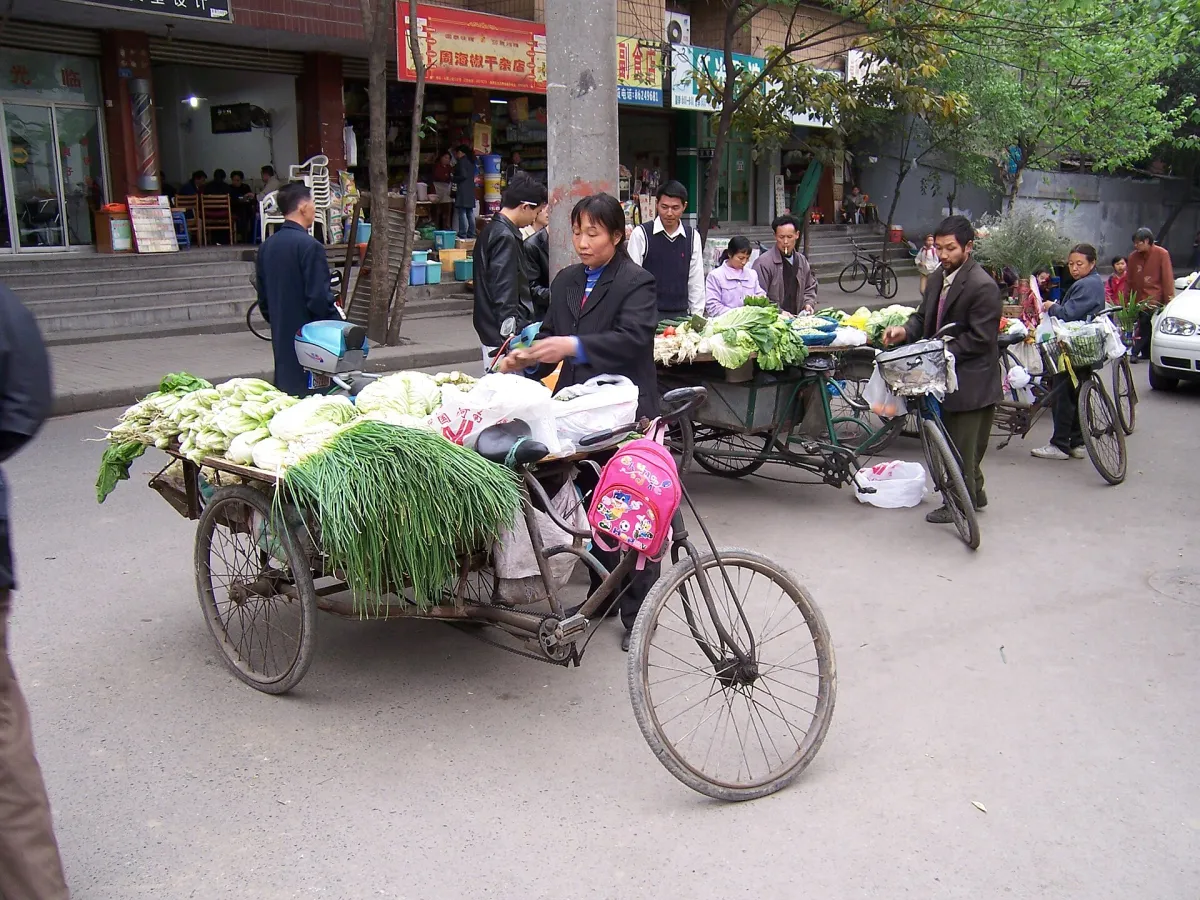

Mobile payment is common in mainland China, but one method should not be your entire plan. Carry an eligible card, a second independent payment option where possible and a practical amount of cash. Merchant acceptance, network availability and your bank’s security checks can all affect a transaction.
Check your bank’s foreign-transaction, withdrawal and conversion terms before travel. If a terminal or ATM offers a currency choice, understand the displayed conversion and fees before confirming. Do not assume a familiar card logo means every machine will accept your particular card.
Keep payment tools separate enough that losing a phone does not also remove every way to pay. Record the bank’s overseas support contact somewhere outside the device. For a shared trip, consider whether both travellers can independently pay for transport or a hotel if one account becomes unavailable.
Alipay & Weixin Pay: setup, payment and backups
Prepare Alipay or Weixin Pay before depending on a phone-only payment. The September 2026 official setup guide confirms overseas-number registration for Alipay and eligible international-card linking for both services. A card can still be declined by its issuer or excluded from a particular product. Keep a second payment method that does not depend on the same app account.
In Alipay, the published card-linking path is Me → Bank Cards. In WeChat, the guide gives Me → Services → Wallet → Bank Cards. Follow the current prompts for your own app version and complete any requested identity checks through the official interface. Do not send card details or passport images to an unsolicited chat contact offering to “activate” the wallet.
Keep the registered number reachable for verification. Changing to a mainland data plan does not require abandoning the number used by your bank. Before departure, check that you can sign in, access the linked card and receive verification messages. For the data/SMS distinction and arrival test, use Internet, SIMs & Apps.
On smaller screens, swipe or scroll horizontally to read the full table.
| At the till | What you do | Check before authorising |
|---|---|---|
| You scan the merchant’s code | Open Scan; check the merchant; enter the requested amount if necessary | The yuan amount, chosen card and any fee shown |
| The cashier scans your payment code | Open the app’s merchant payment code and present it briefly | The resulting amount and completed transaction |
| Payment fails | Read the app message and check order status before trying again | Whether the first attempt is pending, declined or completed |
| A transport or ticket mini-program asks for another setup | Follow that operator’s own passenger/account steps | A general wallet card link does not confirm every extra service |
The ability to make a merchant purchase does not establish that you can make person-to-person transfers, receive every kind of red packet or top up a balance with the same international card. Ask for the merchant’s supported checkout flow rather than trying to send a personal transfer as a workaround. Likewise, a shop’s ordinary payment QR and a city’s transport code serve different functions.
Read the fee and conversion information at confirmation. App service charges, your bank’s foreign-transaction charge and the exchange rate are different parts of the total. This guide does not promise a universal fee-free threshold: the current card, app and transaction screen control the actual payment. For a large hotel bill, ask in advance whether the deposit and final settlement can use your preferred method.
After a failed attempt, show the merchant the transaction status before paying again. If a refund is agreed, retain the merchant receipt and app order number and check the original payment method later. Keep small-denomination cash for ordinary purchases and a physical card for a suitable ATM or card terminal; a flat battery or suspended account should not leave the whole party unable to pay.
Budget for transport and attraction choices
Intercity transport can be one of the largest differences between otherwise similar trips. Compare the confirmed route, date and seat category on the operator’s system. A day trip also includes the local station approach, onward bus or taxi and return; rail fare alone is not its full cost.
At scenic areas, distinguish admission from shuttles, cable transport and optional activities. A combined ticket can be convenient only when you actually need its components. At museums, a guide, audio device, special exhibition or transfer may be separate from the basic visit.
For a paid experience, compare inclusions before the headline price. A lower-priced wall excursion may end at a different point or exclude the transport you require. Avoid building a budget around a listing that has not been checked for the correct destination, date and group. The experience guide gives the relevant planning questions.
Save money without losing the trip’s purpose
Reduce geographic spread before cutting every local expense. Removing one distant base can save a transfer, an airport approach and a partial day of sightseeing. A convenient hotel can also reduce repeated taxis even when its room rate is higher.
Choose a few substantial paid visits and balance them with neighbourhood walks, public waterfronts and ordinary meals. Do not describe a place as free without checking the current access arrangement, and do not assume a public area includes its museums, towers or boat trips. A clear distinction between the walk and optional paid access helps the budget stay honest.
Travel outside major holidays where your schedule allows. Compare the full flexible and prepaid totals rather than chasing an advertised discount. For a longer stay, kitchen, laundry and local transport convenience may matter more than a nightly headline rate; see Longer Stays & Costs for that separate calculation.
Published costs: useful benchmarks, not a national average
The Palace Museum’s official visitor page lists standard admission at CNY 60 from April to October and CNY 40 from November to March, with the Treasure Gallery and Clocks Gallery each costing CNY 10 separately. Two standard adult admissions with both galleries would therefore be CNY 160 in the higher-price season, before transport. Check eligibility and the current booking terms rather than applying that total to every visitor category.
For a much smaller food benchmark, Shanghai’s 24 April 2026 noodle guide published CNY 7 for scallion-oil noodles at Huxi Laolongtang, Room 101, 685 Dingxi Road. This is a dated published menu example, not a live-price promise or the cost of a complete day’s meals. It illustrates why an ordinary noodle breakfast and a reserved hotel dinner should be budgeted as different choices. Use current menus and actual hotel quotes to complete your own trip total.
Shopping, receipts and deposits
For significant purchases, obtain an itemised receipt and confirm what you are buying, how payment is taken and whether a deposit is refundable. A translated conversation is useful, but written details matter for expensive goods, shipping or a custom order. Do not rely on a verbal promise of tax refund or export clearance.
Hotel preauthorisations and security deposits are different from the final room payment. Ask which payment method is accepted and how release is handled. Keep enough available funds so a deposit does not prevent the next travel purchase, and retain the check-out record.
Before carrying food, plants, animal products, antiques or large amounts of currency across a border, consult the relevant customs authorities for both departure and arrival. Mainland, Hong Kong and your home country can have different rules. A shop’s willingness to sell an item does not establish that you may import it.
If a payment fails
Pause and check the amount, merchant and status before trying again. A failed screen, a pending bank authorisation and a completed merchant receipt are different signals. Ask the cashier to confirm whether a payment arrived so you do not accidentally pay twice.
Use your backup method if it is practical, then resolve the account issue through the bank or payment provider’s official channel. Do not hand your phone, password or verification code to an unsolicited helper. A QR code supplied by a stranger is not automatically a customer-service route.
Keep a short record of the date, amount, merchant and transaction reference. The Useful Contacts guide explains which provider to approach for a transport, hotel or payment problem. Your hotel can help with language, but only the responsible provider can confirm the account transaction.
Travel Costs & Money FAQs
Are the budget figures current average prices?
No. They are explicitly assumed amounts showing how to calculate a shared daily subtotal. Replace them with dated quotations for your route, room, occupants and activities.
Can I travel using only my phone wallet?
That creates an avoidable single point of failure. Prepare an independent payment method and usable cash, and confirm that your linked card and phone number work for the services you need.
Does linking an overseas card enable every wallet function?
No. Eligibility and functionality vary by provider, bank and transaction type. Merchant purchases, transfers and other services can have different rules.