USA · NEW YORK CITY GUIDE
New York City Travel Essentials: Prepare for Your City Visit
Prepare for New York as a city of distinct neighbourhoods, busy shared streets and several transport operators. The most useful essentials are the ones that keep an ordinary day working: a correct address, a usable payment method, access to your reservations and a practical way to get back to your accommodation. This page brings those preparations together and points to the detailed local guides, while national immigration and entry rules remain in the USA guide.
Save the information you will need without a connection
Keep your accommodation’s full street address, borough, check-in instructions and contact details available offline. A hotel name alone may be unclear to a driver or similar to another property. Save booking confirmations, required admission slots and the airport route, including the final station exit. If several people are travelling, make sure more than one person can retrieve the essentials.
Check what is actually included in your booking: room occupancy, bedding, cancellation, mandatory fees and any late-entry arrangements. If you need a particular room or access feature, obtain a specific answer rather than relying on a general amenity symbol. Use Hotels and Accessibility for the questions that matter before paying.
Do not fill the first arrival day with non-refundable tickets. Flight delays, baggage and an unfamiliar transfer are enough to manage. A simple walk near the accommodation is easier to adjust than a performance across town.
Visa and entry: use the United States rules
There is no separate New York City visa. Entry permission, ESTA or visa eligibility and any work or study conditions are national matters. Use the USA Visa & Entry guide and its official government sources to check the requirements for your nationality, purpose and circumstances.
For the city portion of arrival, have the accommodation address and onward travel information accessible, and make sure names on travel and accommodation records are correct. If changing airports, plan the landside transfer, baggage and the second airline’s check-in requirements. The airport guide covers local routes; it does not determine whether your transit requires permission to enter the United States.
Keep maps, calls and payments usable
Check that your device is unlocked and compatible before buying a local SIM or travel eSIM. Read whether the plan includes voice calls and texts or only mobile data, when validity starts and how you will receive essential account messages. A data package should not be assumed to provide an ordinary telephone number or every calling function you use at home.
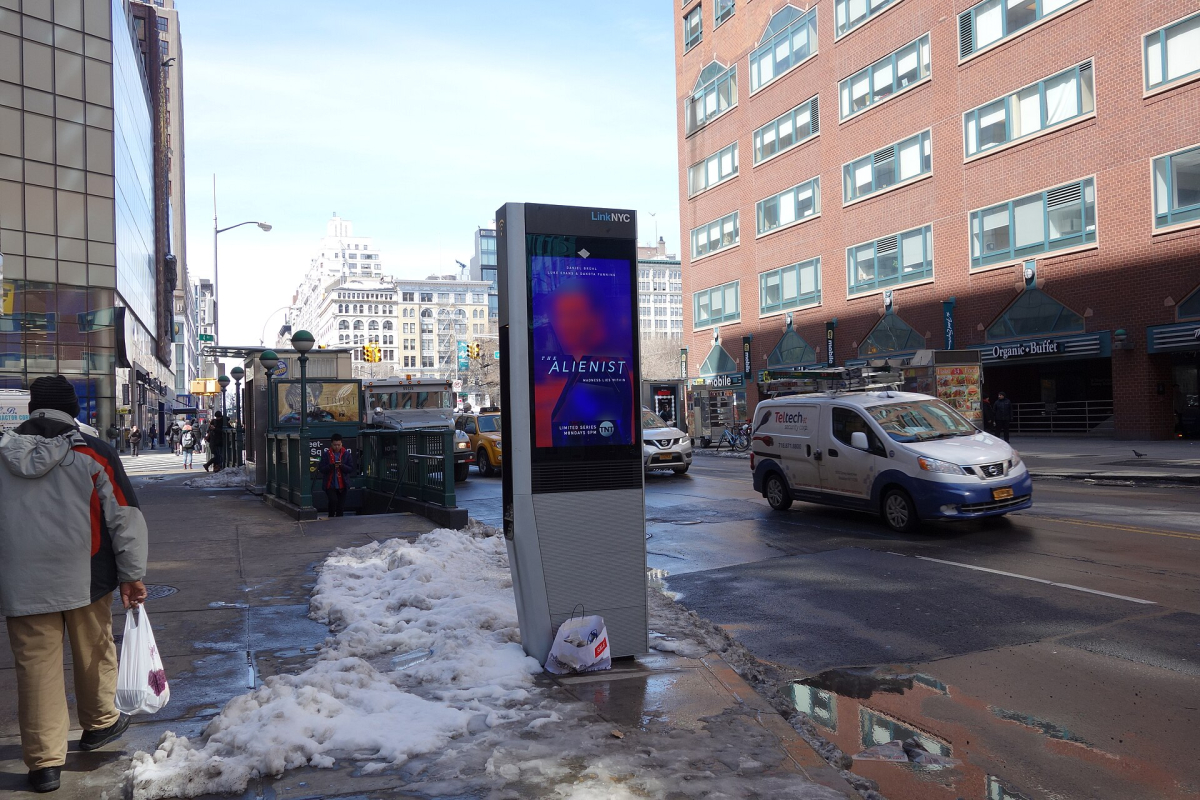
Download the maps and confirmations you need before departure and carry a practical charging arrangement. The LinkNYC FAQ describes public Wi-Fi, US calls and charging features at its kiosks, but do not make a functioning nearby kiosk the only way you can reach your accommodation.
Check your card provider’s travel and foreign-transaction conditions. Keep an alternative separately from your main wallet. The money guide covers local budget scope and payment decisions, while Getting Around explains why your own OMNY payment method should stay consistent.
Plan breaks, restrooms and what to carry

Choose footwear you can use for the whole route and a bag that will pass the restrictions of the day’s venues. A museum and an observation deck may have different bag and equipment policies; check both before carrying luggage or a tripod. Leave major shopping until you no longer need to carry it through several admissions.
Restrooms are an important route detail, especially with children or an access need. NYC311 lists public restroom resources across parks, libraries, public spaces and transport hubs. Check opening hours and the specific access information; a map point does not guarantee a facility is open at the moment you arrive.
A manageable day has somewhere to sit, drink and regroup near the main visit. Use the itinerary guide to group nearby stops, then leave an alternative if weather changes. For a longer visit, Longer Stays & Costs explains kitchen, laundry and routine-neighbourhood decisions.
Know which local guide answers the problem
For local street, weather, belongings and transport precautions, read Health & Safety. For the correct agency or lost-property process, use Useful Contacts. Keeping those roles separate makes it easier to find an action when something goes wrong without repeating the same advice across every page.
New York City’s government contact page directs emergencies to 911 and non-emergency city questions to 311. Save the official contact page before travel, and explain your location clearly if you need assistance. In a venue or station, staff can also help identify the correct local response.
Check official city alerts when conditions may affect travel. A normal-looking morning does not establish that every waterfront, station or later connection will remain unaffected. If a warning changes the day’s practical options, adjust the plan rather than trying to complete a fixed checklist.
A short final preparation check
Before travelling, confirm your lawful accommodation and occupancy, national entry requirements, usable payment/phone arrangements and airport route. Before each day, check the actual main booking, opening pattern, bag policy and return connection. If any of these is essential to your party, seek a direct answer from the provider.
Leave room for the city beyond the reservations. A walk, a meal and time in one neighbourhood can be worthwhile without a ticket. The purpose of preparation is to make those choices easier, not to turn your visit into a list of tasks that all have to be completed.
Travel Tip:
Keep one offline note with the hotel address, check-in instructions, airport route and essential booking references. Share it with another member of your party so one empty phone battery does not stop the day.
Sources and Current Checks
Editorial sources checked on 3 November 2026. Check current operating, booking and travel conditions for your dates.
Frequently Asked Questions
Do I need a visa specifically for New York City?
No separate city visa exists. Check the United States requirements for your nationality, purpose and circumstances through the USA Visa & Entry guide and official government sources.
Is a travel eSIM enough for every phone need?
Read the product carefully. Some plans provide data only and do not include ordinary voice calls or texts. Confirm how you will contact the accommodation and receive any essential messages before relying on one plan.
Where can I find public restrooms?
Use NYC311’s official public restroom resources and check the actual location, opening hours and access information. Include a practical restroom break in a longer walking route rather than relying on an unverified map pin.
What should I keep available offline?
Your full accommodation address and check-in instructions, airport route, essential reservation references and a return transport option. Make sure another traveller can access the information where appropriate.