USA · NEW YORK CITY GUIDE
New York City Food & Drink: What to Eat and How to Order
Eating in New York works best when you think in meals rather than a list of famous names. A bagel breakfast, a quick slice and a deli sandwich are different experiences with different portion sizes, queues and service styles. The city also rewards going beyond a single Manhattan food circuit: Chinese, Ukrainian and many other food traditions are part of its daily life.
This guide explains food and ordering choices. For named venues, addresses and the decision between a shop and a sit-down meal, use Restaurants. It complements the USA food guide with local detail rather than repeating a national menu.
Match the Meal to Your Day
On small screens, swipe or scroll this table horizontally. Keyboard users can focus the table area and use the arrow keys.
| Choice | Good for | What changes the bill or visit |
|---|---|---|
| Bagel with a filling | A substantial breakfast or portable lunch | Fish, spreads and extras; shop counter versus seated cafe |
| Pizza by the slice | A flexible stop between nearby visits | Toppings and reheating; slice shop versus whole-pie restaurant |
| Deli sandwich | A meal centred on a specific food tradition | Portion size, sides and service model |
| Dumplings or noodles | An organised Chinatown or Queens food outing | Exact cuisine, spice, queue and seating |
| Sit-down dinner | An evening built around a neighbourhood | Reservations, tax, service charge and tip |
These categories are planning aids, not a price ranking. A celebrated takeaway can cost more than a simple seated meal elsewhere. Check the current menu before joining a long queue.
Bagels, Smoked Fish and Appetizing Traditions
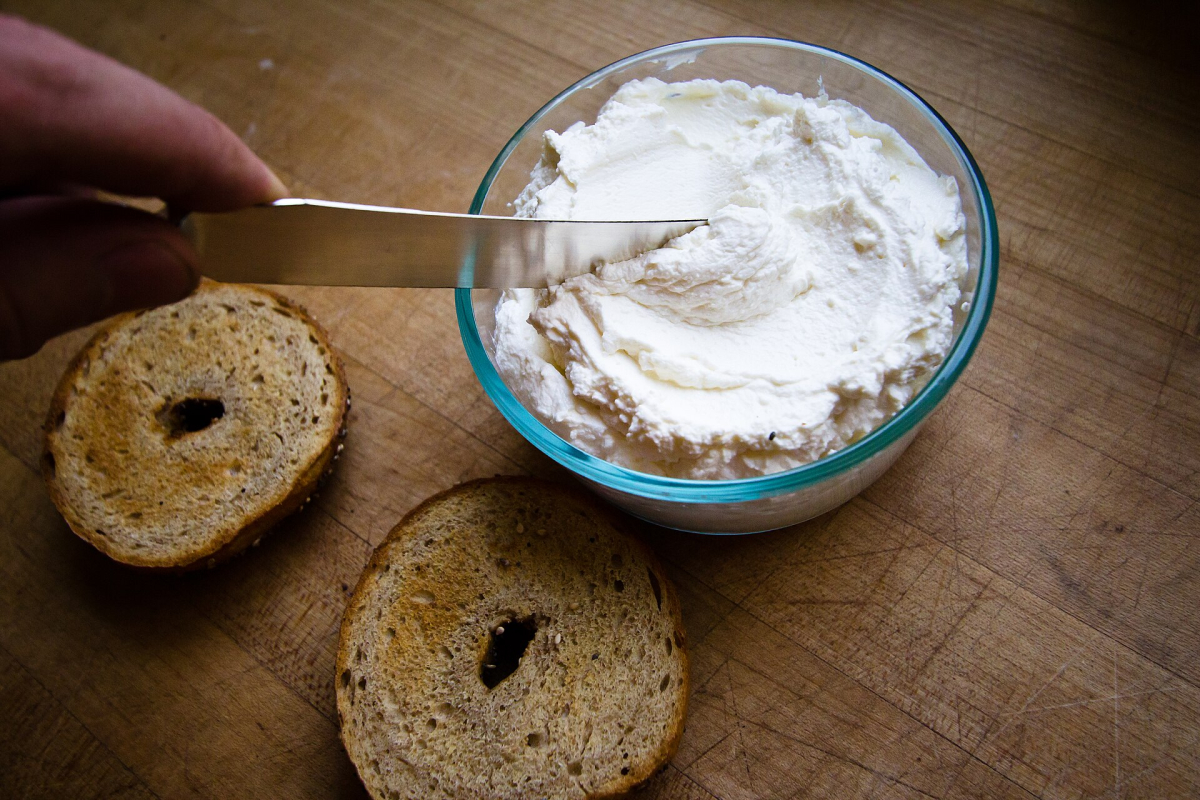
Start by choosing the bread, then the filling. A bagel with cream cheese is a different purchase from one with smoked salmon, and a prepared sandwich is different from buying fish by weight. Ask how the menu prices the combination if it is unclear. Toasting, extra spreads and toppings are choices, not mandatory components of an authentic order.
The Lower East Side’s Jewish appetizing tradition includes smoked fish, bagels, bialys and baked goods. It should not be flattened into a generic deli label: an appetizing shop and a meat delicatessen have different histories and food specialities. A shop counter is useful for a portable breakfast; a cafe offers another service model. The Russ & Daughters location guide makes that distinction explicit.
If you need seating or a toilet, check before ordering takeaway. Plan the meal near your morning route rather than carrying food across the city simply to reproduce a famous photograph.
The Street Slice and the Whole Pie
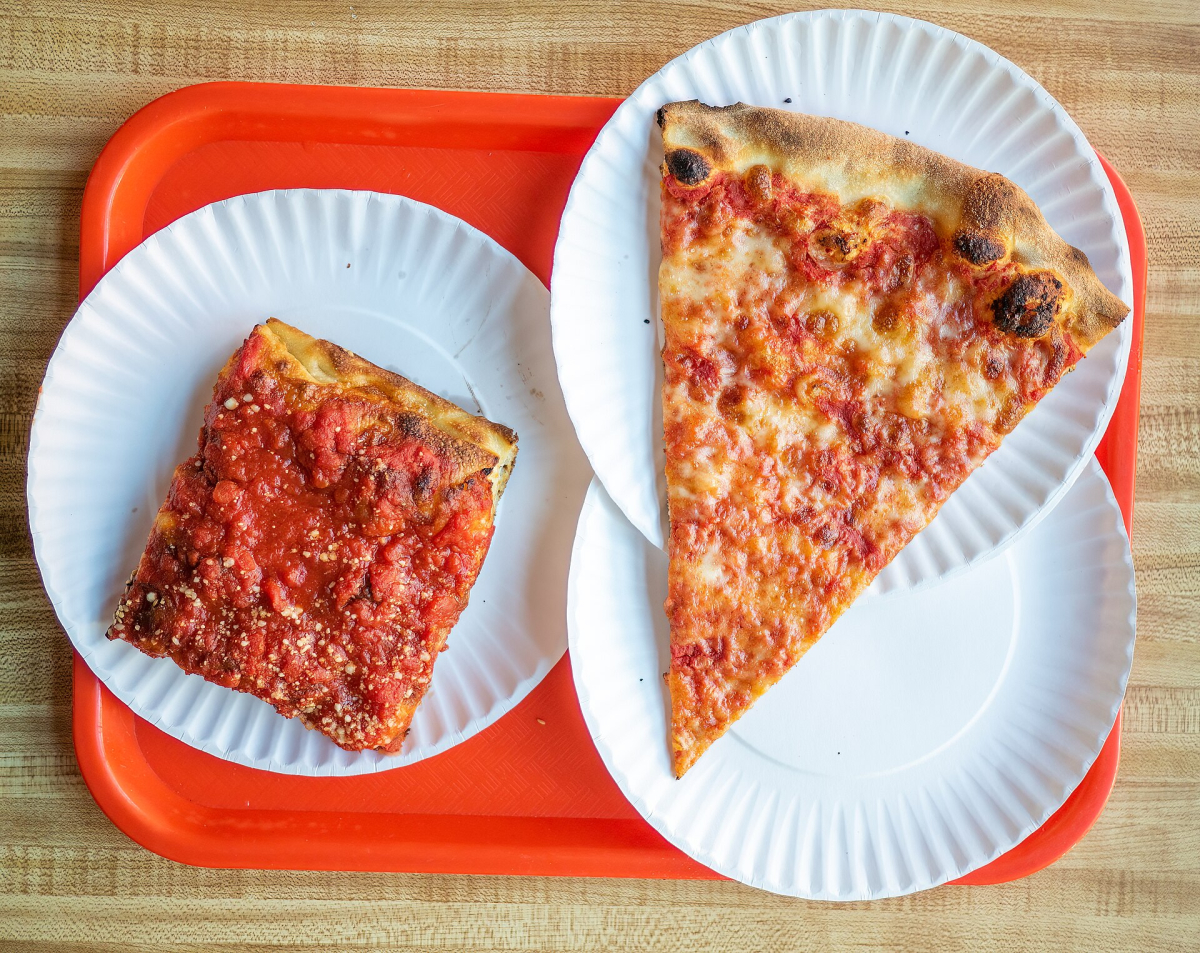
A New York slice is useful when lunch needs to fit around a walk. Check which pies are sold by the slice, choose a topping you actually want and ask about reheating. A plain slice lets you compare crust, sauce and cheese without turning lunch into a search for a universal winner.
Do not assume that a pizzeria with a similar name belongs to the place you intended to visit. The exact branch matters. A sit-down restaurant selling whole pies creates a different commitment: a table, a larger order and possibly a wait. In Brooklyn, use the visit as part of a neighbourhood outing rather than a quick detour between Manhattan reservations.
Photographs on this page identify particular food or venues; they do not show the same slice at every shop. The dish pictured below is from an identified Brooklyn slice shop.
Pastrami, Portions and Deli Service
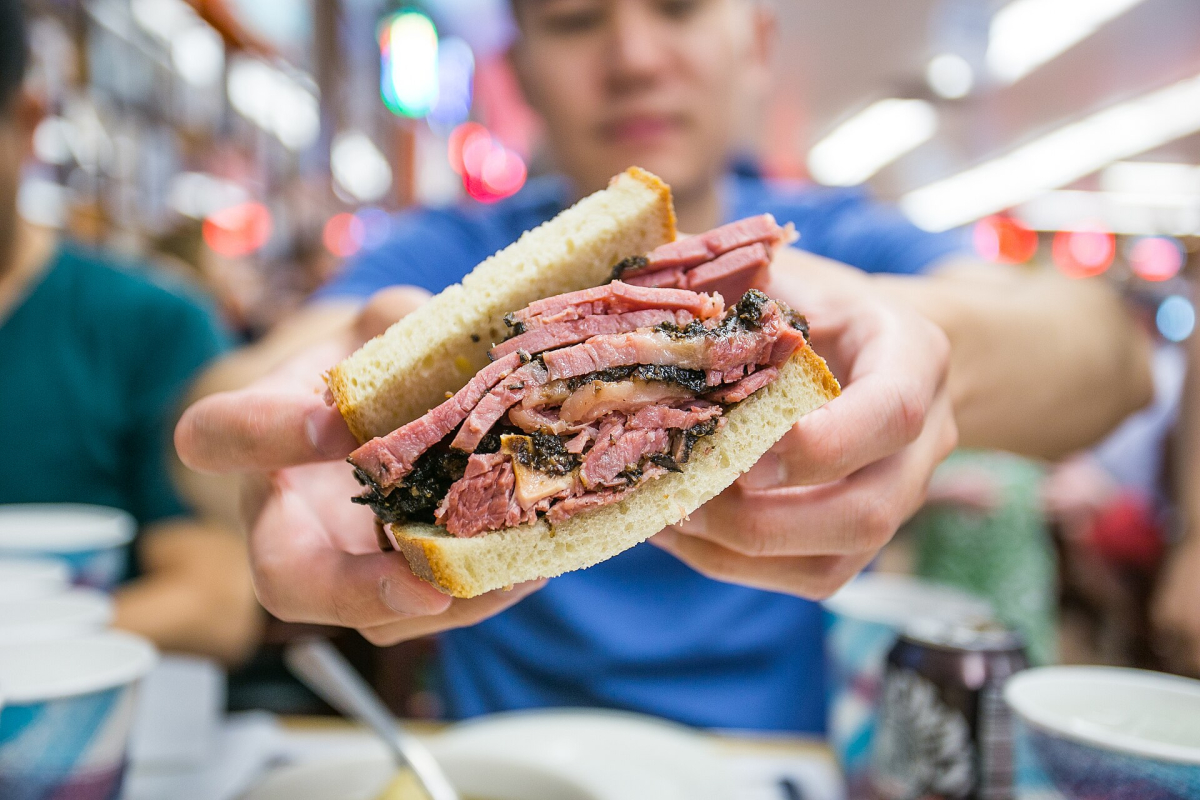
A substantial deli sandwich can be the main meal of a day, especially when meat, bread, pickles and sides are ordered together. Look at the portion and current menu before adding several dishes automatically. Sharing may suit some parties, but confirm any house policy and order enough for the people eating.
Counter service is not interchangeable with table service. At a busy traditional deli, keep any order or payment ticket you receive and ask staff where to order and pay. A queue outside does not tell you whether it is for collection, seating or a particular counter.
Pastrami is a meat dish; it is not a suitable fallback for a vegetarian guest, and bread or sauces may create separate dietary issues. Check ingredients directly. The restaurant guide distinguishes the named establishments without promising the same service system everywhere.
Dumplings, Noodles and a Focused Food Outing
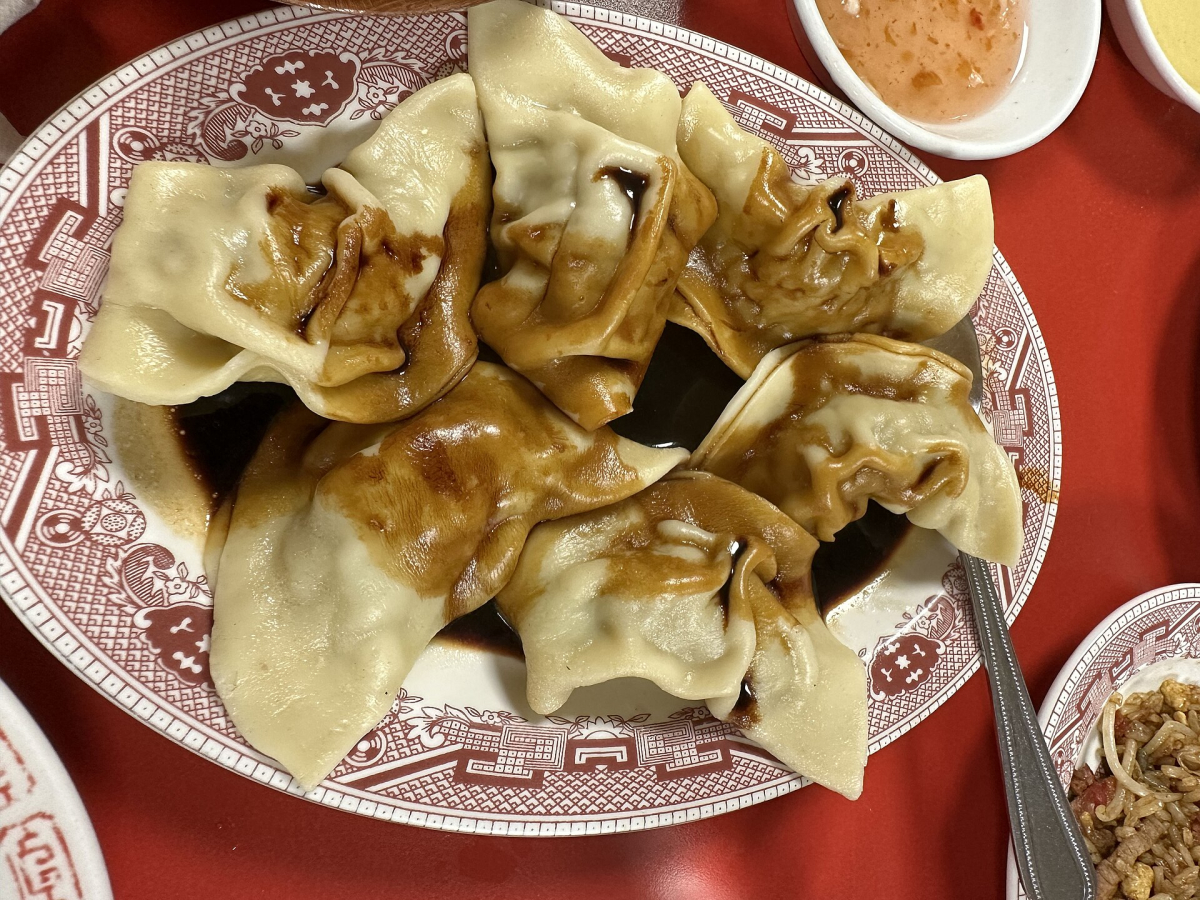
Manhattan’s Chinatown and the food districts of Queens are not interchangeable versions of one menu. Choose a dish or regional cuisine that interests you and identify the actual business before travelling. A dumpling outing can work as a neighbourhood lunch; a multi-stop food plan needs smaller orders, room for queues and a clear return route.
Ask whether a dish is boiled, steamed or fried, what the filling contains and how sauces are served. Vegetarian-looking dumplings can contain meat stock, seafood or other ingredients. Pointing at a photograph is useful, but it does not replace an allergy conversation.
Make space for everyday businesses as well as well-known stops. Keep pavements and doorways clear while waiting or taking photographs. If you plan to go to Queens, pair the meal with one local visit instead of assuming the journey is a short extension of a downtown Manhattan walk.
Dietary Needs, Water, Tax and Tips
Tell staff about an allergy before ordering and ask about ingredients and shared preparation. An advertised vegan, kosher, halal or gluten-free option does not establish how every dish is prepared. Pick a venue that can answer the question rather than relying on a district-wide assumption.
For sit-down meals, look for a service charge or gratuity already included before adding another amount. Check whether displayed prices include tax. For alcohol, carry identification and verify the venue’s entry rules. The cost and money guide explains how to build meals into a trip budget without treating an old online price as a current quote.
A practical day might combine one reserved meal with two flexible stops. That leaves room for weather, an unexpectedly long museum visit or a nearby place that suits your appetite better.
Travel Tip:
Choose one food stop near each day’s main neighbourhood. It reduces backtracking and makes it easier to eat when you are hungry instead of when a cross-city checklist says you should.
Sources and Current Checks
Editorial sources checked on 3 November 2026. Check current operating, booking and travel conditions for your dates.
Frequently Asked Questions
What is the difference between an appetizing shop and a deli?
In the Jewish New York food tradition, appetizing shops specialise in foods such as smoked fish and dairy accompaniments, while a meat deli centres on foods such as pastrami. Check the actual shop menu rather than treating the terms as interchangeable.
Is pizza by the slice the same as a sit-down pizzeria?
No. A slice shop suits a quick individual order; a whole-pie restaurant can involve seating, a queue or a reservation and a different bill.
Can I assume dumplings are vegetarian?
No. Ask about fillings, stock, sauces and preparation. A vegetable appearance or menu photograph is not enough to establish ingredients.
Should I book every meal?
Usually a few important sit-down meals are enough. Flexible breakfasts and lunches make a sightseeing day easier to adjust.