
Portugal Beaches: Algarve Coves, Atlantic Shores and Island Choices
Portugal's beaches differ in exposure, access and the kind of day they support. A small Algarve cove below cliffs, an open Atlantic shore near Lisbon and an island beach reached by boat should not be chosen using the same assumptions. Start with the base where you will stay, then decide whether the priority is bathing, scenery, a coastal walk or a supervised activity. This guide helps make that comparison. Conditions, flags and access notices on the day take priority over a photograph or a seasonal description. Check the actual services available during your dates, especially outside the main bathing season. Keep the beach plan flexible enough to enjoy the coast without entering the water when that is the better choice.
Choose the beach day before choosing the beach
Decide what your group needs: easy access, nearby meals, a longer sandy stretch, a striking view or a specific lesson. These priorities can point to different shores. Travellers with children or mobility requirements should check the precise access and facilities instead of treating every beach in a resort area as equivalent. A short walk on a map may contain stairs or an uneven descent.
Choose one main beach and a practical nearby alternative. Repeatedly crossing a region to collect several named coves can consume the day in parking and driving. Keep the weather and sea state part of the decision. An attractive viewpoint and a supervised bathing area have different purposes; neither needs to be forced into the other to make a coastal visit worthwhile.
Algarve coves: Praia da Marinha and nearby coast
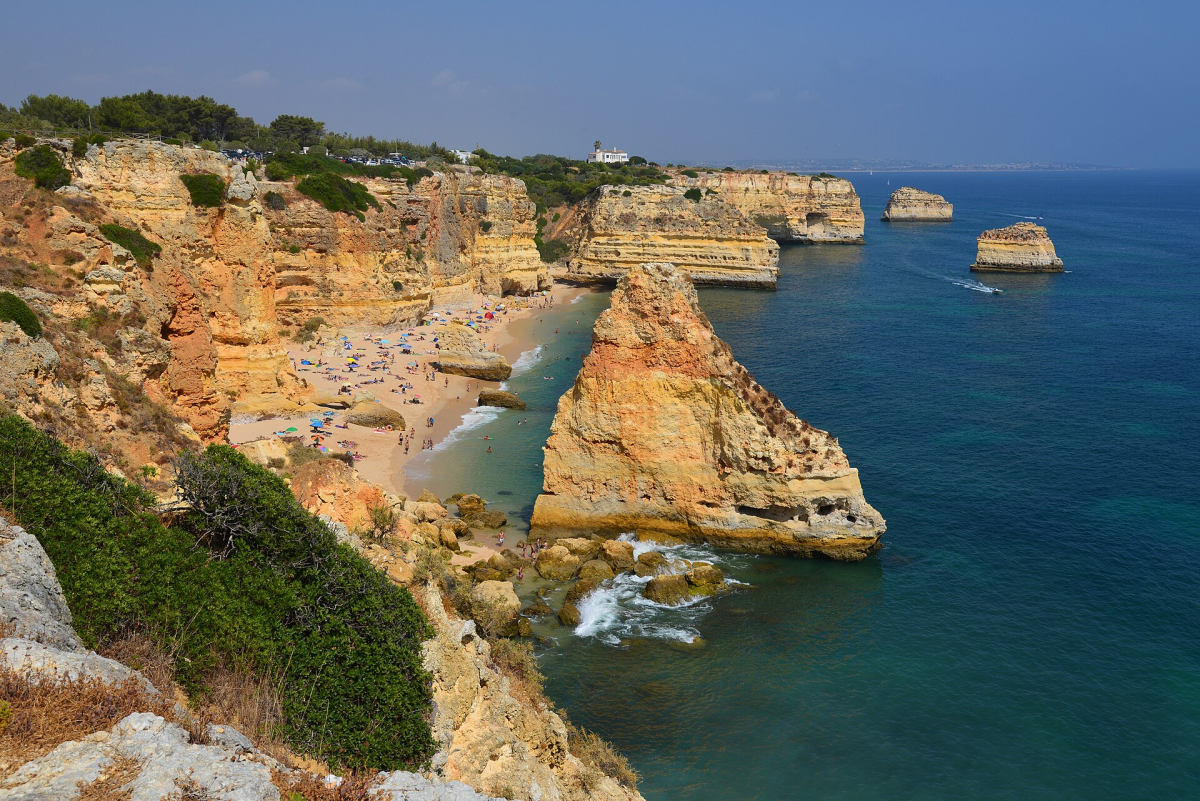
Praia da Marinha's limestone scenery makes it a strong choice for a landscape visit as well as a beach outing. Check current access and use designated routes. Cliffs require care, both at the top and beneath them. Do not follow an improvised descent or stand in a restricted area because another visitor appears to do so. A photograph showing clear water does not establish the sea conditions for your date.
Allow time for the actual approach, parking or transfer and the return. If your group needs very simple access, compare another beach with facilities and a route that can be verified. Marinha's visual appeal should not override practical requirements. For a coastal walk, use officially permitted routes and suitable conditions rather than adding a long exposed section to a casual swim day without preparation.
Western Algarve and the Sagres area
The western Algarve and the coast around Sagres can appeal to travellers who want broad Atlantic scenery and space for a deliberately planned outing. Exposure to wind and waves makes the actual conditions particularly important. A surf lesson should be selected with a qualified local school that discusses experience level, equipment and supervision for the chosen session.
Base the day on the region rather than assuming every Algarve shore is close to Faro or Tavira. A distant out-and-back transfer can make a scenic stop feel rushed. Combine a suitable coastal visit with a town or meal nearby and leave an alternative if the shore is unsuitable. Check where you will return from the lesson or beach; the last local service and a prearranged pickup can determine how long you can stay.
Lisbon's Atlantic coast: Adraga and Guincho
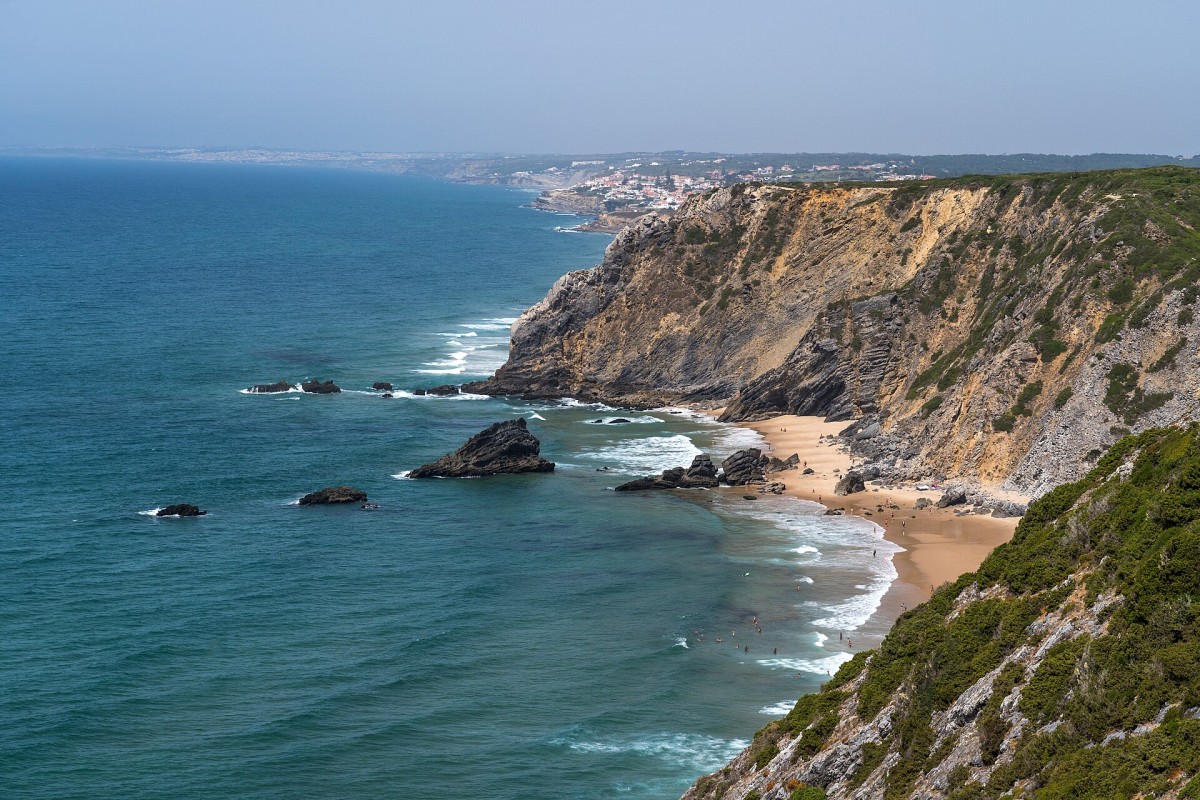
Praia da Adraga near Colares offers a cove setting with cliffs and Atlantic waves. Guincho near Cascais has a more open, exposed coastal character and is associated with wind and water sports. Choose according to the actual day's conditions and transport, not a general promise of warm, calm water. Ask about access, supervision and facilities for the particular beach you intend to use.
A Lisbon base does not make every shore a simple urban transport stop. Check the whole route, including any final connection from a station or town. If hiring a vehicle, allow for traffic and parking. Keep a scenic walk or meal as an alternative when bathing is inappropriate. For a lesson, confirm the exact meeting point, start time and return arrangement before committing to another reservation later in the day.
The Alentejo coast: plan around distance and access
A coastal stay in Alentejo can suit a slower itinerary with fewer hotel changes. The practical question is which town and beach combination works for your transport and daily needs. An attractive remote shore can involve limited nearby services, while a village base may offer a more comfortable routine. Check the actual access and seasonal facilities with the responsible local tourism information.
Do not add several isolated stops merely because they appear close along a coastline on a small map. Road access and the route back can be less direct. Bring what is needed for the outing and take waste away with you, while respecting marked paths and sensitive vegetation. Choose a beach with verified arrangements if access needs or supervision are central to the day.
Madeira and Porto Santo are different beach choices
Madeira's dramatic coast and Porto Santo's sandy beach setting call for different planning. A stay in Funchal should not be booked on the assumption that every nearby hotel has a broad natural sandy beach. Check the property's actual bathing access and the responsible local information for the setting you want. Public bathing complexes, pebble shores and sandy beaches offer different experiences.
Porto Santo is a separate island. Check the available transport, dates and complete stay before presenting it as a quick addition. A photograph of a beach cannot establish that a same-day crossing fits your schedule. If a sandy beach holiday is the priority, choose the island and accommodation around that need from the start. Keep time for weather or transport changes when linking islands with an onward flight.
Azores shores: choose the actual island
The Azores contain nine islands, and a named beach or bathing area belongs to a specific island itinerary. Volcanic landscapes, ocean exposure and local facilities vary. Use the official island information for the place you intend to visit. Do not transfer a recommendation from São Miguel to another island simply because both belong to the same archipelago.
For an outing involving natural pools or an exposed shoreline, check current local conditions and instructions. A pool-like appearance does not remove the influence of the sea. Arrange a suitable route and return, and keep an inland alternative when coastal conditions are unsuitable. A flexible few days on one island can make more sense than a tight sequence of crossings chosen only to include another beach name.
Ilha de Tavira: include the crossing in the plan
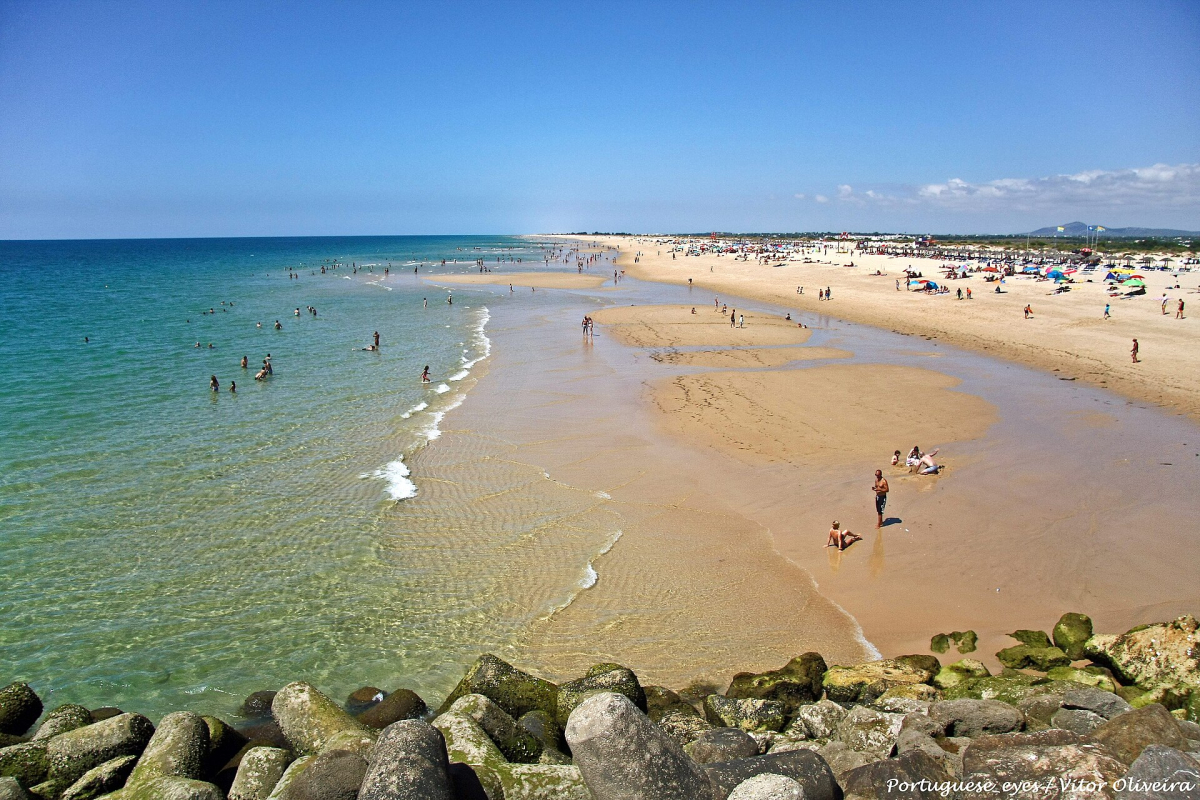
Ilha de Tavira offers a different setting from the mainland town's riverside streets. Confirm the actual embarkation point, current service and last return for your date. A town hotel described as convenient for the beach does not necessarily provide direct access to the sand without a transfer. Check what the property means and whether it suits your group.
Bring a manageable bag, account for the return and keep the evening plan flexible if services or weather change. Verify which facilities will be operating rather than relying on a summer photograph for a visit in another season. A Tavira stay can combine historic town time with an island beach day, provided each part is planned on its own terms. The photograph identifies the actual beach setting and is separate from the Tavira images elsewhere in this guide.
Flags, facilities and accessibility
Follow the displayed flags and lifeguard instructions. Verify whether supervision is present at the time you visit. Official Visit Portugal information describes Algarve bathing flags and identifies that accessible beach arrangements exist at some sites; check the actual beach's current facilities and hours. A designation or an old list cannot establish that every required service will be available on your date.
Ask specific access questions: the surface from the parking area, steps, accessible toilets, the route to the water and any assistance equipment. That produces a more useful answer than asking only whether a beach is accessible. Keep the needs of the whole group central to the choice, and avoid a difficult descent that would make the return uncomfortable or impractical.
Protect the coast and leave a workable return
Stay on designated paths through dunes and vegetation, respect barriers and remove your litter. Do not move rocks, disturb wildlife or block a narrow access route for a photograph. If using a boat, school or guided activity, choose a provider that explains current conditions and the behaviour expected at the destination. Scenery is more enjoyable when the place remains usable for residents and other visitors.
Save the departure point and return details offline, with a backup plan appropriate to the trip. Leave enough time before an airport or intercity transfer. A final swim should not make a fixed departure depend on an exact parking space or crossing. The best beach day is one that fits your base, the actual conditions and your group's needs, with room to adapt.
Match the shore to your base
Choose the practical town and accommodation area through Where to Stay, then compare the regional season through Best Time to Visit. Use Getting Around to include the whole journey to the beach and the return in the plan.
Official information and sources
Linked practical information reviewed on 13 October 2026. Recheck current timetables, entry requirements, event programmes and access conditions before committing to bookings.



