
Longer Stays & Costs in Portugal: Monthly Planning and Practical Choices
Spending several weeks or months in Portugal changes the budget's structure. A furnished stay, utilities, groceries, local transport and the ability to work or rest comfortably matter more than the price of a single sightseeing day. This page helps compare longer temporary stays and explains the questions to ask before committing to accommodation. It is not a rental-market survey, a legal entitlement to reside, or a promise of remote-work eligibility. Monthly examples below are planning arithmetic with stated assumptions, not current national average costs. Use Visa & Entry for the distinction between a short visit and a longer authorised stay, and use qualified advice for questions about immigration, employment or tax that depend on your circumstances.
Decide what “longer stay” means for your trip
A four-week winter stay, a three-month furnished booking and a move to establish residence are different projects. Define the dates and purpose before comparing prices. A visitor who wants one comfortable base may value included services and flexible cancellation more than the lowest long lease. Someone planning a move needs to examine the legal and financial obligations of that move separately. A cheap accommodation offer does not establish permission to stay or work.
Make a list of requirements that affect everyday use: sleeping arrangements, a usable kitchen, a quiet area, heating or cooling, laundry, internet and transport. Specify what is essential and what is optional. A month in a picturesque room can be frustrating if the equipment or location does not support the routine you actually need.
Compare locations through your weekly routine

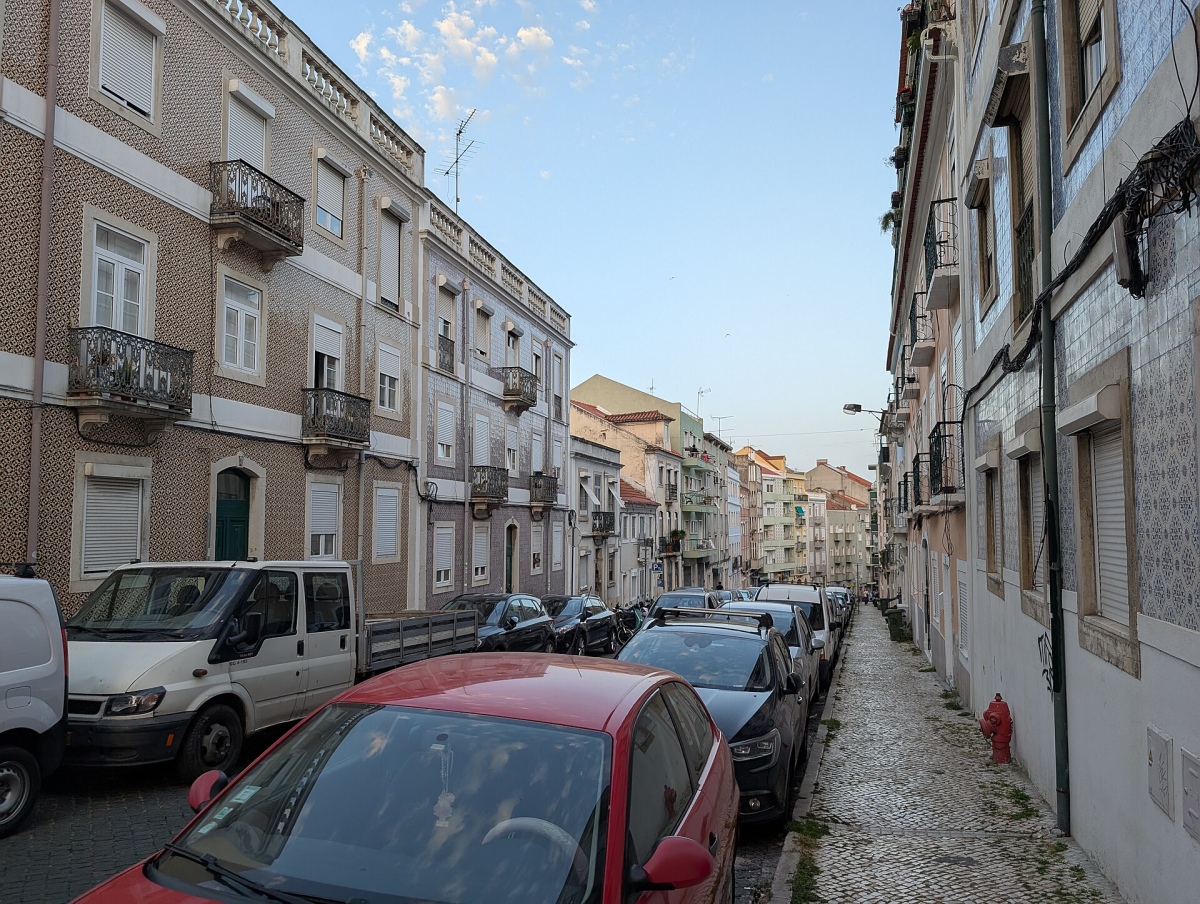
Lisbon and Porto can offer useful urban services, but the exact neighbourhood matters. A hilltop address, a nightlife street and a quieter transport-connected district support different routines. Look beyond the town's headline reputation to the route to groceries, local transport and any regular commitments. The property described as central may still have steep access or a noisy frontage. Ask about the actual entrance, floor and lift.
Smaller towns and rural settings can suit a slower stay, but lower accommodation costs may come with a need for transport or fewer nearby services. For the Algarve, confirm which local businesses and connections operate during your dates rather than extrapolating from summer. On an island, include the cost and practicality of occasional onward travel. A place is good value only if it supports the stay you are planning.
Furnished accommodation: compare like with like
Request a complete quote for the exact dates and occupancy. Identify rent or booking cost, cleaning, any platform charges, linen, internet, utilities and applicable local taxes. “Monthly” can mean a calendar month, four weeks or a discount triggered by a minimum number of nights. Check the definition before comparing two offers. Photographs should show the actual booked space or clearly identify a representative category.
For a temporary booking, read cancellation and early-departure conditions. For a lease or another formal agreement, understand its obligations before signing and seek appropriate advice when necessary. Keep inventory, check-in and deposit arrangements in writing. Do not transfer funds through an unsolicited message that asks you to bypass the original booking channel. A discounted price is not a reason to skip checking who is responsible for the property.
Utilities and seasonal comfort
Ask which services are included and whether there are limits or separate meter charges. Heating, cooling and hot water can affect both comfort and cost. A sunny destination name does not guarantee a warm indoor room in winter. Check the property's actual heating arrangements and ventilation, especially for a long stay when small discomforts recur every day. Consider the position of the room and noise from adjoining units or the street.
If charges are separate, ask how readings and bills are recorded and settled. Clarify what happens if the stay crosses billing periods. An all-inclusive booking may be simpler for a short temporary stay, while a longer agreement can use a different structure. Compare the full expected cost rather than a rent figure that excludes services you must use.
Groceries, cooking and meals outside

A kitchen saves money only if it is practical for the meals you intend to prepare. Check the available cooking equipment, refrigeration and storage. Shopping for one person for a short stay can leave unused ingredients, while a shared household may spread those costs more efficiently. Include household basics as well as food if they are not supplied. Avoid assuming that all supermarket trips are cheaper than every simple café meal.
Build a weekly pattern with a realistic mixture of cooking and eating out. A neighbourhood café visit can be part of the experience, while a special restaurant meal belongs in a separate discretionary allowance. Dietary requirements can affect the choice of location and shop. Keep a small list of nearby options before committing to an isolated property, rather than solving the routine only after arrival.
Internet, working space and local transport
If connectivity is essential, ask about the actual connection in the booked unit and any recent information the host can provide. A general claim of Wi-Fi does not establish a suitable workspace, reliable speed or a quiet room. Confirm a table, chair, outlets and the level of privacy you need. A backup connection can help, but check your mobile plan's coverage and roaming conditions rather than assuming it works identically everywhere.
For a regular commute or city use, compare the operator's current ticket products with the journeys you expect. A tourist pass designed for several busy sightseeing days may not suit a month of routine travel. Include transport to supermarkets, stations and social activities. If a car is necessary, allow for parking and the full rental contract over the stay.
An illustrative 30-night household budget
For an arithmetic example, assume one person books a furnished unit for €1,200 for 30 nights. Add €150 for utilities and connectivity if not included, €300 for groceries, €80 for local transport and €220 for meals outside and discretionary spending. Those assumptions produce €1,950 before travel to Portugal, insurance, taxes or other costs not covered. A separate €250 reserve brings the planning total to €2,200.
These are chosen example figures, not an observed Portuguese average or a current rental quote. If an actual property includes utilities, remove the separate allowance rather than counting it twice. If two people share the unit, some household costs are shared while food and personal spending increase. A deposit affects available funds but should be labelled separately from a final expense, subject to its genuine refund conditions.
Health cover and continuity of care
Before a longer temporary stay, check the duration and conditions of your travel cover and the healthcare arrangements applicable to you. A policy that suits a brief holiday may have a maximum trip length or conditions relevant to your situation. Carry the documents your own provider requires and know how to contact it. Do not treat a health card as a substitute for all insurance needs.
Arrange necessary medical questions with a qualified professional before departure, including how to handle prescriptions and continuity of care. Check entry restrictions for any medicines through the relevant official authorities where needed. The Health & Safety and Useful Contacts pages identify emergency and regional advice channels; they do not determine treatment or insurance eligibility. Include any known personal health-related costs in your own budget without relying on a national estimate.
Separate immigration and tax questions from the budget
A longer affordable stay still needs the correct permission for your nationality, documents, purpose and duration. A short-stay visitor allowance is not automatically a right to employment or residence. Visits elsewhere in the Schengen area may affect the time available under rules that apply to you. Use official Portuguese and EU information, and seek qualified advice for an individual immigration or tax decision.
Avoid building the budget around an assumed deadline or a rule repeated by an accommodation host. A provider can describe its booking terms but cannot grant residence rights. If your plans change from a holiday to a move, review the legal and financial implications before extending. Keep the budget, document timeline and commitments visible together so a cheap extension does not create a more expensive problem.
Trial the base before making a larger commitment
For a substantial stay, a short initial booking can help you assess the neighbourhood and property, although it may cost more per night. Check noise at relevant times, transport access, groceries and the conditions inside the unit. Consider how the place works on a rainy day or an ordinary weekday, not only during the attractive hours used in its photographs.
Set aside a realistic amount for moving or adjusting the plan. Keep essential documents, provider contacts and balances due organised. Ask who handles maintenance and how a problem should be reported. The most useful longer-stay budget reflects your daily routine and the actual agreement, with a reserve for changes, rather than presenting a low monthly total as proof that every stay in Portugal will be inexpensive.
Compare your choices
| 30-night example for one person | Assumed amount | What to verify |
|---|---|---|
| Furnished accommodation | €1,200 | Exact period and complete charges |
| Utilities and connectivity | €150 | Remove if already included |
| Groceries | €300 | Personal shopping requirements |
| Local transport | €80 | Current product and actual routes |
| Meals out and discretionary costs | €220 | Your planned routine |
| Subtotal / with €250 reserve | €1,950 / €2,200 | Editorial assumptions; not market averages |
Official information and sources
Linked practical information reviewed on 13 October 2026. Recheck current timetables, entry requirements, event programmes and access conditions before committing to bookings.



