
Portugal Travel Costs & Money: Build a Realistic Trip Budget
A useful Portugal travel budget starts with your itinerary, dates and room arrangements. It is not a single national daily price. Lisbon during a major event, an Algarve resort in summer and a weekday stay in an inland town can produce very different totals. This page explains how to build a short-trip budget, handle euro payments and compare what a booking actually includes. The illustrative calculations are editorial examples, not surveyed average prices or current quotations. Replace each assumption with a live offer for your dates before booking. Longer Stays & Costs deals separately with monthly accommodation and recurring household expenses, so the same visitor budget is not repeated as a relocation estimate.
Budget by booking unit, not by a headline daily number
Start with a calendar of nights and transfer days. Accommodation is normally quoted by room, apartment or bed; transport and admission often by person; a rental car generally by vehicle and rental period. Mixing those units makes a trip appear cheaper than it will be. A couple sharing a room may divide its price, while a solo traveller paying for the same room cannot. Families should check the exact occupancy and bedding rather than assuming that children add no cost.
Keep international flights separate from the local trip total so route comparisons remain meaningful. Add insurance, baggage and any travel-document expenses where they apply. Decide whether your budget is for every traveller together or one person, and label it clearly. A daily figure is useful only after the full trip cost has been calculated consistently.
Accommodation: compare the final checkout amount
Collect a small set of actual offers for the same dates and occupancy. Compare room category, cancellation terms, meals, payment timing and any taxes or charges shown. An apartment's low nightly headline can change after cleaning or other booking charges. A hotel's breakfast may be included in one offer and extra in another. City or visitor taxes can depend on the municipality and exemptions; use the property and local authority's current information instead of a supposed national flat rate.
Include the location's transport consequences. A cheaper room outside a useful centre may add transfers each morning and evening, while a coastal property without suitable services may require a car. Where to Stay helps compare bases and Hotels gives a small property-specific shortlist. Reserve the terms that suit your itinerary, not only the lowest visible price.
Food: separate everyday meals from special experiences

Estimate breakfasts, lunches, dinners and drinks according to the way you intend to eat. A simple café stop, a casual meal and a tasting-menu evening are different budget categories. If cooking, allow for groceries and check that your accommodation actually has useful kitchen equipment. Do not count a hotel's included breakfast again as an outside meal. Likewise, a tour with a confirmed meal reduces one part of that day's food budget, but not necessarily every drink or snack.
Read the menu and confirm extras before ordering. Items brought to a table should not automatically be treated as free. A seafood dish priced by weight needs an agreed understanding of the portion and total. Tips are a separate personal decision and should not be confused with a stated service charge. Keep a little flexibility for the days when weather or a late arrival changes the meal plan.
Transport: include the whole transfer
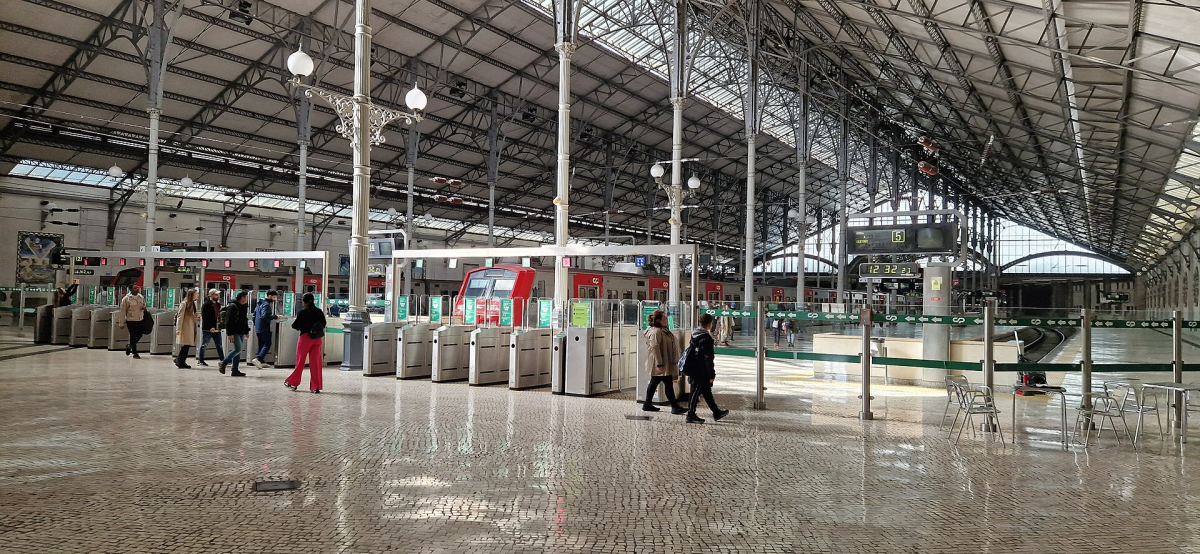
For rail or coach journeys, use current prices for the departure and ticket conditions you need. A promotional fare with limited flexibility differs from one that can be changed. Add transport between your hotel and the station at each end, rather than budgeting only the intercity ticket. City passes should be compared with your actual intended use and the services included. An airport transfer may require a different product from an ordinary local trip.
For a car, combine hire, fuel, parking, any applicable tolls, collection fees and the contract's cover or excess arrangements. Deposits and credit-card requirements affect cash flow even when they are not a final expense. The current official Portugal toll service is PTTolls; verify the particular roads and rental company's payment process. Old national toll claims may no longer match a route.
An illustrative seven-night calculation for two adults
Suppose two adults share a room at an assumed €120 per night for seven nights. That gives €840 for accommodation. If their combined food allowance is €70 per day for eight calendar days, food adds €560. Add an assumed €160 for intercity and local transport, €180 for paid visits and €140 as a flexible reserve. The example total is €1,880 for two, or €940 each, excluding international flights, insurance and any taxes not already covered.
None of those assumptions is a current market average or a promise of availability. The example shows the arithmetic: nights and calendar days are different, shared room costs are divided once, and a reserve belongs in the total. Replacing the room assumption with €180 raises accommodation to €1,260 and the two-person total to €2,300. A small nightly difference has a visible effect over a week.
Solo, family and island trips need different assumptions
A solo visitor should first decide between a private room and a shared accommodation product, then use its actual price. Dividing a couple's example in half may leave too little for a private room. A family should check occupancy, extra beds, meals and activity restrictions. One car shared among several travellers has a different per-person cost from the same vehicle for one person, but it still requires a suitable driver and rental terms.
Island travel adds flights or relevant ferry services, luggage and the cost of a disrupted connection. A mainland-to-island flight is not an ordinary local bus transfer. Where several islands are included, budget each segment separately and keep time and funds for a change. A quieter itinerary on one island may give better value than frequent hotel changes and transport purchases.
Euro payments and card choices
Portugal uses the euro. Carry a workable combination of payment methods and some cash for situations where a card is not accepted or a terminal fails. Check your own bank's foreign-transaction charges and withdrawal conditions before departure. When a terminal or cash machine offers a conversion into your home currency, compare the disclosed rate and charges rather than assuming the conversion is useful. Paying in euros allows your card provider's applicable conversion process, whose terms you should also know.
Protect your PIN and use a secure machine in a sensible setting. Keep a backup payment method separate from the main wallet. A merchant or ATM fee is different from your bank's charge; read both where shown. Do not carry the whole trip budget as cash simply because a guide recommends having a small reserve.
Refunds, deposits and flexible reservations
Read the actual cancellation deadline, time zone and refund terms before paying. A free-cancellation accommodation offer can still have a deadline, and a transport ticket may use a different policy. Keep booking references and a record of the conditions you accepted. If plans depend on a weather-sensitive outing, avoid making every later reservation impossible to change. Flexibility has a price but can reduce the cost of a disrupted itinerary.
Separate money already paid, money due on arrival and temporary holds on a card. A rental deposit or hotel authorisation can affect available spending even if later released. Confirm which card and documents the supplier requires. For an unexpected cancellation, contact the responsible provider and your insurer according to their conditions, rather than assuming all losses are covered.
Choose savings that improve the trip
Fewer bases often reduce transport costs, lost time and check-in effort together. Staying near useful transport can make an ordinary public journey practical and reduce repeated taxi use. Reserve only the paid visits you care about; a public waterfront walk or neighbourhood afternoon can be worthwhile without an admission purchase. Compare a pass with the attractions you would genuinely visit, rather than adding unwanted stops to justify it.
Watch the cost of travel on both sides of an attractive deal. A low flight fare with inconvenient airports, separate luggage charges and an overnight transfer may cost more overall. Booking far ahead can help some trips, while rigid dates during a popular event may still be expensive. There is no guaranteed savings formula that replaces comparing complete live offers.
Keep a simple trip ledger
Record the item, date, unit, number of people, amount paid and balance due. Label estimates clearly and update them when a booking is confirmed. Include one line for discretionary spending so souvenirs and extra outings do not silently consume transport money. If travelling with others, agree which costs are shared and how repayments will be handled before the first large purchase.
Review the total when changing a base or adding an island. The cost difference is more than an extra ticket if it also changes room nights and transfers. Keep a reserve suited to the trip and your circumstances. The goal is a budget that supports the journey you want, with visible assumptions, rather than a daily figure that looks appealing but omits essential costs.
Compare your choices
| Assumption for two adults | Calculation | Example subtotal |
|---|---|---|
| Shared room | 7 nights × €120 | €840 |
| Food for two | 8 days × €70 | €560 |
| Local and intercity transport | Illustrative allowance | €160 |
| Paid visits | Illustrative allowance | €180 |
| Reserve | Illustrative allowance | €140 |
| Total excluding flights and insurance | Editorial arithmetic example | €1,880 |
Official information and sources
Linked practical information reviewed on 13 October 2026. Recheck current timetables, entry requirements, event programmes and access conditions before committing to bookings.


