
AUSTRALIA TRAVEL GUIDE
Australia Travel Essentials: Packing, Connectivity & Daily Logistics

Australia travel preparation should match the actual route. A city stay, a tropical excursion, a Tasmanian drive and a remote journey need different clothing, communications and everyday arrangements. Begin with the itinerary and identify what must work on arrival, during each transfer and when conditions change.
This guide covers daily logistics and preparation. Visa & Entry, Health & Safety and Useful Contacts address their own tasks separately. Keep essential documents, addresses and booking details available offline rather than assuming your phone will connect immediately after landing.
Keep the basic facts useful
Canberra is Australia’s national capital. Sydney and Melbourne are different cities with their own state-capital roles, while the states and territories have different transport and administrative systems. English is widely used, and Australian English includes local expressions, but asking politely for clarification is more useful than trying to memorise every colloquial term.
The currency is the Australian dollar, and road traffic keeps left. These facts affect actual decisions: keep the budget in AUD and allow time to adjust before a regional drive. Avoid relying on old population figures, national price rankings or a single set of bank-opening hours from a legacy facts page. They add little to a practical trip and can become misleading.
Use Map & Regions for the country’s geography and Travel Costs & Money for payment planning. A concise facts section is most helpful when it directs you towards the detailed decision, rather than presenting a disconnected list of trivia.
Time zones and booking times
Australia spans multiple time zones, and daylight-saving arrangements differ between jurisdictions. Check the local time for each city and travel date rather than applying one offset to the whole country. Some differences include half-hour offsets, so do not assume every change is a whole hour or that all states change clocks together.
Read flight, train, tour and accommodation times in their local context. A calendar entry created on a phone can display differently after a time-zone change, depending on the settings. Retain the supplier’s confirmation and verify the local departure time before leaving. An early pickup should be checked again after a flight across time zones.
For calls home, agree on a time using both locations and the actual date. A convenient recurring time can shift when one country changes clocks before another. Keeping the phone’s automatic time setting correctly configured can help, but it does not replace reading the booking you rely on.
Phones, SIMs, eSIMs and emergency calling
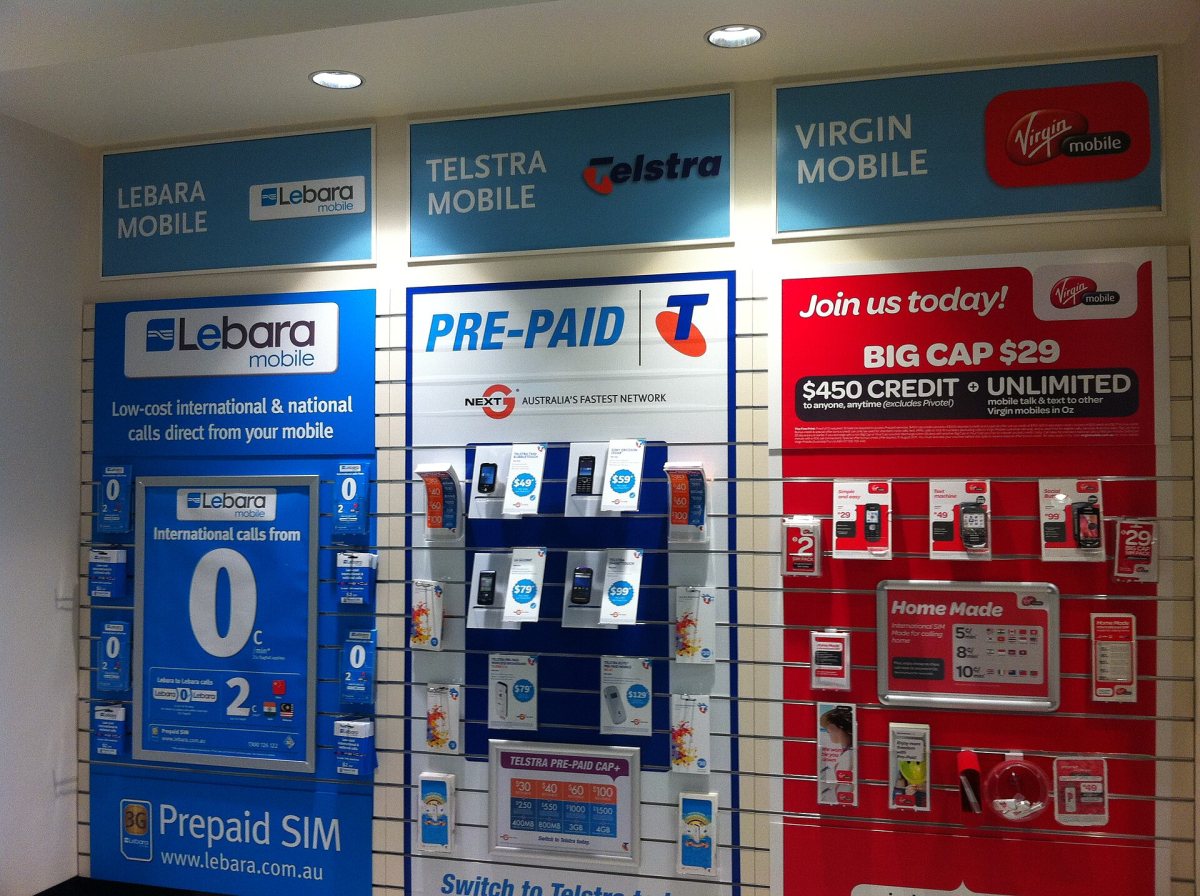
Check the exact phone model with the network or plan provider before departure. An unlocked handset with mobile data capability is not sufficient proof that every voice or emergency function will work in Australia. Following the closure of 3G networks, some older or overseas devices require particular attention to voice-over-4G and emergency-call compatibility.
Compare roaming, a local SIM and an eSIM according to coverage, data, ordinary calls, texts and the duration of the trip. A data-only plan may not provide an ordinary Australian telephone number or standard voice service. Ask how you will make routine supplier calls and receive verification messages, and check the handset’s compatibility separately from the package’s marketing description.
The Australian Communications and Media Authority’s guidance is relevant to device compatibility. Do not test a phone by making a non-emergency call to 000. Check the provider’s stated process instead. Mobile coverage is not universal, and a data plan cannot create a connection in an area with no suitable network coverage.
Power, charging and equipment
Australia commonly uses Type I plugs and a nominal 230-volt, 50-hertz supply. Check the input rating printed on each device. A travel adapter changes the physical plug connection; it does not necessarily convert voltage or make an incompatible appliance safe. Ask an appropriate supplier if you are uncertain about a particular device.
Plan enough charging capacity for the devices you actually carry, especially on a route with several domestic flights or long driving days. Confirm airline rules for batteries and power banks, including how they must be carried and used. Different operators may impose specific conditions, so read the current requirements before packing.
Keep an essential cable, medication and a usable clothing layer in hand luggage. A hotel’s advertised charging facilities may not match your connector or the number of devices in the party. Carrying a suitable adapter is more reliable than assuming every room provides a particular socket or that a late-arrival shop will stock it.
Packing for several regions
Pack around activities and conditions rather than the idea that Australia is always hot. A southern city, tropical boat trip, alpine walk and desert evening can require different layers. Choose clothing that works across the route, and check the actual forecast before each regional section. Sun protection remains relevant even when the air feels cool.
Footwear should match the terrain. A city walking shoe, a beach sandal and a shoe suitable for a rough track solve different problems. Check the route descriptions before deciding what to bring. Do not undertake a demanding walk simply because it appears on the itinerary when your equipment or the conditions are unsuitable.
For self-catering or a road trip, think about storage, water, groceries and what can be carried to the next base. Biosecurity rules can affect goods at international and some domestic boundaries. Check the actual route and current official guidance rather than assuming food bought during the trip can always be taken everywhere without restriction.
Opening patterns, bookings and ordinary errands

Opening hours vary by business, location, weekday and holiday. A cafe, pharmacy or supermarket near the accommodation may not operate when your flight arrives. Confirm any service essential to the first night, including meals, medication access or a late check-in. An airport shop is not a dependable substitute for checking what you need.
For regional journeys, plan fuel, food and accommodation before leaving a larger centre. A town shown on a map may have limited services, and an advertised business may have changed hours. Keep a practical reserve and verify the next stopping point. The Getting Around guide covers the wider road and transport decisions.
Save reservations and key addresses offline, but protect personal documents and payment information. Use established supplier channels for changes and be cautious about unsolicited requests to move a payment or provide new card details. A message that appears to reference a booking still needs verification through the service you actually used.
Accessibility: check the complete journey
Assess access as a connected route: airport assistance, ground transport, accommodation entrance, room, bathroom and the activity itself. A property described as accessible may offer only certain categories or features. Ask for the measurements and arrangements you need, and obtain written confirmation for the specific booking rather than relying on a generic symbol.
The same care applies to tours, ferries and parks. A step-free terminal does not establish access to every vessel, while a formed path may still have gradients or surfaces unsuitable for a particular visitor. Explain your needs directly to the responsible operator and ask how the actual journey works, including toilets, rest points and assistance.
Keep a workable alternative when an essential service is unavailable. Allow extra time for transfers and avoid tightly linking independent components that cannot accommodate a delay. Good access planning is specific: it identifies the part of the route that must work and confirms the person or organisation responsible for it.
Frequently Asked Questions
Will any unlocked phone work fully in Australia?
Check the exact model, network and emergency-call compatibility with the provider. Unlocked status and mobile data alone do not establish every function.
Does an eSIM always include phone calls?
No. Read the actual package. Data-only products may not include ordinary voice calls, texts or a local telephone number.
Is Australia in one time zone?
No. Check local time and daylight-saving arrangements for each city and date, including any half-hour difference.
Does a travel adapter convert voltage?
Not necessarily. Check the device’s input rating and the adapter’s function before using it with Australian power.



