
SEYCHELLES TRAVEL GUIDE
Victoria Photos: Market Street and Mahé’s Townscape
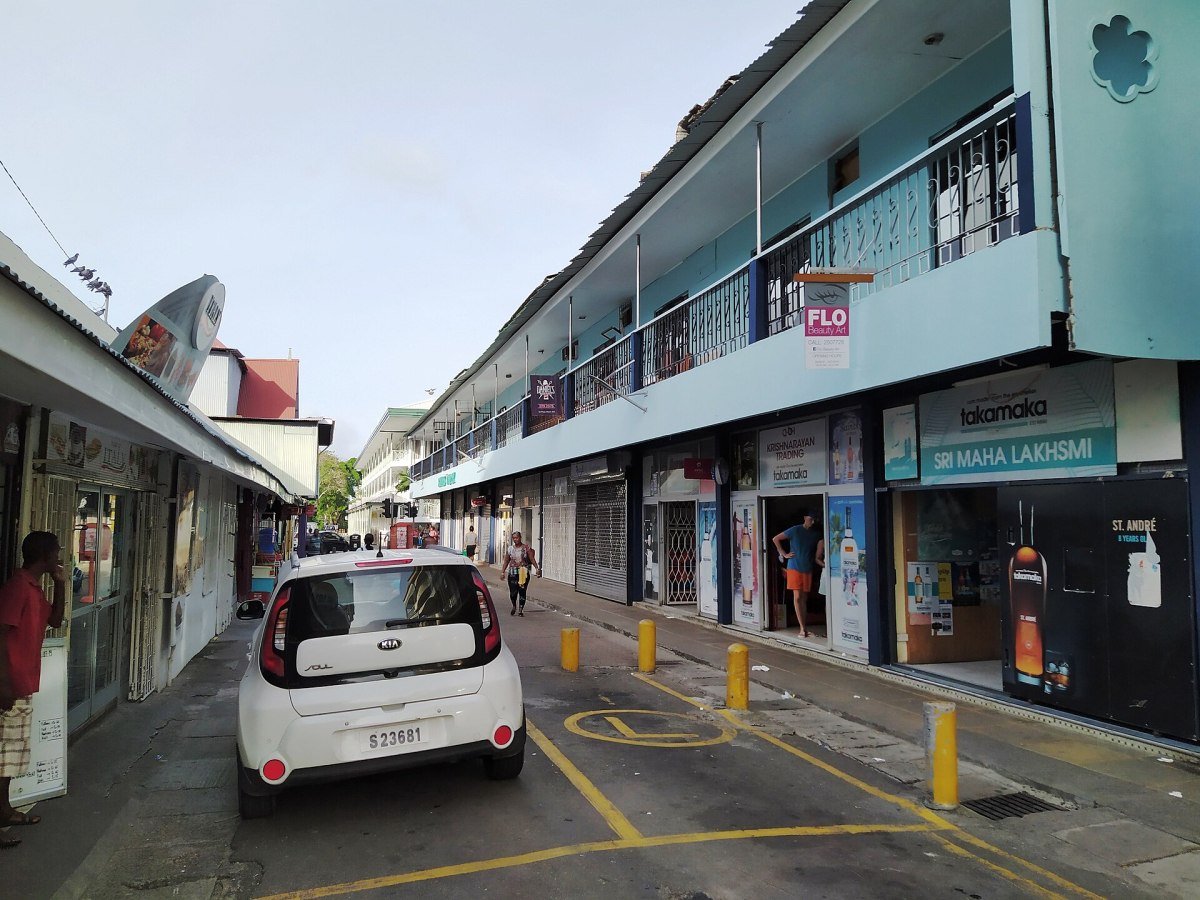
Victoria on Mahé adds a working-town perspective to a Seychelles photo collection. The image here looks along Market Street, where shopfronts, road markings and everyday movement create a different rhythm from the coast. Begin with the street as a place people use, then look for a composition that leaves them room to continue their day.
Read Market Street as a streetscape
The lines of the road and the building fronts give a natural direction to the picture. Stand where the pavement provides a stable position and check what the frame includes at both edges. A sign or balcony can provide a recognisable detail without filling the whole image. The hills behind the town may help place an urban scene within Mahé’s landscape.
Keep verticals reasonably controlled if architecture is the main subject, but avoid stretching a building so heavily that its proportions become misleading. Make one wider frame before concentrating on a detail. That establishing image helps you remember the relationship between the shopfront, street and surrounding block.
Make room for ordinary movement
Watch traffic before looking through a viewfinder, and step aside before reviewing a photograph. Do not stop in a narrow doorway or set equipment where shoppers need to pass. A small camera or phone can make this sort of walk comfortable, particularly when you expect to buy food or use public transport afterwards.
If a person becomes the main subject, ask permission for an identifiable portrait. A distant streetscape and a close personal photograph raise different practical questions. Explain the intended use if the picture will appear publicly or commercially, and accept a refusal. The people photography guide develops that approach with a historical Victoria market scene.
Build a short sequence of architectural details
Choose two or three related features: a street corner, lettering above a shop and a balcony or window pattern. Use their actual setting to connect them, rather than suggesting unrelated façades belong to one building. Take a quick note of a legible business or building name so that your caption does not depend on a guess made later.
Light can differ sharply between a shaded pavement and a bright road. Check whether a white wall still has detail, and wait for a passing vehicle to clear the frame only when it is safe to remain where you are. Ordinary traffic can also be part of the story; a town photograph does not have to look deserted to be successful.
Deepam Cinema as a historical streetscape
A photograph by Ken Roe, published under the name kencta, documents the Deepam Cinema façade in 2004. Its readable sign, vertical window grid and entrance steps provide useful architectural details to compare when studying older Victoria photographs. The source is a historical record, not evidence of a current screening programme, opening time or public access arrangement.
When making your own sequence, keep dates attached to pictures of buildings that may change. A shop sign, altered entrance or new use can make an older photograph historically interesting. Preserve the photographer’s credit when referencing such a source and obtain the necessary permission before reproducing an image.
Plan a compact town photography walk
Build the walk around a few subjects you can reach comfortably, with a water and food stop rather than a rigid checklist. Check the current trading location if a market visit is central to the plan. Food & Drink covers local produce and eating, and Map & Islands helps place Victoria within Mahé.
Continue to Seychelles Photo Spots to combine the town with a coastal or forest subject. Keeping those settings in one collection gives a fuller account of the trip while avoiding repeated versions of the same beach view.
Victoria & Mahé Photography FAQs
Where was the main street photograph taken?
The source identifies Market Street in Victoria, Mahé.
Does the historical cinema photograph show current operations?
No. Ken Roe’s source records a photograph taken in 2004; it cannot verify current screenings or opening arrangements.
How can I photograph Market Street without blocking daily activity?
Choose a stable pavement position, watch traffic and step aside when reviewing photographs. Keep doorways and shopping routes clear. Begin with an establishing streetscape, then photograph a few architectural details without suggesting unrelated façades belong to one building.

