
SEYCHELLES TRAVEL GUIDE
Anse Georgette Photos: Bay Views on Praslin
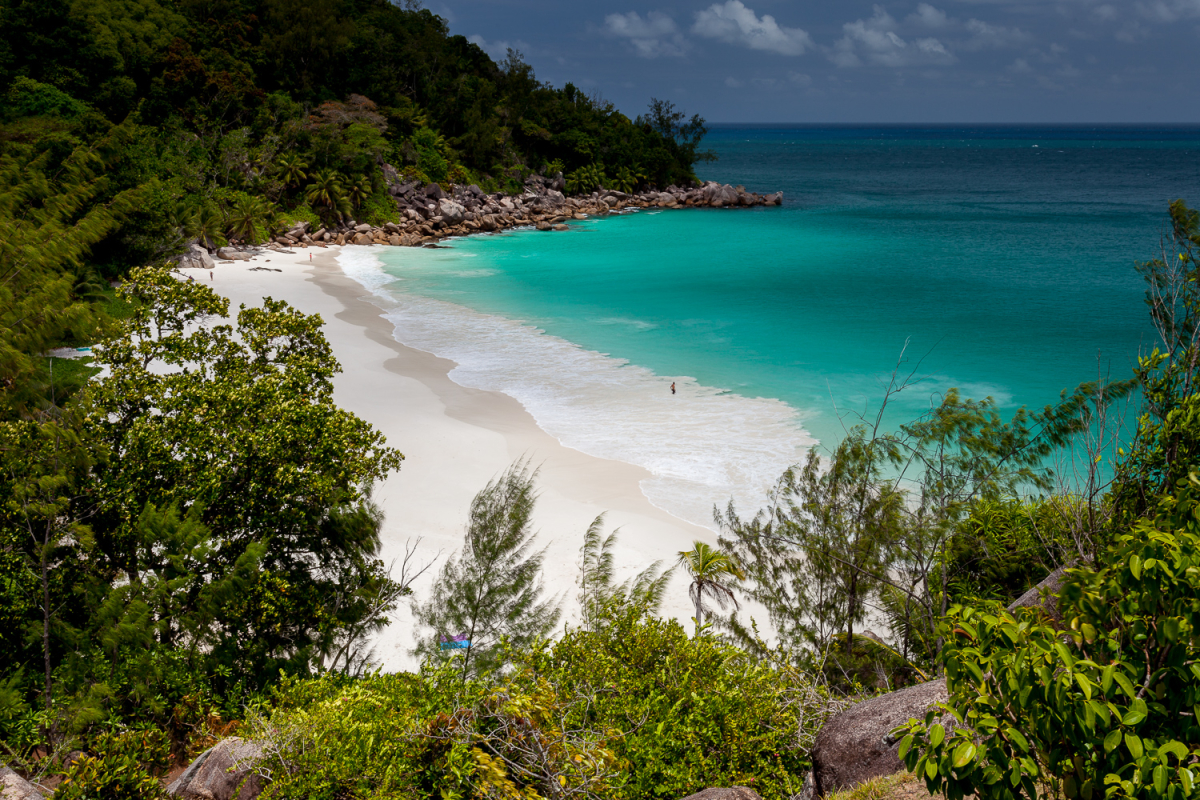
Anse Georgette on Praslin makes a useful study in how a beach changes when photographed from the edge of its vegetation rather than straight towards the water. The photograph here shows a curve of pale sand, granite and a green headland. It is a starting point for reading the landscape, not a promise of identical cloud, tide or access when you visit.
Read the curve of the bay
The shape of the shoreline gives the frame its main direction. Look for a position where the edge of the sand leads towards the far headland without being cut abruptly by the image border. A rock near the foreground can provide scale, but it should leave enough space for the beach to remain legible. Take a moment to check the horizon before making several similar pictures.
A wider view establishes the place; a second, tighter frame can concentrate on where the granite meets the sand. Make those choices by moving within the permitted access area. Avoid stepping onto vegetation or unstable rocks simply to remove a small branch from the edge of a photograph.
Arrange access before planning the light
For access through Constance Lémuria, the resort’s April 2026 beach guide says visitors need to request permission to pass through its grounds. Confirm the current non-guest arrangement, walking route and return time directly before planning the light. Permission to pass through resort grounds is a separate practical question from choosing a photograph on the beach; it is not a promise of unrestricted passage at sunrise or sunset.
For a photography visit, include walking, heat, a water stop and the return transfer in the schedule. Check where equipment can be carried comfortably. A short period of suitable light is more useful when you arrive with time to look around than when you rush from the drop-off point.
Balance bright sand and the shaded edge
Pale sand and reflective water can be much brighter than the trees beside them. Check that the important highlights retain detail, then decide how much shadow you want to show. Cloud can soften the contrast and give the vegetation a quieter appearance; bright light can emphasise water colour. Take a few deliberate frames as conditions change instead of assuming one setting will work throughout the visit.
If you use a polarising filter, compare the result with and without it. Its effect changes with the camera angle and can make a wide sky uneven. The aim is a believable description of the shore, with enough colour and texture to show why the view interests you.
Keep a stable position on the shore
Watch the surf before setting a bag down, keep the camera above spray and leave a dry way back. A pleasing picture does not establish safe swimming conditions. You can show the movement of water from a stable shore position without walking into it. Follow local warnings even if a reference photograph looks calm.
Use the Seychelles beach comparison to plan the leisure part of a visit and Photo Spots for a broader photographic route. Keep the specific beach name in your notes so that pictures from different Praslin bays do not acquire the wrong caption later.
Anse Georgette Photography FAQs
Where is the photographed beach?
Anse Georgette is on Praslin. Keep its name distinct from Anse Lazio and the Côte d’Or area.
Can I assume non-guests can walk in at any time?
No. The resort’s published guidance asks visitors to request permission to cross its grounds. Confirm your date, route and return time with Constance Lémuria before scheduling the photograph; do not assume unrestricted sunrise or sunset passage.
Do I need to enter the sea for a useful photograph?
No. The bay’s shape, granite and vegetation can be composed from a stable permitted position on shore.

