
AFRICA · EGYPT TRAVEL GUIDE
Egypt Photos & Photo Spots: Viewpoints, Light and Camera Rules
Egypt rewards a photography plan built around access, light and enough time to observe. A pyramid panorama, carved temple wall and Nile-side scene need different approaches. Treat this page as a way to choose subjects and prepare a manageable day, rather than a promise of unrestricted viewpoints or empty monuments.
Use the Egypt travel guide for the overall route and Egypt itineraries for the order of overnight stops. The suggestions below focus on photographic decisions: where to look, what to simplify and which practical questions to settle before leaving. The photographs are individually credited examples, not evidence of a private tour or a recent visit by the author.
Understand photography rules before choosing equipment
Egypt’s published framework permits personal, non-commercial photography in public places subject to restrictions. It does not grant access to every site or cover professional productions automatically. The Ministry of Tourism and Antiquities’ announcement excludes equipment such as professional lighting and gear that blocks roads from the ordinary permit-free arrangement. It also states that photographing Egyptian citizens requires written permission and prohibits photographing children.
Current FCDO advice warns against photographing military property, including the Suez Canal, and identifies sensitivities around officials, government infrastructure and religious buildings. Do not import or use a drone without the required prior Egyptian Ministry of Defence permission. Leaving it at home avoids a complicated issue at the border; an operator offering an excursion does not establish that your equipment is authorised.
At a museum, tomb, mosque or archaeological site, ask staff about the rules for that particular space. Separate three questions: whether you may bring the equipment, whether you may take photographs, and whether a planned commercial use requires permission. A normal visitor ticket should never be treated as a blanket production permit. Follow signs and instructions even when another visitor appears to be doing something different.
Giza: use the pyramids and Sphinx to tell different stories
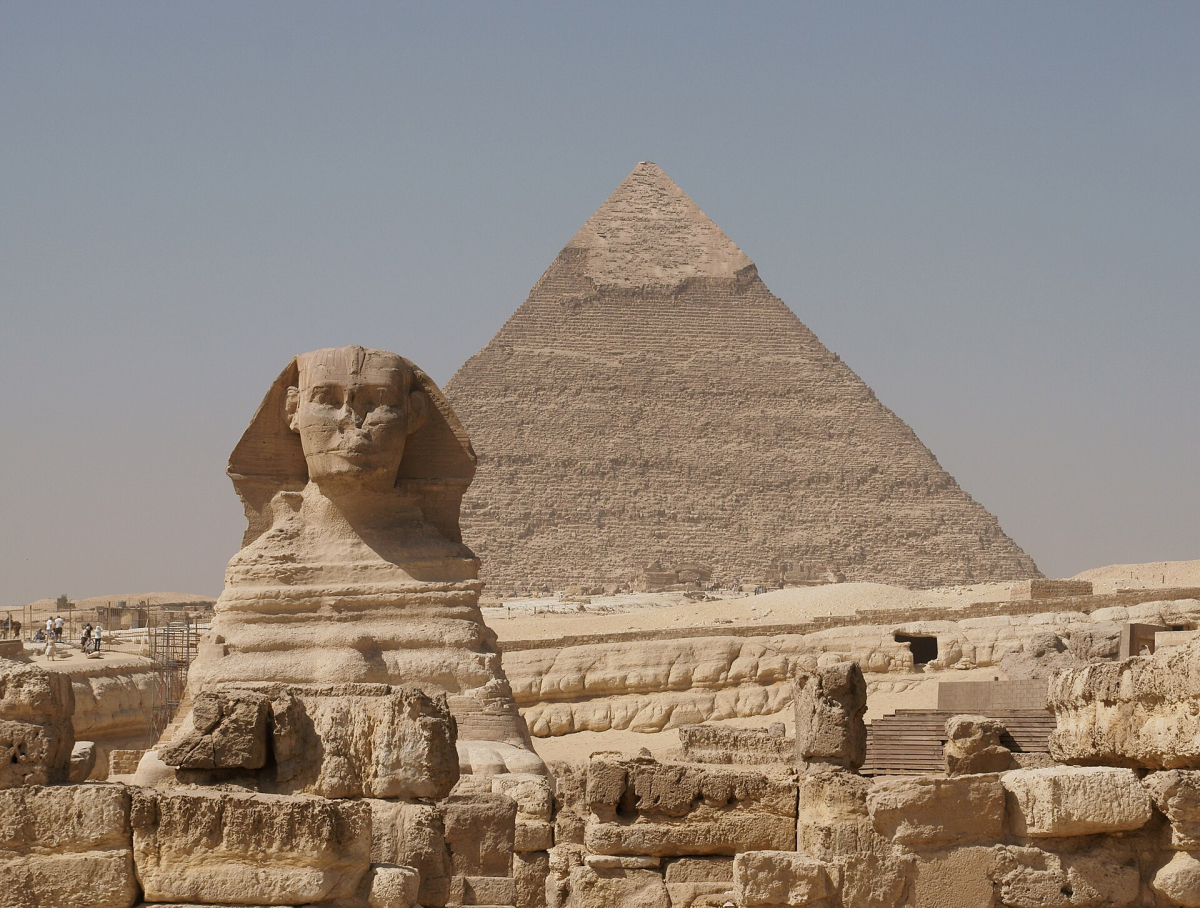
At Giza, start with the relationship between monuments. A wider frame can show the Sphinx with the Pyramid of Khafre behind it, while a tighter photograph emphasises carved stone and changing texture. The example above illustrates that relationship; it does not mark a guaranteed public standing point for every future visit.
Plan one establishing photograph, one architectural detail and one image that includes the scale of the landscape. This creates a more useful sequence than repeatedly taking the same pyramid from slightly different distances. Keep pathways clear while composing, stay within visitor boundaries and never climb stonework to improve a viewpoint. Avoid turning an unfamiliar edge or barrier into a platform for a photograph.
Check admission arrangements before fixing a departure time around sunrise. Early light and the start of public access are different things. A photograph taken by someone with special access does not prove that a standard ticket will let you reproduce it. Ask your guide or the site’s official booking channel which entrance and accessible areas apply to your visit.
Dust and haze can soften distant scenes. Rather than spending the whole visit trying to force a clear panorama, change subjects: stone joints, a gateway or the outline of a monument may work better. A lens hood and a clean cloth are useful; avoid changing lenses in blowing sand if you can use the equipment already fitted.
Luxor: distinguish the temple interior from the wider landscape
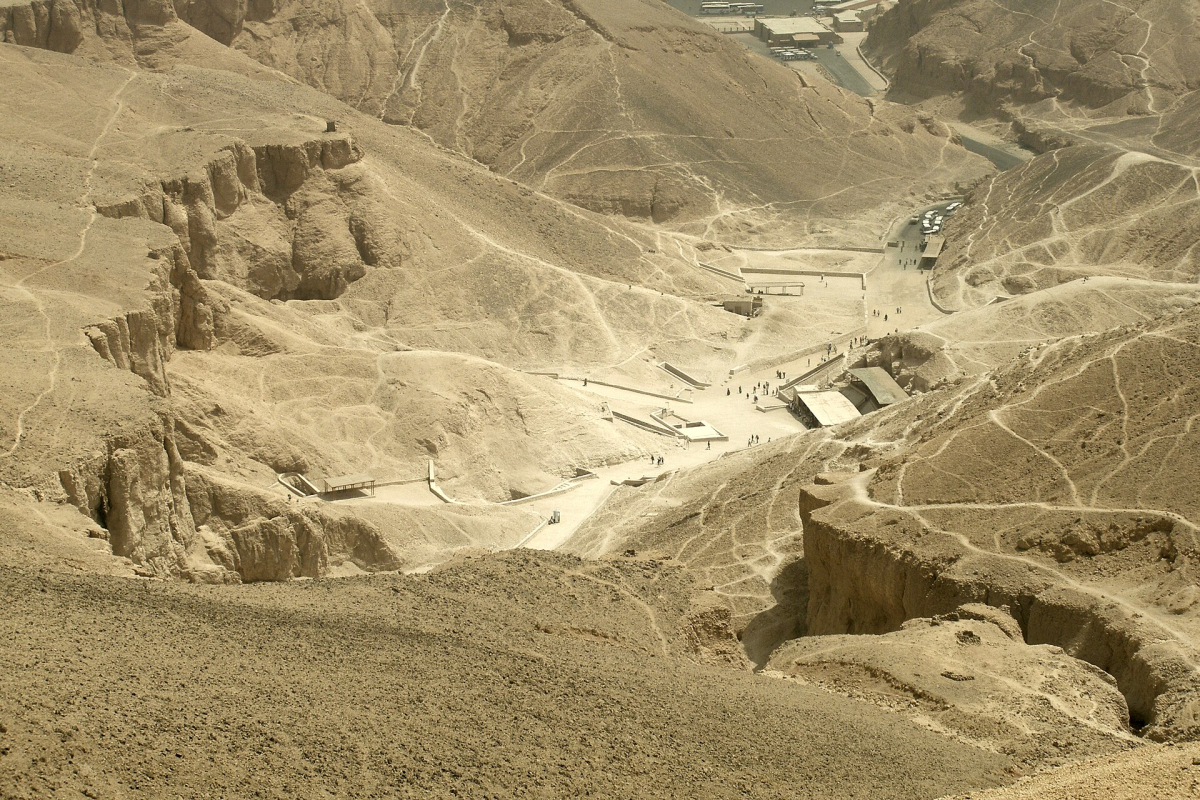
Luxor’s photographic subjects vary sharply between enclosed temple spaces and the open western hills. The Valley of the Kings photograph shows the dry landscape and visitor paths; it does not imply that the same rules apply inside a tomb. Let the setting determine both the composition and the access questions you ask.
In a columned hall, look for repetition, side light and a small number of readable details. Pointing upward can introduce strong converging lines; decide whether you like that effect or would prefer a more level view. In low light, steady your stance and take several careful frames. Do not use flash or set up support equipment where staff or signs prohibit it.
Outside, give the hills enough space in the frame to explain why the monuments sit where they do. A small human figure can suggest scale, but it should not be a reason to photograph an identifiable person without the required consent. You can often use paths, doorways or the size of a column to convey scale instead.
A hot-air balloon is a separate excursion, with weather and operator conditions, rather than a substitute for visiting the sites. If you choose a flight, secure loose equipment and follow the crew’s instructions. Do not lean out or change position because a composition seems better on the other side of the basket.
Cairo: craft details and architecture need patient observation
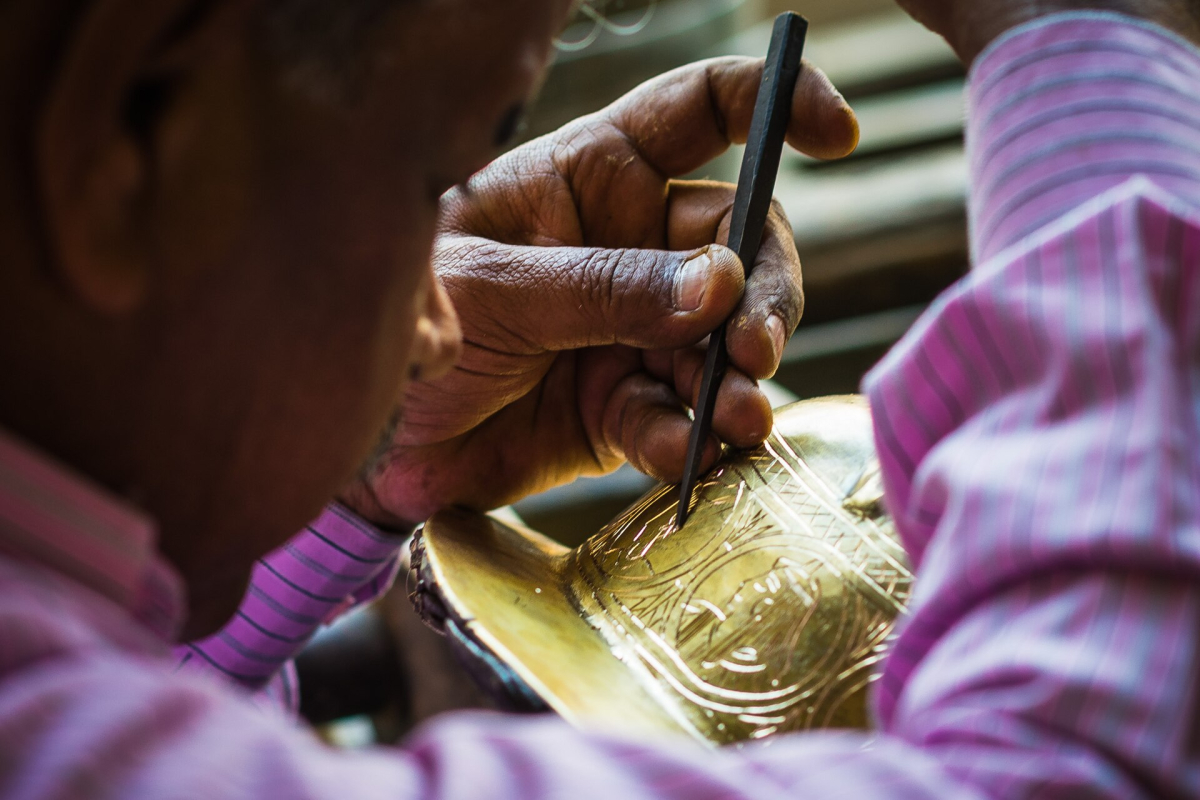
Markets and workshops offer colour, repeated forms and close detail, but they are working places. The example of metal engraving shows how hands, tools and material can become the subject. It is a credited existing photograph; visitors must obtain the permissions required for their own photographs and respect a refusal immediately.
Ask before entering a workshop or pointing a camera toward a stall. Explain whether you want a quick personal image, a portrait or a longer sequence. If payment is requested, agree on the terms before taking photographs. Buying something does not automatically include permission to photograph the seller or publish their image.
When a portrait is inappropriate, look for architectural patterns and objects you have permission to photograph. A carefully chosen detail can convey craftsmanship without turning a person into scenery. Avoid blocking an entrance or holding up customers, and put the camera away when the space becomes too crowded to work comfortably.
For religious architecture, prioritise the visit itself: dress appropriately, follow instructions and check which areas are open. A courtyard, carved doorway and city view can form a coherent short sequence. Interior availability may depend on worship or site management, so do not schedule the rest of your day around a photograph that requires access you have not confirmed.
Match other Egyptian subjects to the right kind of visit
A strong photograph is easier when the excursion already fits your route. Use these ideas to decide what to pay attention to, rather than adding a long detour simply for another image.
Scroll horizontally on smaller screens to compare all columns.
| Setting | Look for | Before you commit |
|---|---|---|
| Aswan and the Nile | Sails, water, islands and changing layers of distance | Agree on the boat trip and safe camera handling |
| Abu Simbel | Monument scale and a balanced architectural frame | Check transport, admission and interior rules |
| Alexandria | Sea-facing architecture and the line of the waterfront | Allow for weather, wind and public access |
| Red Sea | Water colour and reef detail | Choose a suitable operator and protect marine life |
| Desert and oases | Landforms, texture and settlement context | Check current travel advice and authorised access |
On the water, secure the camera with a suitable strap and keep it clear of spray when boarding. Underwater, photograph only within your training and buoyancy ability. Do not touch coral, move animals or stand on a reef to stabilise a frame. A technically imperfect photograph is preferable to damaging the subject or creating a safety problem.
Plan around light, heat and the actual opening window
Check the best time to visit Egypt alongside your daily access plan. Lower-angle light can give stone and hills more texture, but an attraction’s opening window and your transfer time determine whether it is usable. Leave enough margin for queues, walking and a rest, especially when a day involves several exposed sites.
Choose a small equipment kit you can carry comfortably. A phone or one versatile camera can cover a wide range of subjects without repeated bag changes. Keep batteries and storage ready before entering a busy attraction. When travelling between bases, carry essential equipment with you and check airline rules for batteries rather than packing them by habit.
Back up photographs in more than one place during the trip. Check that a transfer has completed before deleting anything from a memory card. If sharing online, avoid publishing sensitive locations or identifiable people without the necessary permission. Captions should name the actual subject accurately and should not imply access, experiences or current conditions that the photograph does not establish.
Frequently asked questions
Can tourists take photographs in Egypt?
Personal photography is permitted in many public places subject to restrictions. Follow current national rules and the instructions for each museum, monument or religious site; permission to enter and permission to photograph are separate questions.
Can I bring a drone for pyramid photographs?
Do not bring or use a drone without the required prior Egyptian authorisation. Check current official advice before travel; a normal attraction ticket or tour booking does not grant drone permission.
Can I photograph people in markets?
Follow Egypt’s consent rules and obtain the required written permission for photographs of Egyptian citizens. Do not photograph children. A purchase or a smile should not be treated as permission.
Should I book sunrise access to every site?
Only book an access arrangement after confirming what it actually includes. Sunrise time and standard visitor opening time are different, and published photographs may have been made under special access conditions.



