
AFRICA · EGYPT TRAVEL GUIDE
Egypt Food & Drink: What to Eat and How to Order
Eating well in Egypt starts with matching the meal to the day. A bowl of koshary can be a convenient lunch between visits, while a sit-down dinner deserves enough time for conversation, ordering and a comfortable journey back. Egyptian food offers much more than the international buffet: breakfast beans, fragrant greens, grilled dishes, coastal seafood and pastries give a trip a different rhythm.
This guide explains what to order and how to make sensible choices. It does not rank restaurants or promise that a particular dish is suitable for every dietary requirement. Use the Egypt travel guide to plan the wider journey, then leave space in your itinerary for meals near the places you are already visiting. Crossing Cairo simply to tick off a snack can consume more of a short day than the meal itself.
Choose an Egyptian meal that fits your day
Start with a small selection rather than trying every familiar name at once. The table below is an ordering aid: portion sizes, recipes, kitchens and availability vary. Ask what comes with the dish before adding bread, rice or several sides.
Scroll horizontally on smaller screens to compare all columns.
| Meal or preference | Consider | Check before ordering |
|---|---|---|
| Quick, filling lunch | Koshary | Portion size, sauces and allergens |
| Breakfast with bread | Ful and taameya | Added toppings and shared frying equipment |
| Home-style main course | Molokhia | Stock and accompanying meat or rice |
| Coastal meal | Cooked fish or seafood | Price basis, weight, preparation and sides |
| Something to share | Feteer or a small dessert selection | Dairy, nuts, sesame and portion size |
If you are travelling with children or a mixed group, agree on one reliable option for each person before ordering shared plates. A less adventurous meal on a tiring transfer day can leave everyone more interested in trying something new the following morning. Food should support the journey, not become another demanding checklist.
Koshary: a filling bowl with a living food culture
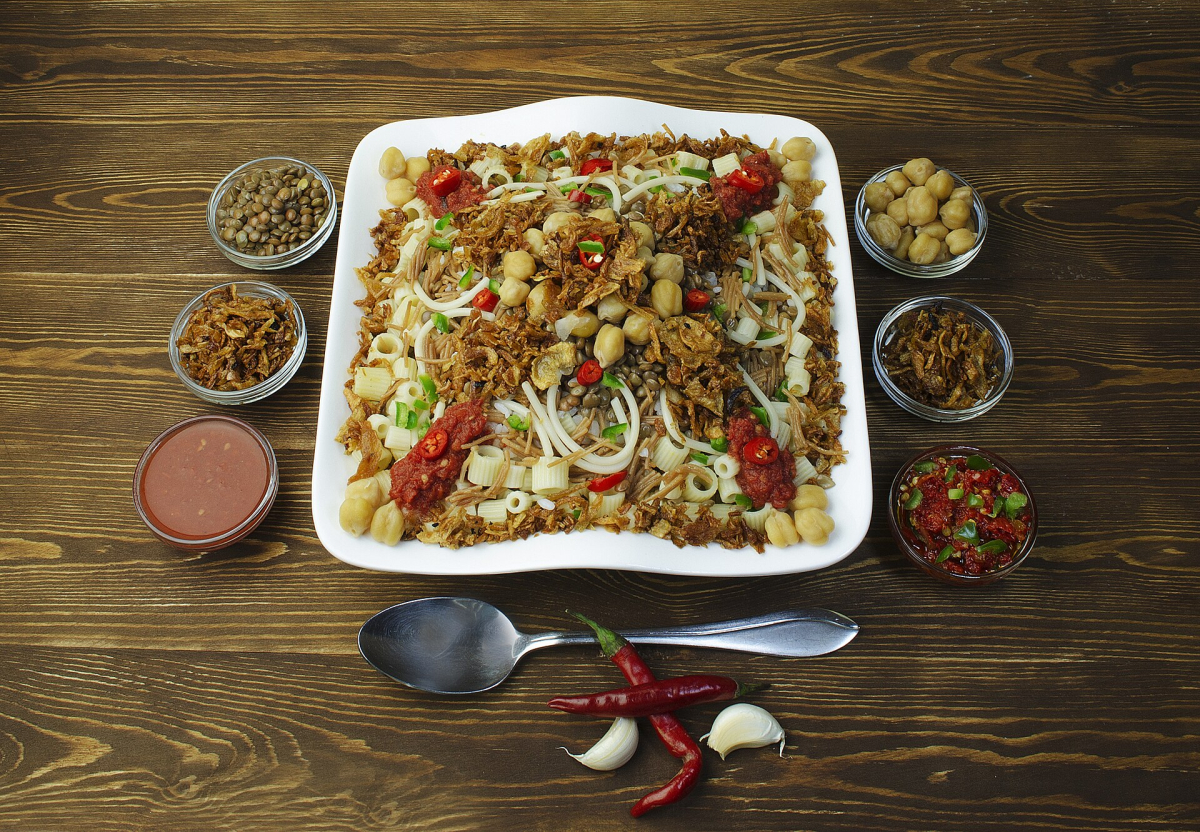
Koshary brings together rice, pasta, lentils, chickpeas, fried onions and sauces. Spellings such as koshari and kushari refer to the same family of dishes. Order a manageable size first; an inexpensive-looking bowl can be substantial. If several sauces arrive separately, add a little at a time so that chilli, garlic and acidity stay at a level you enjoy.
UNESCO inscribed koshary’s everyday practices in 2025. Its recognition concerns the people, skills and social traditions around the dish, rather than a restaurant award. That is a useful reason to notice how a meal is assembled and shared, instead of treating it only as a photograph or a challenge to finish.
For an easy first encounter, choose a place where the ordering process is clear and ask whether the bowl includes everything shown. Keep your receipt until any takeaway order is complete. If you want a photograph, take it promptly and eat while the food is fresh; do not obstruct a busy counter while arranging your shot.
Ful, taameya and a practical breakfast
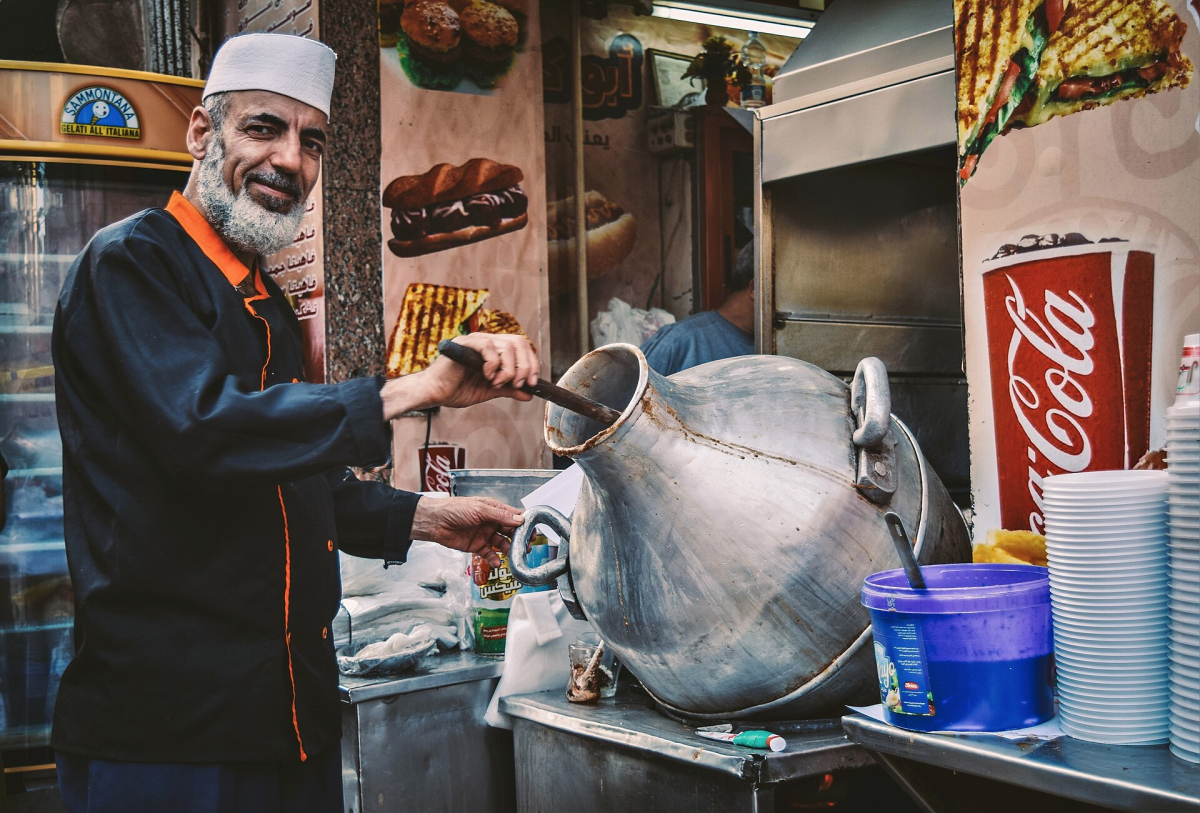
Ful is slow-cooked fava beans; taameya is the Egyptian fava-bean fritter. Baladi bread often accompanies breakfast. These provide a useful starting vocabulary when a menu is unfamiliar, but the name alone does not tell you every ingredient or topping. Ask what the kitchen adds and choose a portion that fits your morning.
Breakfast works best when it is close to your departure point. Before an early Giza or Luxor visit, check when your accommodation serves food and whether a takeaway breakfast is possible. If you arrange a packed meal, confirm collection time and where you can keep it until eating. A missed breakfast can turn a carefully planned morning into a hurried search at the first stop.
The photograph shows preparation of ful, rather than a recommendation for a currently operating vendor. When choosing a place yourself, look beyond the appearance of the cart or dining room. Ask for a freshly prepared serving, watch how food and utensils are handled, and leave if you cannot understand what you are ordering or how it has been stored.
Molokhia and home-style dishes
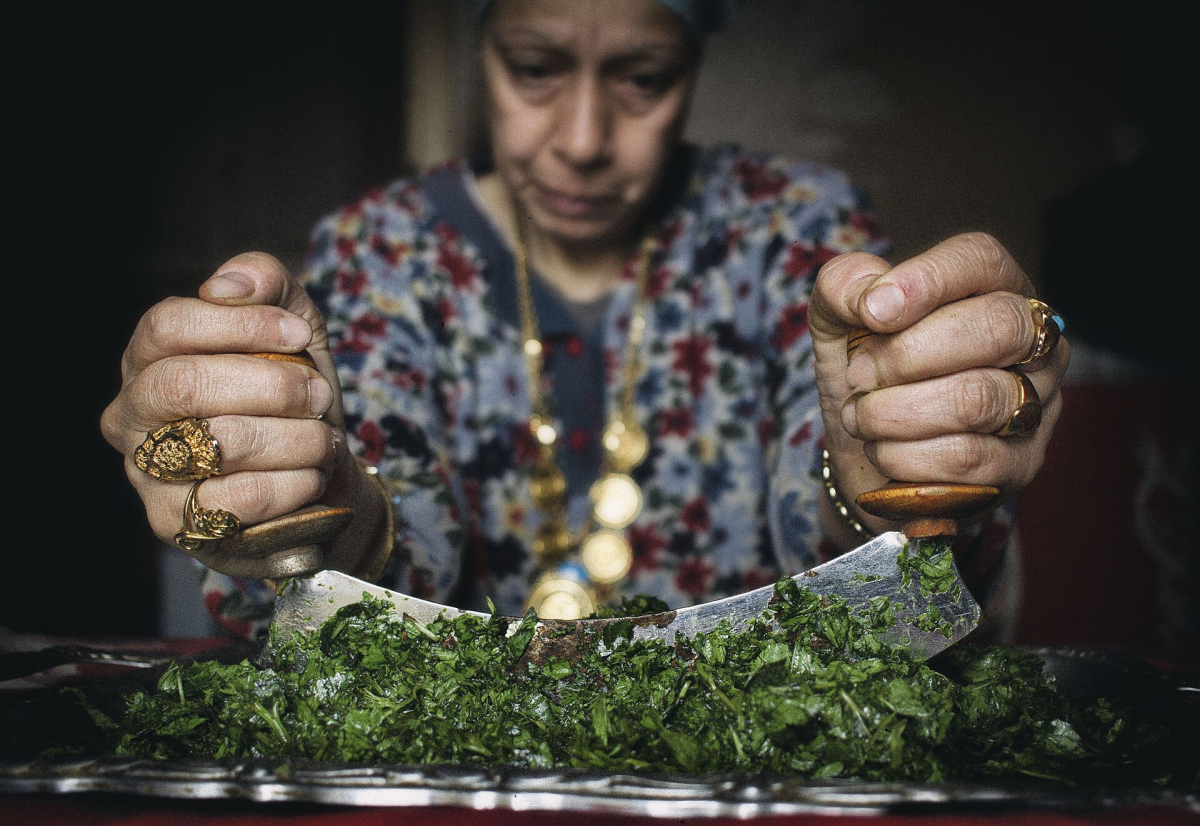
Molokhia is made with finely chopped leaves, commonly finished with garlic and coriander and eaten with rice or bread. The photograph shows the preparation stage. The finished bowl and its accompaniments differ between kitchens, so ask whether the menu price includes rice, bread or a main course.
This is a good meal around which to slow the day down. Choose a seated lunch when you have time to ask questions, rather than ordering an unfamiliar dish just before a booked transfer. If sharing, explain how many people will eat and ask for advice on quantities. A kitchen’s portion recommendation is more useful than guessing from a photograph taken somewhere else.
Vegetarians should ask about stock and cooking fat even when the visible ingredients are green. The same principle applies to stuffed vegetables, rice dishes and soups. Explain the restriction itself, including whether meat stock is excluded; a request for “no meat” may be understood as removing visible pieces rather than changing the preparation.
Fish, grilled dishes and pastries: order with clear expectations
On the Mediterranean and Red Sea coasts, cooked fish and seafood offer another direction. Before a whole-fish order, establish whether the price is per fish, per portion or by weight. Ask to see the agreed total, preparation charge and included sides. A clear conversation before cooking is easier than resolving a misunderstanding after the meal arrives.
For grilled dishes, ask how many skewers or pieces make a portion. With a group, check whether a mixed platter includes the items everyone wants and whether bread, salads and dips cost extra. Do not assume that a photograph on a menu represents a fixed portion. If the explanation remains unclear, order something with an explicit serving description.
Feteer is a layered pastry offered with sweet or savoury accompaniments. Pastries and desserts can also make a pleasant shared finish without requiring another full meal. Choose a small amount first and ask about nuts, sesame and dairy where relevant. A dish that appears plain may contain ingredients that are not obvious from its surface.
Drinks, dietary needs and food handling
Specify whether you want a hot or cold drink and whether sugar is included or served separately. With a juice or iced drink, ask about the water and ice if you cannot establish their source. Carry drinking water for longer outings, and check the seal of a bottled drink before opening it. A reusable bottle is useful only when filled with water you know is safe to drink.
For allergies, show a clear written explanation naming the ingredient and the seriousness of the reaction. Ask about shared utensils, oil and preparation surfaces. If a server cannot get a reliable answer from the kitchen, choose somewhere else. A dish that is normally plant-based is not automatically safe for an allergy, and a hotel buffet is not automatically free from cross-contact.
Use the World Health Organization’s food-safety guidance as the underlying principle: handling, safe water, thorough cooking and storage matter. Prefer food cooked through and served hot; do not rely on popularity alone as proof of hygiene. Seek professional advice before travelling if a medical condition makes foodborne illness particularly concerning.
Build meals into your Egypt itinerary
Keep one flexible meal slot each day. Museum visits, road transfers and temple stops can finish later than expected, so avoid a sequence in which every lunch depends on reaching a distant restaurant at an exact time. Ask your driver or guide where the scheduled break will be and whether you can choose an alternative without missing the next visit.
Before a Nile cruise, establish which meals and drinks are included, when service starts on embarkation day and what happens during early excursions. For a resort stay, compare the meal plan with the way you actually travel: a lunch inclusion has little value if you spend most days away from the property. Check the current written terms rather than relying on the name of the package.
During Ramadan and major holidays, ask directly about the day’s serving arrangements. Reserve a particular evening meal if it matters to your plans, then allow a comfortable journey back. For a limited budget, compare the complete bill including drinks, taxes or service charges shown on the menu. Keep cash in manageable denominations and confirm the accepted payment method before ordering.
The Egyptian Tourism Authority’s food and culture overview is a useful introduction to dish names. Use it as a starting point, then let ingredients, clear ordering and the practical shape of your day guide your choices.
Frequently asked questions
Is koshary vegetarian or vegan?
Koshary is commonly made from plant ingredients, but confirm the actual recipe, toppings and preparation with the kitchen. Its usual ingredients do not establish allergy safety or rule out cross-contact.
What is the difference between ful and taameya?
Ful is a dish of cooked fava beans; Egyptian taameya is a fritter made with ground fava beans and herbs. Ask about toppings, additions and shared frying equipment when dietary requirements matter.
How should I order fish in Egypt?
Confirm whether the price is per portion, per fish or by weight before cooking begins. Agree on the chosen fish, preparation, included sides and total charge.
Can I rely on a dish name to avoid allergens?
No. Explain the specific restriction and ask the kitchen about ingredients and preparation. If staff cannot confirm the answer, choose a different dish or venue.



